The Milesians Myth Meaning & Symbolism
The final wave of mortal invaders who, through struggle and negotiation, establish a sacred pact with the land's divine guardians, becoming the ancestors of Ireland.
The Tale of The Milesians
Listen now, and let the fire’s crackle become the crash of waves on a distant shore. The story I tell is of the final breath of the mythic age, the moment when [the world](/myths/the-world “Myth from Tarot culture.”/) of gods and spirits receded like a tide, and the age of mortal men truly began.
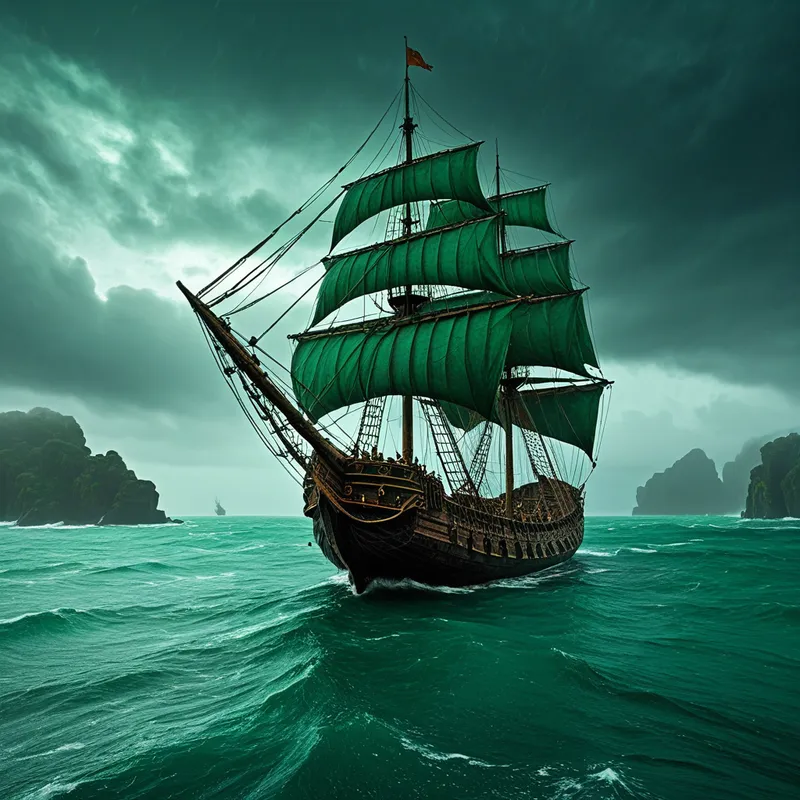
They came from [the sea](/myths/the-sea “Myth from Greek culture.”/), the sons of Míl Espáine. Not as thieves in the night, but as a storm upon [the horizon](/myths/the-horizon “Myth from Various culture.”/). Their fleet was a forest of masts, their sails the grey of gulls’ wings against a bruised sky. They were driven by prophecy and loss, seeking the land their seer, Amergin, had sung of—a land of surpassing beauty, hidden beyond the ninth wave. Their leader was Míl himself, though he fell on the journey, his spirit carried in the hearts of his eight sons and their people. They were exiles, warriors, and seekers, carrying with them the dust of other lands and the burning need for a home.
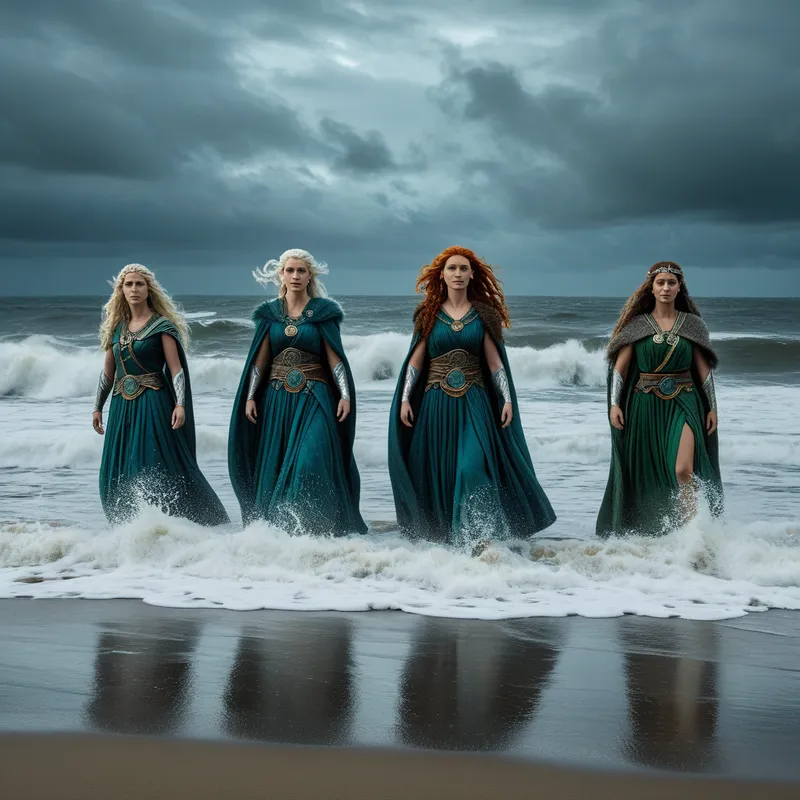
As their ships scraped upon the sands of Ériu, they were met not by armies, but by a presence. Three queens stood upon the shore, regal and terrible as the land itself. They were Banba, Fódla, and Ériu, each a sovereign goddess of the Tuatha Dé Danann. “This land is named for me,” each declared in turn, their voices the whisper of wind through grass and the rumble of stone. They did not raise sword or spear, but laid a geis, a sacred injunction, upon the invaders: “You must give this island my name.”
The Milesians, led by the brothers Éber Finn and Éremón, agreed, honoring the queens. But the true test was yet to come. As they marched inland, the very landscape rose against them. The Tuatha Dé Danann, masters of magic, summoned a fierce druidic storm. A mist descended, so thick it stole breath and sight. The land itself seemed to writhe and shift, mountains becoming phantoms, paths dissolving into bog. The Milesian host was scattered, turned about, and driven to the brink of despair upon their own ships.
In that moment of chaos, poised between conquest and drowning, the poet Amergin Glúingel stood at the prow. He raised his arms, not in supplication, but in declaration. He did not fight magic with sword, but with a deeper, older truth—the truth of belonging. He sang his famous invocation, a song that was not a plea but a claiming, a weaving of his people’s destiny with the very bones and breath of the island:
“I am the wind on the sea, I am a wave of the ocean, I am the roar of the sea…”
His song was a spell of integration. He named himself the bull of seven fights, the hawk on the cliff, the dewdrop, the fairest of flowers, the boar, the salmon, the lake on the plain. He did not seek to dominate the land, but to proclaim his kinship with all its parts. As his voice rolled over the waves, the druidic mist parted. The storm ceased its fury.
Acknowledging the power of the song and the strength of the newcomers, the Tuatha Dé Danann offered a pact. They would withdraw, not to oblivion, but into [the hollow hills](/myths/the-hollow-hills “Myth from Celtic culture.”/), [the sidhe](/myths/the-sidhe “Myth from Celtic culture.”/), becoming the Aos Sí, the people of [the Otherworld](/myths/the-otherworld “Myth from Celtic culture.”/). The surface world, the realm of sowing and reaping, of kingdoms and bloodlines, would belong to the Milesians. But the land’s deep magic, its sovereignty, would forever be shared, a sacred trust. The Milesians landed once more, this time to stay. They divided the land, became its high kings, and from them, it is said, all the Gaels of Ireland are descended. The gods had retreated into the twilight, and the age of human history began, forever shadowed by the pact.
Cultural Origins & Context
The story of the Milesians is the foundational myth of Gaelic sovereignty, preserved primarily in the medieval Irish text *Lebor Gabála Érenn (The Book of Invasions). This 11th-century compilation sought to synthesize native Irish mythic cycles with the Biblical and classical history demanded by a newly Christianized scholarly tradition. The Milesians were positioned as the final, mortal wave in a sequence of mythical invasions, providing a divine-sanctioned ancestry that connected the contemporary Gaelic rulers to both the sacred landscape and a “respectable” ancient past akin to that of Rome or Greece.
Functionally, this myth was far more than a creation story. It was a charter of legitimacy. It explained why the Gaels had the right to rule Ireland, framing their arrival not as a brutal conquest but as a negotiated, poetic taking of possession ratified by the land’s own deities. The myth served to sacralize kingship—a true king was one who, like the Milesian chieftains, could successfully “marry” [the sovereignty goddess](/myths/the-sovereignty-goddess “Myth from Celtic culture.”/) (represented by Ériu) and maintain the fragile pact with the invisible powers of the land. It was a narrative told by bards and seanchaí (storytellers) to reinforce social order, connect people to place, and encode the understanding that human dominion is always conditional, always in relationship with forces older and deeper than itself.
Symbolic Architecture
At its [heart](/symbols/heart “Symbol: The heart symbolizes love, emotion, and the core of one’s existence, representing deep connections with others and self.”/), the Milesian myth is a profound [allegory](/symbols/allegory “Symbol: A narrative device where characters, events, or settings represent abstract ideas or moral qualities, conveying deeper meanings through symbolic storytelling.”/) for the encounter between the conscious ego and the autonomous, numinous [psyche](/myths/psyche “Myth from Greek culture.”/)—the Self.
The Milesians represent the arriving [consciousness](/symbols/consciousness “Symbol: Consciousness represents the state of awareness and perception, encompassing thoughts, feelings, and experiences.”/): purposeful, historical, driven by ambition and the need for [identity](/symbols/identity “Symbol: Identity represents the sense of self, encompassing personal beliefs, cultural background, and social roles.”/) and territory (the “home”). The Tuatha Dé Danann represent the indigenous, autonomous contents of the unconscious: magical, shape-shifting, deeply connected to the instinctual and spiritual essence of the psyche (the “land”). The initial conflict is inevitable; [the ego](/myths/the-ego “Myth from Jungian culture.”/)’s forward march is met with psychic [resistance](/symbols/resistance “Symbol: An object or tool representing opposition, struggle, or the act of pushing back against external forces or internal changes.”/), [confusion](/symbols/confusion “Symbol: A state of mental uncertainty or disorientation, often reflecting internal conflict, lack of clarity, or overwhelming choices in waking life.”/), and overwhelming [emotion](/symbols/emotion “Symbol: Emotion symbolizes our inner feelings and responses to experiences, often guiding our actions and choices.”/) (the druidic storm).
The true conquest is not of the land, but of the relationship to it. Sovereignty is not taken; it is received in exchange for recognition.
Amergin’s song is the critical turning point. It is the act of psychological [integration](/symbols/integration “Symbol: The process of unifying disparate parts of the self or experience into a cohesive whole, often representing psychological wholeness or resolution of internal conflict.”/). He does not defeat the unconscious; he identifies with it. “I am [the wind](/myths/the-wind “Myth from Various culture.”/)… I am a wave…” This is the [language](/symbols/language “Symbol: Language symbolizes communication, understanding, and the complexities of expressing thoughts and emotions.”/) of active imagination, of dissolving the rigid boundaries of the ego to claim kinship with the archetypal forces within. His invocation is a [ritual](/symbols/ritual “Symbol: Rituals signify structured, meaningful actions carried out regularly, reflecting cultural beliefs and emotional needs.”/) of naming, which in mythic thought is an act of creation and [connection](/symbols/connection “Symbol: Connection symbolizes relationships, communication, and bonds among individuals.”/). By speaking himself into the fabric of the world, he makes a place for his people within it. The resulting pact—the [division](/symbols/division “Symbol: Represents internal conflict, separation of self, or unresolved emotional splits. Often indicates a need for integration or decision-making.”/) of the world into surface (consciousness) and [underworld](/symbols/underworld “Symbol: A symbolic journey into the unconscious, representing exploration of hidden aspects of self, transformation, or confronting repressed material.”/) (unconscious)—models a healthy psyche. The ego administers the day-to-day [life](/symbols/life “Symbol: The symbol of ‘Life’ represents a journey of growth, interconnectedness, and existential meaning, encompassing both the joys and challenges that define human experience.”/), but it must acknowledge and respect the timeless, powerful realms beneath, which remain a [source](/symbols/source “Symbol: The origin point of something, often representing beginnings, nourishment, or the fundamental cause behind phenomena.”/) of creativity, [mystery](/symbols/mystery “Symbol: An enigmatic, unresolved element that invites curiosity and exploration, often representing the unknown or hidden aspects of existence.”/), and renewal.
The Dreamer’s Resonance
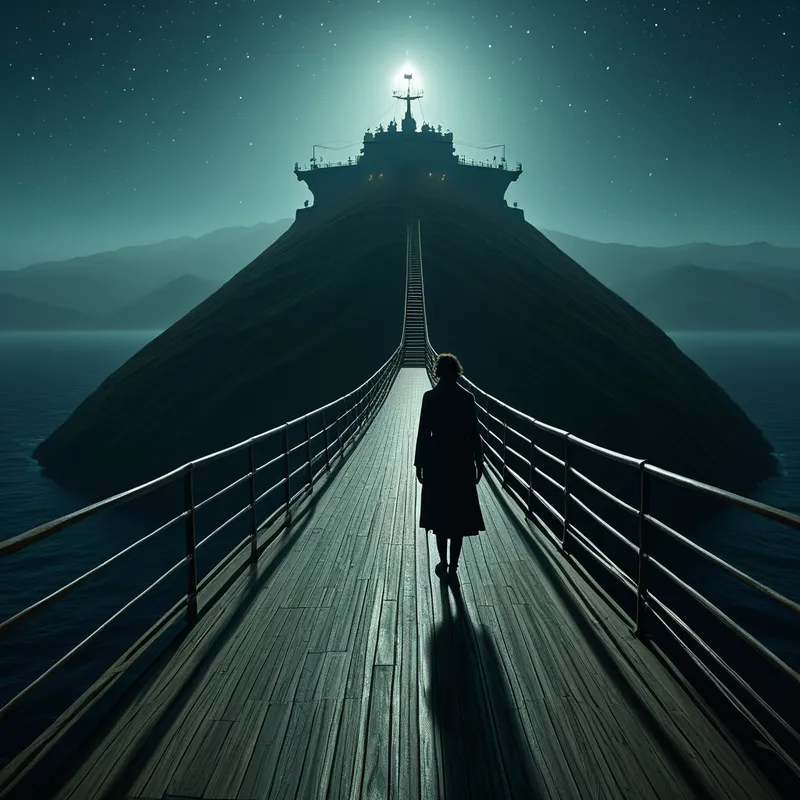
When this mythic pattern stirs in the modern dreamer, it often manifests as a profound transition or a crisis of belonging. You may dream of arriving at a new, breathtaking, yet intimidating landscape—a new job, a new stage of life, a new internal awareness. Initially, there is promise, but then chaos ensues. The dreamscape becomes bewildering; paths vanish, storms of emotion or circumstance arise, and you feel scattered and driven back.
This is the somatic echo of the druidic storm, the psyche’s resistance to a new conscious orientation that has not yet paid its respects to the inner order. The dream may present shadowy, majestic, or elusive figures (the Tuatha Dé Danann) who set conditions or block [the way](/myths/the-way “Myth from Taoist culture.”/). They are not mere obstacles; they are the guardians of [the threshold](/myths/the-threshold “Myth from Folklore culture.”/), the personified values and complexes of your inner world testing your readiness.
The resolution in such dreams is rarely a battle won. It is more likely a moment of profound utterance—a song, a spoken truth, a gesture of respect from the dream ego. It is the moment you acknowledge, “I am part of this, and this is part of me.” This marks the end of the psychic civil war and the beginning of a new, more holistic internal governance. The dreamer is, in effect, singing Amergin’s song, forging their own pact between their striving conscious self and the ancient, magical territory of their soul.
Alchemical Translation
The Milesian journey is a perfect map for the Jungian process of individuation. It begins in the [nigredo](/myths/nigredo “Myth from Alchemical culture.”/), the blackening: the death of the old identity (the exile from Spain, the death of Míl), the voyage through the chaotic sea of the unconscious. The landing represents a new conscious aim, but it immediately triggers the confrontation with [the shadow](/myths/the-shadow “Myth from Jungian culture.”/) and the anima (the goddesses) in their totality.
The storm is the mortificatio, a dissolution and despair necessary for transformation. The ego is humbled, stripped of its simple agenda of conquest. Amergin’s song is the pivotal albedo, the whitening. It is the moment of illumination where the ego surrenders its will to dominate and instead seeks communion. By claiming identity with the archetypal elements, he performs a psychic union of opposites—human and nature, history and myth, mortal and divine.
The pact is the goal of individuation: not a state where the unconscious is conquered and silent, but a lasting treaty where consciousness and the deep Self govern their respective realms in mutual respect.
The final division of the land symbolizes the [rubedo](/myths/rubedo “Myth from Alchemical culture.”/), the reddening or realization. The integrated psyche is now fully embodied and functional in the world. The conscious personality (the Milesian kings) rules the external life, but it does so with the wisdom that its authority flows from a sacred agreement with the inner sovereign (the Aos Sí). The modern individual undergoing this alchemy moves from a life of simple, external goal-seeking (conquest) to one of responsible stewardship, where action in the world is in dialogue with the depths of the soul. They become, like Ireland itself, a land where every hill might hide a doorway to eternity, and every king knows his rule is a gift from the goddess.
Associated Symbols
Explore related symbols from the CaleaDream lexicon: