The Mandapa Myth Meaning & Symbolism
A myth of cosmic creation where gods and demons churn the ocean of existence within a sacred, temporary pavilion to reveal the universe's hidden treasures.
The Tale of The Mandapa
Listen, and let the vision form. Before time was counted, when the universe was a single, silent ocean of potential, the gods grew weary. Immortality had granted them eternity, but not vitality. The demons, their eternal shadows, possessed power but no peace. Both languished in a stagnant heaven, a gilded cage of existence. A longing, deep as [the abyss](/myths/the-abyss “Myth from Kabbalistic culture.”/), arose in the heart of [Vishnu](/myths/vishnu “Myth from Hindu culture.”/). He knew [the ocean of milk](/myths/the-ocean-of-milk “Myth from Hindu culture.”/), [Kshirasagara](/myths/kshirasagara “Myth from Hindu culture.”/), held within its depths the secret of immortality’s essence: the nectar of life, Amrita.
But how to churn an ocean? How to stir the infinite? A plan, vast and terrible in its beauty, was conceived. The gods and demons, eternal enemies, would have to join hands. The great mountain Mandara would be their churning rod. The king of serpents, the mighty Vasuki, would be their rope. And to hold the mountain steady, to prevent it from plunging through the very fabric of creation, a foundation was needed. A sacred, temporary dwelling. The Mandapa.
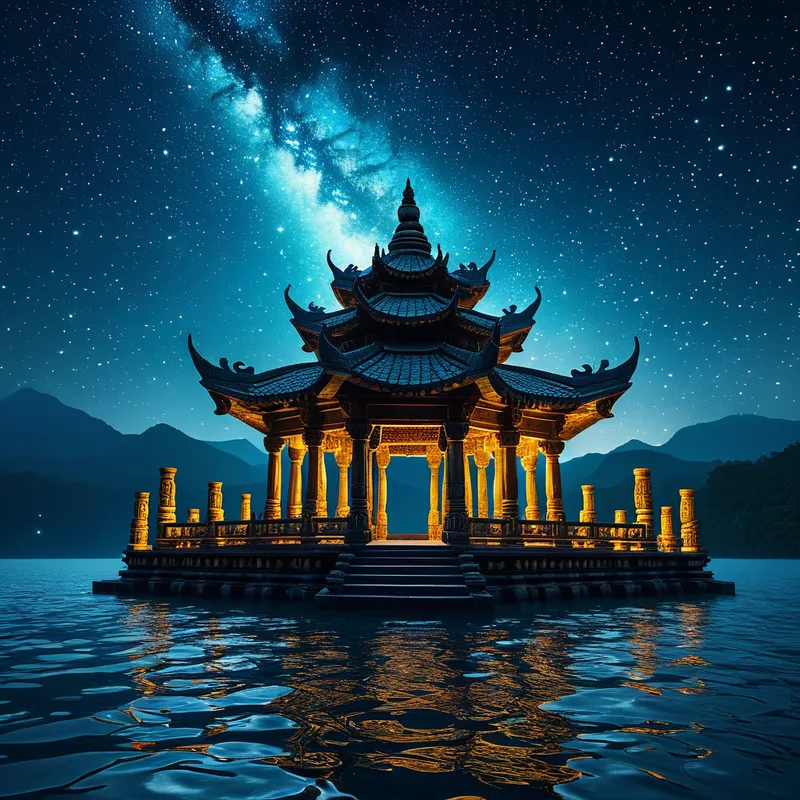
Vishnu commanded [the architect](/myths/the-architect “Myth from Various culture.”/) of the gods, [Vishvakarma](/myths/vishvakarma “Myth from Hindu culture.”/), to build it. Not of stone or wood, but of intention and cosmic law. Its pillars were the cardinal directions. Its canopy was the vault of [the sky](/myths/the-sky “Myth from Persian culture.”/). Its floor was the back of [Kurma](/myths/kurma “Myth from Hindu culture.”/), the great [tortoise](/myths/tortoise “Myth from Greek culture.”/), who plunged into the depths to bear the weight of [the world](/myths/the-world “Myth from Tarot culture.”/). The Mandapa arose—a pavilion of purpose, a theater for the impossible.
Then began the churning. Gods at the tail of Vasuki, demons at his head, they pulled. The mountain spun. The ocean roared and frothed. Vasuki, stretched between divinity and darkness, breathed plumes of fire and venom that threatened to scorch all creation. The air grew thick with the strain. The Mandapa trembled on the back of the tortoise, a fragile vessel containing a cataclysm. From the churning waters, wonders and horrors emerged first: the deadly poison Halahala, which [Shiva](/myths/shiva “Myth from Hindu culture.”/) drank to save the world; the celestial cow [Kamadhenu](/myths/kamadhenu “Myth from Hindu culture.”/); the goddess of wine, [Lakshmi](/myths/lakshmi “Myth from Hindu culture.”/), rising radiant on a [lotus](/myths/lotus “Myth from Hindu culture.”/).
The churning seemed eternal, a symphony of agony and effort contained within the sacred space. Finally, from the heart of the foam, emerged Dhanvantari, holding the glowing pot of Amrita. The goal was in sight. The demons, driven by greed, snatched the pot. But Vishnu, the preserver, transformed into the enchanting Mohini, distracted the demons, and ensured the nectar went to the gods, restoring cosmic balance. The Mandapa, its purpose fulfilled, dissolved back into the elements from which it was summoned, leaving only the memory of the space where creation was remade.
Cultural Origins & Context
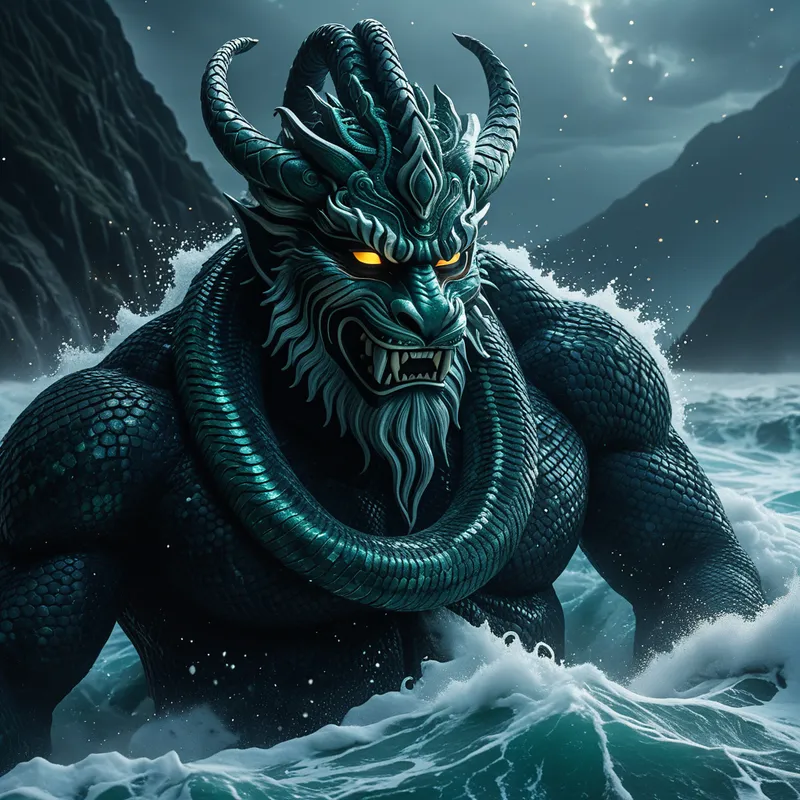
The myth of [the Churning of the Ocean](/myths/the-churning-of-the-ocean “Myth from Hindu culture.”/), or [Samudra Manthan](/myths/samudra-manthan “Myth from Hindu culture.”/), is a foundational narrative found in ancient Hindu texts like the Mahabharata and several Puranas, including the Vishnu Purana and the Shiva Purana. It is not merely a story of gods but a cosmic allegory for the Vedic and post-Vedic worldview, where creation is not a one-time event but a continuous process of dynamic tension and equilibrium.
The Mandapa itself is a profound architectural and ritual concept. In temple architecture, it is the pillared hall leading to the sanctum, a transitional space for preparation and gathering. In life-cycle rituals (Samskaras), a temporary mandapa is constructed for weddings and ceremonies—a sacred, bounded space where transformative events occur. The myth elevates this practical structure to a cosmic principle. It was passed down by priests and storytellers (Sutas) not just to explain the origin of celestial objects and beings, but to model the societal function of sacred space and cooperative effort, even among rivals, for a higher, sustaining goal.
Symbolic Architecture
The Mandapa is the sacred container, the [temenos](/myths/temenos “Myth from Greek culture.”/) of the [psyche](/myths/psyche “Myth from Greek culture.”/). It represents the consciously created, bounded [space](/symbols/space “Symbol: Dreaming of ‘Space’ often symbolizes the vastness of potential, personal freedom, or feelings of isolation and exploration in one’s life.”/) necessary for any profound alchemical work. Without it, the churning forces—our divine aspirations and our demonic passions—would tear the world, and [the self](/myths/the-self “Myth from Jungian culture.”/), apart.
The Mandapa is the ego’s necessary, temporary structure: not the final temple, but the vital workshop where the raw materials of the soul are processed.
The churning rod, Mount Mandara, is the [axis](/symbols/axis “Symbol: A central line or principle around which things revolve, representing stability, orientation, and the fundamental structure of reality or consciousness.”/) mundi, the central pillar of the world and the [spine](/symbols/spine “Symbol: The spine symbolizes strength, support, and the foundational structure of one’s life and identity.”/) of the individual, around which transformation occurs. The [serpent](/symbols/serpent “Symbol: A powerful symbol of transformation, wisdom, and primal energy, often representing hidden knowledge, healing, or temptation.”/) Vasuki is the primal, coiled [energy](/symbols/energy “Symbol: Energy symbolizes vitality, motivation, and the drive that fuels actions and ambitions.”/) of the unconscious ([Kundalini](/symbols/kundalini “Symbol: A dormant spiritual energy coiled at the base of the spine, representing untapped potential and awakening consciousness through ascension.”/)) that must be engaged, stretched, and utilized. The gods and demons are the eternal opposites within: order and [chaos](/symbols/chaos “Symbol: In Arts & Music, chaos represents raw creative potential, uncontrolled expression, and the breakdown of order to forge new artistic forms.”/), [spirit](/symbols/spirit “Symbol: Spirit symbolizes the essence of life, vitality, and the spiritual journey of the individual.”/) and matter, conscious and [shadow](/symbols/shadow “Symbol: The ‘shadow’ embodies the unconscious, repressed aspects of the self and often represents fears or hidden emotions.”/). The [tortoise](/symbols/tortoise “Symbol: Tortoises symbolize wisdom, longevity, and the importance of patience in achieving goals.”/) Kurma is the grounding principle, the instinctual [foundation](/symbols/foundation “Symbol: A foundation symbolizes the underlying support systems, values, and beliefs that shape one’s life, serving as the bedrock for growth and development.”/) that supports the entire endeavor. The [emergence](/symbols/emergence “Symbol: A process of coming into being, rising from obscurity, or breaking through a barrier, often representing birth, transformation, or revelation.”/) of poison before nectar signifies that any deep psychological work will first bring the toxic, repressed elements ([resentment](/symbols/resentment “Symbol: A deep-seated emotional bitterness from perceived unfairness or injury, often festering silently and poisoning relationships.”/), fear, rage) to the surface. They must be acknowledged and “consumed” (integrated) before the nourishing Amrita of wholeness can be attained.
The Dreamer’s Resonance
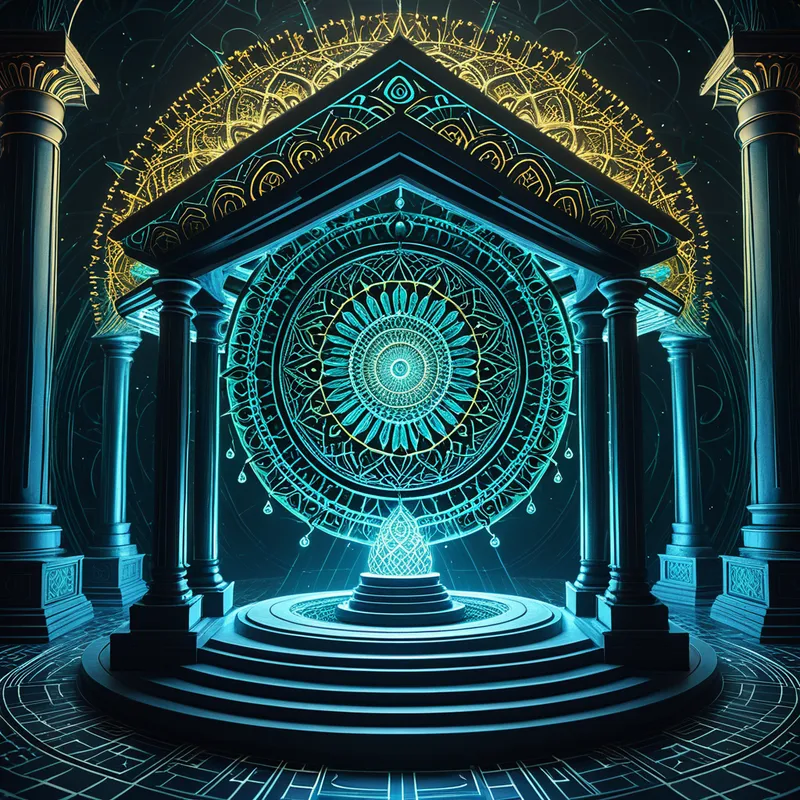
When the motif of The Mandapa appears in modern dreams, it seldom appears as a literal pavilion. Instead, one dreams of a defined space where a great struggle or collaborative effort is underway. It could be a specific room in a house that feels charged with purpose, a surgical theater, a [gymnasium](/myths/gymnasium “Myth from Greek culture.”/) where a team is straining at a rope, or even the cockpit of a vehicle navigating turbulent seas.
Somatically, the dreamer may awaken with a feeling of tension in the back and shoulders—the weight of the mountain, the pull of the rope. Psychologically, this dream pattern signals that the psyche has initiated a deep process of “churning.” Opposing forces within (perhaps a drive for success versus a need for rest, or a spiritual longing conflicting with worldly desires) are being engaged simultaneously. The dream is an assurance that a sacred container—the structure of therapy, a creative practice, a committed relationship, or the dreamer’s own observing consciousness—is actively holding this difficult, necessary process. The anxiety is not of chaos, but of immense, contained effort.
Alchemical Translation
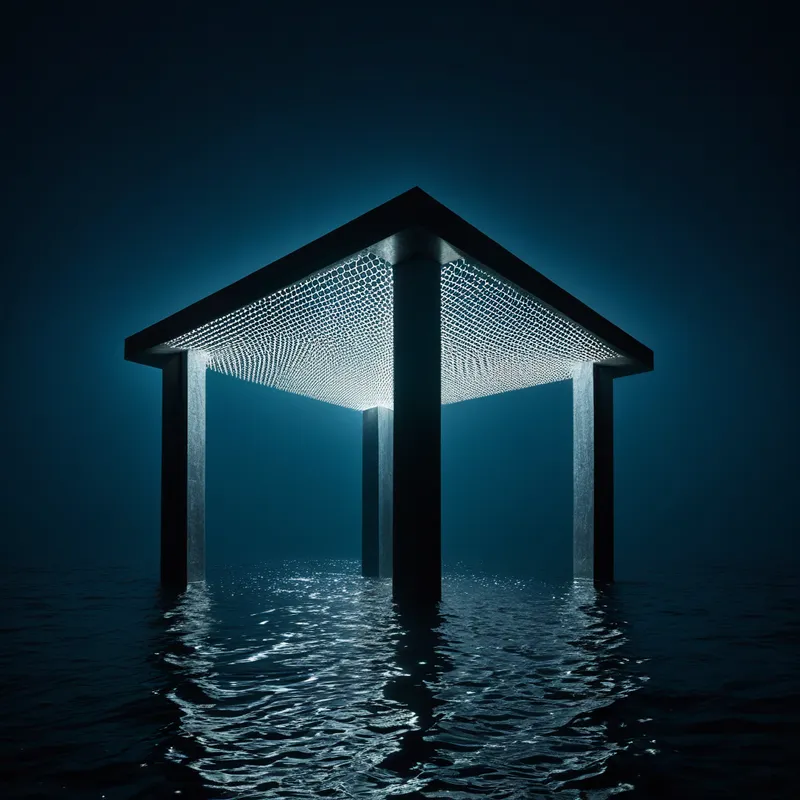
The myth of The Mandapa models the individuation process with stunning clarity. The first step is the construction of the container: the conscious decision to engage in self-work, to create a regular practice (analysis, meditation, journaling) that becomes our personal Mandapa. This is an act of the Creator archetype.
Then begins the churning: the active engagement with the unconscious through imagination, active imagination, or confronting life’s crises. We must enlist both our “gods” (our highest values, disciplines, and virtues) and our “demons” (our raw passions, ambitions, and shadow aspects) to pull on the rope. This is often experienced as inner conflict, creative frustration, or the painful surfacing of old wounds—the Halahala. The work of integration, like Shiva drinking the poison, is to hold this toxicity without being destroyed by it, to let it become a part of our transformative power.
The nectar of Amrita is not found by avoiding the churning, but at the very heart of it. Wholeness is the prize for enduring the tension of opposites.
The final stage is the distribution of the nectar. The Dhanvantari within us brings forth the healing insight, the renewed vitality. But [the shadow](/myths/the-shadow “Myth from Jungian culture.”/) (the demons) will try to claim it solely for itself—for inflation, grandiosity, or selfish gain. The Vishnu principle, our inner preserver and trickster, must ensure this new wholeness serves the balance of the entire psyche, not just one faction. The temporary Mandapa of our focused effort may then dissolve, but the transformed self, having tasted the Amrita, remains. We learn that we are both the builders of the sacred space and the ocean being churned within it, engaged in the eternal work of creating ourselves anew.
Associated Symbols
Explore related symbols from the CaleaDream lexicon: