The Lover and the Beloved Myth Meaning & Symbolism
A story of a soul's burning, ecstatic journey through separation, longing, and annihilation to achieve union with the Divine Beloved.
The Tale of The Lover and the Beloved
Listen. In the beginning, there was no separation. Only a unity so profound, so complete, that to speak of it is to shatter its silence. From this unity, a sigh was breathed—a sigh of longing to be known. And from that sigh, the cosmos was spun, and within it, the human soul, the Lover.
The Lover awoke in a world of forms, in a body of clay, in a city of distractions. But a memory, faint as a scent of jasmine on a night wind, lingered in the chambers of the heart. A memory of a Face, a Voice, a Presence—the Beloved. This memory was not a thought, but a wound. A sweet, agonizing ache that made the gold of palaces seem like dust and the praise of crowds sound like the rattling of dry bones.
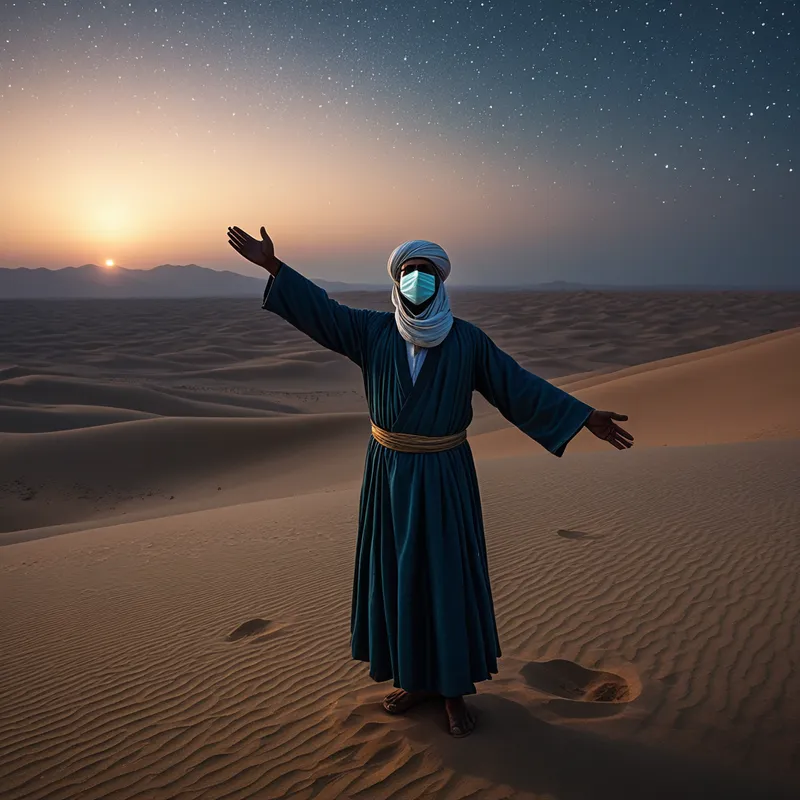
So the Lover began to wander. He left the city gates behind, entering the desert of seeking. The sun was a hammer, the wind a scourge. He drank from brackish wells and slept on stones, yet the fire within burned hotter. He would sing in the emptiness, his voice cracking with thirst: “Where are You? Show me Your face!” The only answer was the echo of his own cry, which he mistook for the Beloved’s voice, and this both tortured and sustained him.
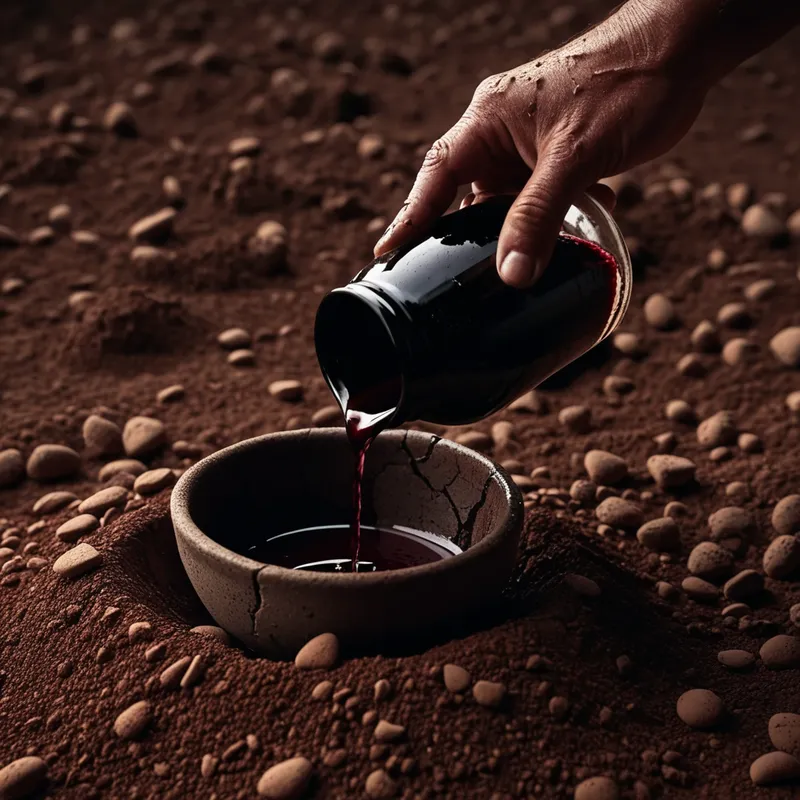
He encountered guides and tricksters. A stern ascetic told him to chain his desires. A merry drunkard offered a cup of wine, saying, “This is the key.” The Lover drank, and for a moment, the world softened, and he felt a terrifying closeness. But it faded, leaving only a deeper emptiness. He realized the wine was not the Beloved, but a symbol; the intoxication he sought was of a different vintage entirely.
The longing became a madness. He danced in the marketplace, tearing his robes, indifferent to scorn. He was called a fool. He was a fool—a fool for God. In his rapture, he saw the Beloved in the beggar’s eye, in the flash of a bird’s wing, in the curve of a Arabic letter on a page. Yet these were only reflections in a broken mirror. The direct gaze was withheld.
Finally, exhausted, annihilated, he collapsed at the edge of a vast, silent plain. He had nothing left—no hope, no prayer, no self. In that absolute zero, a whisper came, not from outside, but from the very core of the void he had become: “I am always here. You were looking with your eyes. Now, see with Mine.”
And in that moment, the Lover vanished. The one who sought was gone. What remained was not union, for that implies two. What remained was the One. The Beloved, gazing upon Itself, through Itself, as Itself. The story ends where it began, but now, known.
Cultural Origins & Context
This is not a single myth with a fixed canon, but the central, living metaphor of Sufism. It finds its roots in the 8th-9th centuries CE, blossoming in Persia with poets like Rumi and Hafez, and in the teachings of masters like Attar. It was never merely a story to be told, but a map of the heart’s journey to be enacted.
It was passed down in the smoky gatherings of the Sama, where poetry was sung, music played, and devotees spun in the whirling dance, physically enacting the Lover’s orbit around the Beloved. Its primary function was pedagogical and transformational. For a society bound by strict religious law (Sharia), it provided the path of inner truth (Haqiqa), teaching that the ultimate goal was not just obedience, but passionate, intimate love and direct experiential knowledge of the Divine.
Symbolic Architecture
The myth is a precise blueprint of the soul’s psychology. The Lover represents the individual human ego-consciousness, which experiences itself as separate, incomplete, and longing for wholeness. The Beloved is that wholeness itself—the Self, the divine ground of being, the unconscious in its ultimate, integrative aspect.
The journey begins not with an answer, but with a holy homesickness. The soul’s deepest memory is of its own origin, and that memory manifests as a wound that will not heal.
The desert is the arid landscape of the ego, stripped of the illusions of society and personal identity. The wine is the intoxicating glimpse of the unconscious, often accessed through art, poetry, or ecstatic practice, which dissolves boundaries but can also lead to confusion if mistaken for the goal itself. The final annihilation, Fana, is the total dissolution of the ego-complex. What follows is Baqa—not the ego’s triumph, but its quiet abiding in the reality of the Self. The Lover does not find the Beloved; the Lover becomes the locus through which the Beloved knows Its own love.
The Dreamer’s Resonance
When this myth stirs in modern dreams, it speaks of a profound psychological turning point. You may dream of an endless search for a person or place you cannot name, filled with acute, somatic longing. You may dream of a radiant figure who is always just out of reach, or of yourself singing a song no one hears.
These dreams signal that the conscious personality is being called—or painfully pulled—towards a deeper integration. The “Beloved” in the dream is the unlived life, the repressed wholeness, the Self that the ego has excluded. The aching separation is the felt experience of the ego’s necessary but painful isolation from the unconscious totality. Such dreams often precede a period of significant life change, depression (as a kind of spiritual via negativa), or a creative breakthrough, as the psyche labors to bridge the gap between its conscious stance and its deeper purpose.

Alchemical Translation
For the modern individual, this myth models the alchemical process of Individuation. The initial, unconscious unity is childhood identification with the parents and the world. The “sigh” of separation is the dawn of ego-consciousness—the “I” that feels alone.
The nigredo, the blackening, is the Lover’s desert: the depression, confusion, and sense of meaninglessness that arises when the ego’s old projects and identities lose their lustre. This is not pathology, but the furnace of transformation.
The wandering and encounters with various figures represent engaging with the contents of the unconscious—the anima/animus, the shadow, the archetypal images—often projected onto lovers, mentors, or adversaries in our lives. The “madness” is the necessary deconstruction of the persona, the socially acceptable mask, allowing a more authentic, if initially disorientated, self to emerge.
The final annihilation is the solutio—the dissolving of the rigid ego in the waters of the unconscious. The triumph is not the ego’s victory parade, but its graceful retirement from the throne. It learns to serve as a vessel for the Self. The individual no longer lives from the small, needy “I,” but from a center that is both deeply personal and transpersonal. One becomes a conduit for what is beyond oneself. The love that once sought an object now flows from the source, transforming one’s relationship to the entire world.
Associated Symbols
Explore related symbols from the CaleaDream lexicon:
- Love — The fundamental force and the goal of the myth; not a passive emotion but an active, consuming fire that drives the soul from separation back to its source.
- Fire — Represents the burning longing of the Lover, the pain of separation that purifies the soul of all attachments until only the essence remains.
- Wine — Symbolizes the intoxicating glimpse of divine knowledge or ecstasy that temporarily dissolves the ego’s boundaries, hinting at the union to come.
- Desert — The arid landscape of the seeker’s journey, where the soul is stripped bare of all social identity and comfort, forced to confront its essential nature.
- Mirror — The created world and the human heart, which can only reflect fragments of the Beloved’s beauty, reminding the Lover of the original unity.
- Annihilation — The crucial moment where the individual self dissolves, not into nothingness, but into the greater reality of the Beloved.
- Journey — The entire path of the soul, which is not a linear travel to a distant place but an inward deepening through stages of longing, search, and dissolution.
- Heart — The central organ of Sufi spirituality; not the physical heart but the subtle center of consciousness where the memory of the Beloved resides and the transformation occurs.
- Dance — The physical enactment of the myth, particularly the whirling of the Dervish, which mirrors the cosmos orbiting and the soul spinning in ecstatic remembrance.
- Union — The state beyond duality achieved after annihilation, where the distinction between Lover and Beloved vanishes, and only the One exists.