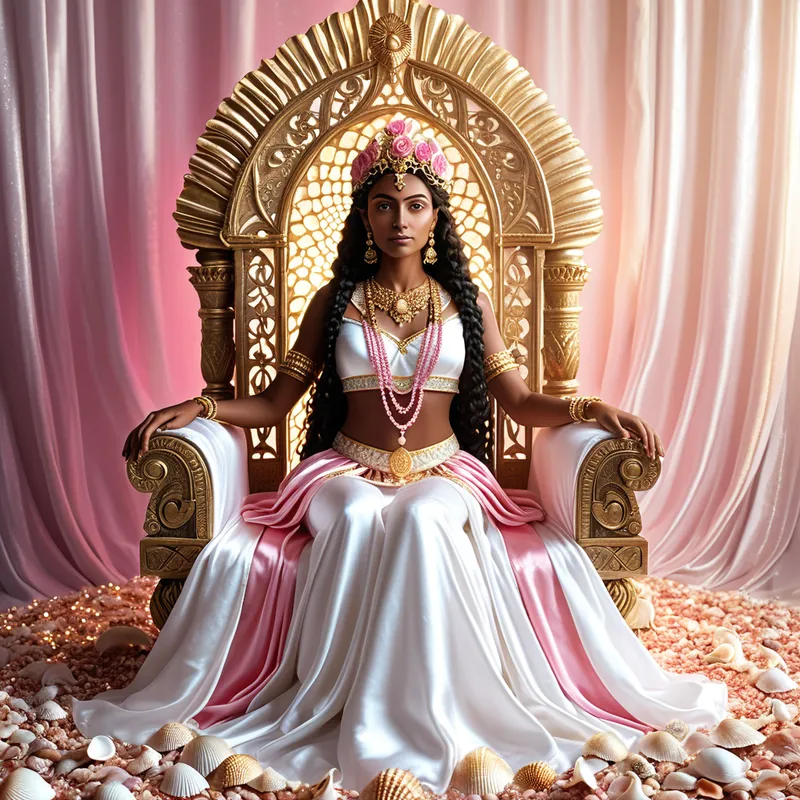
The Loa Myth Meaning & Symbolism
The Loa are the sacred spirits of Vodou, bridging the human and divine, guiding the soul through the crossroads of life, death, and transformation.
The Tale of The Loa
Listen, and let the drums tell you. Not with words, but with the thunder in the blood, the memory in the bone. Beneath the ceiba tree, where roots drink from deep waters and branches touch the star-road, the world is not one, but three. There is the world you see, of sun and sweat and soil. There is the world above, Bondye, silent and vast as the sky. And between them, a shimmering, teeming ocean of spirit—the world of the Loa.
They are the ones who answer. When the sun is a hammer and the well is dust, it is Azaka who feels the ache in your back and sends a cloud. When love is a sharp thorn in the heart, it is Erzulie Freda who tastes the salt of your tears and may grant you sweetness. They are not distant gods on mountains; they walk. They ride. They come when called with rhythm, with prayer, with the offering of a white candle, a sip of rum, a perfectly ripe avocado.
But to call is to stand at the crossroads. This is the domain of Papa Legba, the old man at the gate. He leans on his crutch, his clothes tattered, his pipe smoking. He speaks all tongues. Without his permission, the way is shut, the messages lost, the Loa silent. You must greet him first. You must offer your respect. For he opens the way, and what comes through is not always what you asked for, but what you need.
The drums are the horse. The song is the road. The people gather, feet beating the earth into a holy ground. The houngan or mambo draws the sacred vèvè in cornmeal, a fleeting map of spirit. The air grows thick, charged. A dancer stumbles, their eyes rolling white. A shudder passes through them like a wave. Their face changes. The posture shifts. A laugh booms—deep, earthy, generous. It is no longer the dancer, but Agwé, come to survey his waters. A voice speaks, craggy and ancient, asking for a cigar. This is Baron Samedi, tipping his top hat from the land of bones.
They arrive. They feast. They give warnings, blessings, scoldings. They heal with a touch, advise with cryptic proverbs, dance until the sweat of the spirit mingles with the sweat of the human. For a time, the veil is gone. The ancestors are near. The cosmic balance is restored through exchange—energy for energy, respect for power, remembrance for guidance. Then, with a final salute and a rum libation poured to the four corners, they depart. The dancer returns, weary, emptied, blessed. The crossroads remains, silent again, but the path ahead is clearer. The Loa have spoken.
Cultural Origins & Context
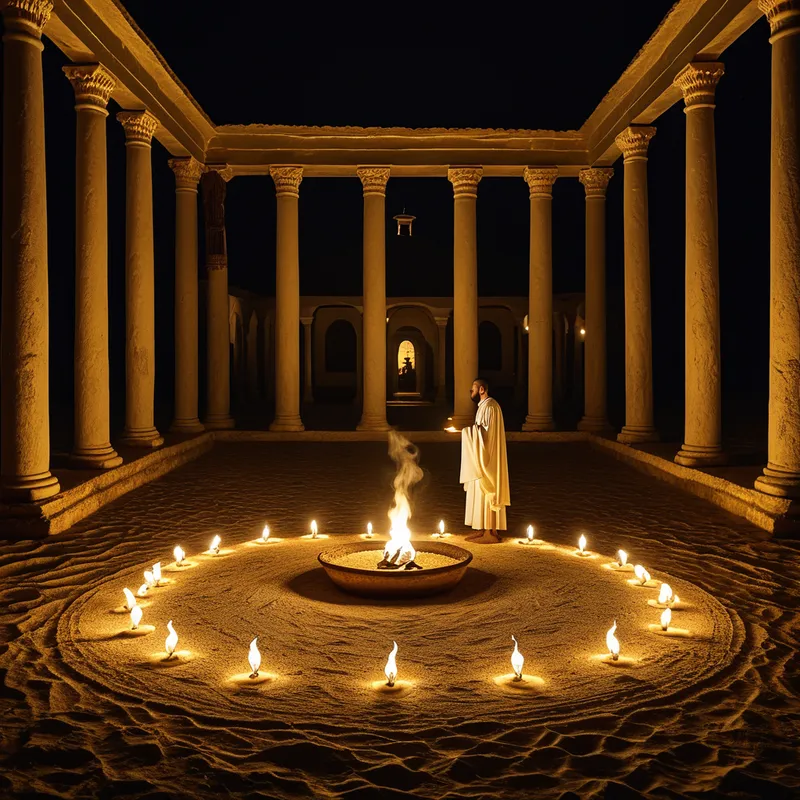
This is not a myth confined to parchment. It is a living, breathing cosmology forged in the crucible of the African Diaspora. Its roots are in the spiritual soil of West and Central Africa—among the Yoruba, Fon, Kongo, and others—where vibrant pantheons of deities and ancestor veneration were the bedrock of life. The Middle Passage was not just a physical dislocation but a spiritual cataclysm. In the holds of slave ships and on the plantations of Haiti, Saint-Domingue, Louisiana, and beyond, these traditions were shattered, forbidden, and forced underground.
From this fragmentation and under immense pressure, the myth of the Loa was not lost; it was re-membered. It syncretized, wearing the masks of Catholic saints to survive, yet its African heart beat fiercely beneath. It became the core of Haitian Vodou, Louisiana Voodoo, and related practices. The myth was passed down not in books, but in the bodies of the people—in the rhythms of the drums, the steps of the dance, the recipes for healing herbs, the patterns of the vèvè drawn in dust. Its societal function was, and is, profound: it provided a framework for resilience, community cohesion, healing, and a direct line to power and agency in a world designed to strip them away. The Loa were proof that the spirit of the people could not be enslaved.
Symbolic Architecture
The Loa represent the archetypal forces of existence made accessible. They are not monolithic symbols but a complex ecosystem of psychic energy.
The crossroads is not a place, but a condition of the soul: the moment of choice, the point of intersection between past and future, the conscious and the unconscious.
Papa Legba symbolizes the threshold itself, the ego’s necessary function as the gatekeeper to the deeper self. Without consciously “opening the gate” through introspection or crisis, the transformative energies of the unconscious remain locked away. The act of “being ridden” by a Loa is a profound symbol of divine inspiration, where the individual ego temporarily steps aside to allow a greater, transpersonal force to express itself. Each Loa family—the fiery and impulsive Petro, the cool and benevolent Rada—maps the spectrum of human emotion and experience, from aggressive assertion to nurturing compassion.
Crucially, the Loa are not purely “good” or “evil.” They are powerful, with specific dominions and personalities. This reflects a psychological truth: the forces within us are not merely positive or negative. Our creativity can be ruthless, our love possessive, our discipline cruel. The Loa demand respect and reciprocity, modeling the need for a conscious, ongoing relationship with all aspects of our psyche, not just the pleasant ones.
The Dreamer’s Resonance
When the world of the Loa erupts into modern dreams, it signals a powerful engagement with the ancestral and archetypal layers of the psyche. Dreaming of a crossroads often marks a critical life decision or an internal conflict of values. A dream of being unable to open a gate or door may reflect a blocked connection to one’s intuition or inner wisdom, a call to invoke your inner Papa Legba.
To dream of a vibrant, demanding presence “taking over”—feeling your body move differently, your voice speak with unfamiliar authority—can be terrifying. Yet psychologically, this can represent the urgent emergence of a repressed part of the self: a buried creativity (the Loa of the arts), a long-ignored rage (a Petro spirit), or a neglected capacity for sensual joy (Erzulie). The somatic experience in the dream—the shaking, the altered voice—is the psyche’s theater for integrating this powerful, autonomous energy. The dream is a spontaneous, internal ceremony.

Alchemical Translation
The myth of the Loa provides a dynamic model for psychic individuation—the process of becoming a whole, integrated Self. It frames this not as a solitary, cerebral journey, but as a relational and ceremonial one.
Individuation is not about becoming a god, but about learning the sacred protocols for hosting the gods within.
The first alchemical step is Invocation, standing at your personal crossroads (crisis, question, longing) and consciously calling forth what is needed. This is the work of Legba. Next is Possession, not in a literal sense, but as the courageous allowance of a previously disowned part of the psyche to have its voice, its energy, its say. Let your inner warrior speak its truth; let your inner lover express its grief. This requires the ego’s surrender, its agreement to be “ridden.”
The third step is Exchange and Sacrifice. The Loa do not work for free. Psychologically, this translates to: what old habit, comfortable identity, or cherished grievance must you “sacrifice” or offer up to make room for this new energy? You cannot integrate a new strength without giving up an old weakness. Finally, there is Libation and Integration. The ceremony ends; the Loa depart. The final rum is poured, grounding the experience. This is the essential work of taking the raw, archetypal energy that was activated and consciously translating it into your daily life—your work, your relationships, your art. You honor the spirit by living its gift.
Thus, the pantheon of the Loa becomes an internal council. The goal is not to be controlled by these forces, but to develop a conscious, respectful, and reciprocal relationship with them. In doing so, you move from being a subject of fate to a participant in a sacred dialogue, navigating the eternal crossroads of your own becoming.
Associated Symbols
Explore related symbols from the CaleaDream lexicon: