The Light and Dark Worlds Manichaean
Manichaean mythology depicts a universe split between realms of pure light and absolute darkness, reflecting a profound cosmic struggle between good and evil.
The Tale of The Light and Dark Worlds Manichaean
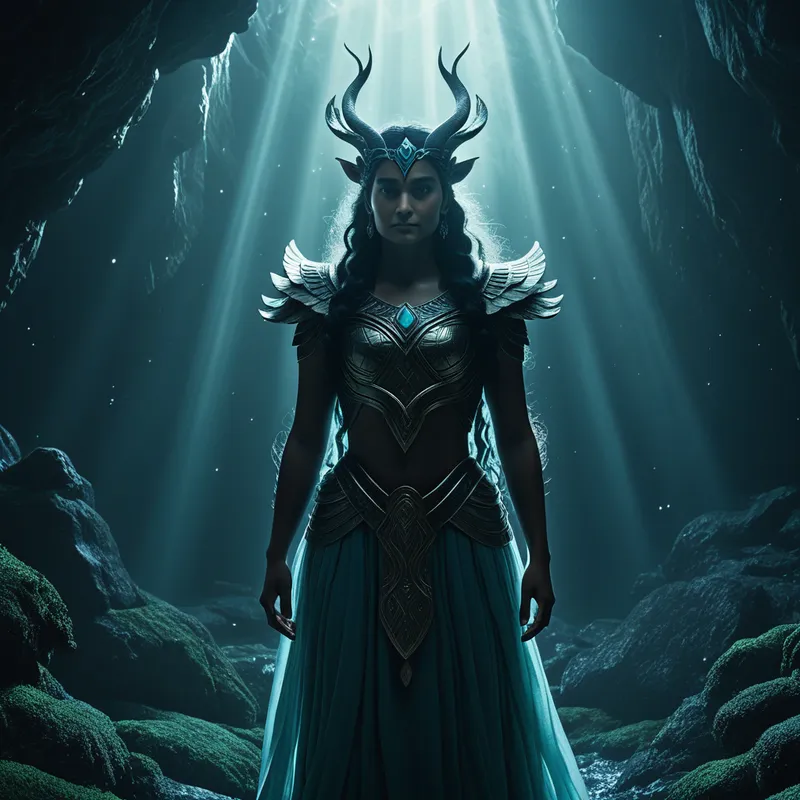
In the beginning, before time was measured, there existed two realms, utterly separate and eternally opposed. One was the Kingdom of Light, infinite, serene, and filled with unspeakable goodness. Its ruler was the Father of Greatness, a being of pure spirit, wisdom, and benevolence, dwelling amidst the five luminous elements: Air, Wind, Light, [Water](/myths/water “Myth from Chinese culture.”/), and Fire. This was a world of perfect peace, where no shadow could fall.
The other was the Kingdom of Darkness, a chaotic, boundless abyss ruled by the Prince of Darkness. This realm was a swirling, formless void of matter, ignorance, and concupiscence, populated by demonic [archons](/myths/archons “Myth from Gnostic culture.”/) and driven by a blind, hungry will. It was not merely the absence of light, but a positive, aggressive force of malice and disorder.
For eons, these two kingdoms remained apart, unaware of each other. But the chaotic, expansive nature of the Darkness eventually led it to the very borders of the Light. Seeing the splendor of the luminous realm, the Prince of Darkness was filled not with reverence, but with a covetous, destructive desire. He launched an invasion, seeking to devour and corrupt the Light itself.
To defend his kingdom without being polluted by direct contact with the adversary, the Father of Greatness evoked a series of divine emanations. First, he called forth the Mother of Life, and she, in turn, evoked the Primal Man. Armed with the five light elements as his armor, the Primal Man descended to the frontier of darkness to do battle. In the ensuing conflict, he was overcome. The powers of darkness swallowed his luminous armor, and the Primal Man fell into a stupor, a divine soul lost and imprisoned in the depths of matter.
Hearing his call, the Father of Greatness sent a second series of emanations: the Friend of the Lights, the Great Builder, and the Living Spirit. The Living Spirit descended, rescued the awakened Primal Man, and returned him to the realm of Light. But the light itself—the divine substance of his armor—remained captured, mingled inextricably with the dark matter of the enemy.
To reclaim this stolen light, the Living Spirit, under the guidance of the Father, fashioned the universe itself as a vast, ingenious machine. From the corpses of the defeated demonic archons, he built the heavens and [the earth](/myths/the-earth “Myth from Hindu culture.”/). From their purified skins, he stretched out the ten skies. From their bones and excrement, he forged the eight earths. This entire cosmos was a complex filtration plant. The captured particles of light were to be slowly released from matter: drawn upward by the turning wheels of the stars and planets, gathered by [the moon](/myths/the-moon “Myth from Tarot culture.”/) as a “ship of light” in its waxing phase, and transferred to the sun for final passage back to the Light Kingdom.
Yet, the forces of darkness, in a final act of sabotage, used the last of the impure, mixed substance to create [Adam and Eve](/myths/adam-and-eve “Myth from Biblical culture.”/). They fashioned the human body as the ultimate prison for light, stirring into it all the passions, appetites, and forgetfulness of the dark realm. Into this prison, they placed a soul crafted from the very light they had stolen. Thus, humanity was born—a microcosm of the macrocosmic struggle, a living battleground.
Knowing this, the Realm of Light sent a perpetual series of redeemers—prophets like Zoroaster, [Buddha](/myths/buddha “Myth from Buddhist culture.”/), and [Jesus](/myths/jesus “Myth from Christian culture.”/)—to awaken the slumbering soul. The final and most perfect of these was Mani, the “Apostle of Light.” He brought the complete gnosis—the saving knowledge of the soul’s divine origin, its present captivity, and the path to its liberation. The ultimate end is the Great War’s conclusion: the final separation of Light from Darkness, a process lasting millennia, culminating in a cosmic conflagration that purifies the last remnants of light. The Kingdom of Light will be restored to its pristine, boundless unity, and the Kingdom of Darkness, stripped of all stolen light, will be sealed forever in its own impotent, chaotic void.
Cultural Origins & Context
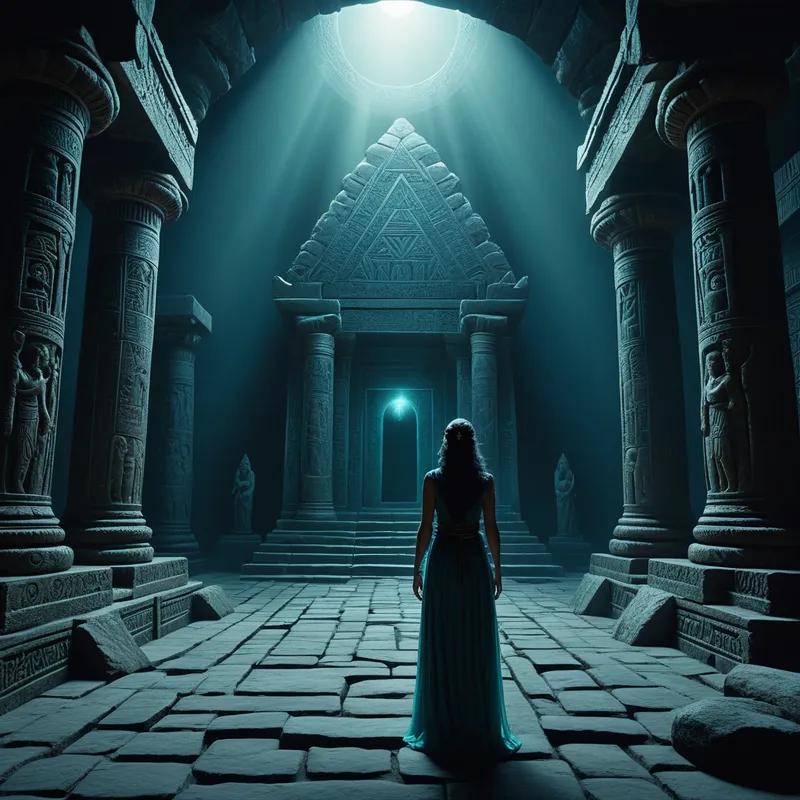
Manichaeism emerged in the 3rd [century](/myths/century “Myth from Biblical culture.”/) CE in the Sasanian Empire, the profound synthesis of its founder, Mani. A child of a Jewish-Christian sect in Mesopotamia, Mani was steeped in the dualistic currents of Zoroastrianism, the apocalyptic strands of Judaism and Christianity, and the gnostic thought flourishing in the region. He proclaimed his doctrine as the completion and universal truth underlying all previous revelations. Unlike secretive gnostic schools, Mani designed a world religion with a complex ecclesiastical structure, intended for global propagation.
Its rapid spread from North Africa to China is a testament to its potent answer to the existential anxieties of late antiquity. In a world rife with political instability, suffering, and a palpable sense of cosmic alienation, Manichaeism offered a comprehensive explanation for the problem of evil. Evil was not a moral failing within a good creation, but a primordial, external force. This provided a stark, intellectually satisfying clarity. The religion organized its adherents into a strict hierarchy: the Elect, who practiced extreme asceticism to avoid further imprisoning light, and the Hearers, who supported the Elect and lived under less rigorous rules, hoping for a better rebirth. Persecuted by both the Roman Christian state and the Zoroastrian priesthood, it was ultimately driven underground, its last remnants fading around the 14th century, though its themes echo powerfully through later Western thought.
Symbolic Architecture
The Manichaean [cosmos](/symbols/cosmos “Symbol: The entire universe as an ordered, harmonious system, often representing the totality of existence, spiritual connection, and the unknown.”/) is a grand, tragic [architecture](/symbols/architecture “Symbol: Architecture in dreams often signifies structure, stability, and the framing of personal identity or life’s journey.”/) of [consciousness](/symbols/consciousness “Symbol: Consciousness represents the state of awareness and perception, encompassing thoughts, feelings, and experiences.”/). It externalizes the internal [human](/symbols/human “Symbol: The symbol of a human represents individuality, complexity of emotions, and social relationships.”/) experience of conflict—between [spirit](/symbols/spirit “Symbol: Spirit symbolizes the essence of life, vitality, and the spiritual journey of the individual.”/) and flesh, [knowledge](/symbols/knowledge “Symbol: Knowledge symbolizes learning, understanding, and wisdom, embodying the acquisition of information and enlightenment.”/) and ignorance, [compassion](/symbols/compassion “Symbol: A deep feeling of empathy and concern for others’ suffering, often involving a desire to help or alleviate their pain.”/) and desire—into a universal [drama](/symbols/drama “Symbol: Drama signifies narratives, emotional expression, and the exploration of human experiences.”/). The [universe](/symbols/universe “Symbol: The universe symbolizes vastness, interconnectedness, and the mysteries of existence beyond the individual self.”/) is not a home, but a [prison](/symbols/prison “Symbol: Prison in dreams typically represents feelings of restriction, confinement, or a lack of freedom in one’s life or mind.”/) and a refinery; the [human](/symbols/human “Symbol: The symbol of a human represents individuality, complexity of emotions, and social relationships.”/) is not a citizen of this world, but a displaced royalty in [exile](/symbols/exile “Symbol: Forced separation from one’s homeland or community, representing loss of belonging, punishment, or profound isolation.”/).
The body is not a temple, but the most cunningly designed oubliette of the soul, where the divine light is made to forget its own nature through the clamor of the senses.
This mythology maps the [psyche](/myths/psyche “Myth from Greek culture.”/) itself. The [Kingdom](/symbols/kingdom “Symbol: A kingdom symbolizes authority, belonging, and a sense of identity within a larger context or community.”/) of Light represents the pure, undifferentiated Self, the core of [awareness](/symbols/awareness “Symbol: Conscious perception of self, surroundings, or internal states. Often signifies awakening, insight, or heightened sensitivity.”/) before it is entangled with [trauma](/symbols/trauma “Symbol: A deeply distressing or disturbing experience that overwhelms the psyche, often manifesting in dreams as unresolved emotional wounds or psychological injury.”/), desire, and [material](/symbols/material “Symbol: Material signifies the tangible aspects of life, often representing physical resources, desires, and the physical world’s influence on our existence.”/) identification. The invading Darkness is the shock of embodiment, the “otherness” of [the world](/myths/the-world “Myth from Tarot culture.”/) and the instinctual drives that shatter primordial unity. The entire cosmic process, from the Primal Man’s fall to the sending of prophets, is the [soul](/symbols/soul “Symbol: The soul represents the essence of a person, encompassing their spirit, identity, and connection to the universe.”/)‘s own arduous [journey](/symbols/journey “Symbol: A journey in dreams typically signifies adventure, growth, or a significant life transition.”/) of recollection (anamnesis)—remembering its [origin](/symbols/origin “Symbol: The starting point of a journey, often representing one’s roots, source, or initial state before transformation.”/) and working, through conscious [effort](/symbols/effort “Symbol: Effort signifies the physical, mental, and emotional energy invested toward achieving goals and personal growth.”/) ([gnosis](/symbols/gnosis “Symbol: Direct, intuitive spiritual knowledge or enlightenment that transcends ordinary understanding, often associated with mystical experiences and esoteric traditions.”/)), to disentangle itself from the complexes that bind it.
The Dreamer’s Resonance
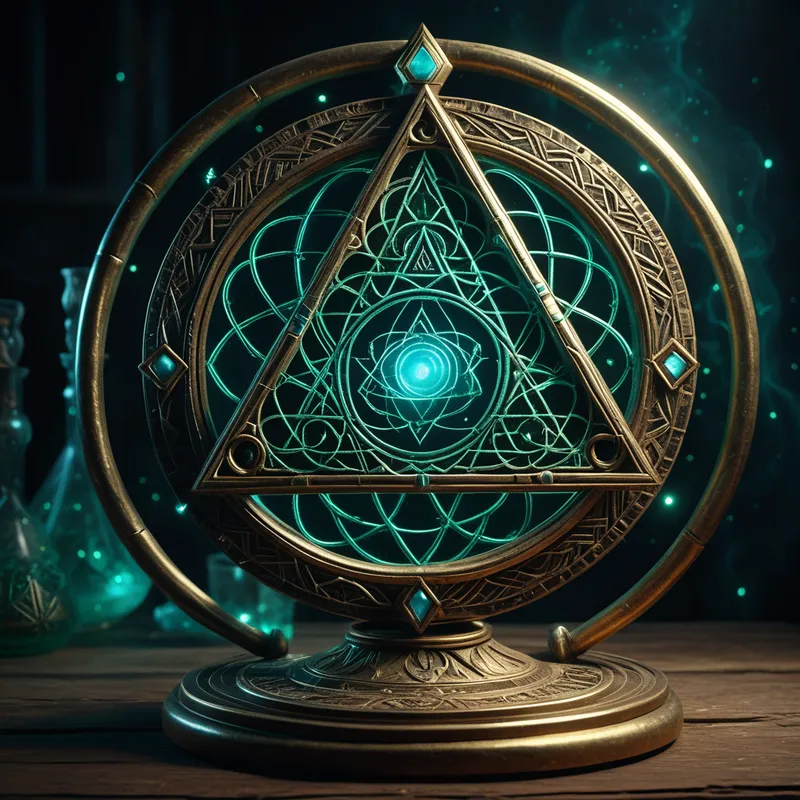
For the modern dreamer or psyche, the Manichaean myth resonates not as a literal cosmology, but as a profound metaphor for psychological integration. The stark dualism reflects a stage of consciousness where inner conflicts feel absolute and irreconcilable: good versus bad, spirit versus matter, intellect versus instinct. The dream of being trapped in a dark place, of seeking a lost light, or of battling shadowy figures mirrors the Primal Man’s struggle.
The myth warns of the peril of identifying wholly with one pole. To see oneself as only the captive light is to reject the body and the earthly experience, leading to dissociation. To identify with the dark, material prison is to succumb to nihilism and addiction. The healing lies in recognizing that the “cosmic battle” is internal. The work is not to destroy a part of oneself, but to undertake the careful, lifelong process of differentiation—separating authentic feeling from reactive impulse, conscious choice from compulsive behavior, much like the cosmic machinery seeks to separate light from dark matter. The goal is not the annihilation of the “dark,” but its rendering powerless to captivate and confuse the essential self.
Alchemical Translation
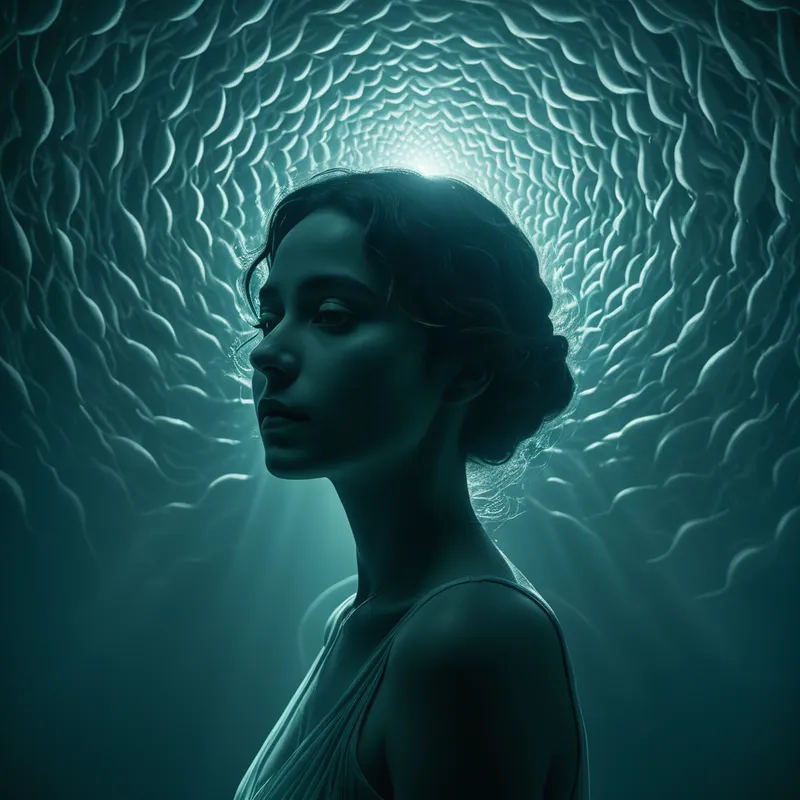
In alchemical terms, Manichaeism is the opus on a cosmic scale. The initial state is the massa confusa, the chaotic mixture of light and dark following the invasion. The fallen Primal Man, unconscious in matter, is [the divine spark](/myths/the-divine-spark “Myth from Gnostic culture.”/) buried in the leaden [prima materia](/myths/prima-materia “Myth from Alchemical culture.”/) of the world.
The Living Spirit’s construction of the cosmos is the Separatio—the establishment of the alembic and the beginning of the great distillation. The turning heavens are the rotating vessel, the sun and moon are the opposing yet complementary agents of sublimation and coagulation.
The human being is the alchemical vessel in miniature. [The ascetic](/myths/the-ascetic “Myth from Christian culture.”/) practices of the Elect—their strict control over diet, speech, and action—are the disciplines of calcination and purification, burning away the combustible “dark” passions to release the fixed, luminous spirit. The final conflagration is the [rubedo](/myths/rubedo “Myth from Alchemical culture.”/), the great reddening or purifying fire that yields the [lapis philosophorum](/myths/lapis-philosophorum “Myth from Alchemical culture.”/)—not a stone, but the fully redeemed, liberated Light itself, returned to its unified, golden state. The entire system is a spiritual alchemy where the soul is both the raw material and the ultimate product of the celestial laboratory.
Associated Symbols
Explore related symbols from the CaleaDream lexicon:
- Light — The fundamental substance of the divine realm and the imprisoned soul, representing pure consciousness, wisdom, and the ultimate object of salvation.
- Darkened Cheek — A symbol of the shame and grief of the fallen soul, its luminous nature bruised and obscured by its captivity in the material world.
- Primal Man — The divine warrior whose defeat and capture initiates the cosmic drama, representing the archetypal Hero who descends into darkness for a fateful struggle.
- Living Spirit — [The demiurge](/myths/the-demiurge “Myth from Gnostic culture.”/) as cosmic architect, fashioning the universe as a salvific machine from the substance of the defeated enemy.
- Moon — The “ship of light” or intermediate vessel that gathers liberated light particles from the earth, symbolizing the cyclical process of collection and reflection on the path to wholeness.
- Sun — The final ferryman of light, the purifying vessel that transports redeemed spirit back to its source, representing transcendent consciousness and the culmination of the journey.
- Tower — The structured cosmos itself, a complex edifice built for a specific, redemptive purpose, as well as the ascetic discipline required for liberation.
- Cave — The human body and the material world experienced as a confining prison, where the soul sits in forgetful captivity, awaiting the call to remember.
- Key — The gnosis (saving knowledge) brought by prophets like Mani, which unlocks the prison of matter and ignorance for the slumbering soul.
- Separation — The ultimate goal of the cosmic process: not destruction, but the final, eternal disentanglement of light from darkness, spirit from compulsive matter.
- Flickering Streetlight — The fragile, often intermittent awareness of the divine within the murky atmosphere of worldly life, a lone beacon in the psychic night.
- Cosmic Lighthouse — The entire apparatus of salvation—[the prophets](/myths/the-prophets “Myth from Biblical culture.”/), the teachings, the cosmic machinery—guiding the scattered sparks of light through the turbulent darkness back to their homeland.