
The Leprechaun's Pot Myth Meaning & Symbolism
A tale of a mortal's pursuit of a fairy's hidden gold, revealing that the greatest treasure is not found, but earned through a shift in consciousness.
The Tale of The Leprechaun’s Pot
Listen now, and let [the mist](/myths/the-mist “Myth from Celtic culture.”/) of the old world settle around you. In a time when [the veil](/myths/the-veil “Myth from Various culture.”/) between the mortal realm and the [Sídhe](/myths/sdhe “Myth from Celtic / Irish culture.”/) was thin as a cobweb, there lived a man named Dáire. His fields were stony, his hearth was cold, and his heart was heavy with a want that gnawed at his bones—a want for gold.
One twilight, as the last amber light bled into the hills, Dáire heard a sound like tiny, rhythmic bells. Peering through a thicket of [hawthorn](/myths/hawthorn “Myth from Celtic culture.”/), sacred and forbidden, he saw him. A wee man, no taller than a barley stalk, clad in a coat of emerald green so vivid it hurt the eye. He was a [leprechaun](/myths/leprechaun “Myth from Celtic culture.”/), and he was lost in his work, tapping a silver hammer upon a shoe smaller than a hazelnut. His concentration was absolute, a bubble of otherworldly focus in the quiet wood.
Dáire’s breath caught. The stories were true. With a lunge born of desperate hunger, he seized the tiny creature. The leprechaun squawked, a sound like a rusty hinge, and fixed Dáire with eyes that held the chill of deep, still pools. “Release me, great oaf!” he demanded, his voice dry as autumn leaves.
“Not,” growled Dáire, his grip tightening, “until you show me your pot of gold.”
The leprechaun’s anger cooled into a sly, calculating stillness. A smile, thin and sharp as a sickle moon, touched his lips. “Very well,” he sighed, a false note of defeat in his voice. “You have caught me fairly. My treasure lies at the end of the rainbow.”
“The rainbow’s end is nowhere and everywhere, trickster!” Dáire snapped.
“Then,” said the leprechaun, his eyes glinting, “it lies buried beneath the roots of that very tree.” He pointed a slender finger to a specific, gnarled old hawthorn at the edge of the clearing. Dáire’s heart hammered against his ribs. Gold. Real, heavy, life-changing gold.
But he had no spade. “I must fetch my shovel,” he said, mind racing. “Swear you will not move the gold. Swear by your name and your craft!”
The leprechaun gave a solemn, slow nod. “I swear by my hammer and my last, I will not touch the pot. But to mark the spot for your return…” He reached up and, with a touch like a moth’s wing, tied a single red thread from his waistcoat around a specific leaf on a low-hanging branch of the hawthorn. “There. Your beacon.”
Dáire, torn between suspicion and avarice, reluctantly released the fairy. The instant his hands were free, the leprechaun vanished—not with a pop, but with a fading chuckle that seemed to come from every direction at once. Dáire, not trusting the creature for a moment, tore the strip from his own cap and tied it around the same leaf, covering the red thread. “Now I have my own mark,” he muttered, and sprinted home for his spade.
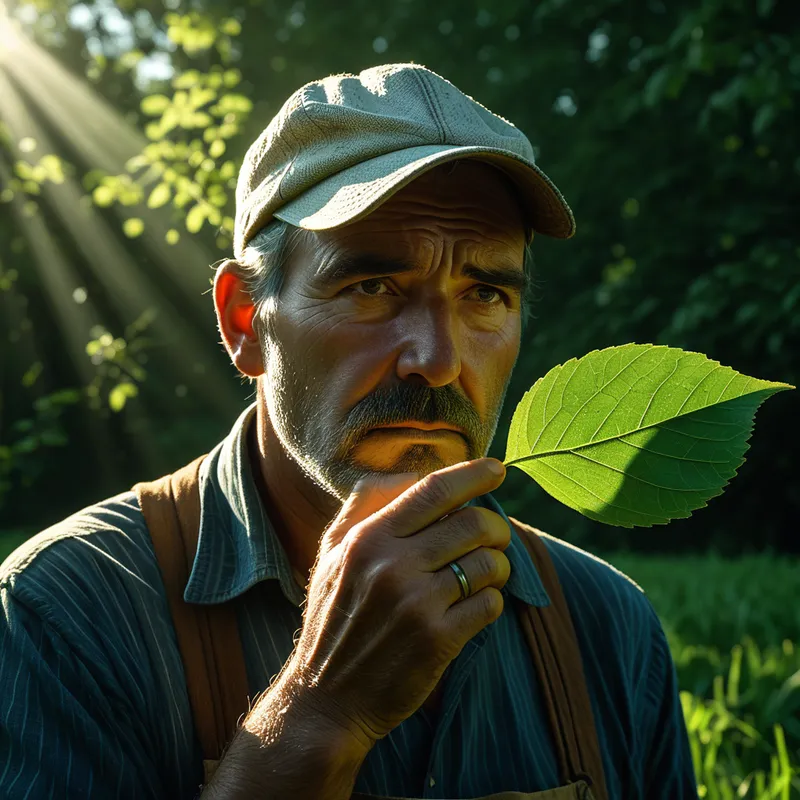
He returned, breathless, as [the moon](/myths/the-moon “Myth from Tarot culture.”/) rose. The clearing was bathed in silver. He ran to the hawthorn tree, his eyes searching for the marked leaf. And he froze. His blood turned to ice. Every leaf on every branch of the great, sprawling hawthorn… was now tied with an identical strip of dirty cloth. A thousand markers winked at him in the moonlight, a silent, mocking chorus of his own folly. The pot was lost. The gold was gone. And all that remained was the echo of a fairy’s laugh on [the wind](/myths/the-wind “Myth from Various culture.”/), and the profound, hollow silence of a lesson learned too late.
Cultural Origins & Context
This tale does not spring from the high myths of the Tuatha Dé Danann, but from the rich, oral soil of Irish folk tradition, passed down by the fireside for centuries. The leprechaun, or lobaircin (meaning “small-bodied fellow”), is a later, more localized figure of the Aos Sí. These stories were told by seanchaí (storytellers) not as sacred doctrine, but as communal wisdom and entertainment. Their function was multifaceted: to explain the uncanny, to enforce social norms against greed and disrespect for the natural and supernatural world, and to celebrate the cunning of the native culture in the face of hardship. The leprechaun, often a cobbler, represents a self-sufficient, hidden economy of the land, a keeper of secrets and old ways. To seek his gold is to attempt to plunder the soul of the land itself, a fool’s errand that always ends in a lesson.
Symbolic Architecture
The myth is a perfect, crystalline [allegory](/symbols/allegory “Symbol: A narrative device where characters, events, or settings represent abstract ideas or moral qualities, conveying deeper meanings through symbolic storytelling.”/) for the [psyche](/myths/psyche “Myth from Greek culture.”/)’s encounter with the unconscious. The leprechaun is the [trickster](/symbols/trickster “Symbol: A boundary-crossing archetype representing chaos, transformation, and the subversion of norms through cunning and humor.”/) [archetype](/symbols/archetype “Symbol: A universal, primordial pattern or prototype in the collective unconscious that shapes human experience, behavior, and creative expression.”/), a personification of the unpredictable, amoral, and ingenious [depths](/symbols/depths “Symbol: Represents the subconscious, hidden emotions, or foundational aspects of the self, often linked to primal fears or profound truths.”/) of the unconscious mind. He is not evil, but he operates by rules that defy [linear](/symbols/linear “Symbol: Represents order, predictability, and a direct, step-by-step progression. It symbolizes a clear path from cause to effect.”/), grasping [logic](/symbols/logic “Symbol: The principle of reasoning and rational thought, often representing order, structure, and intellectual clarity in dreams.”/).
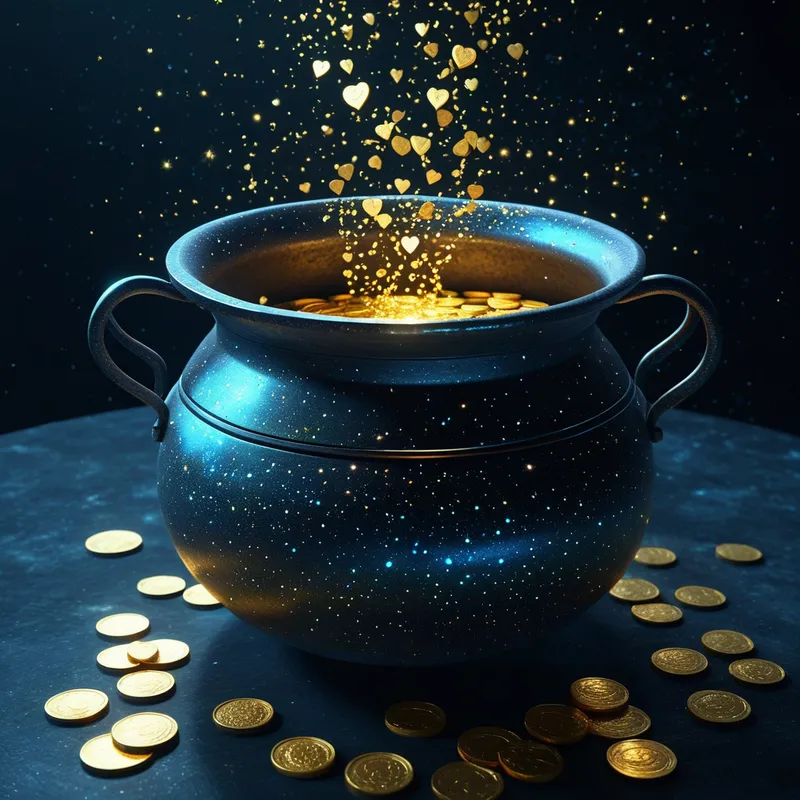
The pot of gold is the ultimate [symbol](/symbols/symbol “Symbol: A symbol can represent an idea, concept, or belief, serving as a powerful tool for communication and understanding.”/) of projected desire. It is not merely [wealth](/symbols/wealth “Symbol: Wealth in dreams often represents abundance, security, or inner resources, but can also symbolize burdens, anxieties, or moral/spiritual values.”/), but the imagined [solution](/symbols/solution “Symbol: A solution symbolizes resolution, clarity, and the overcoming of obstacles, often representing a sense of accomplishment.”/) to all of one’s problems, the fulfillment of every lack—the [Philosopher](/symbols/philosopher “Symbol: A seeker of wisdom and truth, representing deep contemplation, questioning reality, and the pursuit of fundamental knowledge about existence.”/)’s [Stone](/symbols/stone “Symbol: In dreams, a stone often symbolizes strength, stability, and permanence, but it may also represent emotional burdens or obstacles that need to be acknowledged and processed.”/) of the impoverished ego. It is always “elsewhere”: at the [rainbow](/symbols/rainbow “Symbol: Rainbows symbolize hope, promise, and the beauty found after turmoil, often viewed as a bridge between the earthly and divine.”/)’s end (an illusion of [perspective](/symbols/perspective “Symbol: Perspective in dreams reflects one’s viewpoints, attitudes, and how one interprets experiences.”/)) or buried (repressed in the unconscious).
The true treasure is not the gold, but the encounter with the trickster who guards it. The value is in the transformation demanded, not the object desired.
The critical [moment](/symbols/moment “Symbol: The symbol of a ‘moment’ embodies the significance of transient experiences that encapsulate emotional depth or pivotal transformations in life.”/)—the marking of the [leaf](/symbols/leaf “Symbol: A leaf symbolizes growth, renewal, and the cycles of life, reflecting both the natural world and personal transformations.”/)—is the pivot of the entire [drama](/symbols/drama “Symbol: Drama signifies narratives, emotional expression, and the exploration of human experiences.”/). Dáire believes he is securing a concrete symbol in the [material](/symbols/material “Symbol: Material signifies the tangible aspects of life, often representing physical resources, desires, and the physical world’s influence on our existence.”/) world. The leprechaun, understanding the fluid, symbolic [nature](/symbols/nature “Symbol: Nature symbolizes growth, connectivity, and the primal forces of existence.”/) of [reality](/symbols/reality “Symbol: Reality signifies the state of existence and perception, often reflecting one’s understanding of truth and life experiences.”/) itself, simply replicates the symbol to [infinity](/symbols/infinity “Symbol: A mathematical and philosophical symbol representing endlessness, eternity, and limitless potential.”/). He demonstrates that when [the ego](/myths/the-ego “Myth from Jungian culture.”/) tries to pin down the numinous content of the unconscious with a literal sign, the unconscious responds by proliferating meaning until the ego is lost in a hall of mirrors. The gold was never meant to be physically possessed; it was an [invitation](/symbols/invitation “Symbol: An ‘Invitation’ symbolizes opportunities, connections, or decisions awaiting the dreamer.”/) to a different kind of seeing, which Dáire failed.
The Dreamer’s Resonance
When this myth pattern arises in modern dreams, it signals a profound psychological process. To dream of desperately pursuing a hidden treasure, only to have it vanish or transform at the last moment, is somatic. One may wake with a clutch of anxiety in the chest, a literal “heart-sink” feeling. This is the ego’s frustration at failing to capture a complex, unconscious content—a nascent talent, a repressed memory, a spiritual insight—and reduce it to a simple, usable “[thing](/myths/thing “Myth from Norse culture.”/)” (a new job, a relationship, a sum of money).
The leprechaun in a dream is the personification of the psyche’s self-regulating function. His trickery is therapeutic. He is sabotaging the dreamer’s ego-driven plan because that plan, if successful, would be a form of psychic theft. It would loot a deep, symbolic value (the gold) for a shallow, literal one, killing its transformative power. The dream is a warning that one’s current approach to a deep desire is greedy, linear, and destined to end in disorientation and loss.

Alchemical Translation
The alchemical journey mirrored here is the [nigredo](/myths/nigredo “Myth from Alchemical culture.”/)—the blackening, the failure, the utter confusion that is the necessary first stage of transmutation. Dáire’s literal-minded pursuit is the [prima materia](/myths/prima-materia “Myth from Alchemical culture.”/), the base lead of the ego’s greed. His crushing failure in the moonlit clearing is the putrefaction, where the old, greedy consciousness dies.
The individuation process begins not with finding the gold, but with losing it absolutely, and being forced to sit in the bewildering darkness of that loss.
For the modern individual, the “pot of gold” might be the fantasy of perfect happiness via external achievement. The leprechaun’s intervention—the proliferation of markers—forces a crisis. It asks: What if your map to fulfillment is wrong? What if the treasure isn’t where you’re digging? The alchemical work is to stop digging, to turn attention from the thousand false markers back to [the self](/myths/the-self “Myth from Jungian culture.”/). The true transmutation is the shift from seeking to possess the gold (the integrated Self) to engaging with the guardian of the gold (the tricky, intelligent unconscious).
The leprechaun, as trickster, is the necessary [Mercurius](/myths/mercurius “Myth from Alchemical culture.”/) of the soul. He cannot be outwitted by egoic cunning, only related to with respect, humor, and a willingness to be fooled. The one who finally “wins” is not the one who gets the gold, but the one who learns the rules of the game, who understands that the treasure is the wisdom gained in the playful, frustrating, and ultimately sacred engagement with the elusive, crafting spirit at the root of one’s own being. The pot’s contents are not coins, but the liquid light of a transformed perspective.
Associated Symbols
Explore related symbols from the CaleaDream lexicon: