
The Landlord in the Parable of the Tenants Myth Meaning & Symbolism
A powerful landowner sends his son to collect the harvest, only for the tenants to seize and kill him, revealing a crisis of authority and belonging.
The Tale of The Landlord in the Parable of the Tenants
Listen. There was a man, a householder, who planted a vineyard.
He did not do this lightly. With his own hands, he chose the slope of the hill where the sun would linger. He set a hedge of thorns to keep out the wild boar, and hewed a winepress from the living rock, its hollow soon to run purple. He built a watchtower of stone, a sentinel against thieves and foxes. Then, when the vines were tender shoots promising a future of sweetness, he leased his masterpiece to tenants. He journeyed to a far country, leaving the fruit in their care.
The seasons turned. The grapes swelled, deep and dark. The time of harvest came, and the heart of the householder turned toward his land. He sent his servants to the tenants to collect his fruit.
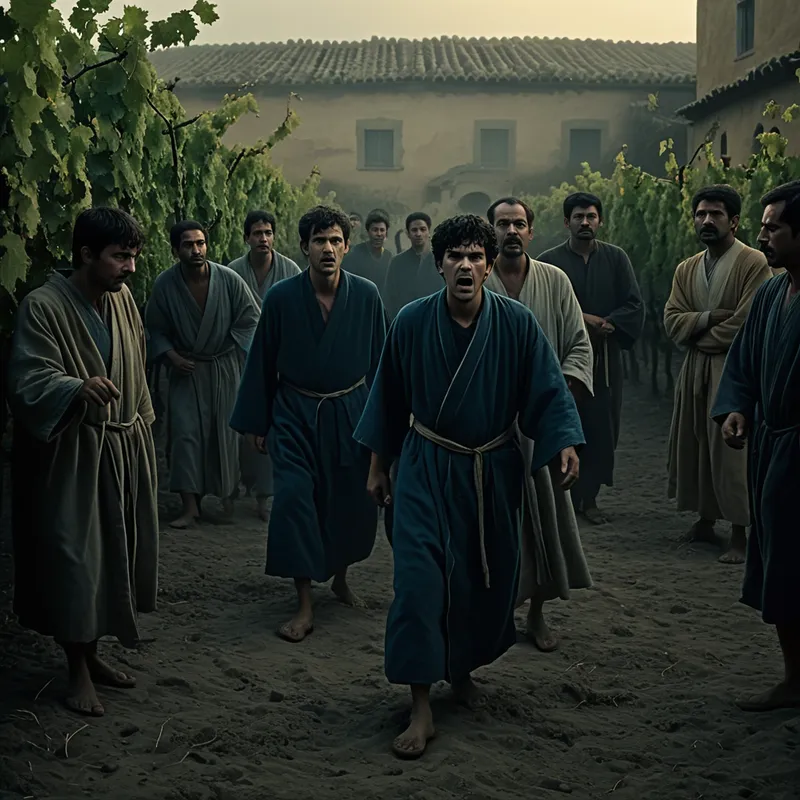
But the tenants had grown accustomed to the vineyard. The sun on the leaves felt like their sun. The juice in the press felt like their reward. When the servants came, they saw not emissaries of the rightful owner, but thieves coming to steal what they had cultivated. So they seized one servant, beat him, and sent him away empty. They stoned another. They killed a third.
Still, the householder was patient, a patience as deep and terrible as the sky. He sent other servants, more than the first. The tenants treated them in the same way.
Finally, the householder sent his son. "They will respect my son," he said to himself, the words hanging in the silent room of his distant home. For the son was the very image of the father, the heir to all things.
But when the tenants saw the son approaching the vineyard gate, they did not see an heir. They saw their final obstacle. "This is the heir," they whispered to one another, their eyes gleaming not with respect, but with a frantic, covetous calculus. "Come, let us kill him and seize his inheritance." So they laid hands on him, dragged him out of the vineyard, and killed him.
Now, what will the owner of the vineyard do?
He will come. He will destroy those tenants. And he will give the vineyard to others.
Cultural Origins & Context
This story is not a folktale but a parable, spoken by Jesus of Nazareth in the final days of his life, as recorded in the synoptic gospels (Matthew, Mark, and Luke). Its audience was a mixed crowd in the temple courts of Jerusalem, including religious authorities who perceived its target. In the tense atmosphere of first-century Judea, under Roman occupation, stories of absentee landlords and rebellious tenants were not mere fiction; they reflected a lived economic and political reality. The parable, however, transposed this reality into a prophetic and theological key.
It functioned as a pointed allegory directed at the religious establishment of the day. The vineyard was a well-established symbol for Israel (see Isaiah 5). The servants were the prophets, historically rejected and persecuted. The son was Jesus himself. The parable was a devastating critique of a system that had forgotten it was tenanted, not owned—a warning about the violent rejection of divine messengers and the ultimate consequence of claiming an inheritance that is not yours by right of creation. It was a story of impending, catastrophic transition.
Symbolic Architecture
At its core, this myth is a stark map of projection, possession, and the murder of the new.
The Landlord represents the transcendent source, the Self in its wholeness. He is not a micromanager but a grantor of freedom and responsibility. The vineyard is the given world—our life, our talents, the cultural and psychic inheritance into which we are born. It is fertile, structured, and capable of yielding a sacred harvest: a life of meaning.
The tragedy begins not with rebellion, but with amnesia. The tenants forget they are tenants.
The servants and the son symbolize the disturbing, recurring voice of the authentic Self. They are the calls to accountability, the moments of conscience, the insights from dreams, the painful truths spoken by others, the creative impulses that ask for our yield. The tenants’ escalating violence—from beating, to stoning, to killing—charts the psyche’s defense mechanisms when its illusion of ownership is threatened. We rationalize away the servant (the minor insight). We stone the next (attack the bearer of truth). Finally, we murder the son—the ultimate, integrative symbol of the new consciousness, the heir to our own potential wholeness.
The killing outside the vineyard is the crucial detail. They cannot integrate the heir, so they cast him out of the bounded system of their identity and destroy him there. This is the psychic murder of one’s own future, one’s own destiny, to preserve a temporary, fraudulent sovereignty.

The Dreamer's Resonance
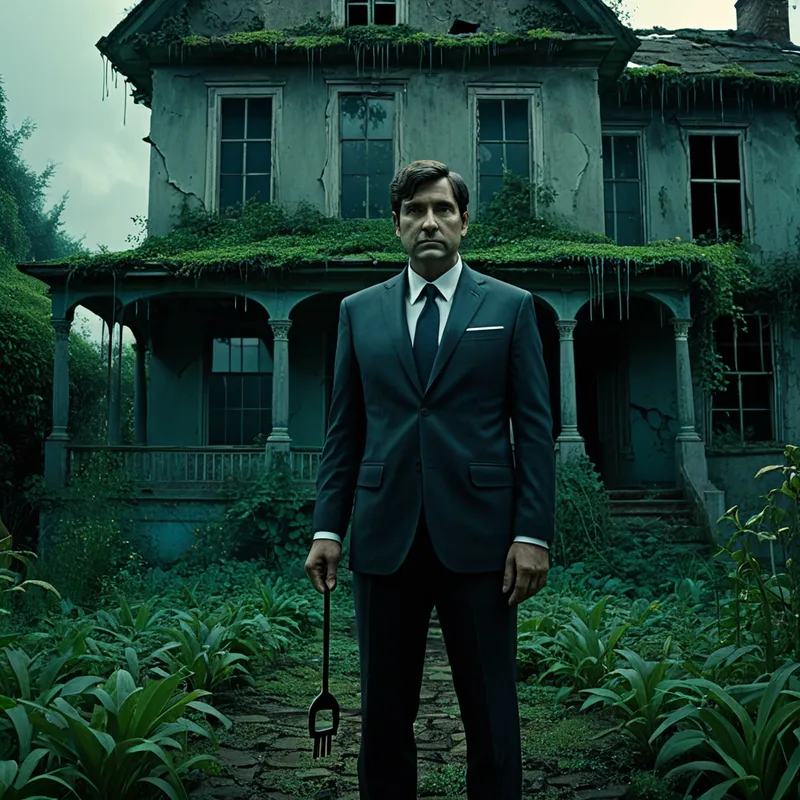
When this myth stirs in the modern soul, it rarely appears as biblical imagery. Instead, the dreamer may find themselves in a neglected house they are supposed to be managing, but which is overrun by squatters or hostile roommates. They may be at work, tasked with delivering an important message (the servant’s role), only to be met with blank, hostile stares or outright sabotage. The central dream-feeling is one of fraudulent stewardship and dread of the rightful claimant.
Somatically, this can manifest as a tightness in the chest—a clutching, possessive anxiety. The psychological process is one of confronting the shadow of the ruler archetype in its corrupted form: the usurper. The dreamer is both the terrified tenant, afraid of being exposed as a fraud, and the absent landlord, disconnected from their own property. The dream signals a critical point: the psyche is sending its “son,” its most integrated and vulnerable new possibility, toward consciousness. The ego’s tenant-structure is panicking, preparing a violent rejection to maintain its cramped, familiar control.
Alchemical Translation
The alchemical work modeled here is the transmutation of the tenant into the faithful steward. It is the journey from claiming “This is mine!” to declaring “This is entrusted to me.”
The first operation is recognizing the leasehold. Psychological adulthood begins with the shocking, humbling realization that nothing in the psyche is originally ours. Our talents, our complexes, our very bodies are on loan from a source that precedes the ego. We are caretakers of a mystery.
The killing of the son represents the nigredo, the darkest hour. It is the moment when the ego, in its terror, destroys the very new synthesis that could save it. This is a necessary, if brutal, stage. One must experience the catastrophic consequence of one’s possessiveness—the inner wasteland that follows the murder of potential.
The coming of the Landlord is not a vengeful punishment, but the inevitable return of wholeness. It is the psyche’s auto-correct function, dissolving the tyrannical ego-complex (the wicked tenants) that blocks the flow of life.
The vineyard given to “others” is the final, hopeful stage. It signifies the redistribution of psychic energy to new attitudes, to a consciousness capable of bearing the truth of its tenancy. The heir may be dead, but the principle of heirship cannot be destroyed. The alchemist must introject the slain son, becoming the humble, resurrected steward who tends the vineyard knowing it is a sacred trust. The harvest is no longer for the small self’s hoarding, but an offering back to the vastness from which it came. In this, the tenant finds their true inheritance: not possession, but blessed participation.
Associated Symbols
Explore related symbols from the CaleaDream lexicon: