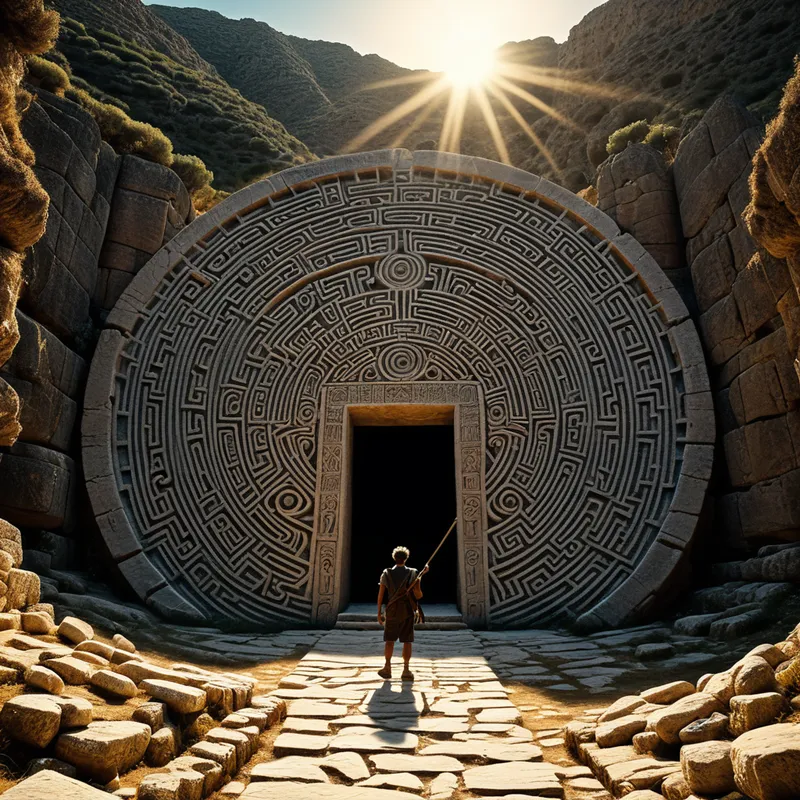
The Labyrinth of King Minos Myth Meaning & Symbolism
A hero enters a monstrous maze to confront a beast born of divine transgression, navigating impossible turns to find the thread of his own salvation.
The Tale of The Labyrinth of King Minos
Hear now the tale of a king’s shame and a hero’s trial, of stone that breathes and a beast that weeps. In the wine-dark sea, on the isle of Crete, there ruled a king named [Minos](/myths/minos “Myth from Greek culture.”/). His power was great, his navy unmatched, but his house was built upon a broken oath. He prayed to [Poseidon](/myths/poseidon “Myth from Greek culture.”/) for a sign of favor, and the god sent from the foaming waves a bull, pure white and magnificent, a creature of the divine sea itself. This bull was to be sacrificed in [Poseidon](/myths/poseidon “Myth from Greek culture.”/)’s name, but [Minos](/myths/minos “Myth from Greek culture.”/), coveting its perfection, hid it among his herds and slew another in its place.
The salt of [the sea](/myths/the-sea “Myth from Greek culture.”/) turned to wrath in Poseidon’s heart. His vengeance was not a thunderbolt, but a terrible enchantment. He made Pasiphaë, the queen of Crete, burn with an unnatural desire for the white bull. From this cursed union, engineered by the artificer Daedalus, was born a creature of two natures: the body of a powerful man and the head and tail of a bull. He was the [Minotaur](/myths/minotaur “Myth from Greek culture.”/), Asterion, whose bellow was not of language but of raw, trapped hunger.
King Minos, to hide his wife’s sin and contain the monster, commanded Daedalus to build a prison from which none could escape. And so Daedalus, his genius turned to a dark purpose, conceived the [Labyrinth](/myths/labyrinth “Myth from Various culture.”/). It was not merely a maze, but a living puzzle of stone, a winding, turning, coiling confusion of corridors where every path looked like the last, where echoes died at your feet, and the very walls seemed to shift with the shadows of a single torch. At its unknowable heart, they placed [the Minotaur](/myths/the-minotaur “Myth from Greek culture.”/), and into its twisting belly, they fed him. For Minos had waged war on Athens and won a grievous tribute: seven youths and seven maidens, sent every nine years to be lost in the dark and devoured.
This was [the world](/myths/the-world “Myth from Tarot culture.”/)’s order, a cycle of fear and consumption, until the son of the Athenian king, [Theseus](/myths/theseus “Myth from Greek culture.”/), stepped forward. “I will go,” he said, “and I will end this.” His father begged him not to, but the hero’s will was iron. He sailed to Crete with the black-sailed ship of mourning. There, in the court of Minos, the king’s daughter Ariadne saw him, and love, that other great architect of fate, struck her heart. She sought out Daedalus, the builder, and he gave her the secret: a simple skein of thread.
As Theseus was forced into the mouth of [the Labyrinth](/myths/the-labyrinth “Myth from Greek culture.”/), Ariadne pressed the ball into his hand. “Tie one end here, at the entrance,” she whispered. “Let it unravel as you walk. It will remember [the way](/myths/the-way “Myth from Taoist culture.”/) when you cannot.” Into the suffocating dark he went, the stone cold and damp under his feet, the only sound the scrape of his sandals and the distant, echoing snort of the beast. The thread spun out behind him, a fragile, glowing line in the gloom, the sole testament to a world outside. He walked for what felt like days, the turns doubling back on themselves, hope curdling into despair. Then, in a chamber that felt like the crushed center of [the earth](/myths/the-earth “Myth from Hindu culture.”/), he found it—the Minotaur, sleeping amidst bones.
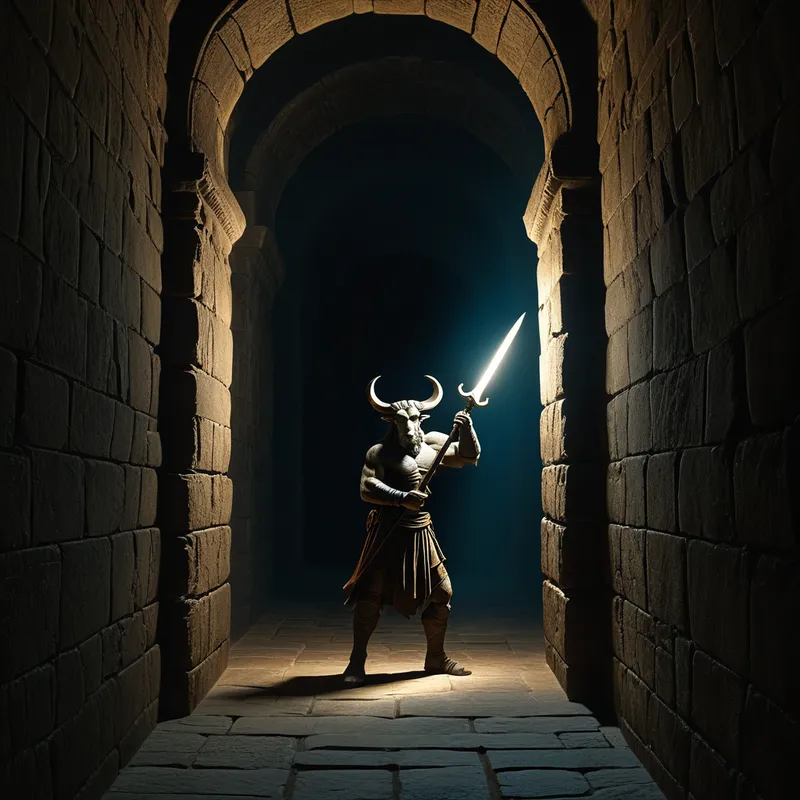
The fight was not glorious; it was primal, a grappling in the dark, the stench of beast and blood, the clash of bronze on horn. With strength and the favor of the gods, Theseus prevailed. Then, breathless and stained, he did the only [thing](/myths/thing “Myth from Norse culture.”/) more heroic than the killing: he remembered the thread. He followed the slender, blood-spattered line back through the winding stone intestine, past the ghosts of the lost, back to the blinding light of the world, pulling his future behind him.
Cultural Origins & Context
The myth of the Labyrinth is a foundational story of the ancient Greek world, most comprehensively recorded in later sources like Plutarch’s Life of Theseus, but its roots are far older and murkier. It is widely believed to be a mythological echo of the magnificent, complex palace complexes of the historical Minoan civilization on Crete (c. 2700–1100 BCE). To mainland Greeks like the later Mycenaeans and Classical Athenians, the vast, multi-leveled palace of Knossos, with its countless rooms and corridors, may have seemed like an impenetrable maze. The myth thus functions as a narrative “conquest” of an older, powerful, and somewhat mysterious culture by the rising heroic archetype of Athens.
The story was not static scripture but a living epic, performed by bards and playwrights. It served multiple societal functions: as an etiological myth explaining Athenian maritime dominance (free from Minos’s tribute), as a charter for the heroic ideal of cunning ([metis](/myths/metis “Myth from Greek culture.”/)) paired with courage, and as a profound ritual narrative. The labyrinth itself may correlate with initiatory or funerary rites, where the neophyte or soul undergoes a symbolic death (entering the maze), confronts a shadow (the Minotaur), and is reborn (exiting). The tribute cycle of nine years further ties it to cosmic and agricultural rhythms, making it a story about the necessary, terrifying renewal of the social and natural order.
Symbolic Architecture
The [Labyrinth](/symbols/labyrinth “Symbol: The labyrinth represents a complex journey, symbolizing the intricate path toward self-discovery and understanding one’s life’s direction.”/) is the myth’s central [symbol](/symbols/symbol “Symbol: A symbol can represent an idea, concept, or belief, serving as a powerful tool for communication and understanding.”/), and it is not a [maze](/symbols/maze “Symbol: A maze represents confusion, complexity, or a search for truth, often reflecting life’s challenges or inner turmoil.”/). A maze offers choices, dead ends, and puzzles for the intellect. The classical Labyrinth, like the one on the [floor](/symbols/floor “Symbol: The floor in dreams often symbolizes the foundation of one’s life or psyche, representing stability, grounding, and the underlying structures of our experiences.”/) of Chartres [Cathedral](/symbols/cathedral “Symbol: A monumental religious structure representing spiritual aspiration, divine connection, and the intersection of human achievement with sacred purpose.”/), is a unicursal [path](/symbols/path “Symbol: The ‘path’ symbolizes a journey, choices, and the direction one’s life is taking, often representing individual growth and exploration.”/)—a single, winding, but ultimately inevitable route to the center and back out.
The Labyrinth is not a puzzle to be solved, but a path to be walked. It represents the convoluted, often terrifying, but singular journey into the heart of the Self.
The [Minotaur](/symbols/minotaur “Symbol: The Minotaur, a creature from Greek mythology, is often interpreted as a symbol of inner turmoil and the struggle between human and beast.”/) is the occupant of that [heart](/symbols/heart “Symbol: The heart symbolizes love, emotion, and the core of one’s existence, representing deep connections with others and self.”/). He is the monstrous [child](/symbols/child “Symbol: The child symbolizes innocence, vulnerability, and potential growth, often representing the dreamer’s inner child or unresolved issues from childhood.”/) of a broken sacred contract (Minos’s [oath](/symbols/oath “Symbol: A solemn promise or vow, often invoking a higher power or sacred principle, binding individuals to specific actions or loyalties.”/)) and unnatural desire. Psychologically, he is the [Shadow](/symbols/shadow “Symbol: The ‘shadow’ embodies the unconscious, repressed aspects of the self and often represents fears or hidden emotions.”/) in its most raw and untamed form—the bestial, hungry, shameful progeny of our own hubris and repressed instincts. He is not evil from [birth](/symbols/birth “Symbol: Birth symbolizes new beginnings, transformation, and the potential for growth and development.”/); he is born of context and imprisoned, forced to become the very [monster](/symbols/monster “Symbol: Monsters in dreams often symbolize fears, anxieties, or challenges that feel overwhelming.”/) he is named. Theseus, the heroic ego, does not go to reason with the [Minotaur](/symbols/minotaur “Symbol: The Minotaur, a creature from Greek mythology, is often interpreted as a symbol of inner turmoil and the struggle between human and beast.”/) or redeem him; he goes to slay him. This represents the necessary, violent confrontation with a complex that has grown too powerful and destructive to be integrated peacefully.
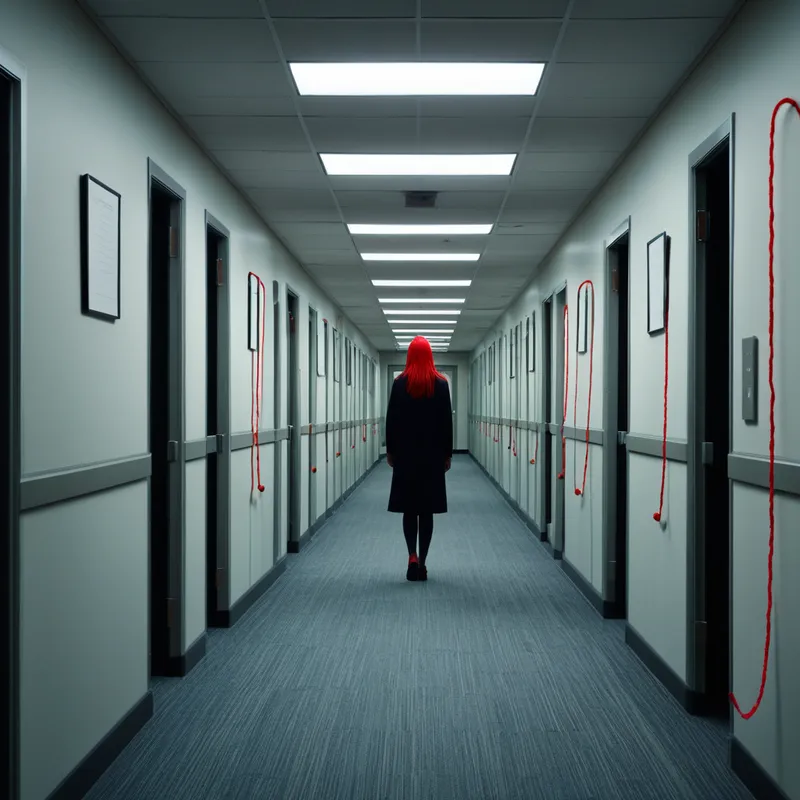
Ariadne’s thread is the symbol of relatedness and [memory](/symbols/memory “Symbol: Memory symbolizes the past, lessons learned, and the narratives we construct about our identities.”/). It is the [connection](/symbols/connection “Symbol: Connection symbolizes relationships, communication, and bonds among individuals.”/) to [consciousness](/symbols/consciousness “Symbol: Consciousness represents the state of awareness and perception, encompassing thoughts, feelings, and experiences.”/), to love, to the guiding principle ([logos](/myths/logos “Myth from Christian culture.”/)) that prevents total [dissolution](/symbols/dissolution “Symbol: The process of breaking down, dispersing, or losing form, often representing transformation, release, or the end of a state of being.”/) in the [chaos](/symbols/chaos “Symbol: In Arts & Music, chaos represents raw creative potential, uncontrolled expression, and the breakdown of order to forge new artistic forms.”/) of the unconscious (the maze). It is the therapeutic [alliance](/symbols/alliance “Symbol: A formal or informal union between individuals or groups for mutual benefit, support, or protection.”/), the spiritual practice, the creative project—the thin, vital line that allows for return and reintegration after the descent.
The Dreamer’s Resonance
When this myth pattern stirs in the modern dreamer, it rarely appears as a classical stone maze. Instead, one dreams of being lost in an endless, shifting bureaucracy; wandering the identical halls of a childhood home that expands infinitely; or trying to navigate a complex, high-stakes problem where every solution leads back to the start. The somatic feeling is one of mounting dread, claustrophobia, and profound disorientation—the gut-knowledge that you are circling something central and dangerous.
The Minotaur in dreams is the feeling of a looming, half-seen presence around the next corner. It is the boss, the addiction, the repressed memory, the childhood trauma, or the overwhelming aspect of your own personality that feels “monstrous” and all-consuming. The dream is mapping a psychological process of approaching a core complex. The anxiety is not a sign of failure, but of the [psyche](/myths/psyche “Myth from Greek culture.”/) preparing for a necessary confrontation. The dream asks: What is at the center of your personal labyrinth? What hungry, neglected, or shamed part of yourself have you been feeding with sacrifices of your own vitality?
Alchemical Translation
The myth models the alchemical process of individuation, the psychic transmutation of the lead of the fragmented self into the gold of the integrated Self. The journey has distinct stages:
- The Voluntary Descent ([Nigredo](/myths/nigredo “Myth from Alchemical culture.”/)): Theseus chooses to go. This is the crucial, conscious decision to engage with one’s own darkness, to enter therapy, or to begin a serious spiritual or creative endeavor. It is the beginning of the “dark work.”
- The Navigation with the Thread (Meditatio): The hero does not rely on brute force alone. He uses the thread—symbolizing consciousness, insight, and the Eros principle (via Ariadne). This is the stage of analysis, reflection, and holding onto a guiding truth amidst confusion.
- The Confrontation (Mortificatio): The battle with the Minotaur is a symbolic death. The old, monolithic complex—the “monster” that has dictated behavior—must be dismantled. This is often experienced as a crisis, a breakdown, or a fierce internal struggle.
- The Return (Albedo & [Rubedo](/myths/rubedo “Myth from Alchemical culture.”/)): Following the thread back out is as vital as the slaying. It is the integration of the insight gained, the bringing of the unconscious material back into the light of day. Theseus emerges changed, but he must then navigate the consequences (abandoning Ariadne, forgetting the black sails). The process is complete, but life continues.
The ultimate triumph is not the death of the beast, but the reclamation of the labyrinth. By walking its path consciously, we cease to be its lost victim and become the sovereign of our own inner landscape.
The myth teaches that the monster in the center is, in part, our own creation, born of broken oaths to our deeper nature. And the way out is not by avoiding the twists and turns, but by laying down a thread of unwavering awareness as we walk courageously into the dark.
Associated Symbols
Explore related symbols from the CaleaDream lexicon: