The labyrinth of Daedalus—a st Myth Meaning & Symbolism
A master architect builds an inescapable maze to contain a monstrous secret, only to be imprisoned within his own creation alongside his son.
The Tale of The labyrinth of Daedalus—a st
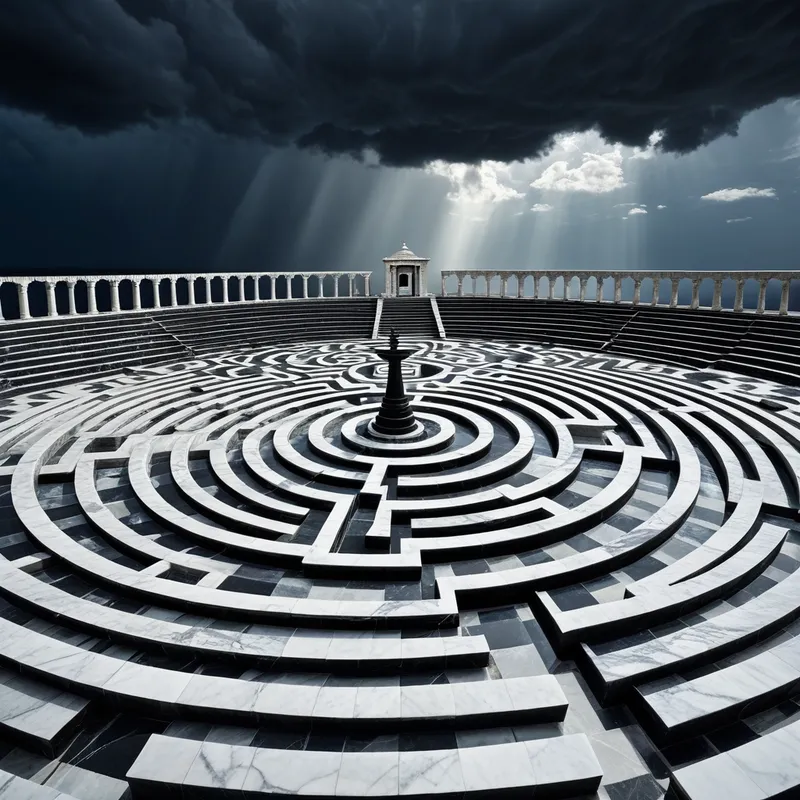
Hear now of the cunning of hands and the prison of the mind. In the age when gods walked close and kings were like tempests, there lived Daedalus, whose name means “cunningly wrought.” His mind was a workshop where no problem found a door, only solutions, elegant and terrible. His fame was a beacon, drawing the gaze of Minos, ruler of the sea-girt isle of Crete, a king whose power was absolute and whose shame required a vault.
For the queen, Pasiphaë, had been cursed with a monstrous desire, and from that union was born a creature of rage and hunger: the Minotaur, Asterion. Its bellow was the sound of a kingdom’s secret sin. King Minos, cloaking shame in royal decree, commanded Daedalus: “Build me a container. Not a cage of iron, but a confusion of stone. A place where this… problem may be lost, and our honor preserved.”
And so Daedalus bent his genius to the task. Upon the dry earth of Knossos, he conceived not a building, but a brain made of limestone corridors. The Labyrinth. It was his masterpiece. No mere maze of hedges, but a three-dimensional riddle, a path that turned back upon itself, where up was down and left led only to a previous right. The walls, cool and smooth, whispered of dead ends. The very air grew thick with the despair of forgotten directions. Into its heart, the bellowing Minotaur was placed, and the single, heavy door was shut. The kingdom sighed in relief. The secret was buried.
But secrets have a gravity, and they pull their keepers close. Daedalus, the architect of confinement, knew the turns too well. For this, or for some other slight against the king’s will, Minos’s gratitude turned to wrath. The master and his young son, Icarus, whose eyes still held the light of the open sky, were cast into the topmost tower of the palace. It was a gilded cage, overlooking the sea they could not touch. The Labyrinth held the monster of flesh; the tower held the monster of the mind—Daedalus’s own boundless, trapped ingenuity.
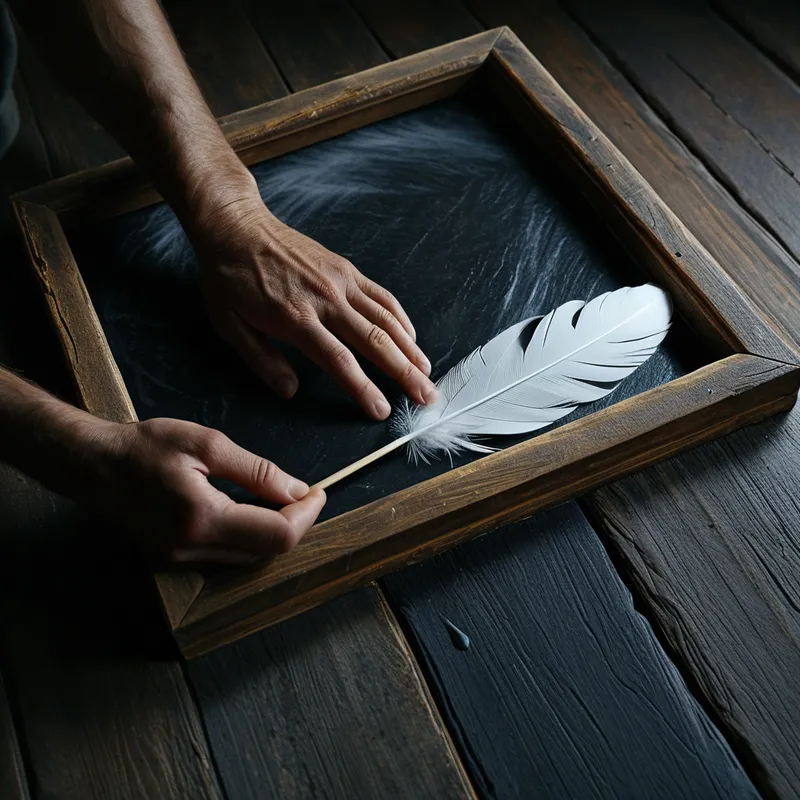
Daedalus looked out at the gulls riding the winds, and his cunning, denied earth, took to the air. “Minos may control the land and sea,” he said, his voice low as he gathered feathers fallen from the sky, “but the air is not yet his kingdom.” With wax and thread and profound care, he fashioned two pairs of wings, vast and trembling. As he fastened the last strap to his son’s shoulders, his warning was the lesson of the Labyrinth made manifest: “Follow my path through the sky. Do not fly too low, lest the sea’s damp clog your feathers. Do not fly too high, lest the sun’s fire melt their bond.”
The moment of escape was a silent leap from the cliff’s edge into the arms of the wind. For a glorious, suspended time, it worked. They were free, two strange birds over the wine-dark sea. But the Labyrinth does not only exist in stone. Icarus, drunk on the ecstasy of liberation and the sun’s brilliant call, forgot the prescribed path. He soared upward, the wax softening, flowing, failing. One feather, then a dozen, then a storm of plumes. His cry was not of fear, but of sudden, shocking descent, before the sea swallowed him whole. Daedalus, the creator, flew on, his victory ash in his mouth, to a lonely exile. The maze he built to contain a monster had finally claimed its true, unintended victim: his own future.
Cultural Origins & Context
The myth of Daedalus and the Labyrinth is a cornerstone of the ancient Greek storytelling tradition, most comprehensively preserved in the later works of Roman poets like Ovid, though its roots are palpably Minoan. It functions as an aetiological myth for the breathtaking, complex palace ruins of Knossos on Crete, which so confounded later Greek visitors that they could only imagine it as the home of a monster. The story was not merely entertainment; it was a cultural narrative wrestling with profound themes of the Bronze Age and Classical world: the perilous relationship between innovation and political power, the consequences of unnatural acts (hubris against the gods, as with Pasiphaë), and the father-son dynamic as a vehicle for transmitting wisdom and failure.
Passed down by bards and later codified by scholars, the myth served as a cautionary tale about the limits of human ingenuity. Daedalus represents the ultimate technites, whose art can solve any problem, yet cannot save him from the moral and emotional consequences of his creations. In a society deeply concerned with order, boundary, and propriety, the Labyrinth is the ultimate symbol of disorder contained, while Icarus’s flight is the catastrophic result of boundaries transgressed.
Symbolic Architecture
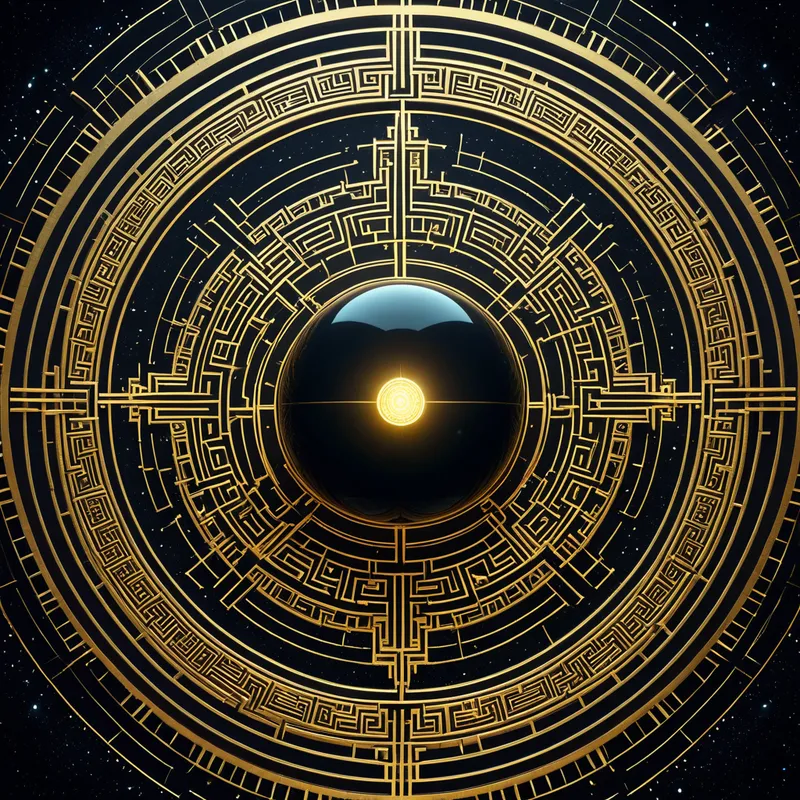
At its core, the Labyrinth is not a maze. A maze is a puzzle with false turns and dead ends, designed to confuse. The classical, unicursal labyrinth—a single, winding but non-branching path to a center—is a different symbol entirely. It is a mandala</ab- br> for the feet, a convoluted but guaranteed path to the deepest self.
The monster in the center is not what we run from, but what we must, inevitably, meet.
Daedalus’s creation, however, is the maze—the modern, multicursal, and treacherous one. It symbolizes the complex, self-created prisons of the psyche: obsessive thought patterns, convoluted lies, addictive behaviors, the intricate defenses we build to hide our own personal Minotaur—the repressed, shameful, or “monstrous” aspect of ourselves we refuse to integrate. Daedalus is the ego at its most brilliant, constructing ever more sophisticated ways to avoid a central, painful truth.
Icarus represents the youthful, impulsive spirit—the libido or pure desire—that seeks absolute freedom without wisdom. His flight is the inflation that follows a brilliant escape plan; his fall is the necessary correction, the reality principle reasserting itself. The tragedy is not the escape attempt, but the failure to navigate the middle way, the disciplined path between the oceanic unconscious (the sea) and the burning, inflating consciousness (the sun).
The Dreamer’s Resonance
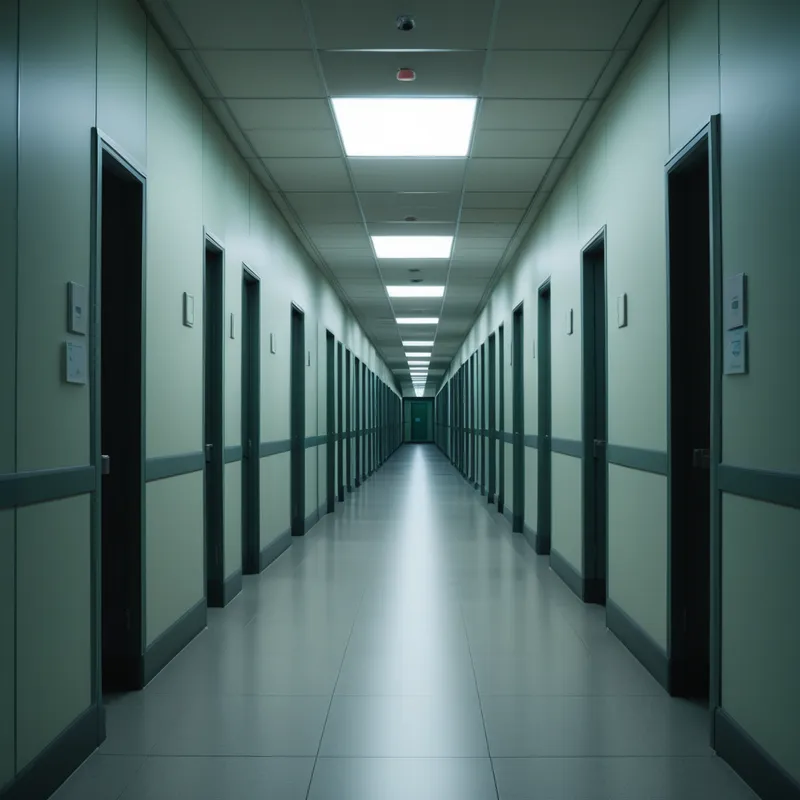
When the Labyrinth appears in modern dreams, it rarely manifests as a Cretan palace. It is the endless, repeating hallway of a school or office building where the dreamer is late for a critical exam or meeting. It is the suburban sprawl where every street looks the same. It is the tangled logic of a problem at work that has no solution. The somatic feeling is one of mounting anxiety, claustrophobia, and frustrated effort—the body itself feeling the futility of the mental maze.
This dream signals a psyche caught in a complex of its own making. The dreamer is likely embroiled in a situation where overthinking, over-planning, or deceptive self-narrative has created an impasse. The Minotaur’s roar, heard faintly in the distance, is the growing pressure of the ignored truth—a repressed emotion, a denied responsibility, a hidden aspect of the personality—demanding acknowledgment. The dream is a call to stop trying to solve the maze with the same cunning that built it, and instead to find a fundamentally new perspective, to “take to the air,” even at great risk.
Alchemical Translation
The myth models the full arc of psychic transmutation, or individuation. It begins in the nigredo, the blackening: the shameful birth of the Minotaur (the shadow) and its imprisonment (repression). Daedalus’s construction of the Labyrinth is the ego’s brilliant, laborious effort to organize and contain the chaos, a necessary but ultimately flawed stage.
The imprisonment in the tower is the crisis that forces the albedo, the whitening—a purification through limitation. Here, the material of the problem (feathers, wax) is gathered and painstakingly re-worked. The crafting of wings represents the synthesis of a new tool, a transcendent function born from the union of earthy craft (feathers, wax) and aerial inspiration (the idea of flight).
The escape is not from the monster, but from the identity of the monster’s keeper.
The flight itself is the risky, sublime stage of citrinitas, the yellowing, where the new consciousness is tested. Icarus’s failure is a partial, tragic integration; he is absorbed by the unconscious (the sea). Daedalus’s survival is the painful rubedo, the reddening. He achieves liberation, but carries the indelible stain of loss and the wisdom of limits. He is no longer just the brilliant artificer, but the grieving father who has learned that creation always carries the seed of destruction, and that true freedom requires navigating the precise, humble path between the depths and the heights. The maze is not solved; it is transcended, and the creator is forever altered by the journey through his own design.
Associated Symbols
Explore related symbols from the CaleaDream lexicon: