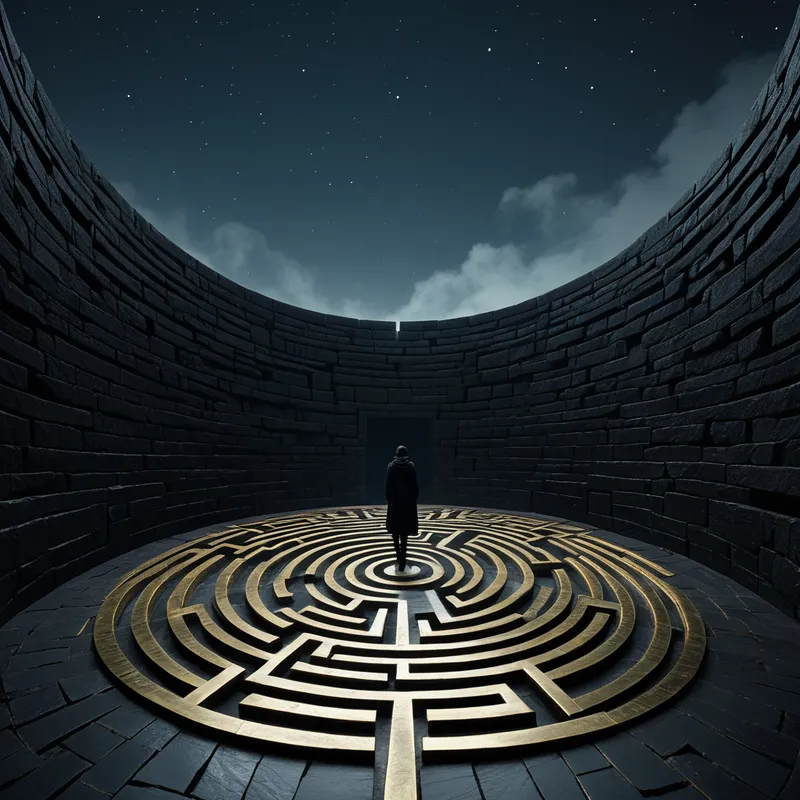
The labyrinth of Daedalus in G Myth Meaning & Symbolism
A master architect builds an inescapable labyrinth to contain a monstrous secret, only to be imprisoned within his own perfect, terrifying creation.
The Tale of The labyrinth of Daedalus in G
Hear now the tale of the Maker and the Maze, a story not of gods, but of a man who dared to rival them. In the gleaming, rational city of G, where geometry was law and ambition the only prayer, there lived Daedalus. His mind was a forge of wonders, his hands the tools of a new order. Kings and tyrants whispered his name with a mixture of awe and dread, for what Daedalus conceived, he built, and what he built, the world could not un-see.
A summons came, not from a king, but from a secret. The rulers of G possessed a horror, a thing of primal rage and insatiable hunger born of a broken oath and divine wrath: the Minotaur. It was a living contradiction, a blasphemy against nature, and it could not be destroyed, only contained. They tasked Daedalus: “Build a prison from which nothing can escape. Not muscle, not instinct, not madness itself.”
Daedalus withdrew. He did not pray; he calculated. He saw that a simple cage would be a challenge, a puzzle to be solved. No, his prison must be a perfect paradox. He envisioned a structure that was not a dungeon of darkness, but a monument to confusion. A labyrinth. Its paths would not be walls, but invitations. Each turn would promise egress, each corridor whisper of the center, yet all would lead only to deeper convolution. It would be beautiful in its precision, terrifying in its logic. The Minotaur would not be chained; it would be presented with infinite choices, every one of them wrong.
For years, the sound of chisels on stone was the heartbeat of G. Daedalus oversaw the raising of walls that curved with deceptive grace, the laying of floors that sloped imperceptibly, the creation of echoes that mimicked distant footsteps. The labyrinth grew, a sprawling, petrified whirlpool. When the final stone was set, the monster was led in. The great brazen doors, etched with Daedalus’s own sigil, swung shut with a finality that echoed in the bones of the watching crowd. The city breathed a sigh of relief. The secret was buried.
But G was a city of secrets, and those who bury one often fear the gravedigger. Daedalus knew the labyrinth’s every secret, its every turn and treacherous shortcut. He was the living key. And so, with smiles as cold as the labyrinth’s stone, the rulers of G bestowed upon its creator his final reward: a suite of rooms in the highest tower overlooking the maze. A gilded cage with a view of his masterpiece. He and his young son, Icarus, were now the labyrinth’s keepers and its prisoners. The man who built the perfect trap had become its ultimate occupant, doomed to gaze forever upon the symbol of his own brilliant, terrible ingenuity.
Cultural Origins & Context
The myth of Daedalus and his labyrinth is a foundational narrative of the Hellenic world, but its threads are woven into a universal human tapestry. While its most famous iteration is set in Crete, the version “in G” speaks to its archetypal, placeless quality. “G” could be any city-state, empire, or modern megastructure built on a foundation of rationalism and hidden shame. The story was not merely entertainment; it was a cautionary parable told by poets and philosophers. It functioned as a check on the hubris of unchecked invention (techne) and a stark reminder that the state’s power to conceal its monsters often extends to silencing the architects of those concealments. It asks a perennial question: when you design a system of control, who ultimately controls you?
Symbolic Architecture
The labyrinth is the central, overwhelming symbol. It is not merely a maze. A maze offers choices, dead ends, and the potential for error. The classical labyrinth, the kind Daedalus built, is a unicursal path. It is a single, winding, but inevitable journey to the center. This makes it a profound symbol for the involuntary journey into the self.
The labyrinth is the mandatory pilgrimage to the center of one’s own being, where the monster of the unrecognized self awaits.
Daedalus represents the egoic intellect at its most potent. He is the builder, the planner, the solver. His fatal flaw is believing his genius can manage chaos from the outside, that he can design a system to contain the shadow (the Minotaur) without being affected by it. His imprisonment is the inevitable result: the conscious mind, having brilliantly walled off the unconscious, finds itself isolated in a sterile fortress of its own making, cut off from the vitality and terror it sought to manage. The Minotaur is not just a monster; it is the embodied truth of a repressed past, a denied passion, or a foundational violence that a culture (or an individual) refuses to integrate.
The Dreamer’s Resonance
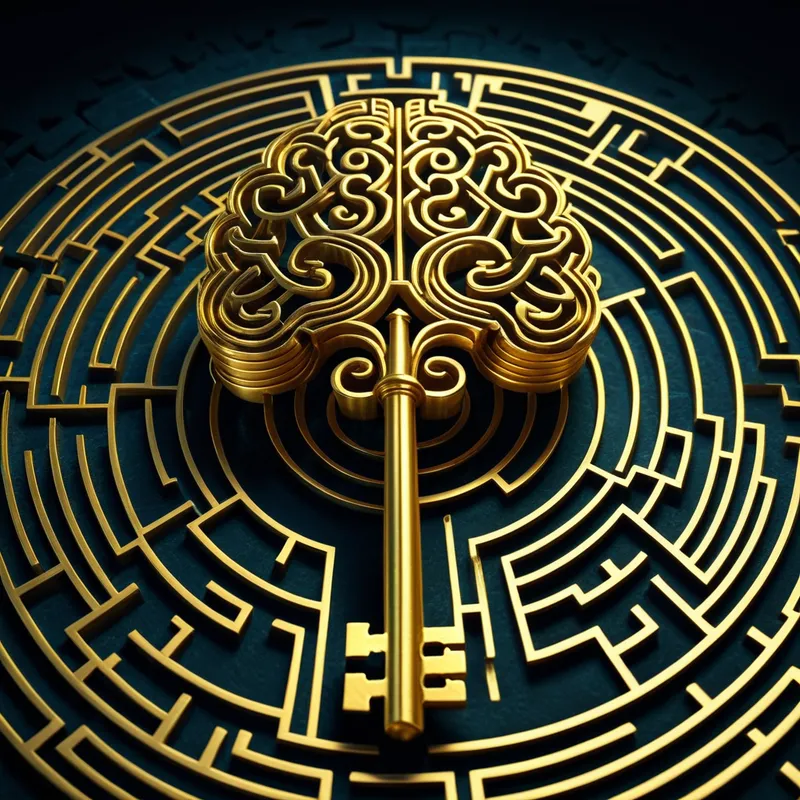
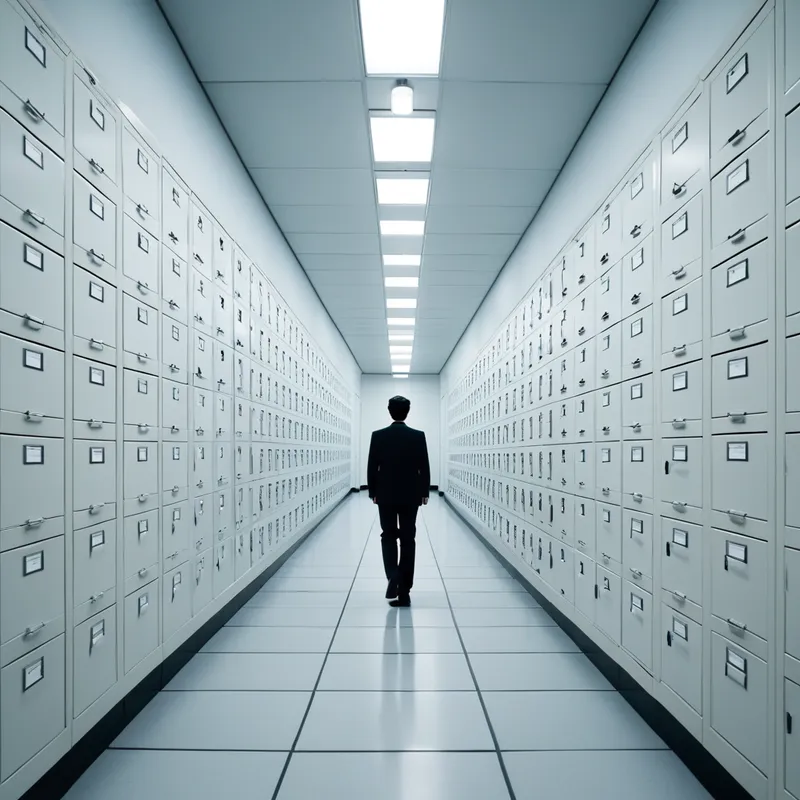
When this myth stirs in the modern dreamscape, it rarely appears as ancient stone. One may dream of an endless, repeating office layout, a software code that writes itself into knots, or a social media feed that scrolls into a perfect loop of anxiety. The somatic feeling is one of taut frustration, of moving with purpose but getting nowhere, of being cleverly, systematically trapped. This is the psyche signaling that the dreamer’s brilliant coping strategies—their personal “Daedalian” constructions of routine, rationality, or avoidance—have become their prison. The dream-ego is both the builder and the lost wanderer. The rising panic is the intuition that the center of this self-made maze holds not just a monster, but a truth: the raw, unintegrated aspect of life that has been walled away for being too messy, too hungry, too real.
Alchemical Translation
The alchemical process mirrored here is the nigredo, the blackening, the descent into the chaotic prima materia. Daedalus’s initial act—building the labyrinth—is a misguided attempt to skip this dark, putrefying stage. He tries to organize the chaos instead of submitting to its transformative rot. His failure and imprisonment are necessary. He must be forced to confront the reality of his creation from the inside.
Liberation does not come from a better map of the labyrinth, but from the realization that one must grow wings and change the fundamental rules of engagement.
The famous sequel—the crafting of wings from wax and feathers—is the next alchemical stage. It represents a synthesis born of despair and ingenuity. The intellect (Daedalus) must now use its skill not to build walls, but to create a vehicle for transcendence, using fragile, organic materials (wax, feathers) symbolizing the soul and intuition. The flight instruction—“fly the middle way”—is the ultimate alchemical dictum: avoid the literal, crushing sea of unconsciousness (the undifferentiated uroboros) and the scorching, inflating fire of solar consciousness (identifying solely with the ego). The path of individuation is the narrow, vital middle path that acknowledges both the monster in the maze and the sun in the sky, using the tools of the self to navigate between them, forever changed by what was met at the center.
Associated Symbols
Explore related symbols from the CaleaDream lexicon: