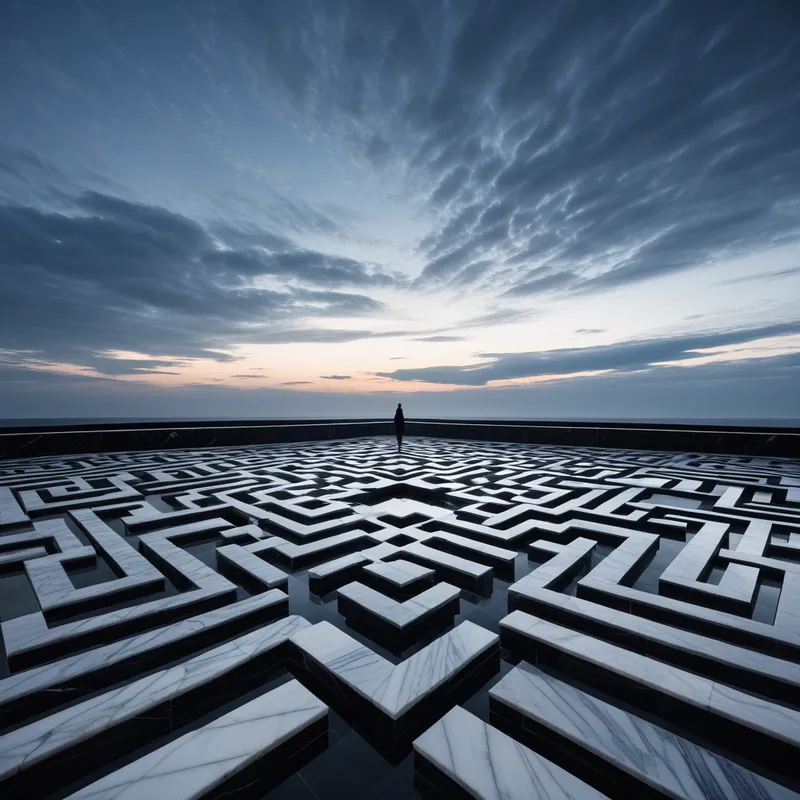
The Labyrinth of Daedalus - bo Myth Meaning & Symbolism
A master artisan builds an inescapable maze to contain a monstrous secret, only to be imprisoned within his own perfect, terrifying creation.
The Tale of The Labyrinth of Daedalus - bo
Hear now the tale of the maze-maker, the architect of fate. In an age when kings were gods in mortal flesh, there lived a man whose mind was a forge of wonders. His name was Daedalus. His hands could coax flight from stone and wisdom from timber. He walked in the courts of power, a shadow among thrones, until hubris cast him into exile on the isle of Crete.
There, King Minos, a ruler whose will was law and whose anger was a storm, commanded him. A monstrous secret had been born in the palace—the Minotaur. It was a creature of shame and fury, a living testament to a broken divine pact. "Contain it," the King demanded, his voice the closing of a tomb. "Build a prison from which neither beast nor truth can ever escape."
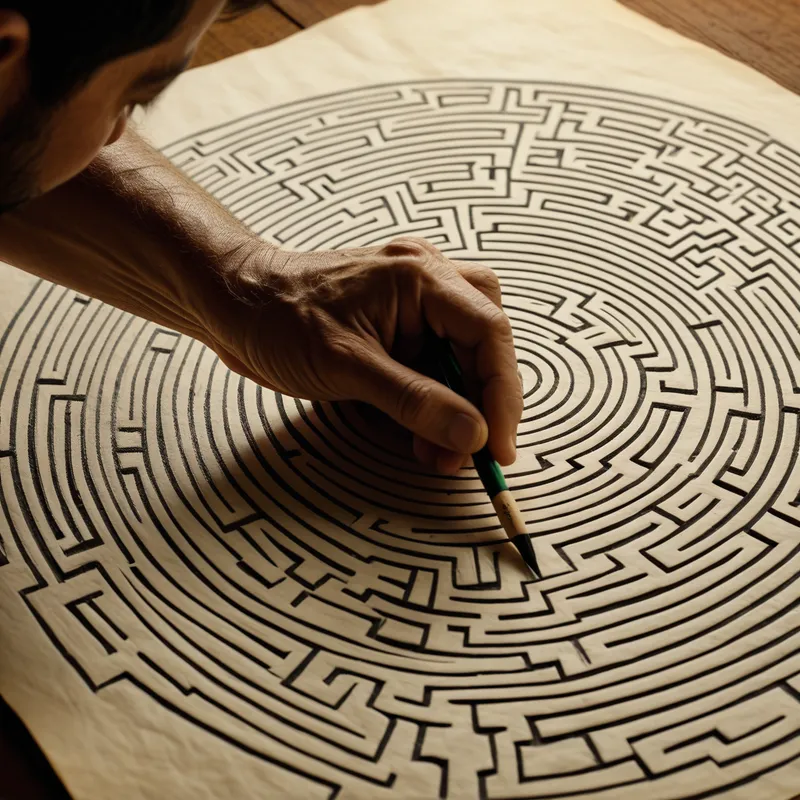
And so, Daedalus bent his genius to this terrible task. He did not dig a pit or raise a simple wall. He conceived a prison of the mind. He drew upon the earth, not with a shovel, but with a geometer's compass and an artist's soul. The Labyrinth was born—a single, winding path that turned back upon itself in endless, perfect deception. Its walls, high and smooth as a cliff face, were made of a stone that drank the light. There were no doors, only an entrance. The path was the sentence; to walk it was to be lost. It was his masterpiece, a cold, beautiful lie told in stone.
The Minotaur was led in, its bellows echoing into the geometric silence. The entrance was sealed. The secret was buried. But a prison that can hold a monster can hold its maker. Fearful that Daedalus might reveal the secret of the maze, or build a greater wonder for another king, Minos turned the key on the architect himself. Daedalus and his young son, Icarus, were cast into the sunless heart of his own creation. The man who knew every turn, every trick of the path, found himself truly lost for the first time. He stood in the central court, the hot breath of the beast a distant rumor in the dark, and understood the final, awful truth of his craft: the most perfect trap is the one you build for yourself.
Cultural Origins & Context
The myth of Daedalus and his Labyrinth is a foundational narrative of the ancient Mediterranean world, most famously preserved in the works of later Greek and Roman authors like Ovid, but rooted in the earlier Minoan civilization of Bronze Age Crete. It functioned as an etiological tale, explaining the awe-inspiring ruins of the vast palace complex at Knossos—a structure so complex it was thought to be a maze. Passed down by bards and poets, it served multiple societal functions: as a cautionary tale about the limits of human ingenuity and the wrath of the gods (or kings), as an exploration of the consequences of transgressing natural order, and as a foundational story for Athenian identity, with the hero Theseus’s later conquest of the Minotaur symbolizing the triumph of civilized order over bestial chaos.
Symbolic Architecture
The Labyrinth is not merely a building; it is a psychic blueprint. It represents the ultimate product of the Creator archetype when divorced from ethical or spiritual grounding. It is ingenuity in service of concealment, order in service of repression.
The maze is the mind turned in upon itself, a map of a problem with the solution deliberately erased.
Daedalus himself symbolizes the brilliant but doomed ego, the part of the psyche that believes it can outthink any problem, even the problem of its own monstrous creations. His imprisonment is the inevitable result: the conscious intellect becomes trapped by the very complexities it generates to manage the unconscious. The Minotaur is the ultimate "shadow" content—the unacceptable, instinctual, or traumatic material that the ego (Minos/Daedalus) tries to hide away in a psychological dungeon. Yet, as the myth shows, you cannot wall off a part of your own soul without walling yourself in with it.
The Dreamer's Resonance
When the Labyrinth appears in modern dreams, it signals a profound encounter with the psyche's own defensive architecture. The dreamer is not lost in a random place; they are lost in a structure their own mind has built. This often manifests during periods of intense intellectualizing, analysis paralysis, or when feeling trapped by one's own life choices, career, or thought patterns.
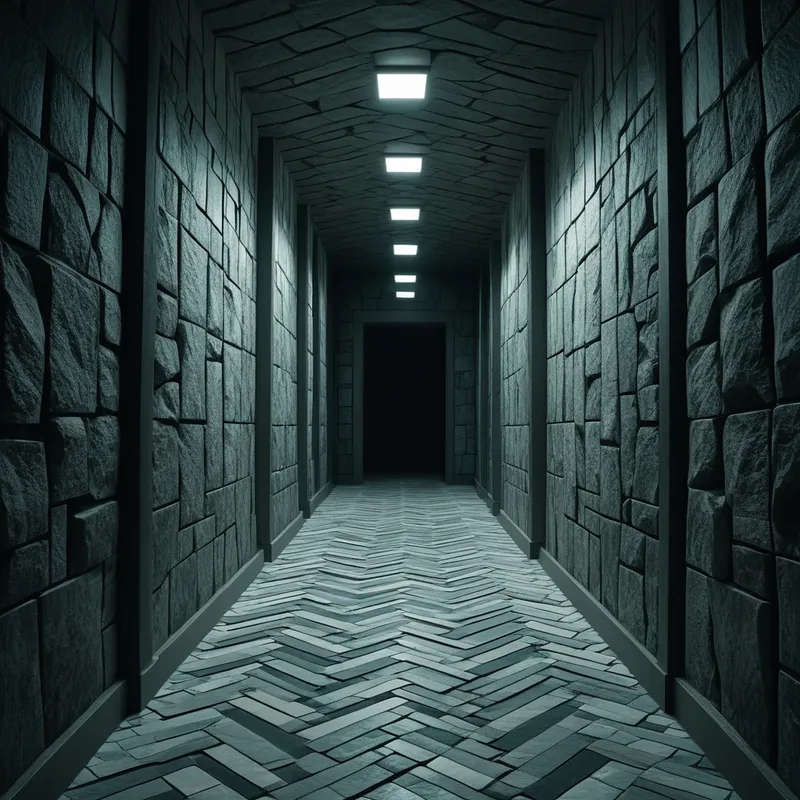
Somatically, this can feel like constriction in the chest, a tightening in the gut, or a dizzying sense of disorientation. Psychologically, it is the process of confronting the "walled-off" self. The dreamer may endlessly traverse featureless corridors (rigid thinking), encounter dead-ends (failed solutions), or hear the distant sound of the Minotaur—the growing, undeniable pressure of the emotion or truth they have been trying to avoid. The dream is an invitation to stop trying to solve the maze and instead to understand why it was built.
Alchemical Translation
The alchemical journey modeled here is the solve et coagula—the dissolution and reconstitution—of the conscious personality. Daedalus’s initial state is one of inflated, unintegrated brilliance (the prima materia of ego). His task, to deal with the Minotaur, is the confrontation with the nigredo, the blackening, the chaotic base matter of the soul.
His failure is the attempt to perform the alchemy externally, through stone and geometry, rather than internally. He tries to "fix" the problem by hiding it, which only leads to his own imprisonment—the stage of mortificatio, or psychic death. The true transmutation begins only in that imprisonment, in the despairing recognition of his predicament.
The only way out of a maze built by the ego is a path not made of stone, but of surrender and symbol.
His eventual escape—through the invention of wings—represents the sublimatio, the spiritual ascension. He must transcend the two-dimensional, ground-level logic of the maze (the literal, problem-solving mind) and access the third dimension of air, intuition, and vision. This is the leap of faith, the creative inspiration that comes not from cunning alone, but from a desperate synthesis of intellect and soul. The tragedy of Icarus, who flies too high, is the necessary counterweight, reminding us that this liberated consciousness must remain grounded in the reality of the human condition. The individuated Self is not the one who never builds labyrinths, but the one who learns they have the means to fly out of them.
Associated Symbols
Explore related symbols from the CaleaDream lexicon: