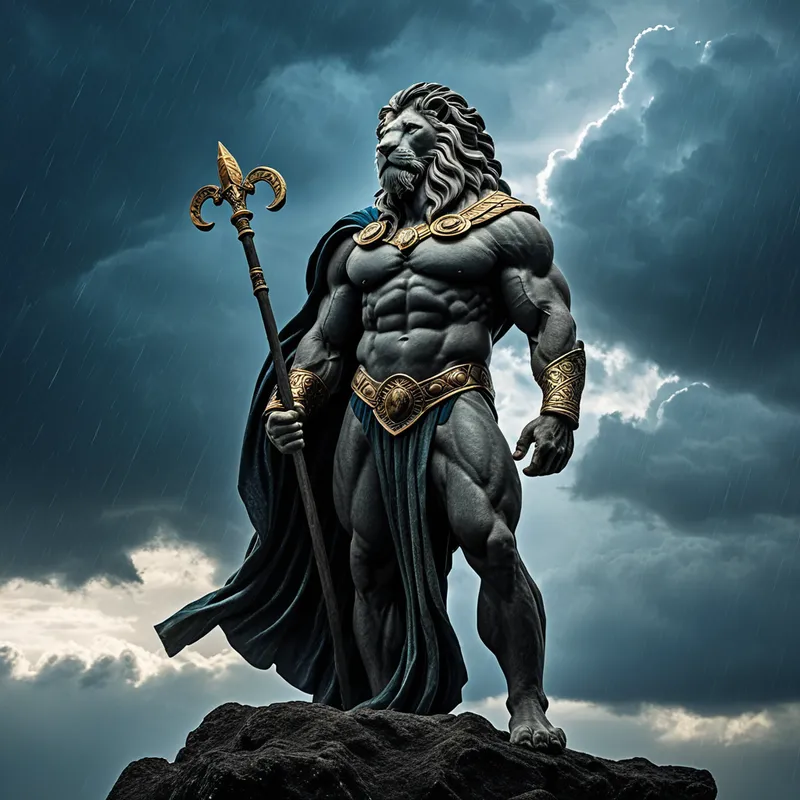
The Labors of Hercules Myth Meaning & Symbolism
A hero, driven mad by a goddess, must complete twelve impossible tasks to purify his soul, battling monsters of the outer world and his inner nature.
The Tale of The Labors of Hercules
Hear now the tale of the strongest man who ever lived, and the weight he had to bear. It begins not with glory, but with a scream in the dark. [Hercules](/myths/hercules “Myth from Greek culture.”/), son of a god and a mortal queen, stood in his own hall, the smoke of a shattered altar stinging his eyes. The air was thick with the scent of iron and terror. Hera, whose jealousy was a cold, celestial fire, had poured madness into his veins. In the red haze, he saw not his beloved wife and children, but phantoms of his enemies. When the fog lifted, he was alone amidst the ruin of his life, his hands stained with a crime no river could wash clean.
Seeking purification, the broken hero traveled to the sacred oracle at Delphi. The voice of the god, speaking through the [Pythia](/myths/pythia “Myth from Greek culture.”/), was merciless. To be cleansed, he must enter the service of his lesser cousin, Eurystheus, a small man with a coward’s heart, and perform ten labors the king would set. No, the voice corrected—twelve. For two would not count.
Thus began the great turning of his fate. His first trial took him to the sun-baked valley of Nemea, where a lion with an impenetrable hide devoured whole villages. Swords shattered on its pelt; arrows fell like straw. In the beast’s dark cave, Hercules discarded his weapons. The fight was raw, a primal contest of muscle and will, until he choked the life from the creature with his own arms, and thereafter wore its skin as his only armor.
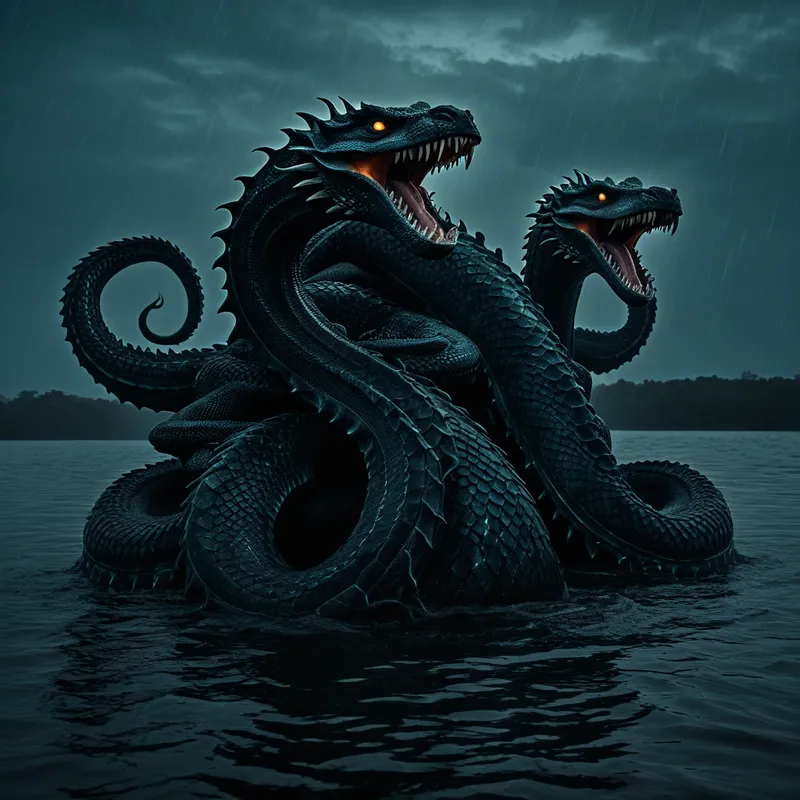
From the hills of Lerna rose the [Hydra](/myths/hydra “Myth from Greek culture.”/), a creature of the swamp whose very breath was poison. As he fought, lopping off heads with a golden sword, he saw the horror of his task: for each head severed, two more writhed from the stump. With the aid of his nephew Iolaus, who seared the necks with fire, he found [the way](/myths/the-way “Myth from Taoist culture.”/). He buried the one immortal head beneath a stone, forever.
He chased the Erymanthian Boar through deep snow into the high mountains, driving the raging beast to exhaustion. He cleansed the Augean Stables not by shovel, but by diverting two mighty rivers through them in a single day. He drove away the man-eating Stymphalian Birds from their misty lake with a thunderous clash of bronze rattles.
He journeyed to the edge of [the world](/myths/the-world “Myth from Tarot culture.”/). For the belt of the Amazon queen, he faced a nation of warrior women. To fetch the cattle of the monster Geryon, he raised his famous pillars at the straits and slew the giant under a foreign sun. He descended into the very kingdom of [Hades](/myths/hades “Myth from Greek culture.”/) to leash the three-headed hound Cerberus, a creature of shadow and saliva, and brought it, trembling, into the light of the living world before returning it to the dark.
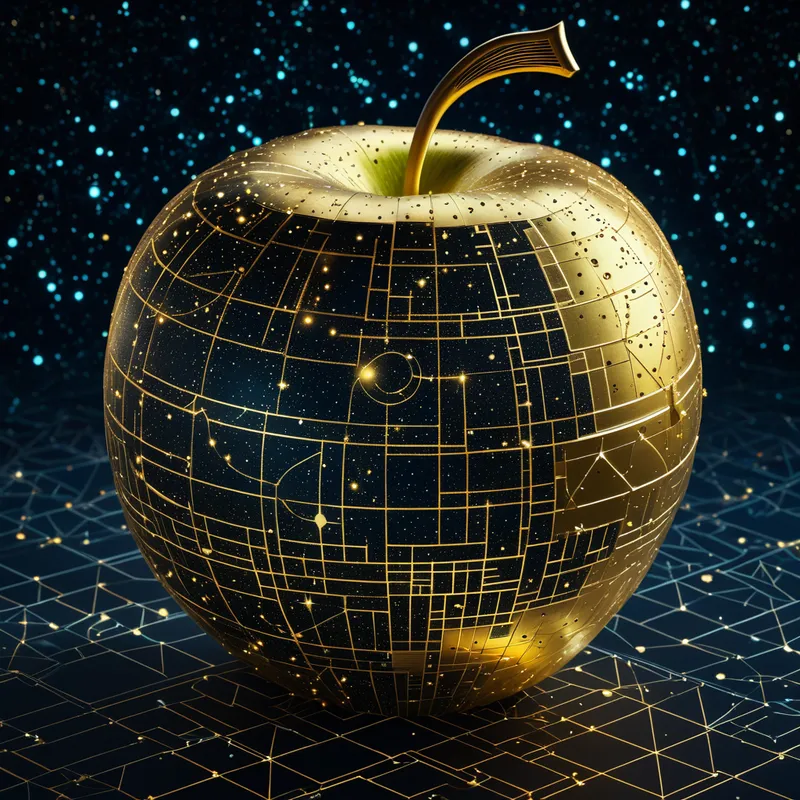
And finally, in the western garden at the world’s end, he tricked the Titan Atlas into retrieving the golden apples of the [Hesperides](/myths/hesperides “Myth from Greek culture.”/), bearing the weight of the heavens on his own shoulders until the Titan returned. When the twelfth task was done, a lifetime of blood, sweat, and cunning lay behind him. The man who emerged was not the same who had entered. The crimes were not forgotten, but they were transmuted. The hero had labored, and in the laboring, had been forged anew.
Cultural Origins & Context
The myth of Hercules is a foundational pillar of Hellenic storytelling, with roots stretching back into the Mycenaean Bronze Age. He was not merely a character but a cultural institution—a pan-Hellenic hero claimed by many city-states, yet belonging to all. His stories were the common currency of the ancient Mediterranean, told and retold by poets like [Homer](/myths/homer “Myth from Greek culture.”/) and Hesiod, and later systematized by mythographers.
The labors functioned on multiple societal levels. They were a map of the known and imagined world, from the local groves of Greece to the fantastical edges of Africa and [the underworld](/myths/the-underworld “Myth from Greek culture.”/), thus defining Greek space against the chaotic “other.” They were a narrative of civilization triumphing over wild nature—the lion, the boar, the birds, [the hydra](/myths/the-hydra “Myth from Greek culture.”/) all representing untamed threats to order. As a religious figure, Hercules straddled the line between mortal and god, a being who suffered a mortal’s agony but achieved apotheosis. His cult was one of protectors, athletes, and travelers, offering a model of endurance and eventual redemption accessible to every person who faced their own daily labors.
Symbolic Architecture
At its [heart](/symbols/heart “Symbol: The heart symbolizes love, emotion, and the core of one’s existence, representing deep connections with others and self.”/), the myth is a profound [blueprint](/symbols/blueprint “Symbol: A blueprint represents the foundational plan or design for something, often symbolizing potential, structure, and the mapping of one’s inner self or future.”/) for the [integration](/symbols/integration “Symbol: The process of unifying disparate parts of the self or experience into a cohesive whole, often representing psychological wholeness or resolution of internal conflict.”/) of the [psyche](/myths/psyche “Myth from Greek culture.”/). Hercules is the embodiment of raw, undirected power—the libido or [life](/symbols/life “Symbol: The symbol of ‘Life’ represents a journey of growth, interconnectedness, and existential meaning, encompassing both the joys and challenges that define human experience.”/) force in its most potent form. His initial [crime](/symbols/crime “Symbol: Crime in dreams often symbolizes guilt, inner conflict, or societal rules that are being challenged or broken.”/), the murder of his [family](/symbols/family “Symbol: The symbol of ‘family’ represents foundational relationships and emotional connections that shape an individual’s identity and personal development.”/), represents this power turned destructively [inward](/symbols/inward “Symbol: A journey toward self-awareness, introspection, and the exploration of one’s inner world, thoughts, and unconscious mind.”/), the “madness” of a [psyche](/myths/psyche “Myth from Greek culture.”/) at war with itself, poisoned by the unresolved complexes (here personified by Hera’s [jealousy](/symbols/jealousy “Symbol: A complex emotion signaling perceived threat to valued relationships or status, often revealing insecurities and unmet needs.”/)).
The labors are not a punishment, but a prescription. They are the ego’s desperate contract with reality, forcing chaotic inner energy into specific, concrete, and nearly impossible channels.
Eurystheus, the pathetic [king](/symbols/king “Symbol: A symbol of ultimate authority, leadership, and societal order, often representing the dreamer’s inner power or external control figures.”/) hiding in a [storage](/symbols/storage “Symbol: Storage symbolizes the preservation of memories, knowledge, emotions, or physical belongings, often reflecting the subconscious mind’s organization.”/) jar, symbolizes the often petty, fearful, and neurotic demands of the conscious ego and societal superego. Each [monster](/symbols/monster “Symbol: Monsters in dreams often symbolize fears, anxieties, or challenges that feel overwhelming.”/) is a facet of the personal and collective [shadow](/symbols/shadow “Symbol: The ‘shadow’ embodies the unconscious, repressed aspects of the self and often represents fears or hidden emotions.”/). The Nemean [Lion](/symbols/lion “Symbol: The lion symbolizes strength, courage, and authority, often representing one’s inner power or identity.”/) is invulnerable pride; the [Hydra](/symbols/hydra “Symbol: A multi-headed serpent from Greek mythology that regenerates two heads when one is cut off, symbolizing persistent, multiplying challenges.”/) is the multiplying problems of repressed [trauma](/symbols/trauma “Symbol: A deeply distressing or disturbing experience that overwhelms the psyche, often manifesting in dreams as unresolved emotional wounds or psychological injury.”/) (cut one head, two grow back); the Stymphalian Birds are the sharp, nagging thoughts of [anxiety](/symbols/anxiety “Symbol: Anxiety in dreams reflects internal conflicts, fears of the unknown, or stress from waking life, often demonstrating the subconscious mind’s struggle for peace.”/); [the Augean Stables](/myths/the-augean-stables “Myth from Greek culture.”/) are the accumulated filth of neglected duties and psychic refuse. To succeed, Hercules must often abandon conventional weapons (conscious strategies) and use cunning, assistance (Iolaus), or elemental force (the rivers). This signifies the need for [the ego](/myths/the-ego “Myth from Jungian culture.”/) to adapt, to employ new psychological tools, and to accept help to integrate the [shadow](/symbols/shadow “Symbol: The ‘shadow’ embodies the unconscious, repressed aspects of the self and often represents fears or hidden emotions.”/).
The Dreamer’s Resonance
When this myth stirs in the modern dreamer, it announces a period of profound, obligatory ordeal. The dreamer may find themselves in an endless, bureaucratic maze (the service to Eurystheus), faced with a series of “impossible tasks” at work or in personal life. They may dream of confronting a terrifying beast in a basement or swamp—a direct manifestation of a growing, Hydra-headed problem they have avoided.
Somatically, this can feel like a heavy burden on the shoulders (the weight of the heavens), a constriction in the throat ([the Nemean Lion](/myths/the-nemean-lion “Myth from Greek culture.”/)’s grip), or the exhausting chase through deep snow ([the Erymanthian Boar](/myths/the-erymanthian-boar “Myth from Greek culture.”/)). Psychologically, it is the process of “shadow-work” made urgent. The dream-ego, like Hercules, is being compelled to stop fleeing and to turn and face the very [thing](/myths/thing “Myth from Norse culture.”/) that feels monstrous and overwhelming. The labor is not optional; it is the price of sanity and forward movement. The dream is the call to pick up your unique club and go to the valley you have been avoiding.

Alchemical Translation
The alchemical journey of Hercules is the individuation process in its most epic and arduous form. It begins with the [nigredo](/myths/nigredo “Myth from Alchemical culture.”/)—the blackening, the murderous madness and utter despair. This is the necessary dissolution of the old, flawed personality.
The twelve labors constitute the albedo and citrinitas—the whitening and yellowing, the long, arduous stages of purification and illumination. Each labor is an operation on [the prima materia](/myths/the-prima-materia “Myth from Alchemical culture.”/) of the soul. Subduing the lion is taming the fiery, devouring passion. Cleaning the stables is the catharsis of decades of psychic neglect. Capturing Cerberus is the conscious descent into the personal [underworld](/myths/underworld “Myth from Greek culture.”/) of the unconscious to retrieve and make peace with its primal guardians.
The ultimate goal is not the apples, the belt, or the cattle, but the transformation of the laborer. The gold produced is not an object, but a state of being—the resilient, responsible, and integrated Self.
The final labor, retrieving the golden apples, represents the attainment of the [rubedo](/myths/rubedo “Myth from Alchemical culture.”/)—the reddening, or the philosopher’s stone. This is the fruit of immortality, not of the body, but of the spirit. Having borne the weight of the cosmos and successfully navigated the tricks of [the Titans](/myths/the-titans “Myth from Greek culture.”/) (the archaic patterns of the psyche), Hercules achieves a wholeness that his initial, brute strength could never provide. He has transformed his curse into his curriculum, his guilt into his guide, and in doing so, models the ultimate human alchemy: turning the lead of suffering into the gold of wisdom.
Associated Symbols
Explore related symbols from the CaleaDream lexicon: