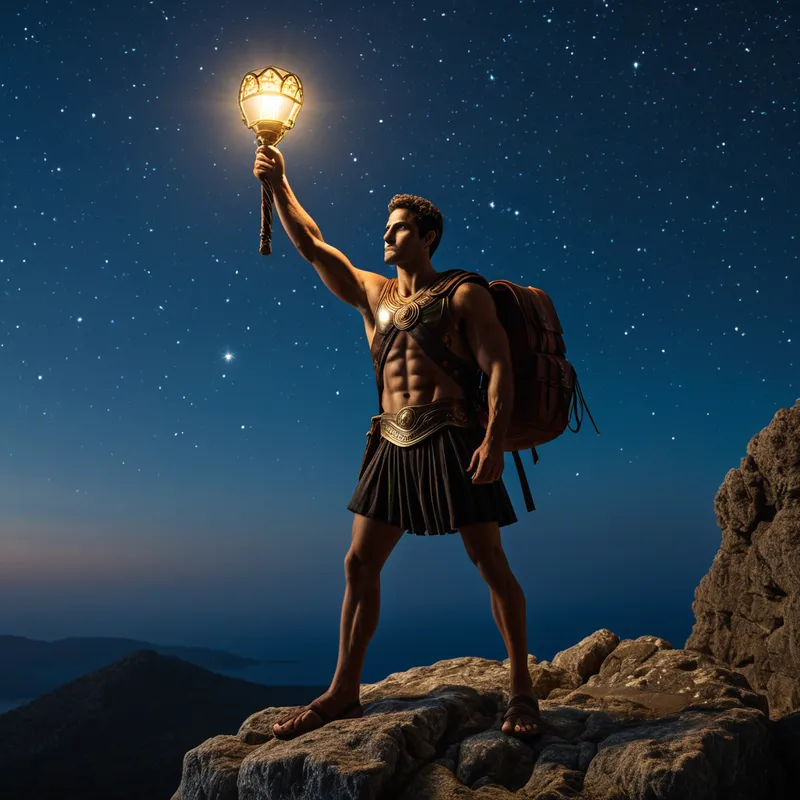
The Knapsack of Perseus Myth Meaning & Symbolism
A hero's enchanted pouch, given by nymphs, holds the petrifying head of Medusa, symbolizing the sacred container for our most terrifying psychic contents.
The Tale of The Knapsack of Perseus
Hear now the tale not of the blade, nor the winged sandals, but of the vessel that carried the unthinkable. The story begins in shadow, with a young man cast adrift. Perseus, son of Zeus and the mortal Danaë, found himself bound by a terrible boast. The tyrant Polydectes demanded the head of the Gorgon Medusa, a task designed to be a death sentence.
But the Fates weave strange patterns. Guided by the cunning Hermes and the fierce-eyed Athena, Perseus journeyed to the ends of the known world. His path led him first to the grey shores where the three ancient Graeae dwelled. In a moment of swift trickery, he seized their single, shared eye, holding the very light of their perception hostage until they whispered the location of the nymphs of the north.
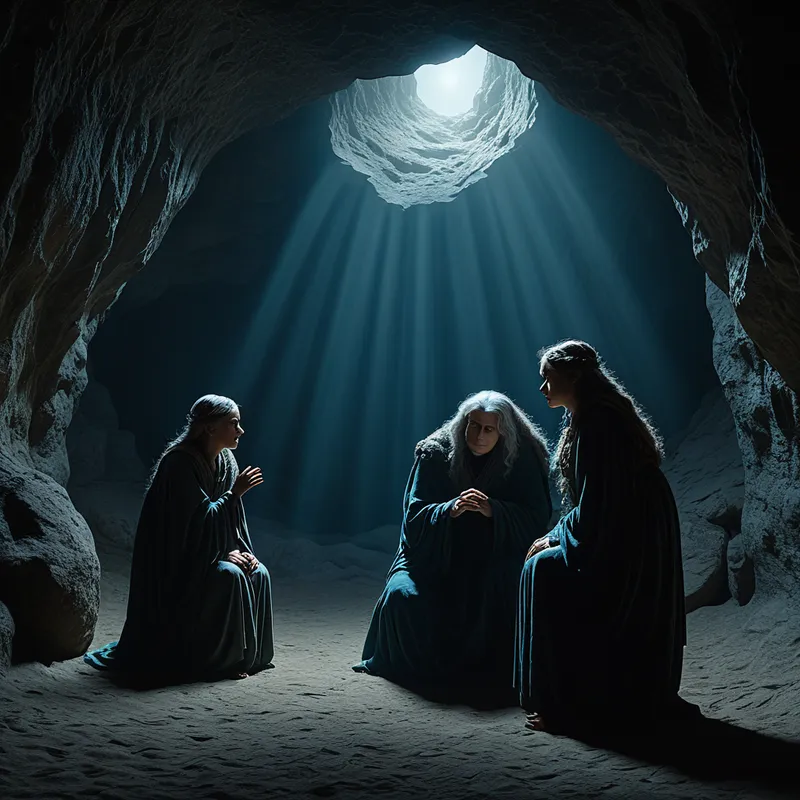
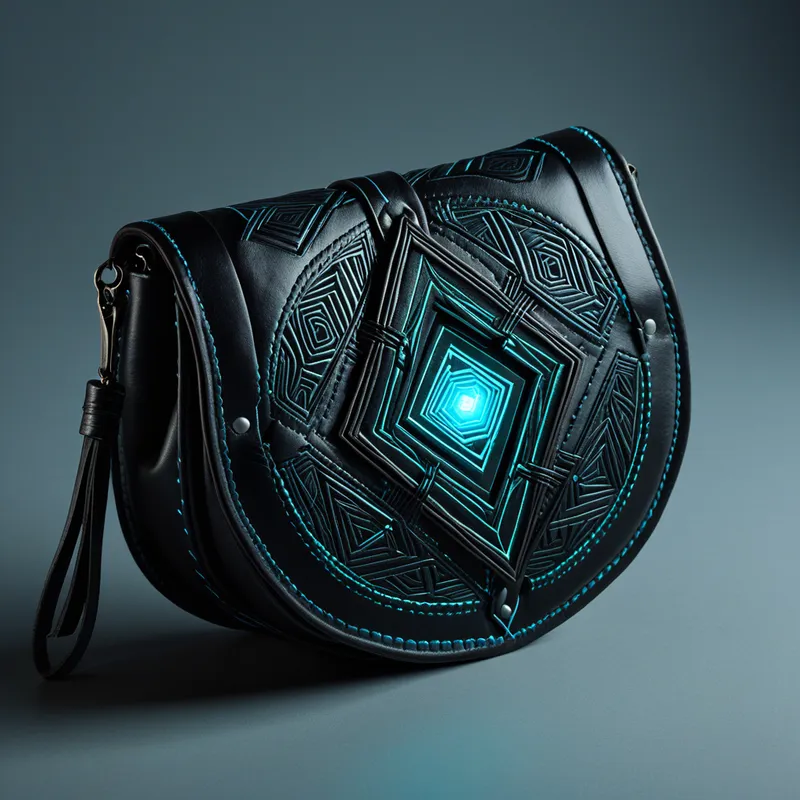
And there, in a hidden grove where the air shimmered with eternal twilight, he found them. They were not warriors, but keepers. The Nymphai of the Hyperboreans moved like liquid shadow. Without a word, they presented him with the tools of his impossible quest: the adamantine sickle, the helm of Hades that shrouded the wearer in darkness, and the winged sandals of Hermes. Lastly, they handed him a simple, unadorned knapsack, kibisis. It was made of a leather that felt both supple and unyielding, stitched with threads that seemed to drink the light.
“This,” one nymph said, her voice the sound of wind through reeds, “is for what you will bring back. It alone can hold it.”
Thus armed, Perseus flew on whispering wings to the Gorgons’ stony plain. Using the reflection in his polished shield—a gift from Athena—he navigated the petrified forest of failed heroes. He found Medusa sleeping among her stone victims, her serpent-hair hissing softly. In one fluid, backward stroke, guided by divine hands, the sickle fell. From the severed neck sprang the winged horse Pegasus and the giant Chrysaor. But Perseus’s task was not complete. Moving with the speed of terror, he did not look. He scooped the still-dripping head into the knapsack, the kibisis, and sealed it. The bag did not bulge. It did not strain. It simply contained the impossible.
On his long journey home, the knapsack was his burden and his power. When the titan Atlas refused him shelter, Perseus opened the bag just enough. The Titan’s defiant gaze met the Gorgon’s, and he was transformed into the mountain that bears his name. Later, rescuing the princess Andromeda from the sea monster, it was not the head he used, but the promise of what the bag contained that solidified his courage. The knapsack carried the horror, but it also carried his destiny, a sacred, terrible secret resting against his back until the moment he presented it to Polydectes and turned the tyrant’s court to a silent, eternal gallery.
Cultural Origins & Context
The myth of Perseus is one of the oldest in the Greek corpus, with roots likely stretching back into pre-Hellenic, possibly even Near Eastern, hero traditions. The specific detail of the magical knapsack, the kibisis, is a crucial piece of archaic equipment. It appears in the fragmented verses of early poets like Hesiod and is fully integrated into the canonical version of the myth as told by later writers such as Ovid.
This was not a story told in philosophical symposia, but a popular, foundational epic. It functioned as a charter myth for the ruling dynasty of Mycenae, establishing Perseus as a divine-right ancestor. The knapsack, however, belongs to the deeper, folkloric layer. It speaks to a pre-Olympian world of nymphs, trickster gods, and practical magic. The nymphs themselves are chthonic powers, spirits of a specific place (the Hyperborean north) who possess the hiera, the sacred objects needed for the rite of passage. The knapsack is the ultimate hieron—a sacred vessel whose primary function is containment of a power too great for mortal hands to hold directly. In a culture deeply concerned with ritual purity and pollution, the bag acts as a perfect insulator, allowing the hero to transport the ultimate miasma (pollution) of the monstrous without being destroyed by it.
Symbolic Architecture
The kibisis is far more than a plot device; it is the myth’s central psychic organ. It represents the sacred container, a concept vital to both ritual and psychology.
The hero’s greatest weapon is not the sword that severs, but the vessel that holds.
First, it is a symbol of mediated power. Perseus cannot look upon Medusa directly, even in death. The shield provides a reflective medium for the act of confrontation; the knapsack provides a non-reflective medium for the act of integration. It allows him to carry the source of his terror without being frozen by it—a perfect metaphor for engaging with trauma or shadow content indirectly, through dreams, art, or therapy.
Second, it embodies paradoxical containment. The bag holds the petrifying Gorgon’s head, yet it is soft, flexible, and does not change its outer form. This speaks to the psyche’s ability to encapsulate immense, contradictory, and potentially destructive complexes without the conscious ego being aware of their full force. The power is inside, transforming the carrier, but its lethal nature is safely sequestered.
Finally, it is the burden of destiny. Once Perseus acquires the head, his journey changes. He is no longer just a son seeking to prove himself; he is a bearer of a divine and terrible secret. The knapsack is the weight of his completed task, the proof of his ordeal, and the responsibility that comes with power. He cannot simply discard it; he must carry it to its destined end.
The Dreamer’s Resonance
When the motif of the Knapsack of Perseus arises in modern dreams, it signals a profound process of psychic containment and integration. The dreamer is likely in a phase where they have confronted something previously unfaceable—a repressed memory, a shaming secret, a core wound, or a burst of creative energy that feels monstrous in its intensity.
To dream of being given a special bag or pouch by enigmatic figures suggests receiving an innate, perhaps newly discovered, capacity to hold difficult emotional or psychological material. The dreamer is being “equipped” by the deeper self (the nymphs of the unconscious) for a journey of carrying.
Dreaming of a bag that is heavy yet whose contents are unseen or forbidden to look upon points directly to carrying a complex—often a complex related to the “Medusa” in one’s life: that which feels terrifying, shameful, and capable of paralyzing one’s emotional life. The somatic sensation may be one of a weight on the back or shoulders, a literal burden. The crucial message of such a dream is that the psyche has provided a container. The contents are not spilling out; they are held. The task is not to open the bag prematurely, but to trust in the process of carrying it until one reaches the “court of Polydectes”—the outer-life situation where this transformed power can be applied to petrify old, tyrannical patterns.
Alchemical Translation
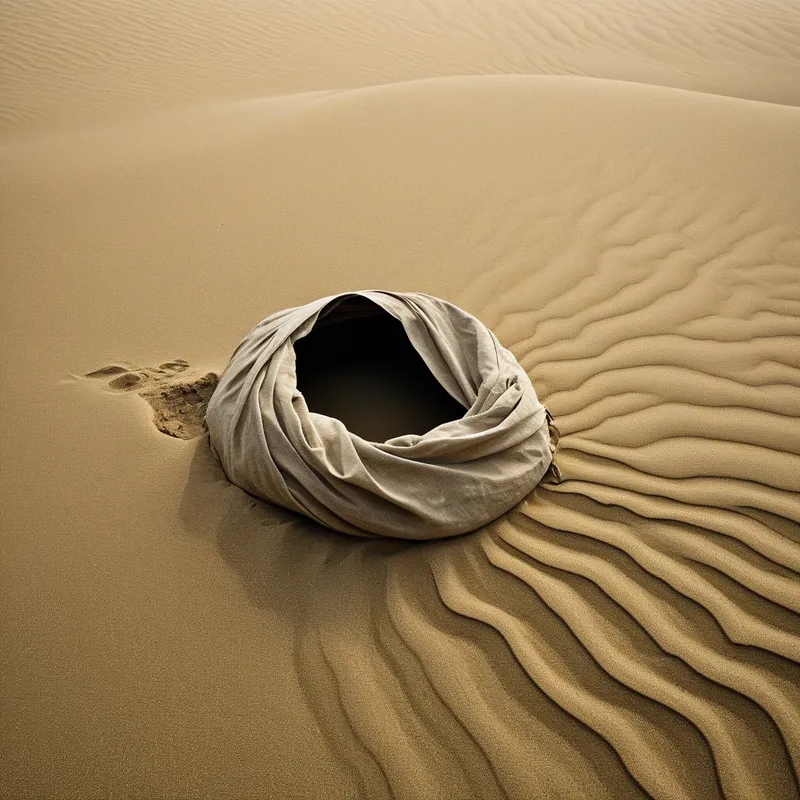
In the alchemy of individuation, the myth of the knapsack models the critical stage of mortificatio and separatio followed by the sacred vas (vessel) of transformation. The slaying of Medusa represents the necessary, violent confrontation with the personal and collective shadow—the terrifying, snake-haired aspects of life and the self we wish to deny. But the act of decapitation is only the beginning. The true alchemical work is in the handling of the caput mortuum, the “dead head” or prized essence extracted from the prima materia.
Individuation is not the killing of one’s demons, but the learning of how to carry them without being turned to stone.
The knapsack is the vas philosophorum, the philosopher’s vessel. It is the conscious ego-structure, tempered by guidance (Hermes, Athena) and gifted by the deep unconscious (the Nymphs), that is now strong enough to hold the volatile, transformative substance. Placing the Gorgon’s head inside is the act of encapsulating a psychic content that is both deadly and divine. Inside the dark, non-reflective space of the bag—the protected inner sanctum of the psyche—the monstrous begins its slow transmutation. It is no longer a thing to be faced, but a power to be integrated.
The hero’s journey home with the bag is the long, often lonely, process of incubation. The power is possessed but not yet fully understood or deployed. It weighs on him. It changes his interactions with the world (Atlas, Andromeda). Finally, in a conscious, deliberate act, he opens the vessel in the right context, for the right purpose: to dissolve the tyrannical ego-structure (Polydectes) that originally set the quest in motion. The stone that results is not failure, but a testament—the frozen, eternal form of what once ruled us, now made inert by the fully integrated, and now relinquished, power of what we once most feared to carry.
Associated Symbols
Explore related symbols from the CaleaDream lexicon: