The Judgment of Paris Myth Meaning & Symbolism
A shepherd-prince's fateful choice between three goddesses ignites a war and reveals the soul's eternal conflict between love, power, and wisdom.
The Tale of The Judgment of Paris
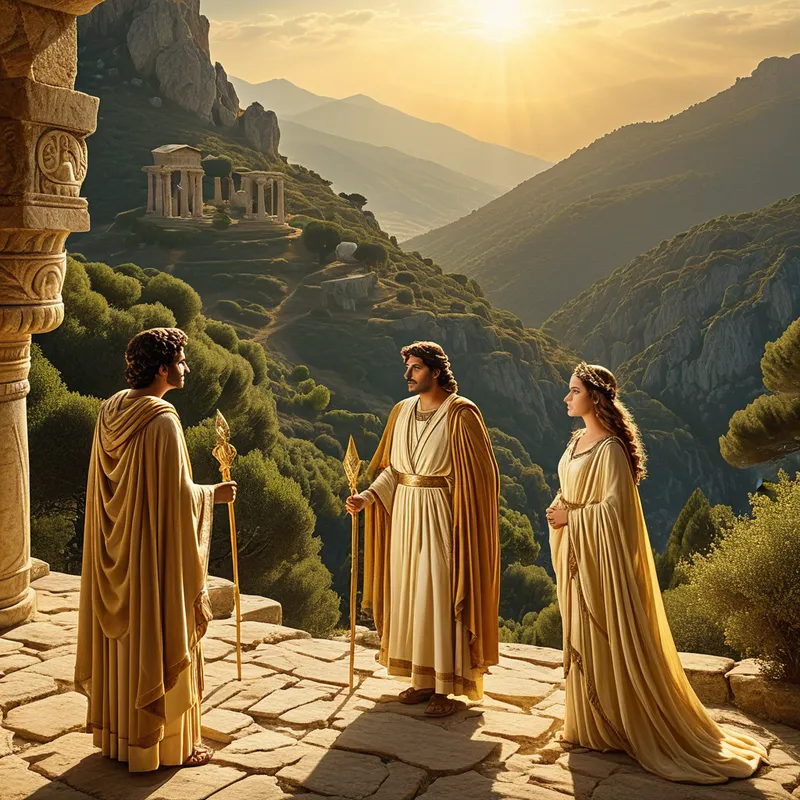
The air on the slopes of Mount Ida was sweet with thyme and pine. Here, far from the polished marble of Troy’s citadel, a young man named Paris tended his flocks, a prince in exile, his royal blood forgotten in the rhythm of sun and soil. His world was the bleat of goats, the whisper of the wind, and the solid earth beneath his feet. But the gods weave fate with threads unseen by mortal eyes.
It began not with a thunderclap, but with a silence that swallowed the birdsong. The light grew thick, honeyed, and heavy. Then came the scent—not of meadow flowers, but of ozone and myrrh, of incense from a thousand altars. Paris turned, his heart a wild drum against his ribs.
Before him stood a vision that would unmake the world. Three figures, not of his mountain, not of his earth. Their beauty was a pressure, a weight that bent the very air. The first was majesty incarnate, crowned with the stern diadem of kingdoms, her gaze holding the cold, enduring fire of empires. This was Hera. The second was clad in the grim bronze of the warrior, her eyes sharp as a honed spear-tip, her presence the clear, terrible logic of strategy and victory. This was Athena. The third seemed to wear only light itself, a smile that promised the dissolution of all sorrow, the warmth of a embrace that could eclipse reason. This was Aphrodite.
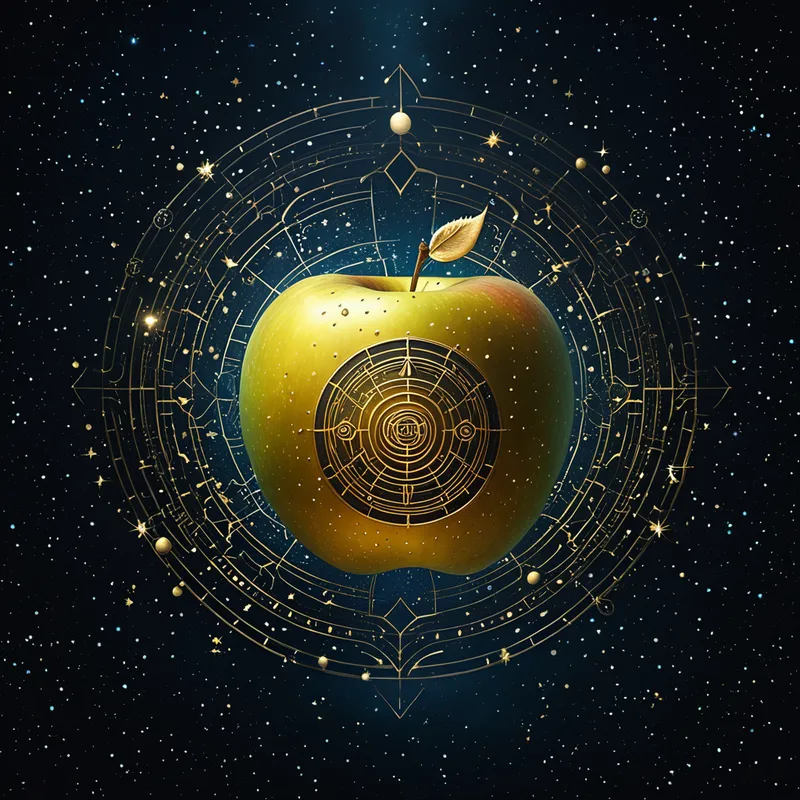
And in his hand, materialized from the charged ether, was the cause of their descent: a fruit of pure, hammered gold, cool and impossibly heavy. Upon it glimmered a phrase, a poison and a promise: Kallisti—To the Fairest.
The messenger god, Hermes, stepped from the shimmering air, his voice a calm ripple in the divine storm. He laid the charge from Zeus upon the shepherd: You must judge. You must choose.
The goddesses did not merely speak; they offered worlds. Hera approached, and the air tasted of iron and old gold. “Choose me,” her voice resonated, “and I will make you lord of all Asia. Kingdoms will bow to your name. Your power will be as unshakable as my throne.” Paris saw visions of citadels bearing his standard, of nations kneeling in the dust.
Athena moved next, and the scent changed to oiled leather and the clean edge of a storm. “Award me the apple,” she said, her words precise as geometry, “and you shall have wisdom beyond measure and fame in war. You will be the greatest strategist of men, your name sung for your cunning and courage on the battlefield.” He saw himself victorious, celebrated, his intellect a legendary weapon.
Then came Aphrodite. She did not promise; she simply leaned close, and the world softened. The very sunlight seemed to warm his skin. “Paris,” she murmured, a sound like a secret shared, “what are kingdoms or the clamor of war? I will give you love. I will give you the most beautiful woman in the world, Helen, to be your wife. Her face will launch a thousand ships of longing.”
In that moment, on that lonely mountainside, the shepherd-prince stood at the axis of the cosmos. Power, glory, wisdom—they were grand, cold things. But the promise of love… it spoke to the deep, lonely cavern of his mortal heart. His hand, almost of its own volition, extended. The cool gold left his palm and was placed into the waiting hand of Aphrodite. Her smile was the sunrise after an endless night.
Hera and Athena departed, their silence colder than any winter wind on Ida. Their unspoken wrath hung in the air, a debt now written in the ledger of fate. Paris had chosen. And with that choice, he set in motion the gears of a war that would burn the towers of Troy to ash, and etch his name not as a wise king or a mighty ruler, but forever as the man who, for love, set the world aflame.

Cultural Origins & Context
This pivotal myth originates from the epic cycle of ancient Greece, most notably forming a critical part of the backstory to Homer’s Iliad. It was a foundational etiological tale, explaining the divine origins of the Trojan War—the “why” behind a decade of legendary conflict. Passed down by bards and poets long before being committed to writing, the story served multiple societal functions. It was a cautionary tale about the catastrophic consequences of choice and the perils of offending divine powers, particularly the potent goddesses of the pantheon. It also reflected a deep cultural exploration of values: the active, political virtues of Hera (sovereignty) and Athena (prowess and wisdom) versus the compelling, personal, and often disruptive force of Aphrodite (erotic love and desire). The myth reinforced the Greek understanding of the gods as deeply involved in, and often capricious architects of, human destiny, where a single mortal decision could attract the focused attention of cosmic forces.
Symbolic Architecture
At its core, the Judgment is not a story about beauty, but about value. It is the psyche’s ultimate forced choice between three fundamental, and often competing, modes of being and relating to the world.
The golden apple is the unintegrated Self, cast into the midst of our inner pantheon, demanding a choice we are never fully prepared to make.
The three goddesses represent a profound tripartite division of the feminine archetype and the values they govern. Hera symbolizes the archetype of Sovereignty—the lure of power, structure, legacy, and social order. Athena embodies the archetype of Metis (cunning intelligence)—the appeal of wisdom, skill, victory through strategy, and conscious achievement. Aphrodite personifies the archetype of Eros—the irresistible pull of love, desire, beauty, and sensual connection to life itself.
Paris, the “hero,” is in fact every human at a crossroads. He is the undeveloped ego, the “shepherd” of our basic instincts, suddenly confronted by the full majesty of the soul’s potential directions. His choice for Aphrodite is often read as a choice for the irrational, personal, and immediate over the rational, social, and enduring. Psychologically, it signifies a moment where the life of the senses and the heart overpowers the claims of the persona (the king/ruler) and the logos (the warrior/strategist). The catastrophic consequences—the Trojan War—symbolize the immense psychic disruption and necessary “destruction” that occurs when one archetypal force is elevated above others, throwing the entire inner system into violent rebalancing.
The Dreamer’s Resonance
When this mythic pattern stirs in the modern unconscious, it manifests as dreams of being forced to choose between three paths, three partners, or three life-altering offers. The dreamer may feel profound anxiety, a sense of being unprepared or unworthy of the decision. The somatic experience is often one of paralysis or frantic searching—a literal crossroads in a dream landscape.
This dream signals a critical moment of individuation. The psyche is presenting its constituent, powerful values in stark, personified form, saying: “You cannot have it all. You must commit. Which fundamental value will you serve at this juncture in your life?” The dream may recur during life transitions—choosing a career path (Athena vs. Hera), committing to a relationship (Aphrodite), or deciding between personal fulfillment and social duty. The “wrath of the unchosen goddesses” translates as the real-world consequences, regrets, or neglected parts of the self that will inevitably arise from any major life choice.

Alchemical Translation
The alchemical process modeled here is not one of synthesis, but of nigredo—the blackening, the initial chaos and separation necessary for transformation. The Judgment represents the moment the prima materia of the soul is subjected to the fire of an impossible choice.
The true alchemical gold is not the apple, but the consciousness forged in the crucible of the choice itself.
The first stage is separatio. The ego (Paris) is isolated from its simple, unconscious state (shepherding) and confronted by the differentiated archetypal forces. The choice for one is, initially, a rejection of the others. This is a necessary, if painful, act of discrimination where the individual begins to define their primary orientation.
The ensuing “Trojan War” within the psyche is the mortificatio—the burning down of old structures, the death of the possibility of being everything to everyone. The walls of Troy are the defensive structures of a life built on avoiding such definitive choices. Their fall is inevitable once Eros, in its full power, has been invited in.
The ultimate goal of this psychic alchemy is not to forever exile Hera and Athena, but to eventually reintegrate their qualities from a new center. After the fires of desire (Aphrodite) have burned through, one may rebuild sovereignty (Hera) over a life that is authentically one’s own, and cultivate wisdom (Athena) born of lived experience, not just theory. The myth shows the beginning of the opus: the fierce, fateful election of the guiding principle that will lead the soul into its necessary conflict, and through that conflict, toward its destined form.
Associated Symbols
Explore related symbols from the CaleaDream lexicon: