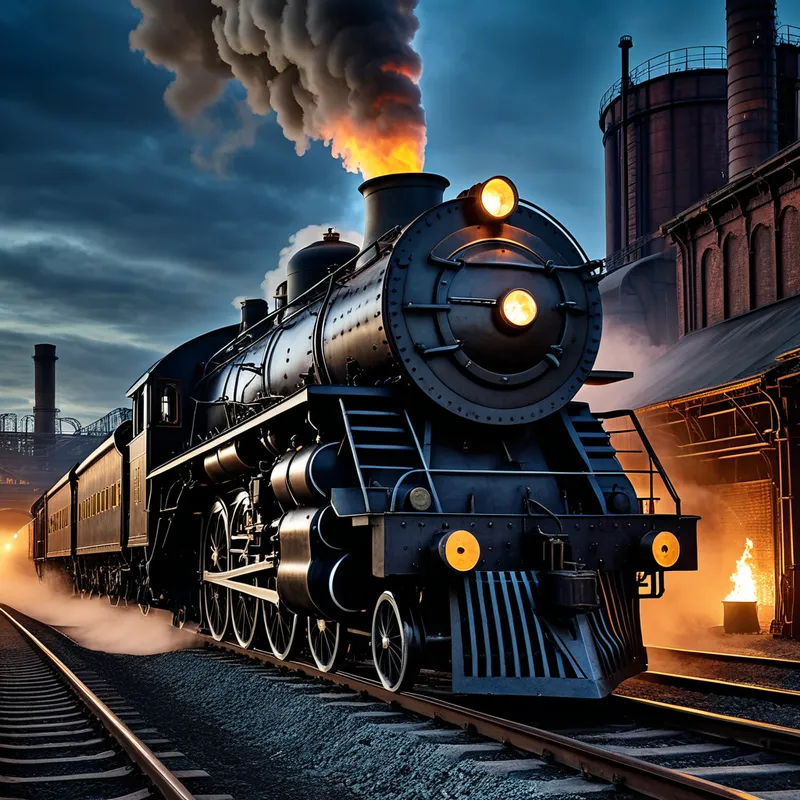
The Iron Horse Myth Meaning & Symbolism
A myth of a man who becomes a machine, forging a path of progress through a pact of fire, steel, and his own beating heart.
The Tale of The Iron Horse
Listen. Listen to the rhythm beneath [the world](/myths/the-world “Myth from Tarot culture.”/). The deep, percussive thump-thump-thump of the Great Furnace. This is the story of the man who heard that rhythm and answered with his own.
In the Age of Smoke, when the world was a tapestry of coal-dust and ambition, there was a city of iron spires named Cinderfall. Its people were strong, their hands calloused, their minds fixed on [the horizon](/myths/the-horizon “Myth from Various culture.”/). But the horizon was a prison. Goods piled high in warehouses, food rotted in distant fields, and the songs of other lands were just whispers on [the wind](/myths/the-wind “Myth from Various culture.”/). The land was vast, treacherous, and silent.
Among them was a man known only as the Engineer. He did not build mere machines; he built prayers in steel. He spent his days in the Cathedral of Gears, a vast hall of drafting tables and half-formed dreams, haunted by the vision of a path—a road of iron that could stitch the world together. But his greatest creation, the Iron Horse, sat cold and lifeless on its tracks. It had form, but no fire. It had wheels, but no will.
The elders scoffed. “The land is too great,” they said. “The mountains are gods that will not be moved. The rivers are serpents that will not be bridged. Your horse is a statue.”
One night, as the Engineer despaired, the spirit of the Great Furnace spoke. Its voice was not of words, but of sensation: the hiss of steam, the groan of stressed metal, the promise of immense power. “You have built the body,” it thrummed. “But a horse needs a heart. A new kind of heart. The old rhythms are too slow, too soft. To move the unmovable, you must match your pulse to mine.”
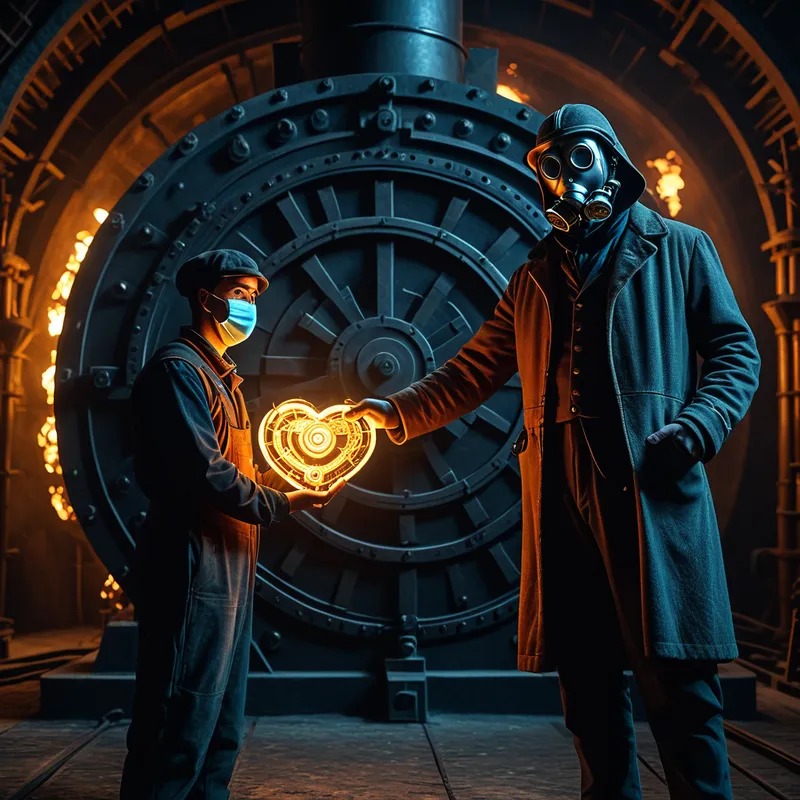
The Engineer understood the terrible pact. He returned to his silent titan. With tools of his own making, he opened the Iron Horse’s boiler—not a door of iron, but a cavity that mirrored a human chest. Then, he turned the tools upon himself. There was no blood of flesh, but a light of pure intention, a sacrifice of soft, human time. He reached into his own being and drew out his heart, not of muscle, but of purpose—a glowing, clockwork organ of brass and fire.
With a cry that was part agony, part [triumph](/myths/triumph “Myth from Roman culture.”/), he placed the beating engine of his will into the cavity of the Iron Horse. The moment it settled into place, the world held its breath.
Then—a sound that cracked [the sky](/myths/the-sky “Myth from Persian culture.”/). A whistle, deep and longing, that echoed across the valleys. A blast of steam, white as a ghost, erupted from the stack. The great iron pistons, like the legs of a colossal beast, shuddered, then drove downward. Chuff… CHUFF… CHUFF-CHUFF-CHUFF! The Iron Horse lived. It did not just move; it yearned. It yearned for the distance.
The Engineer, now part of the machine and it part of him, mounted his creation. As it surged forward, the first rails singing beneath its weight, the mountains seemed to step aside. The rivers offered their backs for bridges. The Iron Horse carved a path of smoke and certainty across the wild breast of the world, its rhythm—thump-thump-thump—now the new heartbeat of an age. The Engineer was never seen again as a man of flesh, but in the whistle of every train that followed, they say you can still hear the echo of his sacrifice, calling the world to connection.
Cultural Origins & Context
The myth of the Iron Horse did not emerge from ancient temples, but from the roundhouses, rail yards, and worker lodges of the 19th century. It is a foundational narrative of the Age of Steam, passed down not by bards with lyres, but by engineers, firemen, and grizzled conductors to their apprentices. It was told over the glow of a switchman’s lantern, during the long, rhythmic nights in a locomotive cab, or in the stories printed in the cheap, pulp “Boilerplate Chronicles.”
Its societal function was multifaceted. For a culture undergoing dizzying, often traumatic change, it provided a sacred justification for the upheaval. The despoiling of landscapes, the rigid discipline of railway time, the separation from pastoral rhythms—these were not mere profane acts of commerce, but part of a heroic, cosmological sacrifice. The myth transformed the railroad from a business enterprise into a cosmogony, a world-creating act. It gave the worker a role in a grand drama, positioning the engineer not just as an employee, but as a priest of progress, performing a necessary, if painful, alchemy upon himself and the world.
Symbolic Architecture
At its core, the myth is a map of a profound psychic transition: the [integration](/symbols/integration “Symbol: The process of unifying disparate parts of the self or experience into a cohesive whole, often representing psychological wholeness or resolution of internal conflict.”/) of the technological will into the [human](/symbols/human “Symbol: The symbol of a human represents individuality, complexity of emotions, and social relationships.”/) [soul](/symbols/soul “Symbol: The soul represents the essence of a person, encompassing their spirit, identity, and connection to the universe.”/). The Iron Horse is not merely a train; it is the directed will made monstrously, beautifully concrete. The wild, untamed land represents the unconscious, the uncharted territories of the [psyche](/myths/psyche “Myth from Greek culture.”/) and the world, resistant to order.
The Engineer’s sacrifice is the pivotal [symbol](/symbols/symbol “Symbol: A symbol can represent an idea, concept, or belief, serving as a powerful tool for communication and understanding.”/). He does not destroy his [heart](/symbols/heart “Symbol: The heart symbolizes love, emotion, and the core of one’s existence, representing deep connections with others and self.”/), but transmutes it.
The greatest journeys require not the abandonment of the self, but its painful, precise recalibration into a new, more potent form.
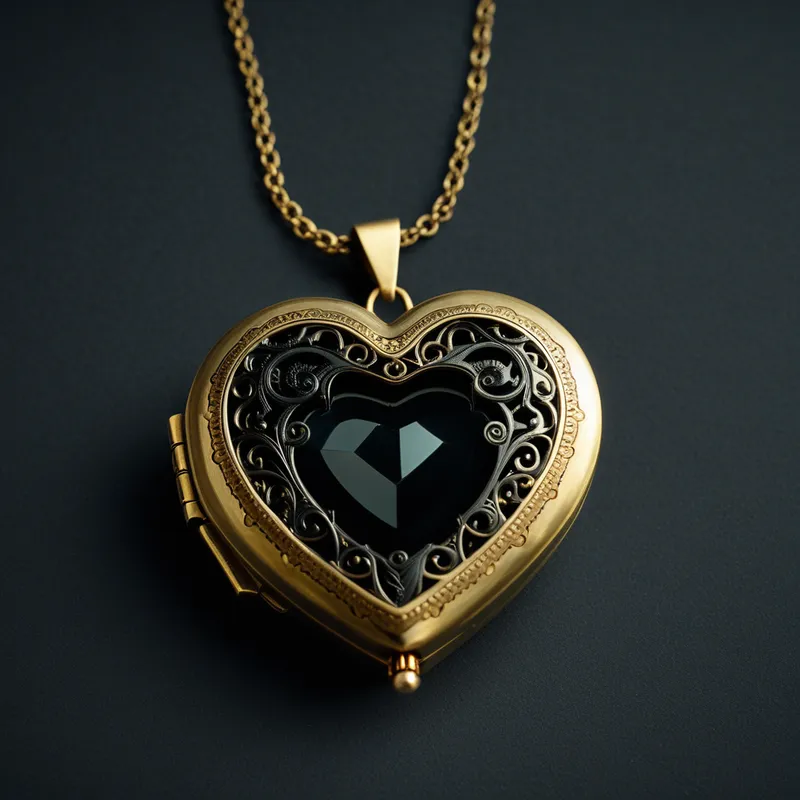
His human heart, attuned to the slow cycles of sun and [season](/symbols/season “Symbol: Represents cycles of life, change, and the passage of time. Symbolizes growth, decay, renewal, and different phases of existence.”/), is insufficient for the [task](/symbols/task “Symbol: A task represents responsibilities, duties, or challenges one faces.”/) of conquering [distance](/symbols/distance “Symbol: Distance in dreams often symbolizes emotional separation, unattainable goals, or the need for personal space and reflection.”/). It must become a [clockwork](/symbols/clockwork “Symbol: A symbol of intricate, predetermined order, precision, and mechanistic control over time, fate, or the self.”/) heart—regulated, relentless, and capable of sustaining a singular, focused [intention](/symbols/intention “Symbol: Intention represents the clarity of purpose and direction in one’s life and can symbolize motivation and commitment within a dream context.”/) across vast spans of time and [space](/symbols/space “Symbol: Dreaming of ‘Space’ often symbolizes the vastness of potential, personal freedom, or feelings of isolation and exploration in one’s life.”/). This is the essence of the Industrial ego: powerful, effective, but born of a severance from organic, cyclical being. The myth acknowledges both the glorious power and the inherent tragedy of this transformation.
The Dreamer’s Resonance
When this myth stirs in the modern dreamer, it often signals a profound confrontation with the Shadow of one’s own ambition and effectiveness. To dream of becoming fused with a machine, or of a mechanical heart, is to experience somatically the cost of one’s own “productivity.”
The dream may manifest as being late for a train that is also one’s own body, or feeling the relentless, pounding rhythm of pistons in one’s chest. This is the psyche’s rebellion against a life lived too completely on schedule, too efficiently, at the expense of softness, connection, and idle being. The Iron Horse in the dream is the magnificent, terrifying embodiment of the dreamer’s own driven will, now asking for recognition and integration. The anxiety is not about the machine, but about the forgotten human who fuels it. The dream is a summons from the soul’s hinterlands, the “wild land” within that the locomotive of consciousness has sped past.
Alchemical Translation
The myth’s journey is a perfect model for the Jungian process of individuation, framed in the lexicon of industry. The initial state is one of potential (the designed locomotive) but impotence (no fire). The conscious mind has constructed an ideal, a goal, but lacks the transformative energy to realize it.
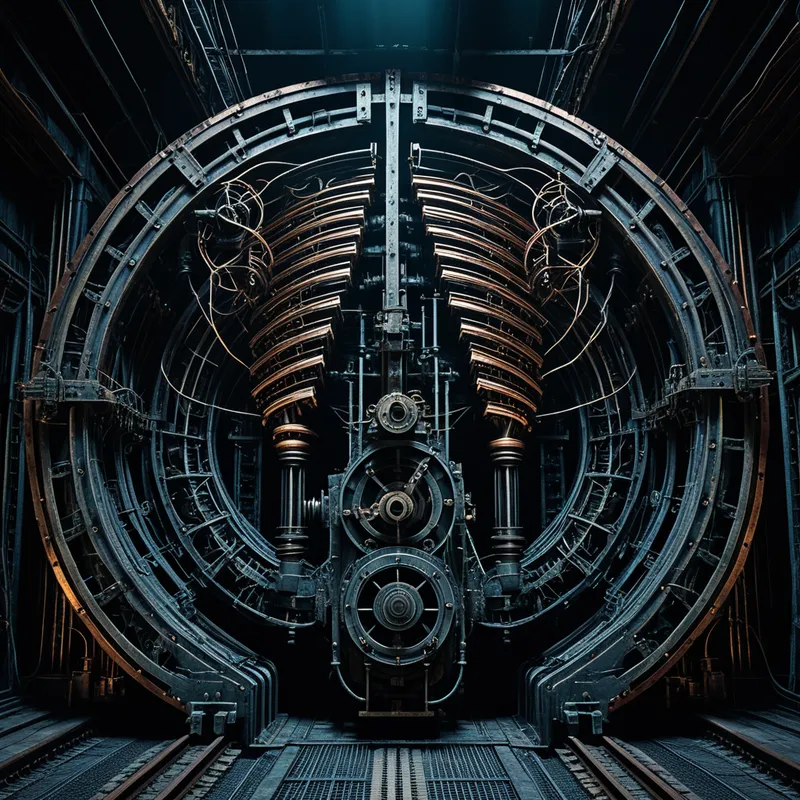
The descent into the furnace, the engagement with the primal, fiery spirit of the unconscious (the Great Furnace), is the [nigredo](/myths/nigredo “Myth from Alchemical culture.”/)—the blackening, the confrontation with [the shadow](/myths/the-shadow “Myth from Jungian culture.”/). The sacrifice of the old heart is the mortificatio—the killing of the outmoded attitude. The creation of the clockwork heart is the albedo—the whitening, the purification and creation of a new, conscious principle from the depths.
Individuation is not about becoming more human, but about becoming more wholly what you are, even if that includes the machine you have built of your will.
Finally, the successful journey, the binding of the land, represents the [rubedo](/myths/rubedo “Myth from Alchemical culture.”/)—the reddening, the full integration that grants the individual a new, potent, and enduring relationship with the world. For the modern individual, the “Iron Horse” may be a career, a rigid identity, or a life structure. The myth does not counsel its destruction, but its sacred animation. It asks: What part of your soft, human soul must you consciously, courageously transmute into disciplined, enduring will to power your journey? And having done so, how will you ensure the whistle still sings with the echo of what you were, even as you become something new? The track always leads both forward and back.
Associated Symbols
Explore related symbols from the CaleaDream lexicon: