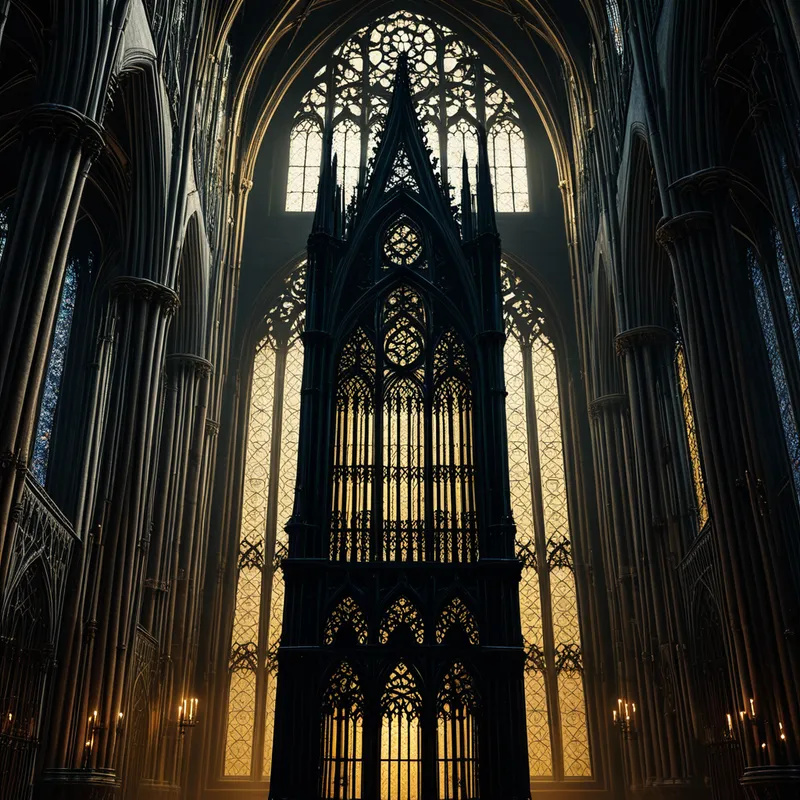
The Iron Cage of Puritanism Myth Meaning & Symbolism
A myth of a soul trapped in a cage of its own rigid virtue, awaiting a key forged not by will, but by divine, unmerited grace.
The Tale of The Iron Cage of Puritanism
Listen. There is a story told in the long, quiet hours, when the fire is low and the conscience is loud. It speaks of a soul—not a wicked one, but a soul of terrible, earnest purity. This soul, whose name is lost to us, lived in a land of grey stone and clear, cold doctrine. It sought not pleasure, but perfection. It measured each thought, each breath, against a plumb line of absolute righteousness, a law inscribed not on tablets of stone, but on the very walls of the heart.
And so, the soul began to build. From the ore of its own fierce will, it smelted bars. From the fire of its conviction, it hammered them straight and true. Each bar was a vow: Thou shalt not. Each rivet was a fear: Thou art not enough. It built not a sanctuary, but an enclosure—a cage of impeccable geometry. The soul stepped inside, and the door, with a sigh of finality, swung shut. The lock, a masterpiece of intricate theology, clicked into place. The key was thrown into a well of forgotten mercy.
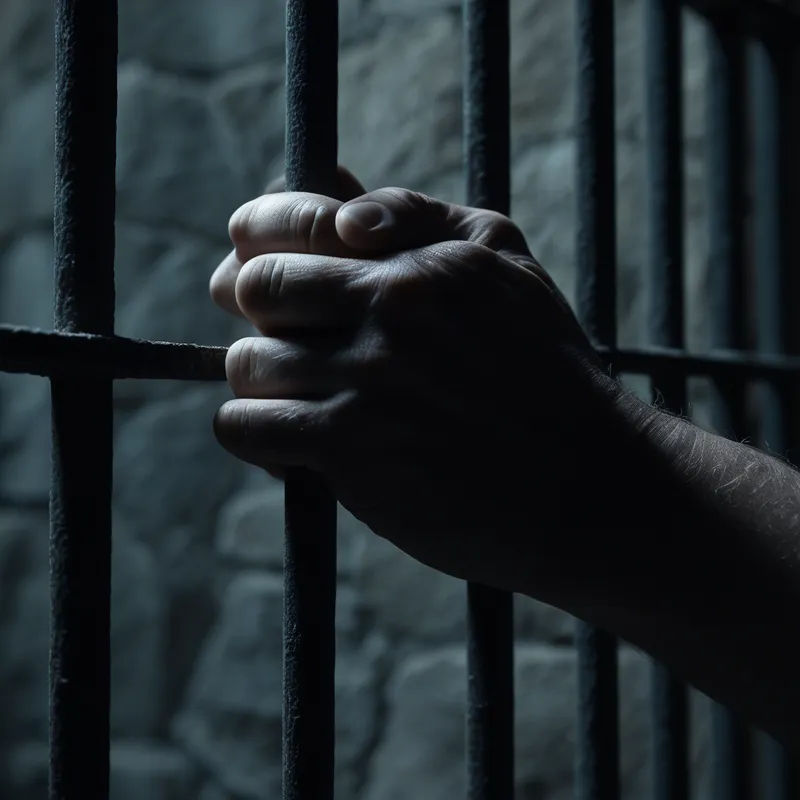
There, in the Iron Cage, the soul stood. It was safe from the wild, blooming chaos of the world, from the stain of doubt, from the terror of freedom. But the air within grew thin and still. The light that filtered through the bars was a cold, analytical light that revealed every flaw on the soul’s own hands. It could see the green world outside, hear the laughter and the weeping, the messy, beautiful business of life, but it was separated by an unbreachable lattice of its own making. The cage was perfect. The cage was a tomb.
The soul prayed, but its prayers were petitions for greater strength to bear the cage, not for deliverance from it. It fasted, until its vision blurred against the bars. It recited the law, until the words echoed back as a taunt. The conflict was not with a dragon or a giant, but with the silence that answered its perfect effort. The rising action was the slow, chilling realization that the lock was on the inside.
Then, in the depth of its impeccable despair, a sound. Not the clang of a hammer, but the soft fall of a footstep. A presence, warm and vast as a field under the sun, approached the cage. It was the Visitant of Unmerited Grace. It did not bring tools to break the bars, for the bars were unbreakable by force. It did not recite a counter-law. It simply stood, and in its standing, the soul remembered the smell of rain, the feeling of earth, the uncalculated beat of its own heart.
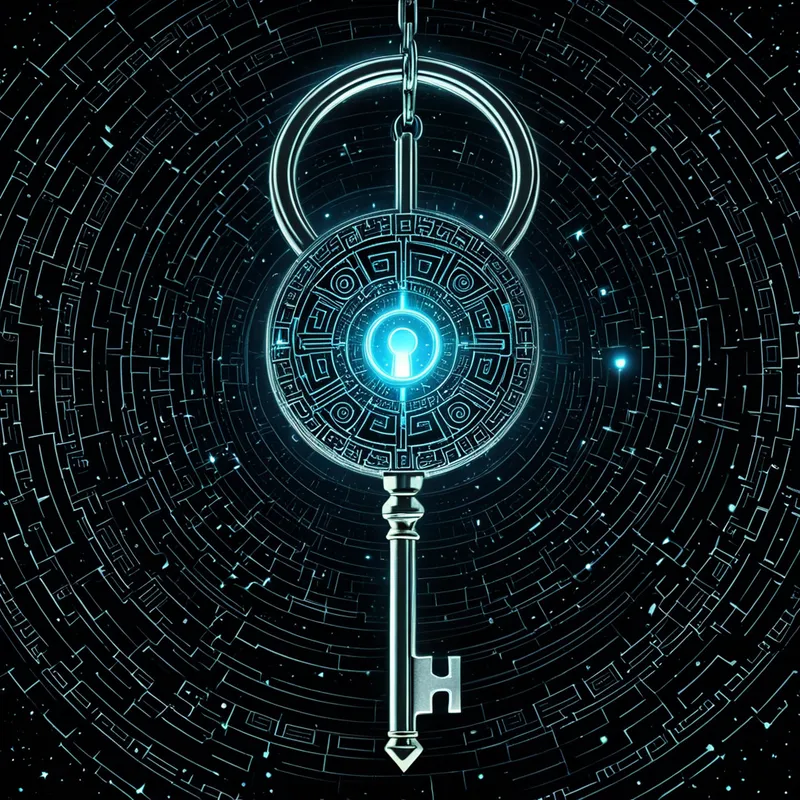
The Visitant looked at the lock, that complex puzzle of earned salvation. Then, from its own side, it produced a key. This key was simple, wrought of something that looked like sorrow and felt like light. It was not a key that fit the lock’s brutal logic. It was a key that dissolved the very idea of the lock. The Visitant did not hand it to the soul. It placed the key on the ground, just outside the bars, where the soul could see it but not reach it.
The resolution was not an explosion, but a thaw. The soul, for the first time, stopped trying to be the builder, the jailer, and the prisoner all at once. It ceased its striving. In that cessation, in the admission of its own perfect impotence, a bar—the one labeled Thy Will Be Done—did not break, but simply… vanished. Then another. Not by the soul’s effort, but by its surrender to the reality of the key it could not earn. The cage did not fall; it unwound, each bar turning to mist before the silent, offered grace. The soul did not walk out in triumph. It found itself already standing in the open air, the cage remembered only as a fading dream of cold iron.
Cultural Origins & Context
This is not a myth found in a single scripture, but one woven from the lived theology and psychological extremity of the Puritan experience, particularly in its New England incarnation. It is a story born from sermons, from spiritual autobiographies like John Bunyan’s Grace Abounding to the Chief of Sinners, and from the deep, introspective anxiety of a culture that placed the individual soul in a direct, unmediated, and terrifying relationship with an inscrutable God.
The myth was passed down not by bards, but by preachers and congregants in meeting houses, by mothers to children in dimly lit homes. Its societal function was dual and paradoxical. On one hand, it served as a warning of a spiritual dead-end: the danger of trusting in one’s own “works” or moral rigor to the exclusion of divine grace. On the other, it precisely described the psychological state of many believers, creating a shared language for an experience of spiritual imprisonment. It legitimized despair as a potential stage on the path to election, making the unbearable tension of the Doctrine of Predestination somewhat navigable. The myth said, “Your feeling of being trapped in your own virtue is known. It is part of the story.”
Symbolic Architecture
The Iron Cage is the central symbol, representing the Ego’s fortress. It is not built by a villain, but by the hero’s highest aspirations. Its iron signifies strength turned to rigidity, conviction hardened into confinement. The intricate lock symbolizes the complex, self-referential logic of a neurosis or a compulsive pattern—a system so internally consistent it becomes inescapable.
The most perfect prison is one the inmate believes is a palace of safety, built with the bricks of their own virtue.
The soul represents the individual psyche in a state of psychic dissociation. It is the part of us that identifies wholly with the inner critic, the rule-maker, the perfectionist, believing this harshness is holiness or high achievement. The Visitant of Unmerited Grace symbolizes the spontaneous intervention of the Self, the deeper, integrative principle of the psyche that lies beyond the ego’s control. It does not fight the cage; it offers a different reality that makes the cage obsolete.
The key is the symbol of the transformative insight or experience that cannot be achieved by willpower. It is often an acceptance of vulnerability, a moment of compassion for oneself, or the intrusion of an irrational beauty or love that operates on a logic alien to the cage’s architecture.
The Dreamer’s Resonance
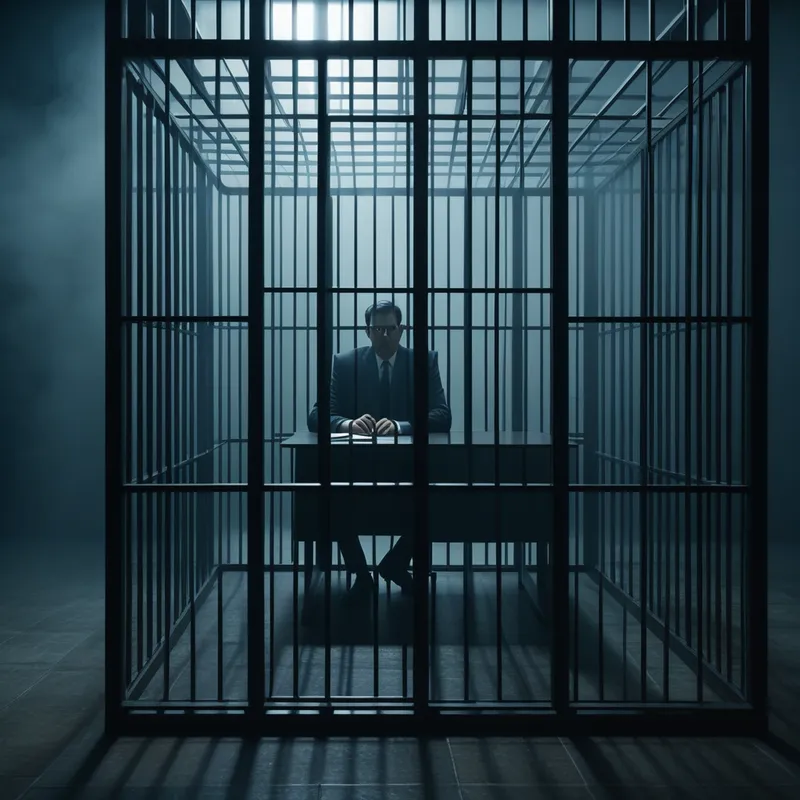
When this myth stirs in modern dreams, it rarely appears as a literal Gothic cage. Instead, one dreams of being trapped in an endless, sterile office building, unable to find the exit despite knowing the layout perfectly. One dreams of a car with brakes that won’t work, on a road of one’s own meticulous design. One dreams of trying to scream in a soundproof room, or of being judged by a tribunal of one’s own face.
Somatically, this is the process of confronting the Shadow—not the shadow of wickedness, but the shadow of life—the messy, emotional, instinctual, and imperfect aspects that the conscious personality has exiled to build its “pure” identity. The tightening in the chest, the shallow breath, the sense of constriction in the dream mirror the body’s habituation to a state of chronic, low-grade control. The dream is the psyche’s attempt to bring this self-imposed confinement into view, to make the invisible cage visible, and to initiate the profound grief for the life not lived within its bars.
Alchemical Translation
The alchemical process modeled here is the solutio—the dissolving. In classical alchemy, solutio follows coagulatio (hardening, fixation). The soul has perfectly coagulated itself into the iron. The transmutation occurs not through a fierier heat (which would only temper the iron harder), but through the waters of grace—the unexpected, irrational solvent.
Individuation often requires the failure of the project of the perfect ego. The cage must be revealed as a cage before the soul can hunger for the sky.
For the modern individual, the myth maps the journey from an identity based on “should” and achievement to one grounded in being. The first stage is the building of the persona of perfect control. The second is the painful realization of its imprisoning nature. The crisis is the confrontation with the fact that one cannot think or will one’s way out. The “Visitant” is that which arrives from the deeper psyche when the ego finally surrenders its central role: perhaps a forgotten creative impulse, a surge of compassion from a dream figure, or a breakdown that becomes a breakthrough.
The alchemical key is the integration of the rejected parts. The soul in the cage is all spirit, no earth. Grace, in psychological terms, is the soul’s own latent wholeness insisting on inclusion. The liberation is the moment the individual can say, “I am not only my discipline, my critique, my purity. I am also my weakness, my longing, my inexplicable joy.” The iron does not disappear; it is transmuted. The strength of will becomes the resilience to hold paradox, the rigor becomes discernment, and the space once occupied by the cage becomes the sacred vessel for a more complete, and therefore truly human, life.
Associated Symbols
Explore related symbols from the CaleaDream lexicon: