The Invisible Door Myth Meaning & Symbolism
A myth of a hero who must perceive a hidden threshold not with sight, but with faith, to find a lost kingdom and restore a forgotten truth.
The Tale of The Invisible Door
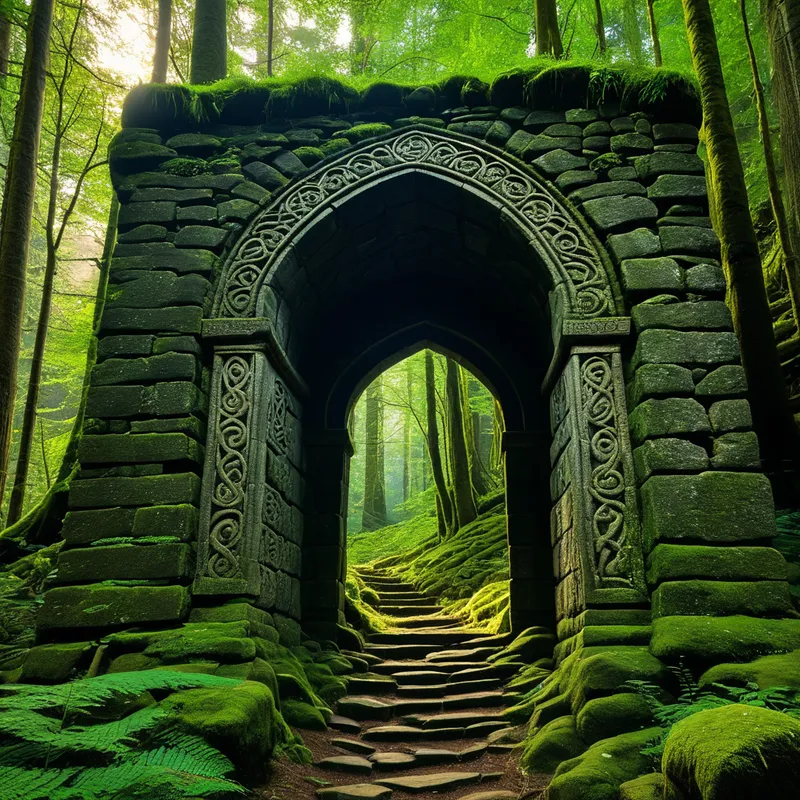
Listen, and I will tell you of a time when [the world](/myths/the-world “Myth from Tarot culture.”/) was softer at the edges, and the woods held their breath, remembering a secret. There was a kingdom, once, of such harmony that its very stones sang at dawn. It was ruled by a wise Monarch who understood the language of roots and stars. But a creeping silence, born of pride and forgetfulness, fell upon the people. They ceased to listen to the old songs and began to believe only what their hands could grasp and their eyes could see. The kingdom, in its sorrow, did not vanish—it withdrew. It folded itself behind a veil of unbelief, and where its great gate once stood, there remained only the unbroken wall of an ancient forest.
Generations passed, and the tale of the lost realm became a fireside story, a metaphor for foolish hope. Until a youth, whom we shall call the Seeker, felt a peculiar ache—not in the body, but in the spirit. It was a homesickness for a place they had never known. Guided by this ache and the fragmented verses of a half-remembered lullaby, the Seeker journeyed to the heart of the oldest wood.
The air grew thick with memory. Birds watched, silent. The Seeker came to a clearing where the light fell in cathedral shafts, illuminating a wall of ivy-clad rock. According to the lore, this was the place. But there was no door, no crack, no handle—only solid, impassable stone. Despair rose like a cold tide. The Seeker had followed a feeling to a literal dead end.
Exhausted, they sank to the moss. As the rational mind surrendered, the other senses awakened. They heard not silence, but a faint, resonant hum from the rock itself. They felt not solidity, but a subtle, inviting pressure in the air before them. The old song echoed in their heart: “Not by sight is [the way](/myths/the-way “Myth from Taoist culture.”/) made clear, but by the truth the heart holds dear.”
Trembling, the Seeker closed their eyes. They stopped looking at the wall and instead remembered the kingdom—not as a picture, but as a feeling of belonging, of rightness. With eyes shut tight, they stood, extended a hand, and took a step forward into the rock. Where sight proclaimed “wall,” the body met no resistance. A sensation of passing through a curtain of cool [water](/myths/water “Myth from Chinese culture.”/), then warm sunlight. A scent of blooming orchards and baking bread. A chorus of welcome sung by a thousand unseen voices.
The Seeker opened their eyes. Before them stretched the lost kingdom, more vibrant than any story, alive and waiting. The Monarch approached, not as a ghost, but as one greeting a long-awaited child. “You have not found us,” the Monarch said, voice like wind in leaves. “You have remembered us. And in remembering, you have made the way visible once more.” The Invisible Door had never been in the wall; it had always been in the act of faithful perception.
Cultural Origins & Context
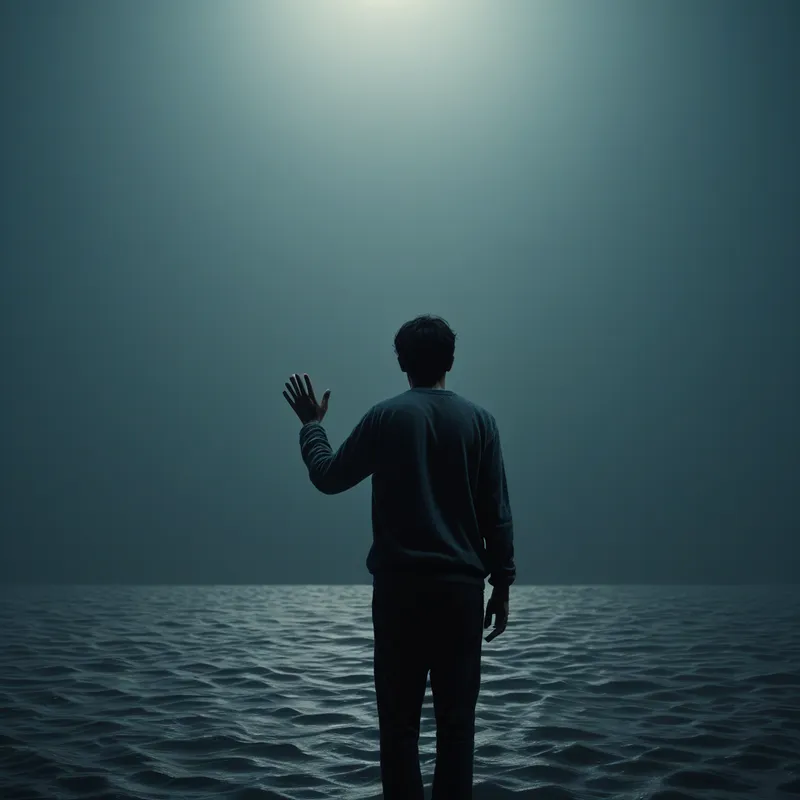
The myth of The Invisible Door is a cornerstone of an oral tradition we broadly categorize as “Fairy Tale” culture—a tapestry of stories shared across hearths and hamlets, meant not merely to entertain but to encode essential truths about human consciousness and its relationship with the unseen world. Unlike courtly epics, this tale was the province of grandmothers, wandering storytellers, and wise folk on the edges of villages. It was told at twilight, in that liminal hour when day logic fades and night intuition stirs.
Its societal function was profound. In pre-modern communities living close to the capricious forces of nature, the myth served as a psychological tool. It validated inner knowing—a gut feeling, a dream, an inexplicable certainty—in a world where tangible evidence was often scarce. It was a narrative antidote to literalism, teaching that some of the most real things (community cohesion, faith, hope, the presence of the sacred) are perceptible only through a faculty beyond the physical senses. The story was a map for navigating crises of faith, both personal and collective, implying that what seems lost is often merely hidden behind [the veil](/myths/the-veil “Myth from Various culture.”/) of conventional perception.
Symbolic Architecture
At its core, the myth is a masterclass in the [psychology](/symbols/psychology “Symbol: Psychology in dreams often represents the exploration of the self, the subconscious mind, and emotional conflicts.”/) of [perception](/symbols/perception “Symbol: The process of becoming aware of something through the senses. In dreams, it often represents how one interprets reality or internal states.”/) and threshold. The lost [kingdom](/symbols/kingdom “Symbol: A kingdom symbolizes authority, belonging, and a sense of identity within a larger context or community.”/) symbolizes a state of [psychic wholeness](/symbols/psychic-wholeness “Symbol: A state of complete integration between conscious and unconscious aspects of the psyche, representing spiritual unity and self-realization.”/), [the Self](/myths/the-self “Myth from Jungian culture.”/) in its integrated form, which can become “lost” to the conscious ego through [trauma](/symbols/trauma “Symbol: A deeply distressing or disturbing experience that overwhelms the psyche, often manifesting in dreams as unresolved emotional wounds or psychological injury.”/), societal conditioning, or simple neglect. The ancient [wood](/symbols/wood “Symbol: Wood symbolizes strength, growth, and the connection to nature and the environment.”/) is the [depths](/symbols/depths “Symbol: Represents the subconscious, hidden emotions, or foundational aspects of the self, often linked to primal fears or profound truths.”/) of the unconscious, where forgotten truths reside.
The Door is invisible not because it does not exist, but because the ego, relying solely on empirical data, is looking with the wrong eyes.
The Monarch represents the archetypal Self, the central organizing principle of the [psyche](/myths/psyche “Myth from Greek culture.”/) that awaits recognition. The [Seeker](/symbols/seeker “Symbol: A person actively searching for meaning, truth, or a higher purpose, often representing the dreamer’s own quest for identity or fulfillment.”/)‘s [journey](/symbols/journey “Symbol: A journey in dreams typically signifies adventure, growth, or a significant life transition.”/) is [the ego](/myths/the-ego “Myth from Jungian culture.”/)‘s [quest](/symbols/quest “Symbol: A quest symbolizes a journey or search for purpose, fulfillment, or knowledge, often representing life’s challenges and adventures.”/) for meaning. The critical turn in the [story](/symbols/story “Symbol: The symbol of ‘Story’ represents the narrative woven through our lives, embodying experiences, lessons, and emotions that shape our identities.”/)—closing the eyes—is the symbolic [death](/symbols/death “Symbol: Symbolizes transformation, endings, and new beginnings; often associated with fear of the unknown.”/) of [the ego](/myths/the-ego “Myth from Jungian culture.”/)‘s [dominance](/symbols/dominance “Symbol: A state of power, control, or influence over others, often reflecting hierarchical structures, authority, or social positioning.”/). It represents the [suspension](/symbols/suspension “Symbol: A state of being held in limbo, neither progressing nor regressing, often representing unresolved tension or transitional phases in life.”/) of doubt, the setting aside of the “rational” worldview that has proven inadequate. The step forward is an act of pistis, of trust in the [reality](/symbols/reality “Symbol: Reality signifies the state of existence and perception, often reflecting one’s understanding of truth and life experiences.”/) of the inner [image](/symbols/image “Symbol: An image represents perception, memories, and the visual narratives we create in our minds.”/) and feeling.
The [Door](/symbols/door “Symbol: A door symbolizes transition, opportunity, and choices, representing thresholds between different states of being or experiences.”/) itself is the [limen](/myths/limen “Myth from Roman culture.”/), the transformative threshold. Its invisibility underscores a fundamental psychological law: the [gateway](/symbols/gateway “Symbol: A threshold between states, representing transition, opportunity, or initiation into new phases of life or consciousness.”/) to a deeper reality becomes apparent only when one’s mode of [consciousness](/symbols/consciousness “Symbol: Consciousness represents the state of awareness and perception, encompassing thoughts, feelings, and experiences.”/) aligns with that reality. You cannot perceive the [solution](/symbols/solution “Symbol: A solution symbolizes resolution, clarity, and the overcoming of obstacles, often representing a sense of accomplishment.”/) from within the [problem](/symbols/problem “Symbol: Dreams featuring a ‘problem’ often symbolize internal conflicts or challenging situations that require resolution and self-reflection.”/)‘s [logic](/symbols/logic “Symbol: The principle of reasoning and rational thought, often representing order, structure, and intellectual clarity in dreams.”/).
The Dreamer’s Resonance
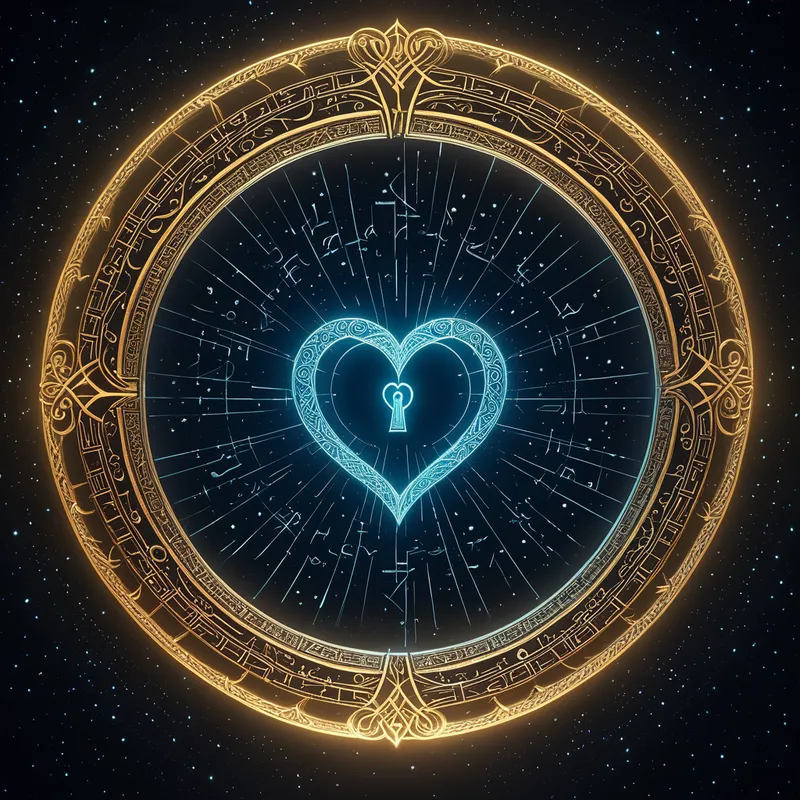
When this myth activates in the modern dreamscape, it often manifests as dreams of finding secret rooms, discovering hidden passages in familiar homes, or encountering walls that become permeable. The somatic experience upon waking is frequently one of tingling anticipation or profound relief, centered in the chest or gut—the body’s intelligence affirming what the mind dismissed.
To dream of The Invisible Door signals that the dreamer is at a critical psychic impasse. Consciously, they may feel “stuck,” facing a situation with no apparent solution—a career dead-end, a relational stalemate, a creative block. The unconscious is presenting the mythic pattern: the solution is not to push harder against the “wall” with the same tools, but to change the perceptual apparatus. The dream is an invitation to introvert, to close the eyes of outer striving and consult the inner feeling-toned truth. The psyche is initiating a process of re-membering—of gathering the disowned or forgotten parts of oneself that hold the key to the next stage of life.
Alchemical Translation
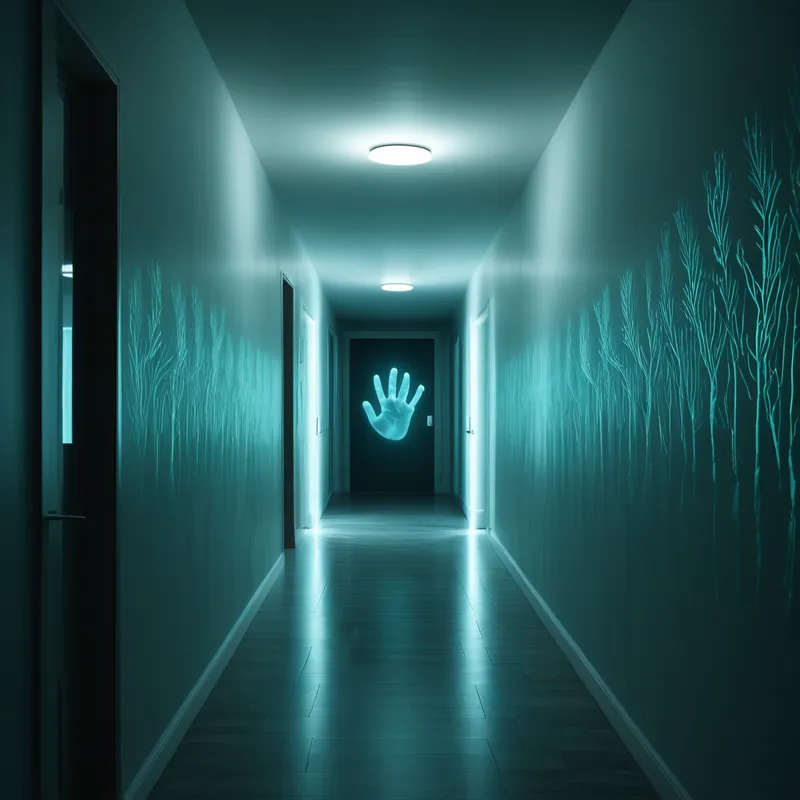
The myth models the alchemical opus, [the great work](/myths/the-great-work “Myth from Alchemical culture.”/) of individuation. The Seeker’s initial state is one of [nigredo](/myths/nigredo “Myth from Alchemical culture.”/), the blackening—the ache, the homesickness for the Self. The journey into the wood is the [separatio](/myths/separatio “Myth from Alchemical culture.”/), leaving behind the collective consensus reality. Facing the solid wall is the moment of mortificatio, the death of the old way of seeing; despair is [the crucible](/myths/the-crucible “Myth from Alchemical culture.”/).
The transmutation occurs not in the finding, but in the fundamental shift from seeking with the eyes to knowing with the heart. This is the true coniunctio, the marriage of consciousness with the unconscious.
Closing the eyes is the supreme act of [solutio](/myths/solutio “Myth from Alchemical culture.”/)—dissolving the rigid structures of the ego. The step forward is the coagulatio, the embodiment of the new insight, giving it substance through action. The regained kingdom is the [rubedo](/myths/rubedo “Myth from Alchemical culture.”/), the reddening, the achievement of [the philosopher’s stone](/myths/the-philosophers-stone “Myth from Alchemical culture.”/): a conscious personality now in living relationship with the Self, radiating wholeness.
For the modern individual, the alchemical instruction is clear. When confronted with an insurmountable obstacle, the directive is to cease looking at it. Instead, one must turn inward, identify the “feeling-tone” of what lies beyond the obstacle—the peace, the resolution, the creativity that is sought. By holding that inner feeling with fidelity and taking the practical, physical step that aligns with it (even, or especially, when it defies conventional logic), one performs the modern equivalent of stepping through the stone. The Invisible Door is the psychoid point where inner conviction manifests outer reality. It is the myth telling us that faith, in the deepest psychological sense, is not belief without evidence, but the courage to act on the evidence provided by the totality of the psyche, visible and invisible alike.
Associated Symbols
Explore related symbols from the CaleaDream lexicon: