The Horse in Tengriism Myth Meaning & Symbolism
A myth of a divine horse descending from the Eternal Blue Sky, becoming the sacred bridge between humanity, the earth, and the spirit of the boundless steppe.
The Tale of The Horse in Tengriism
Listen. Before the memory of stone, when the world was young breath upon the grass, there was only the Tengri and the deep, murmuring Earth. Between them stretched a silence so vast it was a song only the wind knew. Tengri looked upon the rolling, empty steppe and saw a loneliness in its boundless beauty. The Earth felt the gaze of the Blue Sky and yearned for a bridge.
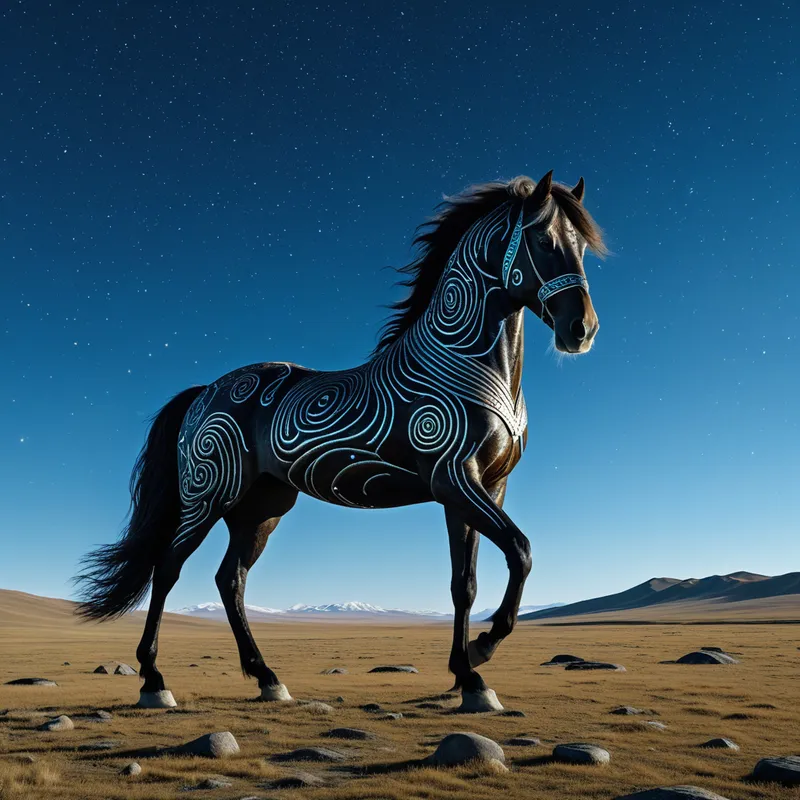
From the breath of the West Wind and a shard of the morning star, Tengri fashioned a spirit. It was not a beast of burden, nor a creature of prey. It was a thought given legs, a prayer given form—a horse. Its coat was the color of a storm cloud at midnight, its eyes held the liquid darkness of mountain lakes, and its mane flowed like the rivers of the Milky Way. They called it the Khökhe Morin, the Celestial Blue Horse.
Tengri sent the horse down on a ladder of lightning. It landed not with a crash, but with the soft sigh of rain finding dust. At first, it ran. It ran until its hooves wore valleys and its breath shaped the hills. It ran to the four sacred directions, marking the corners of the world. The Earth trembled with joy at this vibrant life upon its back. Yet, the horse was a spirit of the sky, restless, its soul tethered to the heights.
Then came the first human, born from the clay of a sacred mountain. Small, fragile, and earthbound, he watched the celestial horse from a distance, his heart aching with a recognition he could not name. One fierce winter, when the White Death stalked the land, the human was dying, curled against the cold. The Blue Horse saw this spark of life guttering. It did not approach as a god, but knelt. It offered the warmth of its flank.
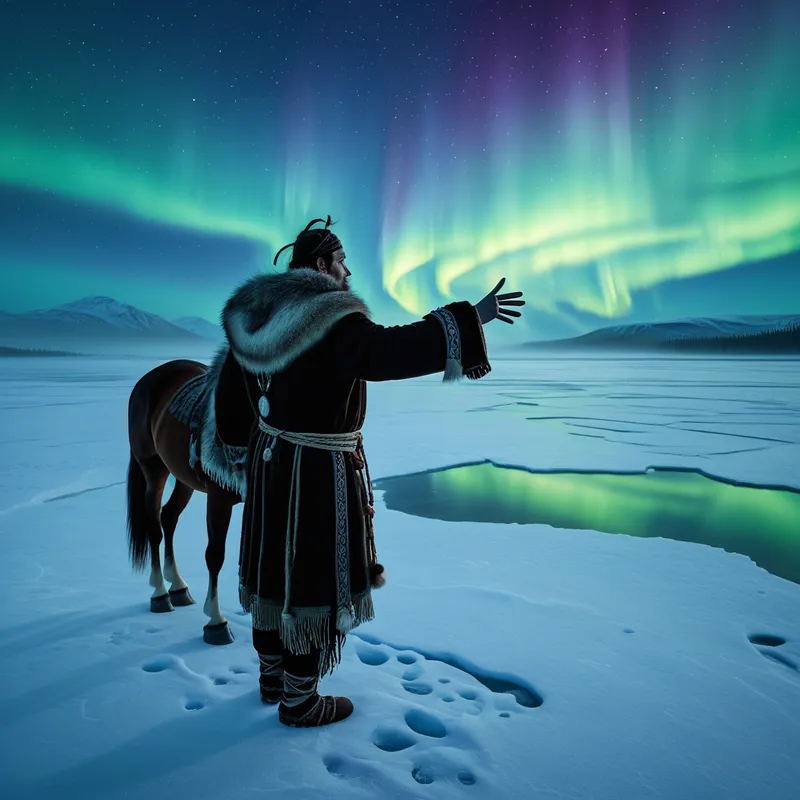
In that touch—the chill of human skin against the living furnace of the spirit-horse—the alchemy occurred. The horse’s boundless sky-energy flowed into the human’s earth-bound frame. The human’s grounded soul gave the horse a purpose in the world below. The horse lifted the human onto its back. Suddenly, the horizon was not a limit but an invitation. The steppe was not a expanse to cross, but a home to sing to. The human’s legs became the horse’s legs; the horse’s spirit became the human’s will. Together, they became the Sülde of the land itself—the moving, breathing spirit of the people and the place. The horse was no longer just of the sky. It had become the sacred bridge, the living bond between Tengri, the human, and the Earth.
Cultural Origins & Context
This myth is not a single story bound in a book, but the living breath of the steppe. It emerged from the symbiotic existence of the nomadic peoples of Central Asia—the Mongols, Turks, and others—for whom the horse was not merely livestock, but the absolute prerequisite for life, identity, and empire. The myth was passed down in the smoke of felt tents, in the rhythmic chants of böö (shamans), and in the epic oral poetry sung by bards to the accompaniment of the horse-head fiddle, the morin khuur.
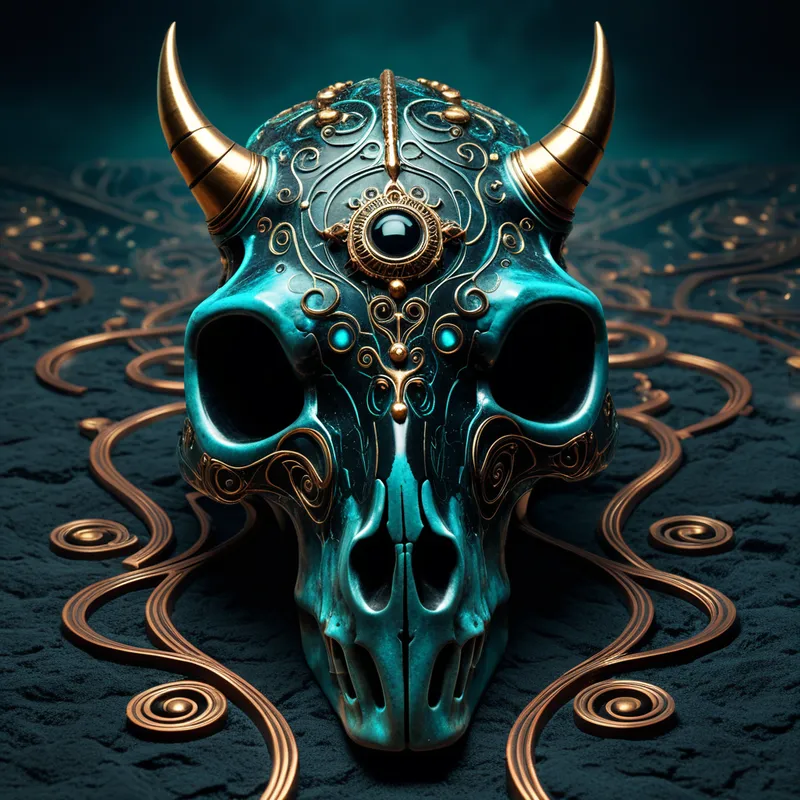
Its societal function was foundational. It sacralized the human-horse relationship, framing it not as domestication, but as a sacred covenant. The horse’s speed and endurance were seen as a direct gift from Tengri, enabling the people to fulfill their destiny on the vast stage of the world. The ritual of attaching a seter to the top of the yurt, or the practice of hanging a horse’s skull on an ovoo, were direct enactments of this myth—maintaining the vertical connection between earth and sky that the horse first established.
Symbolic Architecture
The Horse in Tengriism is a master symbol of the animated psyche in its totality. It represents the untamed, instinctual life force—the raw power of the libido or psychic energy that comes from the "upper world" of the unconscious. The human represents the conscious ego, born of the "middle world" of tangible reality.
The myth narrates the primordial moment when raw instinct is not conquered, but consecrated through relationship, becoming the vehicle for consciousness.
The descent of the horse is the influx of divine or unconscious energy into the field of conscious life. Its initial restless running symbolizes undirected psychic potential—powerful but aimless. The human’s fragility represents the ego’s inherent limitation and its profound need for this greater energy to survive and thrive. The covenant, the mutual offering of warmth, is the critical act of relating to one’s own instinctual nature. It is not about breaking the horse (repression) nor being trampled by it (possession). It is the sacred pact of partnership.
The resulting union—the mounted human—symbolizes the individuated Self. The horse’s legs become the movement of the psyche through the world; the human’s direction gives purpose to the horse’s power. Together, they achieve sülde: a cohesive, dynamic spirit that is in harmony with both its inner depths (the sky) and its outer environment (the earth).
The Dreamer's Resonance
When this myth stirs in the modern dreamer, it often manifests as dreams of horses that are profoundly numinous. You may dream of a horse that is impossibly beautiful, luminous, or storm-colored, standing at the edge of a familiar yet vast landscape. It may be waiting, or it may be running wild just out of reach. The somatic feeling is key: a thrilling mix of awe, longing, and a touch of fear.
This dream signals a critical moment of psychic readiness. The "celestial" energy—a burst of creativity, a surge of vital life force, a deep spiritual longing—has descended from the unconscious and is now present in your psychological field. The dream-ego’s reaction mirrors the ancient human’s: feeling small, earthbound, and separate from this magnificent power. The psychological process underway is the potential for a new covenant between your conscious attitude and this powerful instinctual or spiritual content. Are you ignoring it? Are you trying to cage it with logic? Or are you, in the vulnerability of your "winter," preparing to reach out and establish a relationship? The dream horse offers the vehicle, but the dreamer must choose to mount.
Alchemical Translation
The alchemy here is the transmutation of raw, archetypal energy into a personalized, guiding spirit—the creation of the sülde. For the modern individual, the "Celestial Blue Horse" is that potent, often disruptive, call from the depths: a creative vision that won’t leave you alone, a passion that upends your routine, a spiritual crisis that shatters old beliefs. It feels divine in its intensity and terrifying in its demand.
The individuation journey modeled by this myth is not a quest to find the horse, but to have the courage to meet it when it arrives, and to negotiate the sacred treaty of the shared breath.
The first stage is Acknowledgment (the horse’s descent). You must recognize this influx as meaningful, not as a problem to be solved. The second is Endurance (the horse’s running, the human’s winter). This is the period of chaotic potential and ego-fragility, where the new energy has no direction and the old self feels inadequate. The crucial third stage is the Covenant (the offering of warmth). This is the active, vulnerable work of psychology: engaging with the energy through journaling, art, active imagination, or therapy—offering it the "warmth" of your conscious attention. You relate to it; you do not become it.
The final stage is Mounting (becoming the centaur). This is integration. The creative energy becomes sustained creative work. The spiritual longing becomes a daily practice. The passion finds its direction. You are no longer just your ego, nor are you possessed by an archetype. You are the rider and the horse as one entity, moving with purpose across the steppe of your life, your sülde—your unique, dynamic spirit—finally visible, forged in the pact between heaven and earth.
Associated Symbols
Explore related symbols from the CaleaDream lexicon: