The Horn of Plenty (Cornucopia) Myth Meaning & Symbolism
A horn torn from a river god becomes an unending source of bounty, transforming a symbol of violent rupture into one of perpetual nourishment.
The Tale of The Horn of Plenty
Listen. Before the world was ordered, when gods wrestled in riverbeds and destiny was a fluid thing, there flowed a god named Achelous. He was not a gentle stream but the primal force of water itself—shifting, powerful, and proud. His form was mutable: one moment a bearded man with bull’s horns, the next a great serpent coiling through the land, and then a bull with a crashing, watery roar. His heart was set on the beautiful maiden Deianeira, who saw in his shifting nature not wonder, but terror.
Into this divine courtship strode the hero, Heracles, son of Zeus. His love was a fixed point, his strength a promise of stability. Achelous, insulted, rose to challenge him. The contest began not with blades, but with words, each boasting of their worth. But words soon failed. The river god, in a surge of rage, shifted. He became the bull, a mountain of muscle and wet hide, horns lowered like crescent moons of bone to gore the mortal who dared oppose him.
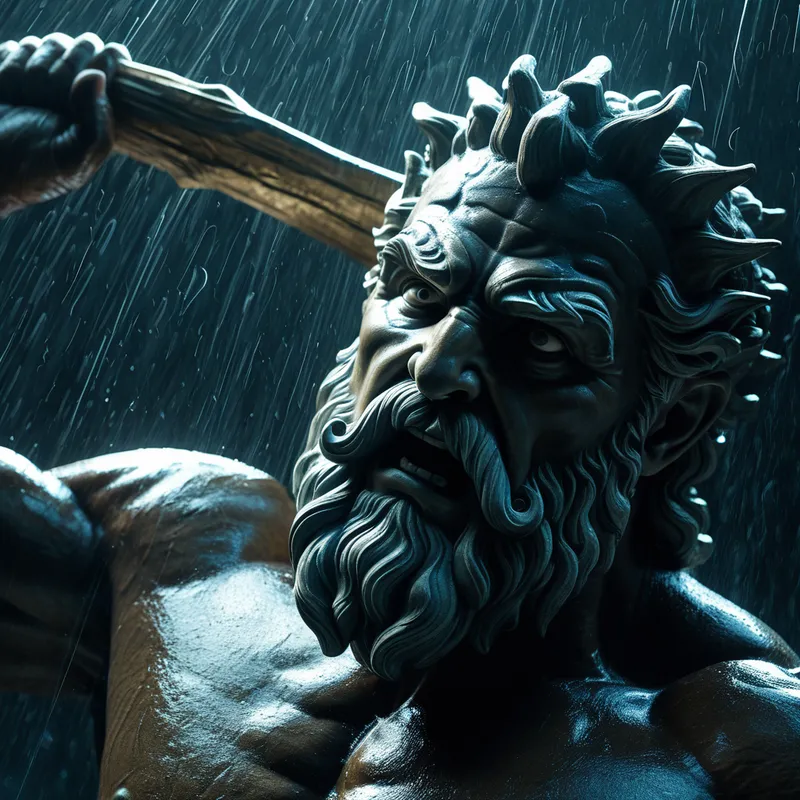
Heracles stood his ground. He did not flee the charge. As the beast thundered toward him, he grasped one mighty horn. The struggle was titanic—a contest between the immutable force of a hero’s will and the churning, shape-shifting power of nature itself. Muscles corded, earth shook, and the river’s waters churned in sympathy with their master’s strain. With a crack that echoed like splitting stone and a cry that was part roar, part rushing torrent, the horn tore free from Achelous’s brow.
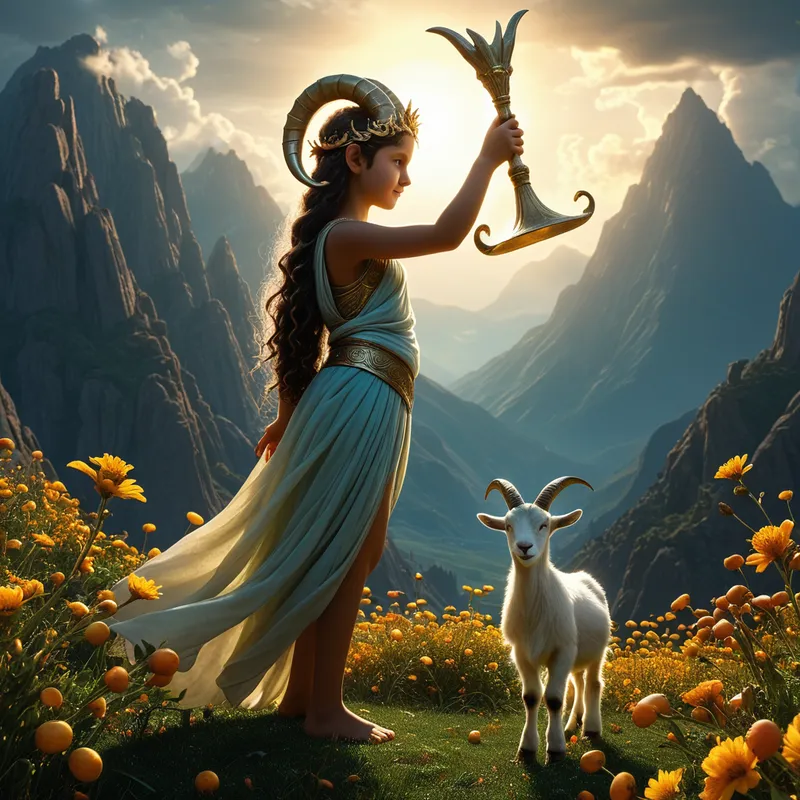
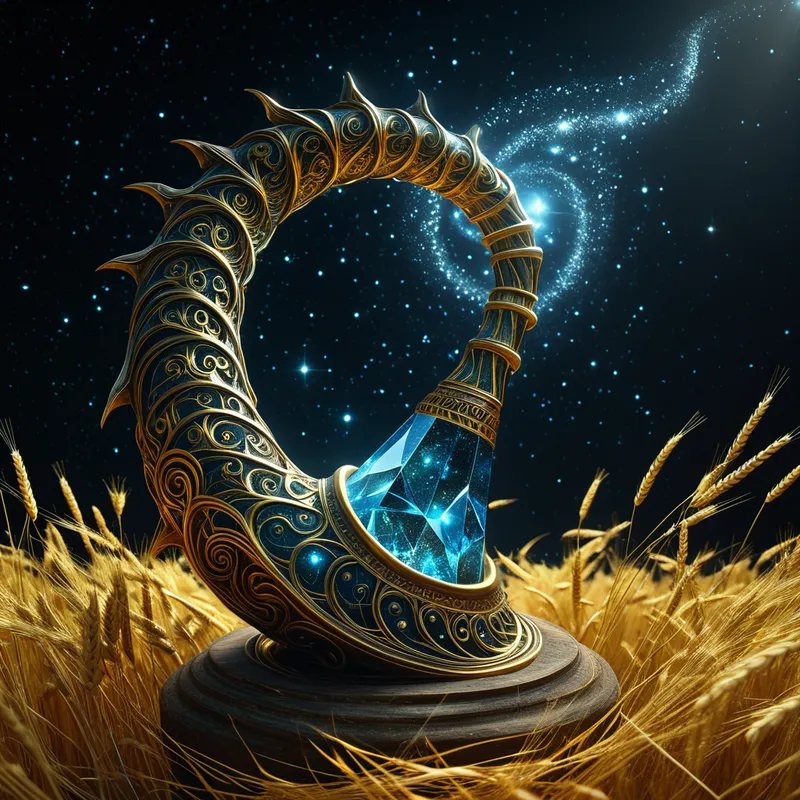
But from that violent rupture, from that symbol of defeat and broken divinity, something miraculous occurred. The Naiads, the spirit-daughters of the waters, took up the horn. They did not cast it aside as a trophy of violence. Instead, they filled it. They filled it with the sweetest fruits of the autumn orchard, with the richest grains from the summer field, with clusters of grapes heavy with wine-dark promise. The horn, once an instrument of potential goring, now overflowed. It did not merely hold bounty; it became its source. It was given a name: Cornucopia. And it was placed in the care of the goddess of the harvest, Demeter, or of her daughter, Persephone, becoming the symbol of the earth’s unending, cyclical generosity.
Cultural Origins & Context
The myth of the Cornucopia is most famously preserved within the corpus of Greco-Roman mythology, with its earliest literary references appearing in writers like Hesiod. However, its essence is truly universal, a “global” myth by virtue of its profound, archetypal simplicity. It was a story told not just in epic poetry but enacted in ritual. During the Thesmophoria and the Roman Cerealia, symbols of the horn overflowing with produce were central, connecting the community directly to the divine source of their sustenance.
Its societal function was multifaceted. On a literal level, it was an aetiological myth, explaining the origin of a common symbol of abundance. On a deeper level, it served as a foundational narrative for agrarian societies, reconciling the necessary violence of harvest (the breaking of the stalk, the pruning of the vine) with the miraculous gift of nourishment that results. It taught that abundance is not a passive state but often born from a moment of profound struggle and transformation, a sacred exchange between humanity, nature, and the divine.
Symbolic Architecture
At its core, the Cornucopia is a symbol of alchemical paradox. Its power emerges not from wholeness, but from a break. The horn is a part severed from a greater whole, a fragment of divinity captured in mortal struggle.
The most profound nourishment flows not from the intact and guarded self, but from the sacred wound, the place where our wholeness was challenged and broken open.
Psychologically, Achelous represents the undifferentiated, primal flow of instinct and natural power—powerful but chaotic. Heracles represents the conscious ego, the heroic principle that seeks to define, order, and claim. Their struggle is the eternal conflict between the unconscious, shape-shifting depths and the conscious will striving for mastery. The broken horn is the prize of this conflict, but its transformation is the myth’s true revelation. The horn becomes a vessel. It is no longer attached to the head, the seat of identity and aggression (the bull), but is re-oriented to become a receptacle. This is the symbolic shift from taking (goring) to receiving and giving (overflowing). The Naiads, as spirits of the nourishing waters, perform this alchemy, turning a token of defeat into an instrument of perpetual grace.
The Dreamer’s Resonance
When the Cornucopia appears in modern dreams, it rarely manifests as a classical still-life. More often, the dreamer encounters the process of the myth. One might dream of breaking something precious—a family heirloom, a part of one’s own body—only to find it begins to spill forth a substance of immense value: light, water, seeds, or a strange, nourishing light. Alternatively, the dreamer may be desperately hungry, holding an empty, dry vessel, until in a moment of despair or release, it suddenly fills from an unseen source.
Somatically, this dream pattern correlates with a psychological process of moving from a state of scarcity consciousness—a feeling of being drained, deprived, or in constant struggle—toward a recognition of inner resource. The “breaking” in the dream mirrors a necessary deconstruction of an old identity, often one built on forceful control (the Heracles ego) or chaotic reactivity (the Achelous complex). The ensuing flow signifies the psyche’s innate capacity for self-replenishment once that rigid structure is compromised. The dream is an assurance from the deep unconscious: your wound, your loss, your brokenness, has the potential to become the very channel through which your deepest nourishment arrives.
Alchemical Translation
For the modern individual navigating the path of individuation, the Cornucopia myth models a critical phase of psychic transmutation. We all contain an inner Achelous—the raw, untamed flow of our instincts, creativity, and emotional power. We also contain an inner Heracles—the striving will that seeks to conquer our demons, achieve our goals, and build a stable identity. Their inevitable conflict is not a flaw but a necessity.
The alchemical work lies not in the victory of one over the other, but in the sacred treatment of the “horn”—the fragment of our psyche that is torn loose in the struggle. This could be a broken ambition, a shattered self-image, a lost relationship, or a humiliating failure. The instinct of the ego is to see this fragment only as a trophy of battle or a badge of shame.
Individuation demands we become the Naiad, not just the warrior. We must take the broken piece and consecrate it, fill it with new meaning, and re-purpose it as a vessel for a different kind of power.
This is the translation from egoic striving to spiritual receptivity. We learn that our true abundance—of creativity, compassion, resilience, and insight—does not come from an inviolate, fortified self, but from the courage to let our defensive structures be compromised, to allow our certainties to be broken open. The Cornucopia teaches that the psyche’s ultimate goal is not invulnerability but fertile, overflowing vulnerability. The horn, forever separate from the head that bore it, becomes a testament that our greatest gifts to the world and to ourselves are often born from the very places where we have been most profoundly ruptured. The endless flow begins precisely there, at the break.
Associated Symbols
Explore related symbols from the CaleaDream lexicon: