The Hero's Journey Myth Meaning & Symbolism
A universal story of departure, initiation, and return, where an ordinary individual is called to adventure, faces a supreme ordeal, and returns transformed.
The Tale of The Hero’s Journey
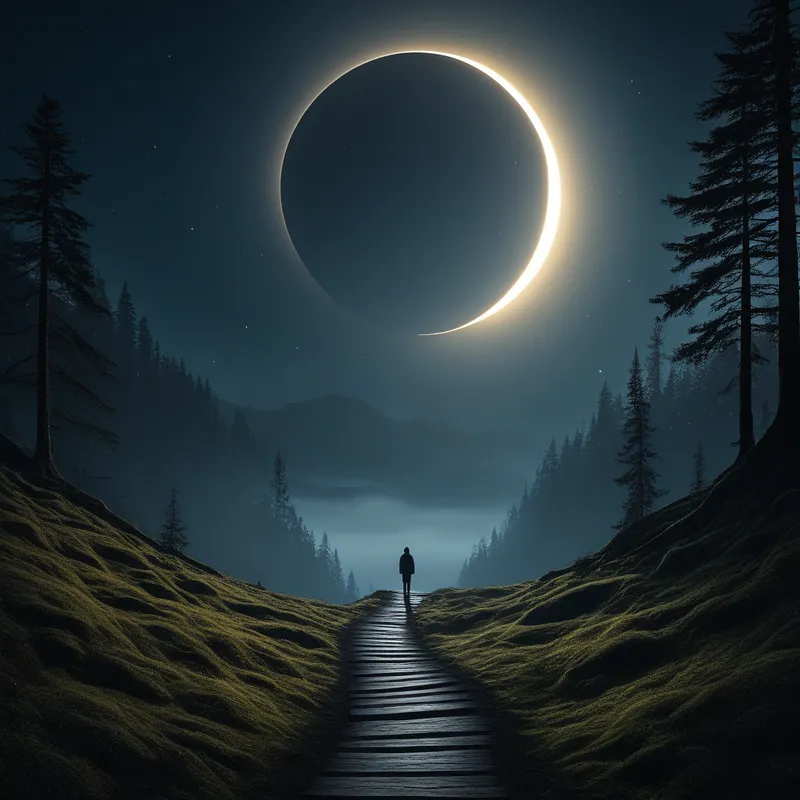
Listen. The world you know is a circle drawn in chalk, and outside that circle, the wind howls with forgotten names. In the heart of the village, where the hearth-fire is warm and the stories are old, there is one who feels the chalk-line itch. This is the Common Day. Here, the hero is no hero, but a son, a daughter, a farmer, a clerk—someone with a familiar face and a quiet discontent.
Then, the Call comes. It may be a whisper on a storm, a dying king’s plea, a theft in the night, or a map found in the belly of a fish. It is an invitation to rupture. Most refuse, clinging to the chalk circle. This is the Refusal. But for the one whose soul is ripe, refusal curdles into resolve. An old guide, a Threshold Guardian with eyes like cracked river stones, may appear, offering a talisman—a word, a sword, a skeptical grin.
And so, they cross. The First Threshold is a physical line: the edge of the forest, the gangplank of a ship, the mouth of a cave. The air changes. The rules of the Common Day dissolve. This is the Belly of the Whale, a realm of shifting shapes and testing shadows. The path is a Road of Trials. They meet tricksters who steal their water, face cliffs that laugh at climbing, and are tempted by sirens singing of simpler loves.
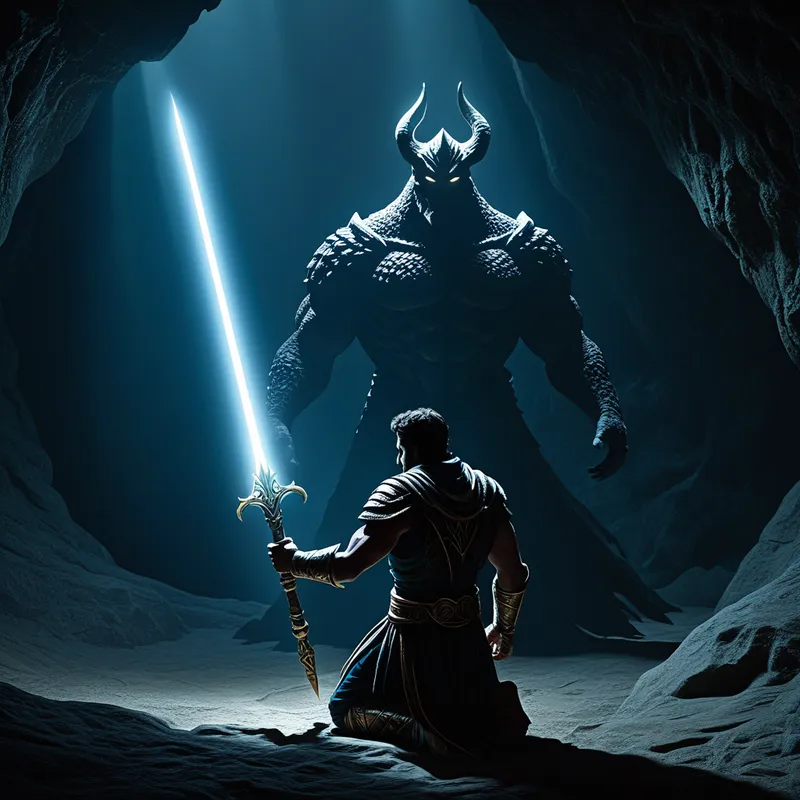
At the journey’s nadir lies the Inmost Cave. Here, in darkness that smells of damp earth and old blood, awaits the Dragon. It is a beast of scales and flame, a tyrant on a black throne, a void that speaks with the hero’s own voice. This is the Supreme Ordeal. The hero fights, is broken, seems to die. In that death—real or symbolic—is a searing revelation. The Boon is seized. It may be a elixir, a ring of power, a captive freed, or simply the knowledge of their own true name.
But the tale is only half-told. The Road Back is chased by the wrath of the disturbed world. There is a final, desperate flight. Then, at the threshold of home, comes the Resurrection. One last shedding of the skin of the quest, a final choice that proves the transformation is complete.
They return. The Return with the Elixir. They step back across the chalk circle, but they are no longer the one who left. They bear a stillness in their gaze, a healing balm, a warning, a story. The village is healed, or warned, or simply seen with new eyes. The circle is redrawn, wider now, to include the howling wind.
Cultural Origins & Context
This is not a myth from a single scroll or one tribe’s fire. It is the myth beneath all myths, a psychic skeleton upon which cultures have layered the flesh of their own gods, landscapes, and values. Scholars like Joseph Campbell traced its contours in the epics of Gilgamesh, the trials of Odysseus, the enlightenment of the Buddha, and the quests of Arthurian knights. Its function was never merely entertainment. It was a societal compass, a ritual narrative performed to guide the young through rites of passage, to validate the shaman’s terrifying vision-quest, and to frame the king’s coronation as a symbolic death and rebirth. It was told by bards, priests, and elders not to describe a world, but to create one—a world with a meaningful center, navigable chaos, and the promise that courage and sacrifice could alter the very order of things. It is humanity’s oldest and most profound map for navigating radical change.
Symbolic Architecture
The journey is not geographical but psychological. The Common Day represents the conscious ego, its comforts and its prisons. The Call is the stirring of the Self, the unconscious demand for growth, often perceived first as crisis or pathology.
The hero is the one who dares to heed the call of the unlived life, making conscious the destiny that the psyche has already written in dreams.
The Belly of the Whale is the descent into the unconscious. The Road of Trials symbolizes the arduous work of confronting complexes and personal history. The Dragon is the ultimate shadow—the totality of the repressed, feared, and unknown aspects of the self. Its treasure is the very energy bound up in our neuroses. The Ordeal is the ego’s necessary surrender to a greater psychic reality. The Boon is the integrated wholeness, the individuated Self. The return is the obligation to make that wholeness manifest in the world of relationships and community.
The Dreamer’s Resonance
When this myth stirs in modern dreams, it rarely appears as knights and castles. The Call is the recurring dream of a missed train or a door you’re forbidden to open. The Mentor might be a mysterious stranger on a bus who gives you a key. The Road of Trials manifests as dreams of being lost in endless, shifting office buildings (the modern labyrinth) or pursued through your own childhood home. The Dragon is the dream of a terrifying yet fascinating figure—a dark twin, a monstrous parent, a sublime beast—that you must ultimately face without fleeing. Somatic signs accompany this: dreams of flight or paralysis (the Refusal), of finding a secret room (the Inmost Cave), or of healing a wounded animal (seizing the Boon). These dreams signal a psyche in active transformation, attempting to guide the dreamer through an inner crisis that the waking mind may label as depression, career change, or creative block.

Alchemical Translation
The hero’s journey is the alchemy of the soul made narrative. The Common Day is the materia prima, the leaden, unconscious life. The Call is the nigredo, the blackening, the descent into confusion and despair that initiates the work. The trials are the separatio, distinguishing outmoded parts of the personality.
The dragon is not to be slain, but to be befriended; its fire is the ignis naturae, the natural fire of transformation that burns away illusion to reveal the gold of the authentic self.
The Supreme Ordeal is the crucial mortificatio, the symbolic death where the old identity is dissolved. The Boon is the albedo, the whitening, the emergence of a clarified spirit, and the rubedo, the reddening, the passion of a life now fully embodied. The return is the projectio, the projection of this inner gold onto the outer world, not as grandiosity, but as a quiet, potent ability to heal and create. For the modern individual, this is the map for turning midlife crisis into wisdom, grief into depth, and talent into vocation. It teaches that the goal is not to escape life, but to return to it, utterly changed, and make your corner of the Common Day sacred.
Associated Symbols
Explore related symbols from the CaleaDream lexicon: