The Hero's Descent Myth Meaning & Symbolism
The goddess Inanna descends to the underworld, is stripped of her power and slain, only to be resurrected and return, forever changed.
The Tale of The Hero’s Descent
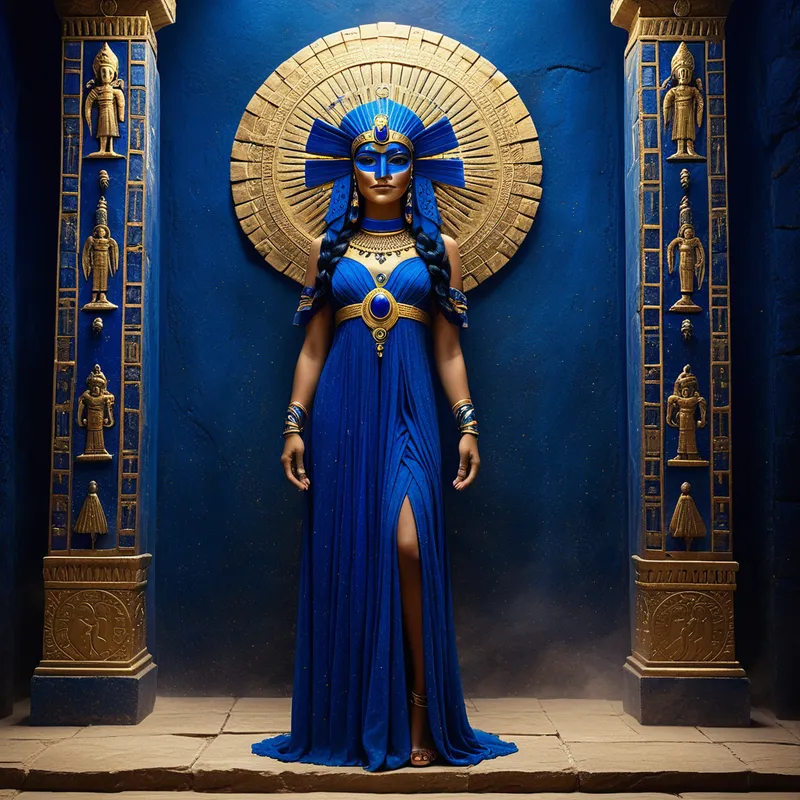
From the Great Above she set her mind toward the Great Below. [Inanna](/myths/inanna “Myth from Sumerian culture.”/), Queen of Heaven, fastened the seven divine me to her body: the shining crown upon her head, the lapis lazuli beads around her neck, the twin egg-shaped stones upon her breast, the gold bracelet upon her wrist, the breastplate called “Come, man, come!” upon her chest, the pala garment of ladyship, and the kohl of radiance around her eyes. Her heart was filled with a terrible purpose, a longing for a kingdom not her own.
She abandoned her celestial cities of Uruk and Eridu, and descended to the dust-choked frontier of reality, to the Ganzir, the gate to [the underworld](/myths/the-underworld “Myth from Greek culture.”/). Before its first door, she was met by Neti, whose face was the color of dried clay. “Who are you?” he demanded. “I am Inanna, Queen of Heaven, on my way to the East.” “If you are Inanna,” Neti intoned, “why has your heart led you on a road from which no traveler returns?”
Yet she insisted. Neti, following the immutable laws of that sunless realm, went to his mistress, Ereshkigal, who sat upon her throne of lapis lazuli, racked with the pains of childbirth. “Bolt the seven gates of the [underworld](/myths/underworld “Myth from Greek culture.”/),” Ereshkigal commanded, her voice like grinding stone. “Then, one by one, open each gate a crack. Let Inanna enter. But as she enters, remove her royal garments.”
And so it was done. At the first gate, Neti removed her shining crown. “What is this?” she cried. “Quiet, Inanna,” came the reply, “the ways of the underworld are perfect. They may not be questioned.” At the second gate, her lapis lazuli beads were taken. At the third, the twin stones. At the fourth, the gold bracelet. At the fifth, the breastplate. At the sixth, the pala garment. At the seventh and final gate, the radiance was stripped from her eyes. Naked and bowed low, the Queen of Heaven entered the throne room of her sister.
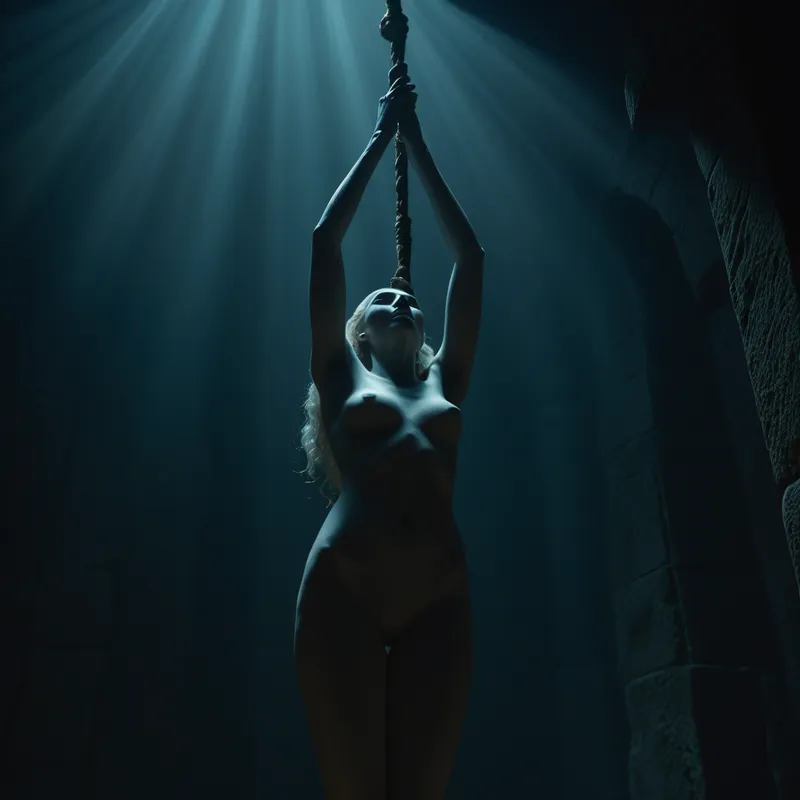
She strode toward the throne. The Anunnaki, the judges of the underworld, passed judgment against her. Ereshkigal fastened on Inanna the eye of death. She spoke a word of wrath. She uttered a cry of guilt. And Inanna was turned into a corpse, a piece of rotting meat, and was hung upon a hook.
For three days and three nights, [the world](/myths/the-world “Myth from Tarot culture.”/) above withered. Love ceased. Fertility failed. The bull no longer mounted the cow. The ewe rejected her lamb. Inanna was dead, and all life felt [the void](/myths/the-void “Myth from Buddhist culture.”/).
But she had been wise. Before her descent, she had instructed her faithful vizier, Ninshubur, to raise a lament if she did not return. Ninshubur did so, beating [the drum](/myths/the-drum “Myth from West African / Diasporic culture.”/) in [the temple](/myths/the-temple “Myth from Jewish culture.”/), circling the houses of the gods. She went first to Enlil, then to Nanna. Both refused to intervene. “Inanna sought the underworld of her own will,” they said. “Who has ever returned from there?”
Finally, Ninshubur came to Enki, the god of cunning waters. From the dirt under his fingernails, Enki fashioned two sexless creatures, the kurgarra and galatur. He gave them the food of life and the [water](/myths/water “Myth from Chinese culture.”/) of life. He whispered to them the strategy of empathy. “Do not ask for her body,” he said. “Go to Ereshkigal. She moans like a woman in childbirth. Moan with her. She will be grateful. She will offer you a gift. Ask only for the corpse that hangs from the hook.”
The creatures slipped into the underworld like water into dust. They found Ereshkigal in her agony, and they did not turn away. They groaned with her. “Oh, my heart!” they cried with her. “Oh, my liver!” Moved by this shared suffering, Ereshkigal offered them the waters of the rivers or the grain of the fields. They asked only for the corpse on the hook. Reluctantly, she granted it.
They sprinkled the food and water of life upon Inanna’s greenish flesh. Once, and she stirred. Twice, and she sat up. Thrice, and she stood upon her feet, alive. But the laws of the underworld are absolute. No one leaves without providing a substitute. The Anunnaki seized her. “Who shall ascend with you? Who shall take your place in the land of no return?”
A ghastly procession followed her upward: demons of the underworld, clingy and sharp-toothed, to claim her replacement. They passed her faithful Ninshubur, her sons Shara and Lulal, each in mourning. Inanna stayed the demons. “No,” she said. “They have shown me reverence.” But when they came to Dumuzid, her husband, he was not in sackcloth and ashes. He sat upon her throne, clad in bright robes, playing a flute. A cold fury filled Inanna’s resurrected heart. “Take him,” she said. The demons seized Dumuzid. Thus, the shepherd-god descended, and the balance was kept. The Queen of Heaven returned, but she was no longer only the goddess of life and love. She had become the goddess who knows death, and in knowing it, holds the terrible, complete cycle of all things.
Cultural Origins & Context
This myth, known as [Inanna’s Descent](/myths/inannas-descent “Myth from Sumerian culture.”/) to the Underworld, is one of the most complete and psychologically complex narratives to survive from ancient Sumer. It was recorded in cuneiform on clay tablets around 1900-1600 BCE, though its oral origins are far older. It was not mere entertainment; it was sacred literature, recited by priestly scribes and perhaps performed in ritual contexts. The myth served multiple societal functions: it explained the seasonal cycle (linked to Dumuzid’s fate as a dying-and-rising god of vegetation), validated the power and capriciousness of the divine, and explored the fundamental Mesopotamian anxiety about the finality of the underworld—a dusty, joyless place where all souls, royal or common, eventually went. Inanna’s journey provided a terrifying but cathartic map of that ultimate frontier, acknowledging its power while asserting that even from its deepest grip, a form of return—though at a great cost—was possible through divine cunning and the loyalty of community.
Symbolic Architecture
The descent is not a battle but a systematic deconstruction. Each of the seven gates represents a [layer](/symbols/layer “Symbol: Layers often symbolize complexity, depth, and protection in dreams, representing the various aspects of the self or situations.”/) of conscious [identity](/symbols/identity “Symbol: Identity represents the sense of self, encompassing personal beliefs, cultural background, and social roles.”/), a me or cultural power that defines [the self](/myths/the-self “Myth from Jungian culture.”/) in the world: [status](/symbols/status “Symbol: Represents one’s social position, rank, or standing within a group, often tied to achievement, power, or recognition.”/), allure, vitality, agency, protection, social [role](/symbols/role “Symbol: The concept of ‘role’ in dreams often reflects one’s identity or how individuals perceive their place within various social structures.”/), and [perception](/symbols/perception “Symbol: The process of becoming aware of something through the senses. In dreams, it often represents how one interprets reality or internal states.”/). The [underworld](/symbols/underworld “Symbol: A symbolic journey into the unconscious, representing exploration of hidden aspects of self, transformation, or confronting repressed material.”/) demands their surrender.
To know the self, one must first be stripped of all that the self believes it to be. The hero’s armor is the first thing the abyss claims.
Inanna’s [death](/symbols/death “Symbol: Symbolizes transformation, endings, and new beginnings; often associated with fear of the unknown.”/) on the hook is the ultimate symbolic act: the total annihilation of [the ego](/myths/the-ego “Myth from Jungian culture.”/). She becomes inert matter, passive [meat](/symbols/meat “Symbol: Meat in dreams often symbolizes sustenance, vitality, and the primal aspects of one’s nature, as well as potential conflicts or desires.”/). This is the core of the ordeal—not suffering, but absolute cessation. [The resurrection](/myths/the-resurrection “Myth from Christian culture.”/) by the kurgarra and galatur, born from Enki’s [dirt](/symbols/dirt “Symbol: Dirt symbolizes grounding, the unconscious, and often the raw or unrefined aspects of life.”/) (the primal, creative [clay](/symbols/clay “Symbol: Clay symbolizes malleability, creativity, and the potential for transformation, representing the foundational aspect of life and the ability to shape one’s destiny.”/)), signifies that [rebirth](/symbols/rebirth “Symbol: A profound transformation where old aspects of self or life die, making way for new beginnings, growth, and renewal.”/) comes not from the old, proud self, but from something more fundamental and cunning—the unconscious wisdom (Enki) that works through [empathy](/symbols/empathy “Symbol: The capacity to understand and share the feelings of others, often manifesting as emotional resonance or intuitive connection in dreams.”/). The creatures do not fight; they feel with Ereshkigal, the Great [Shadow](/symbols/shadow “Symbol: The ‘shadow’ embodies the unconscious, repressed aspects of the self and often represents fears or hidden emotions.”/). [Integration](/symbols/integration “Symbol: The process of unifying disparate parts of the self or experience into a cohesive whole, often representing psychological wholeness or resolution of internal conflict.”/) begins not through conquest, but through shared suffering with the very force that destroys you.
Finally, the necessity of a substitute—Dumuzid—reveals [the law](/symbols/the-law “Symbol: Represents external rules, societal order, moral boundaries, and the tension between personal freedom and collective structure.”/) of psychic economy. No profound transformation occurs without a sacrifice. Something of the old order, often that which is complacent or entitled (Dumuzid on the [throne](/symbols/throne “Symbol: A seat of authority, power, and sovereignty, representing leadership, divine right, or social hierarchy.”/)), must be given to the [depths](/symbols/depths “Symbol: Represents the subconscious, hidden emotions, or foundational aspects of the self, often linked to primal fears or profound truths.”/) to maintain [equilibrium](/symbols/equilibrium “Symbol: A state of balance, stability, or harmony between opposing forces, often representing inner peace or external order.”/). The returning Self is not the same; it carries the [knowledge](/symbols/knowledge “Symbol: Knowledge symbolizes learning, understanding, and wisdom, embodying the acquisition of information and enlightenment.”/) of death and demands a price for its new wholeness.
The Dreamer’s Resonance
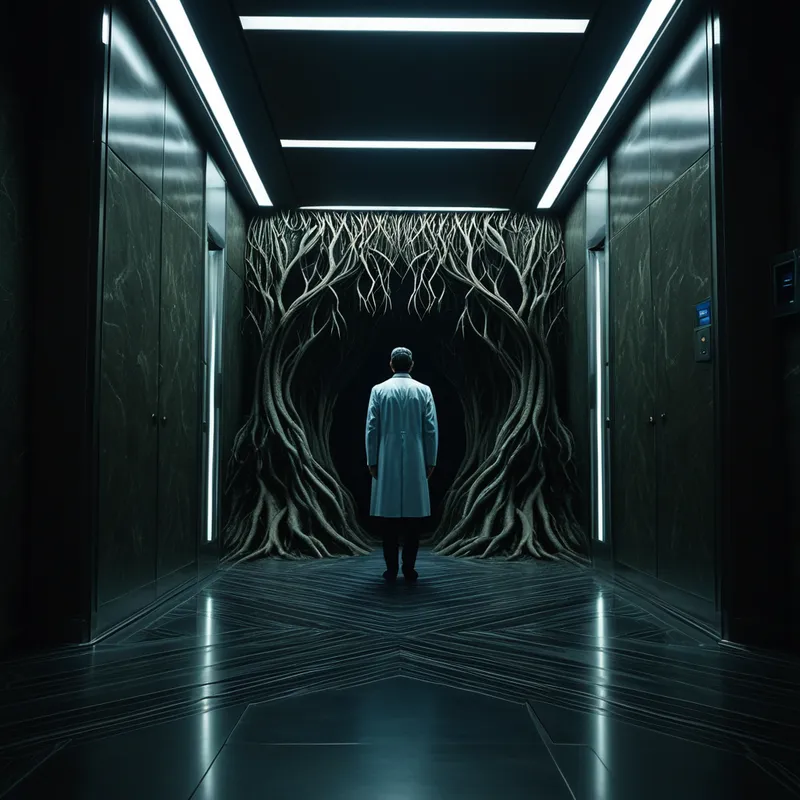
When this myth stirs in the modern [psyche](/myths/psyche “Myth from Greek culture.”/), it manifests in dreams of inexorable descent: elevators plummeting through the foundations of familiar buildings, staircases leading into wet earth, or being pulled into a whirlpool in a calm lake. The somatic feeling is one of dread mixed with inevitability. The dreamer may find themselves in a bureaucratic underworld—endless grey corridors where officials slowly remove their clothing, briefcase, and finally their name badge. This is the psyche initiating a necessary dissolution. The “demons” that follow the dreamer back toward waking life often appear as clinging anxieties, persistent health issues, or a sudden, irrational guilt that attaches to a specific relationship or aspect of their life (the “Dumuzid” figure). The dream is signaling that a foundational part of the personality structure has become rigid or entitled and must be surrendered to the unconscious for a period of “composting,” so that a more authentic, death-informed consciousness can emerge.
Alchemical Translation
For the individual, Inanna’s journey is the archetypal blueprint for individuation through the [nigredo](/myths/nigredo “Myth from Alchemical culture.”/)—the blackening, the darkest phase of alchemical transformation. The conscious ego, brilliant and accomplished in its own realm (the “Queen of Heaven”), must willingly turn toward its own shadowy, repressed foundations. The descent is the act of courage that engages the personal and collective shadow, embodied by Ereshkigal.
The throne of the underworld is also made of lapis lazuli. The deepest shadow contains the same precious material as the highest conscious ideal, but it is experienced as pain, isolation, and decay.
The systematic stripping at the gates is the alchemical solve (dissolution). Every defense, every achievement, every social mask must be rendered null. The death on the hook is the necessary putrefaction, where all previous structures break down into primal, chaotic matter. This is not failure, but the crucial incubation. The intervention of Enki’s creatures represents the emergence of a new, guiding function from the unconscious—often a reconciling symbol or a moment of profound empathy for one’s own suffering. The return, with its demanded substitution, is the coagula (re-coagulation). The individual reintegrates into life, but a part of the old, naive, or inflated self (the “Dumuzid” within) must remain below, cyclically revisited and renewed. One does not conquer the unconscious; one enters into a sacred and costly exchange with it, emerging not as a victor, but as a sovereign who rules with the wisdom of the grave.
Associated Symbols
Explore related symbols from the CaleaDream lexicon: