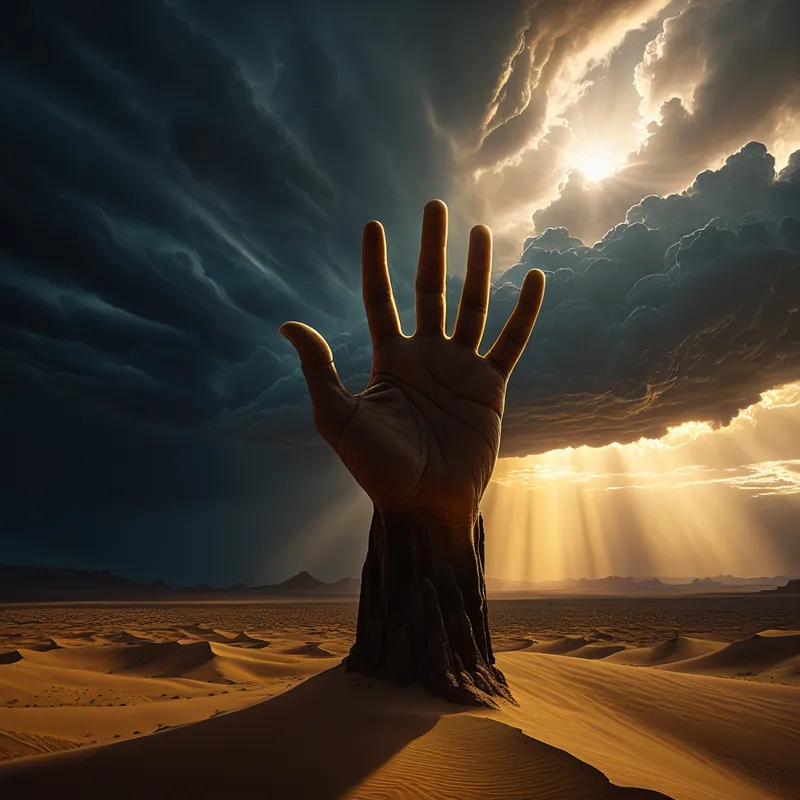
The Hand of God Myth Meaning & Symbolism
The divine hand emerges from the whirlwind, a symbol of ultimate power, creative force, and the terrifying, shaping touch of the numinous upon the human soul.
The Tale of The Hand of God
Hear now, and listen with the ears of your spirit. In the beginning, before time was measured, there was a Voice in the void. And the Voice spoke, and from the Voice came a Hand. Not a hand of flesh and bone, but a Hand of will and fire, a Hand that sculpted the mountains from the deep and cupped the seas in its palm. It brushed the dust of the cosmos and spun the stars into their courses. This was the first act: the Hand of the Yahweh, shaping the formless and the void into a world.
But the tale does not end in the garden of beginnings. It echoes through the corridors of human defiance and divine purpose. See the enslaved people by the reeds of the Nile, their backs bent, their cries a thick fog over the water. And the Hand appears—not in peace, but in power. It becomes a fist of plagues, turning the sacred river to blood, a sweeping gesture that brings locusts like a living curtain, a pointed finger that parts the very sea, carving a highway through the abyss. It is a Hand of terrible liberation, breaking chains with cataclysm.
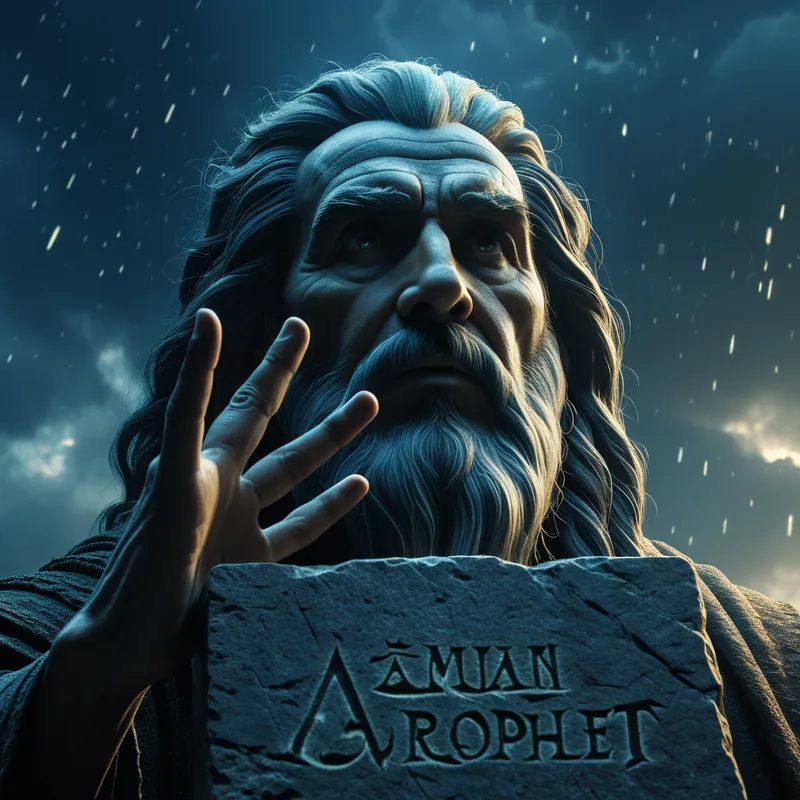
Then, in the barren, wind-scoured heights of Sinai, the prophet stands alone. The mountain trembles, wrapped in smoke and thunder. From the heart of the whirlwind, the Hand returns. This time, it is a scribe’s hand. With a sound like the splitting of the world, its fingertip etches words of fire into tablets of stone—a covenant, a boundary, a law written by the divine digit itself. The touch is so potent the stone glows from within.
And in the visions of the prophets, the Hand takes on a more intimate, dreadful aspect. A man named Ezekiel sits by the river of exile, his heart a desert. The heavens are torn open. A chariot of strange creatures and wheels within wheels descends in storm. And from amidst the glory, a Hand stretches forth, holding a scroll written on both sides with lamentations. It reaches to the prophet’s lips, feeding him the scroll of destiny, a taste both sweet as honey and bitter as ashes. It is the Hand that seizes the soul, imparting a truth that cannot be refused.
Finally, in the court of a pagan king, a reveler’s feast is shattered. Golden goblets, stolen from a sacred temple, are raised in mockery. And then, unattached, without arm or body, a disembodied Hand appears in the lamplight. Its fingers glide through the air, writing cryptic words upon the plaster of the wall: Mene, Mene, Tekel, Parsin. The music dies. The king’s face pales. It is the Hand of judgment, writing a verdict in a language only the condemned can understand, a final, silent decree from a realm beyond palaces and power. The Hand writes, and kingdoms fall.
Cultural Origins & Context
The motif of the Yad Elohim is woven throughout the tapestry of the Hebrew Bible, or Tanakh. It is not a single, centralized myth but a recurring theophany—a manifestation of the divine that avoids the idolatry of a full, anthropomorphic representation. In a culture that fiercely prohibited graven images, the Hand became a powerful, acceptable symbol for conveying God’s agency. It was a way to speak of the unseeable God acting in the visible world.
These stories originated in oral traditions, passed down by priests, prophets, and storytellers around campfires and in temple courts. Their function was multifaceted: to explain the origins of the world and the law, to justify the traumatic history of Exodus and Exile as acts of divine will, and to serve as potent tools for social and moral commentary. The Hand in the story of Belshazzar’s Feast, for instance, is a stark narrative of divine judgment against imperial arrogance and sacrilege, offering hope to a subjugated people that their oppressors were not beyond accountability. The Hand was a symbol of a God who was intimately involved, intervening with creative, liberating, judging, and prophetic force.
Symbolic Architecture
The Hand is the ultimate symbol of agency—the divine will made manifest. It represents the point of contact between the transcendent and the immanent, the infinite and the finite.
The Hand is the interface where the absolute meets the relative, where pure potential becomes specific act.
Psychologically, it maps onto the human experience of a force greater than the ego. It is the numinous—a term coined by theologian Rudolf Otto describing the holy as both terrifying (mysterium tremendum) and fascinating (mysterium fascinans). The Hand creates and it destroys; it writes laws and it writes death sentences; it offers liberation through terrifying means. It embodies the paradoxical nature of the Self, in Jungian terms, which orchestrates the psyche’s development through both nurturing and disruptive means.
The fingers specifically symbolize differentiation from a unified power—the one becoming many, the general will executing specific tasks. The act of writing is particularly profound: it symbolizes the inscribing of fate, the internalization of law (conscience), and the imparting of a destined identity (as with Ezekiel). The Hand that feeds the prophet the scroll represents the often-bitter nourishment of true vocation, the swallowing of one’s destined purpose whole.
The Dreamer’s Resonance
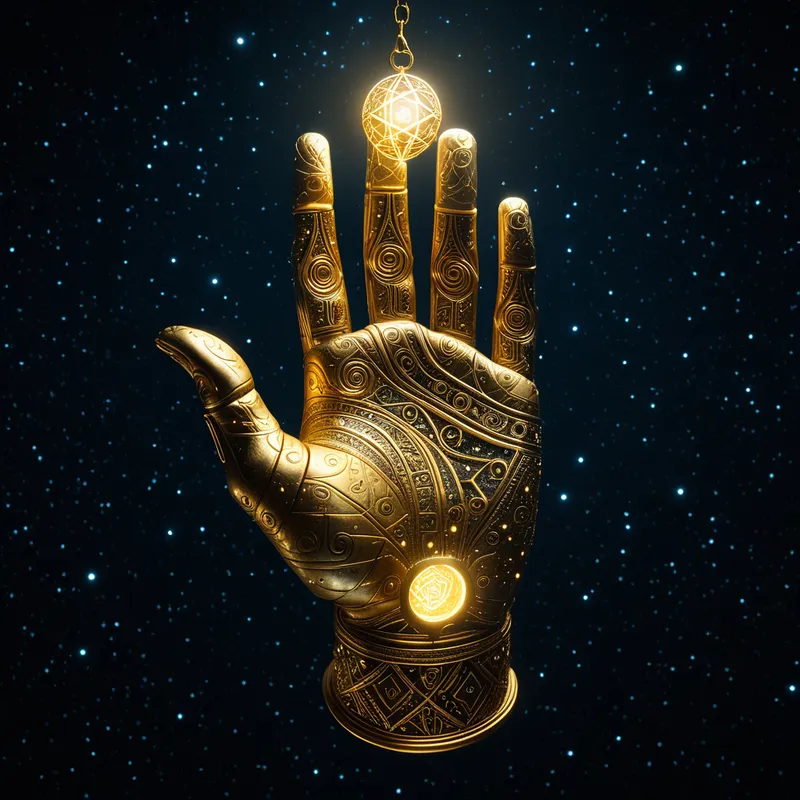
When the Hand of God appears in a modern dream, it seldom arrives with biblical pageantry. It may manifest as a giant hand pressing down on the dreamer’s chest (a somatic experience of overwhelming pressure or anxiety), a disembodied hand writing on a wall in a childhood home, or a radiant hand offering or taking a key.
Such dreams often signal a profound encounter with what Jung called the archetypal layer of the psyche. The dreamer is likely in a state of major life transition, feeling acted upon by forces beyond their control—a career change, a creative block, a moral crisis, or the crushing weight of a destiny they did not choose. The Hand represents the psyche’s own deep, structuring intelligence applying pressure. The feeling of being “gripped” by an idea or a fate is literalized. It is the somatic signature of the unconscious intervening, often to break a hardened conscious attitude (the stone tablet of fixed beliefs) or to inscribe a new law of being. The dreamer is not in control; they are being shaped, judged, or called.
Alchemical Translation
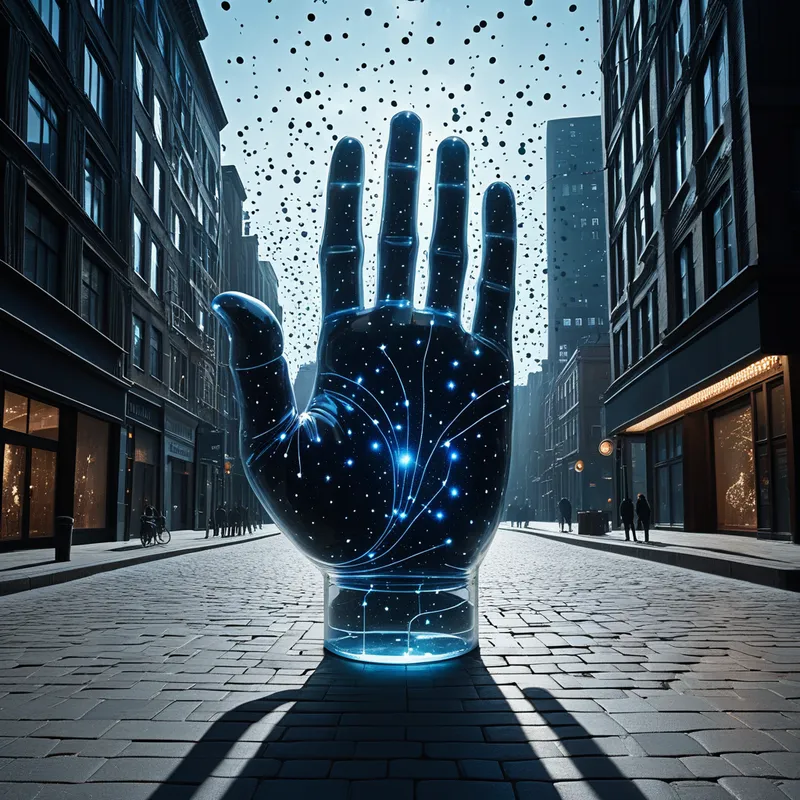
The myth of the Hand models the alchemical process of psychic transmutation, or individuation. The ego begins in a state of massa confusa—the formless void, or perhaps the enslaved state of identification with personal history or societal expectations.
The divine Hand is the archetypal catalyst that initiates the nigredo, the blackening—the necessary crisis that dissolves the old form.
The terrifying, judging, sea-parting Hand represents this necessary rupture. It is the shocking insight, the devastating loss, or the overwhelming creative impulse that shatters the comfortable, known world. This is not a gentle process; it is the plagues upon Egypt, the exile to Babylon. The old “kingdom” of the ego must be judged and found wanting.
The subsequent action—the writing on the tablet or the feeding of the scroll—symbolizes the albedo, the whitening, where a new structure is imparted from the Self. The conscious mind (the prophet, the dreamer) must internalize this new law, this new scroll of destiny. It is the formation of a new ethical center or creative identity from the core of the trauma. The bitter-sweet taste Ezekiel experiences is the integration of this process: the joy of meaning and the grief for the simpler life left behind.
Finally, the creative Hand from Genesis mirrors the final alchemical stage, the rubedo or reddening. This is the conscious, creative partnership with the divine impulse. The individual, having been shattered and re-written, now becomes a co-creator with that inner Hand. Their own hands become instruments of the same numinous power, no longer merely acted upon, but actively shaping their world from a place of aligned, authentic purpose. The transcendent Hand becomes immanent in human action.
Associated Symbols
Explore related symbols from the CaleaDream lexicon: