The Great Fleet Migration Myth Meaning & Symbolism
The epic voyage of ancestral canoes from Hawaiki to Aotearoa, a foundational myth of origin, destiny, and the forging of a people from the sea.
The Tale of The Great Fleet Migration
Listen. The wind remembers. The sea whispers it still. In the time before time, when the world was a different skin, the people lived in a land of warmth, a land of plenty called Hawaiki. But the winds of fate began to blow. Strife grew like a tangled vine. The land could no longer hold the dreams of all its children. The air grew thick with the scent of conflict and the longing for a new tūrangawaewae.
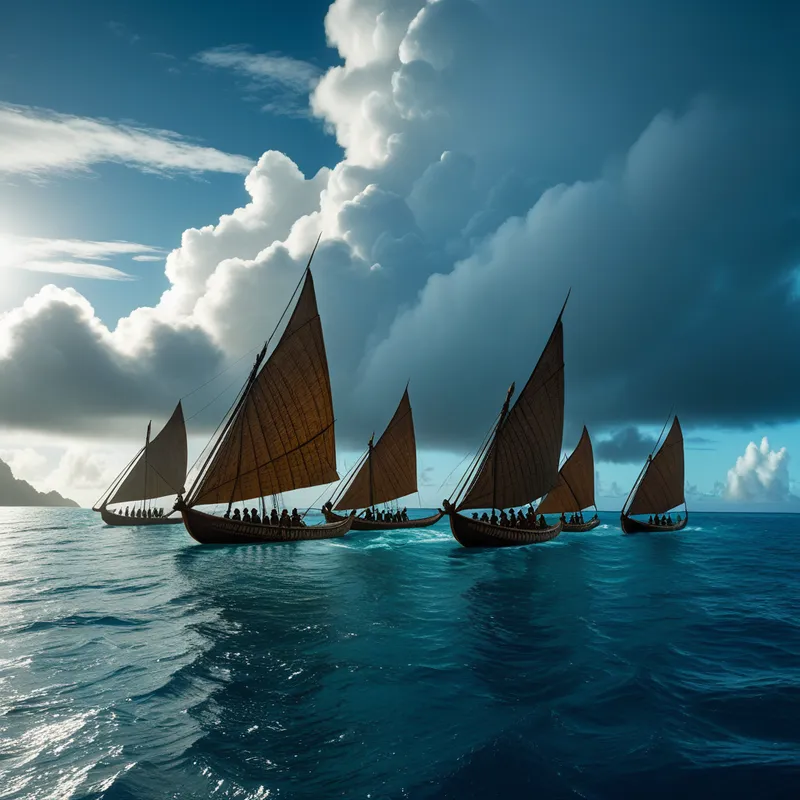
Then came the visionaries, the captains of the great waka hourua. They heard the call from across the Te Moana-nui-a-Kiwa, a call carried on the breath of Tāne and the currents of Tangaroa. It was a call of promise and peril. So they built, with toil and mana, vessels not just of wood and fibre, but of hope. Each waka was a world: Tainui, Te Arawa, Mātaatua, Kurahaupō, Tokomaru, Aotea, and Takitimu. They were laden with the seeds of the kumara, the fronds of the ponga, the treasured pounamu, and the bones of the ancestors.
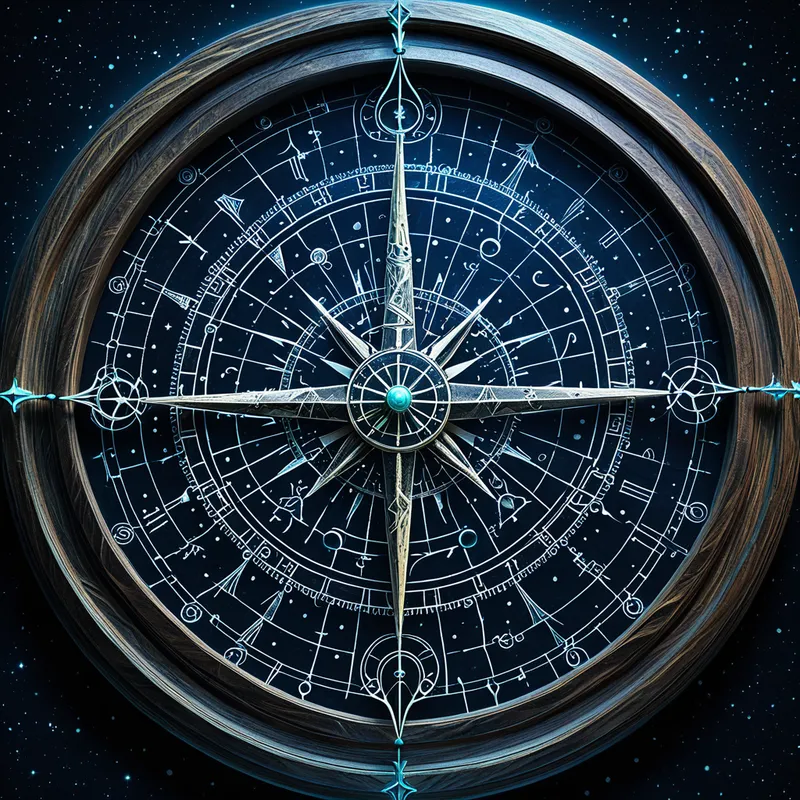
They launched into the unknown, leaving the fires of Hawaiki to sink beneath the horizon. For weeks, for months, they were a speck between two infinities: the pitiless blue sky and the fathomless black sea. They navigated by the star paths, the kāpehu whetū, reading the whispers of the ocean—the flight of the koekoeā, the gathering of clouds, the swell of deep currents. They battled the wrath of Tāwhirimātea, who sent tempests to swallow them. They endured thirst, despair, and the creeping shadow of doubt. This was the Te Moana-nui-a-Kiwa, not just water, but the realm of [taniwha](/myths/taniwha “Myth from Maori culture.”/) and ancestral tests.
Then, a cry from the lookout! A long, white cloud clung to the southern horizon—Aotearoa. As they drew near, the cloud resolved into snow-capped mountains, into forests breathing a deep, green vapour. They had crossed the womb of the world. They made landfall, each waka claiming its own coast, its own river mouth. They touched the earth, planted their seeds, and lit new fires. The voyage was over, but the story was just beginning. They were no longer just people of Hawaiki. They were the people of the land, Māori, born from the sea, forged by the journey.

Cultural Origins & Context
This is not a fairy tale, but the living spine of Māori identity. The narrative of the Great Fleet represents the culmination of centuries of deliberate Polynesian exploration and settlement, crystallized into a foundational whakapapa. It was preserved not in books, but in the oral tradition—chanted in whai kōrero on the marae, recited in intricate waiata, and carved into the meeting house amo. Tohunga (priestly experts) were the custodians of these histories, linking every tribe and every individual back to a specific canoe, its captain, and its crew.
Societally, the myth functioned as a constitutional document. It established land rights, political authority (mana), and tribal relationships. To know your waka was to know your place in the world, your kinship ties, and your responsibilities. It answered the profound human questions: Where do we come from? How did we get here? Why are we here and not there? It transformed a history of migration into a theology of belonging, anchoring a people in their new landscape through the sacred drama of their arrival.
Symbolic Architecture
At its [heart](/symbols/heart “Symbol: The heart symbolizes love, emotion, and the core of one’s existence, representing deep connections with others and self.”/), the Great Fleet is a supreme [metaphor](/symbols/metaphor “Symbol: A figure of speech where one thing represents another, often revealing hidden connections and deeper truths through symbolic comparison.”/) for the [human](/symbols/human “Symbol: The symbol of a human represents individuality, complexity of emotions, and social relationships.”/) [journey](/symbols/journey “Symbol: A journey in dreams typically signifies adventure, growth, or a significant life transition.”/) from a known, often conflicted, past into an unknown and destined future. It is the archetypal voyage of becoming.
The ocean is not an empty space to be crossed, but the primal, undifferentiated unconscious itself. The waka is the fragile vessel of consciousness—the ego, the tribe, the individual soul—setting out upon it.
Hawaiki symbolizes the primal unity, the [source](/symbols/source “Symbol: The origin point of something, often representing beginnings, nourishment, or the fundamental cause behind phenomena.”/), the psychological “[womb](/symbols/womb “Symbol: A symbol of origin, potential, and profound transformation, representing the beginning of life’s journey and the unconscious source of creation.”/)” from which one must eventually separate to achieve individuality. The strife that prompts the [departure](/symbols/departure “Symbol: A transition from one state to another, often representing change, growth, or leaving behind the familiar.”/) is the necessary [friction](/symbols/friction “Symbol: Friction represents resistance, conflict, or the necessary tension required for movement and transformation in dreams.”/) for growth. The waka hourua is a perfect [symbol](/symbols/symbol “Symbol: A symbol can represent an idea, concept, or belief, serving as a powerful tool for communication and understanding.”/) of the Self in Jungian terms—a cohesive, directed totality navigating the vast unknown. The navigators, using the kāpehu whetū, represent the guiding function of [intuition](/symbols/intuition “Symbol: The immediate, non-rational understanding of truth or insight, often described as a ‘gut feeling’ or inner knowing that bypasses conscious reasoning.”/) and ancestral wisdom (the inner compass) in the darkest nights of the psyche. Aotearoa is not merely a new home, but the achieved state of individuation—a hard-won, authentic self, discovered and claimed after a perilous journey of [integration](/symbols/integration “Symbol: The process of unifying disparate parts of the self or experience into a cohesive whole, often representing psychological wholeness or resolution of internal conflict.”/).
The Dreamer’s Resonance
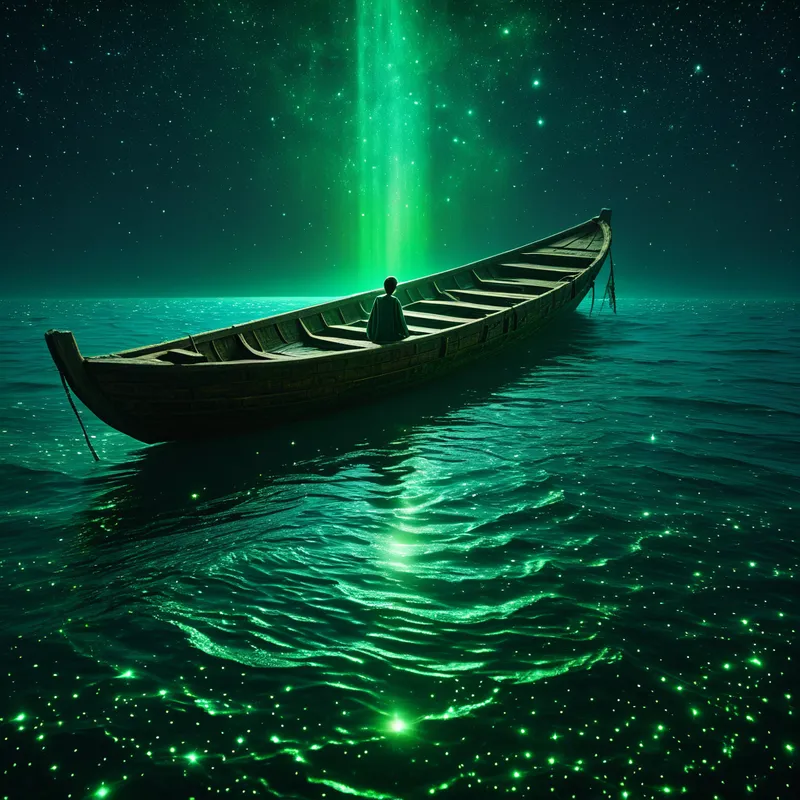
When this myth stirs in modern dreams, it often signals a profound transitional phase. To dream of being on a vast, open ocean in a small boat is to feel the dissolution of old structures—the “land” of a former identity, job, or relationship has vanished behind you. The dreamer is in the liminal space, the “oceanic” feeling of being unmoored, adrift between selves.
Somatically, this can manifest as anxiety (the storm), nausea (the churning sea), or a deep, existential fatigue (the endless rowing). Psychologically, it is the process of the ego surrendering its illusion of control to the larger currents of the unconscious. The appearance of a distant shore, a guiding bird, or a star in such a dream is a critical moment of hope—it signifies the nascent emergence of a new orientation, a new potential self beginning to coalesce on the horizon of awareness. The dream is the psyche’s enactment of its own necessary migration.
Alchemical Translation
The alchemy of this myth is the transmutation of collective lineage into individual destiny. The process mirrors the stages of Jungian individuation.
First, the nigredo: the conflict in Hawaiki—the felt sense of being trapped, of the old “land” becoming psychologically unsustainable. This is the call to adventure, often experienced as a crisis. Then, the albedo: the long voyage itself—the purification through ordeal. On that open ocean, all non-essentials are stripped away. The navigator must rely on inner stars (the transcendent function) and face the monsters of the deep (the Shadow). This is the crucible where one’s mana, one’s authentic power, is tested and forged, not given.
The destination is not found on a map, but is born from the journey. We do not discover who we are; we become who we are by enduring the passage between who we were and who we are meant to be.
Finally, the rubedo: the sighting of Aotearoa and the landing. This is the integration. The new “land” is the conscious embodiment of the journey’s lessons. The dreamer who completes this psychic migration plants the “seeds” they carried—their innate potentials—into the fertile soil of a newly consolidated self. They are reborn, not as who they left, but as who the voyage made them. The fleet does not just find a new home; it becomes the people worthy of it.
Associated Symbols
Explore related symbols from the CaleaDream lexicon:
- Ocean — The vast, unconscious psyche across which the conscious self (the waka) must journey, representing both the source of life and profound, unknown depths.
- Journey — The core archetypal process of the myth, symbolizing the necessary passage from a known but limiting state to an unknown but destined state of being.
- Destiny — The pull of Aotearoa, the latent potential and calling that guides the voyage through hardship, representing a fate that is earned, not given.
- Star — The kāpehu whetū, the fixed points of ancestral wisdom and intuition that provide guidance when all other landmarks have vanished.
- Bird — The koekoeā and other seabirds, acting as messengers from the unseen shore, symbols of intuition and the first signs of approaching a new psychic reality.
- Canoe — The waka hourua as the vessel of the Self, a contained, directed totality carrying the essential elements of identity across the formless sea.
- Land — Aotearoa as the achieved state of individuation, the solid ground of a new, authentic identity won through perilous exploration.
- Ancestor — The guiding presence within the myth, representing the internalized wisdom, lineage, and genetic memory that supports the individual’s transformative journey.
- Storm — The wrath of Tāwhirimātea, symbolizing the chaotic, disruptive forces of the psyche that test and ultimately strengthen the resolve of the voyager.
- Seed — The kumara and other plants carried on the waka, representing the latent potentials, skills, and core identity that must be preserved and planted in the new psychological landscape.
- Migration — The fundamental pattern of purposeful movement from source to destination, reflecting the soul’s inherent drive toward growth, expansion, and the fulfillment of its purpose.
- Root — The eventual outcome of the migration; the establishment of tūrangawaewae, a deep, psychic anchoring and belonging in the newly discovered self.