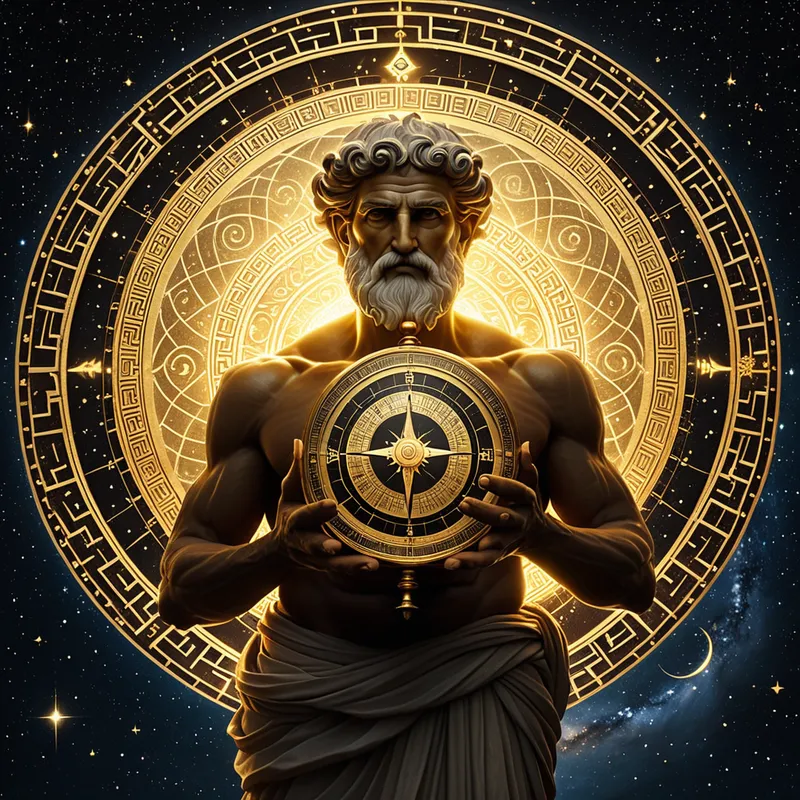
The Golden Ratio Myth Meaning & Symbolism
A cosmic principle of divine proportion emerges from chaos, seeking perfect harmony, only to find its ultimate expression within the human soul.
The Tale of The Golden Ratio
In the beginning, before number and name, there was only the Apeiron, a boundless, churning sea of potential. From its restless depths, a longing arose—a desire for relation, for a conversation between part and whole. This longing crystallized into a silent, seeking principle. It was not a god with a face, but a divine question: How may a [thing](/myths/thing “Myth from Norse culture.”/) be so perfectly shaped that it contains the very seed of its own becoming?
This principle wandered the nascent cosmos. It observed the wild, untamed growth of vines, their leaves erupting in chaotic bursts. It watched the stars scatter themselves heedlessly across the night. Dissatisfied with mere existence, it sought elegance. It took a line, a simple stroke of potential, and divided it not in half, but in a way that sang. The smaller part related to the larger as the larger related to the whole. A harmony resonated from this act, a single, perfect chord struck upon the framework of reality. This was the first ratio, the divine proportion.
Yet, a ratio alone is a silent law. It yearned for manifestation. It whispered to the spiraling shell forming in the deep ocean, and the shell curled inward upon itself, each chamber a perfect echo of the last, a stony hymn to endless growth. It breathed upon the seed-head of the sunflower, and the florets arranged themselves in opposing spirals, a breathtakingly efficient prayer to the sun. In the branching of veins in a leaf and the thunderous curl of a galaxy, the principle found its voice. It was [the architect](/myths/the-architect “Myth from Various culture.”/) of beauty, but an architect without a temple, for its greatest work was yet to come.
It watched the human creature, a being of awkward angles and conflicting passions. It saw in them a spark of the same longing that had birthed it from the Apeiron—a desire for harmony amidst inner chaos. And so, the principle of the Golden Ratio did not build a palace in the clouds. Instead, it planted its seed deep within the human soul. It became the hidden rhythm behind a heartbeat that feels both finite and eternal, the secret geometry of a glance that feels perfectly held, the unconscious compass that guides a hand to place a line or a word in a way that feels, inexplicably, right. The seeker became the indweller. Its ultimate temple was not stone or star, but the conscious, creating mind, where the chaos of experience forever seeks its own perfect, proportional harmony.
Cultural Origins & Context
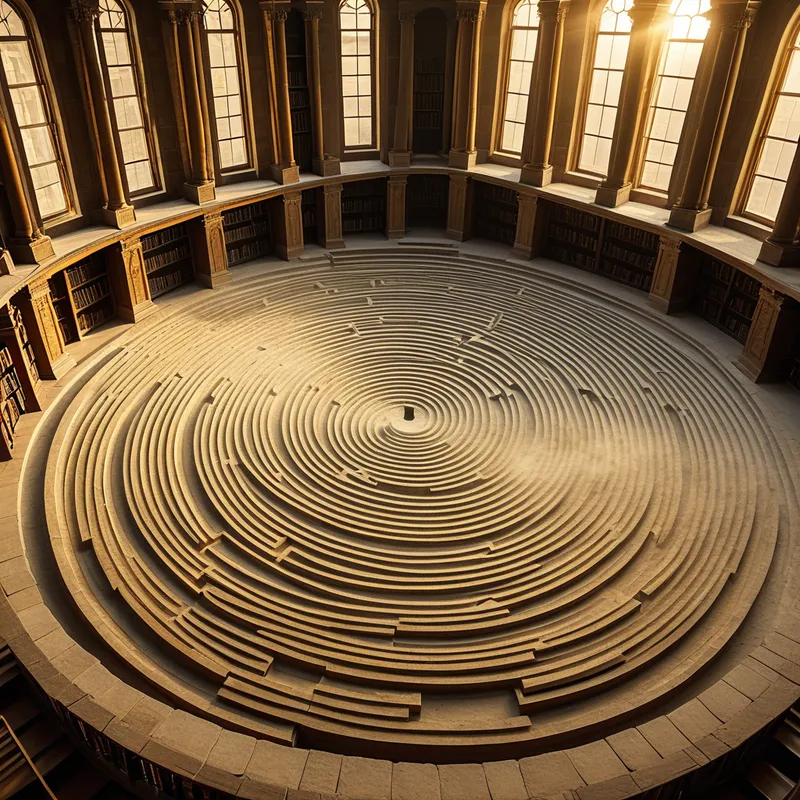
This myth does not belong to a single tribe or a [pantheon](/myths/pantheon “Myth from Roman culture.”/) of named deities. Its culture is the silent, transnational fellowship of seekers who first perceived pattern within flux. Its bards were the Mystics of Miletus, like [Pythagoras](/myths/pythagoras “Myth from Greek culture.”/), who heard the “[music of the spheres](/myths/music-of-the-spheres “Myth from Various culture.”/)” and believed number was the essence of all things. It was passed down not on [papyrus](/myths/papyrus “Myth from Egyptian culture.”/) scrolls of epic poetry, but in the precise diagrams of Euclid’s Elements, where it was defined, with austere beauty, as “extreme and mean ratio.”
Its societal function was dual. For the philosopher, it was a cornerstone of a rational, beautiful cosmos—proof of a divine intellect that used mathematics as its native language. For the artist and architect, from the builders of [the Parthenon](/myths/the-parthenon “Myth from Greek culture.”/) to Leonardo da Vinci, it was a practical secret, a canon of perfection that could bridge the human and the divine. It was the sacred standard, the measurable evidence of a harmonious universe, offering a profound comfort: that beauty was not arbitrary, but built into the very fabric of existence, awaiting discovery by the rational and intuitive mind.
Symbolic Architecture
At its core, the myth of the Golden Ratio symbolizes the [psyche](/myths/psyche “Myth from Greek culture.”/)‘s innate drive toward dynamic [symmetry](/symbols/symmetry “Symbol: A fundamental principle of balance, harmony, and order, often representing perfection, stability, and the resolution of opposites.”/)—a balance that is not [static](/symbols/static “Symbol: Static represents interference, disruption, and the breakdown of clear communication or signal, often evoking feelings of frustration and disconnection.”/), but alive with growth and [relationship](/symbols/relationship “Symbol: A representation of connections we have with others in our lives, often reflecting our emotional state.”/).
It represents the moment where the finite soul apprehends the infinite pattern, and in doing so, finds its own place within it.
The “[hero](/symbols/hero “Symbol: A hero embodies strength, courage, and the ability to overcome significant challenges.”/)” is [the principle](/symbols/the-principle “Symbol: A fundamental truth, law, or doctrine that serves as a foundation for a system of belief, behavior, or reasoning, often representing moral or ethical standards.”/) itself, which embodies the [archetype](/symbols/archetype “Symbol: A universal, primordial pattern or prototype in the collective unconscious that shapes human experience, behavior, and creative expression.”/) of the [Creator](/symbols/creator “Symbol: A figure representing ultimate origin, divine power, or profound authorship. Often embodies the source of existence, innovation, or personal destiny.”/). Its [journey](/symbols/journey “Symbol: A journey in dreams typically signifies adventure, growth, or a significant life transition.”/) from the formless Apeiron into the structured world mirrors the psychological process of bringing unconscious contents into conscious form. The conflict is the [tension](/symbols/tension “Symbol: A state of mental or emotional strain, often manifesting physically as tightness, pressure, or unease, signaling unresolved conflict or anticipation.”/) between [chaos](/symbols/chaos “Symbol: In Arts & Music, chaos represents raw creative potential, uncontrolled expression, and the breakdown of order to forge new artistic forms.”/) and order, between the random scattering of experience and the deep [human](/symbols/human “Symbol: The symbol of a human represents individuality, complexity of emotions, and social relationships.”/) need to find a meaningful, beautiful [pattern](/symbols/pattern “Symbol: A ‘Pattern’ in dreams often signifies the underlying structure of experiences and thoughts, representing both order and the repetitiveness of life’s situations.”/) within it.
[The spiral](/myths/the-spiral “Myth from Celtic culture.”/)—its primary manifestation—is a profound [symbol](/symbols/symbol “Symbol: A symbol can represent an idea, concept, or belief, serving as a powerful tool for communication and understanding.”/). It is the [path](/symbols/path “Symbol: The ‘path’ symbolizes a journey, choices, and the direction one’s life is taking, often representing individual growth and exploration.”/) of evolution that never repeats yet constantly echoes its [origin](/symbols/origin “Symbol: The starting point of a journey, often representing one’s roots, source, or initial state before transformation.”/). It signifies a journey [inward](/symbols/inward “Symbol: A journey toward self-awareness, introspection, and the exploration of one’s inner world, thoughts, and unconscious mind.”/) and [outward](/symbols/outward “Symbol: Movement or orientation away from the self or center; expansion, expression, or externalization of inner states into the world.”/) simultaneously: a descent into the core of [the self](/myths/the-self “Myth from Jungian culture.”/) and an [expansion](/symbols/expansion “Symbol: A symbol of growth, increase, or extension beyond current boundaries, often representing personal development, opportunity, or overwhelming change.”/) into the [cosmos](/symbols/cosmos “Symbol: The entire universe as an ordered, harmonious system, often representing the totality of existence, spiritual connection, and the unknown.”/), following the same unbreakable law. Psychologically, it represents the process of individuation, where one circles back to the essential self, but at a new level of [integration](/symbols/integration “Symbol: The process of unifying disparate parts of the self or experience into a cohesive whole, often representing psychological wholeness or resolution of internal conflict.”/) and understanding each time.
The Dreamer’s Resonance
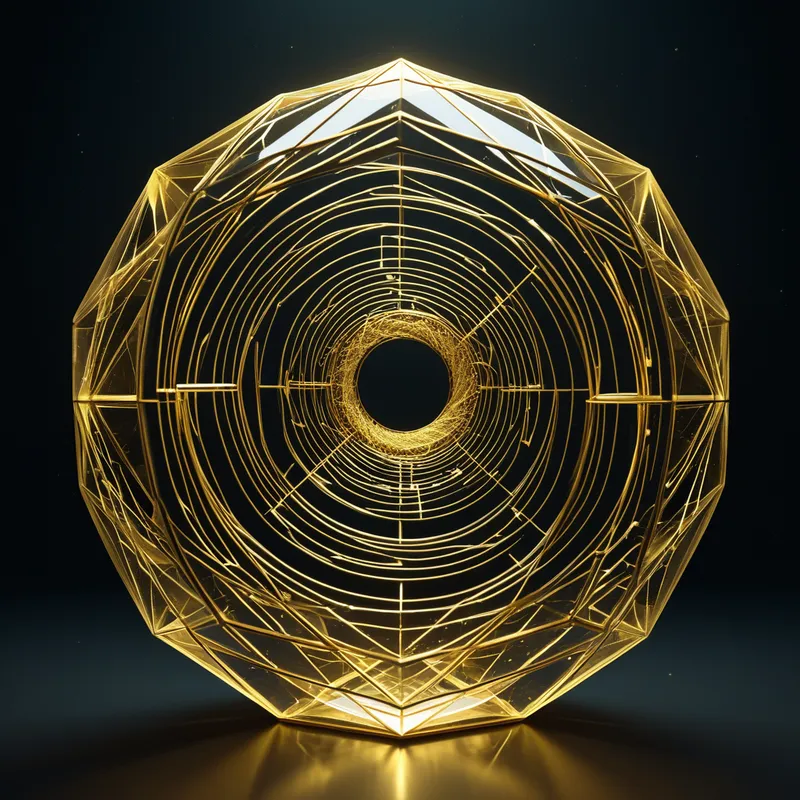
When the Golden Ratio appears in a modern dream, it is rarely as a simple number or diagram. It manifests somatically as a feeling of profound rightness, of aesthetic and emotional resolution. One might dream of a staircase that curves in a perfectly satisfying way, a room whose dimensions feel like a sanctuary, or a natural pattern—a nautilus shell, a pinecone—that holds an almost unbearable significance.
This dream imagery signals a psychological process of synthesis. The dreamer is likely grappling with fragmented aspects of their life or psyche—perhaps a conflict between career and creativity, logic and emotion, or individual desire and relational harmony. The appearance of this mythic pattern is the unconscious affirming that a resolution exists. It is the psyche’s own compass pointing toward a state where these opposing elements do not merely cease fighting, but relate to each other in a way that creates a new, more beautiful and functional whole. The dream is an invitation to seek the proportional balance in one’s own life.
Alchemical Translation
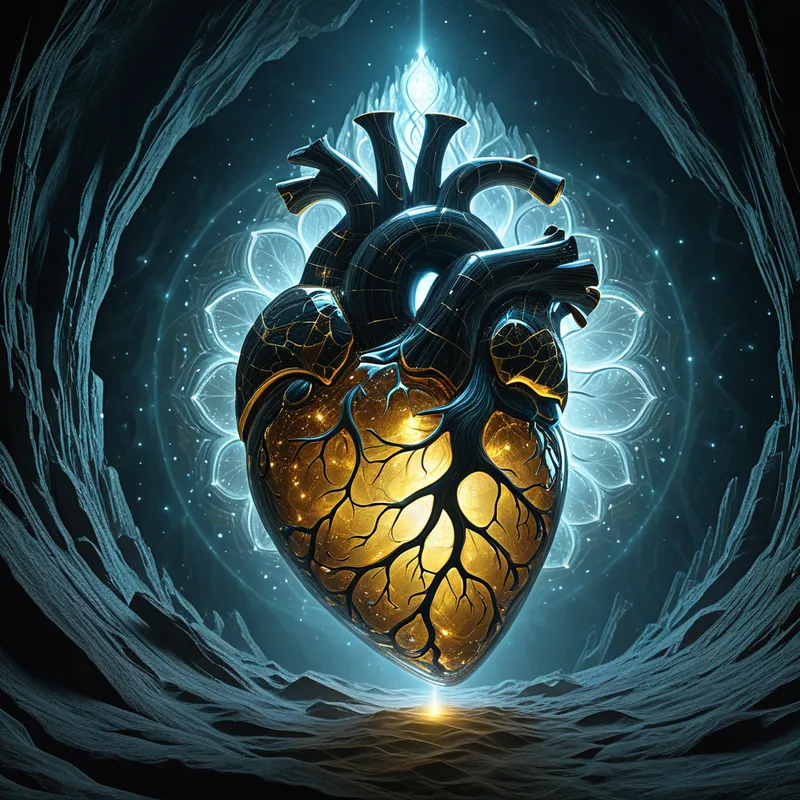
The alchemical work modeled by this myth is the transmutation of the [prima materia](/myths/prima-materia “Myth from Alchemical culture.”/) of raw, chaotic experience into the aurum philosophicum—the philosophical gold of an integrated Self. The process is one of relentless, recursive refinement.
The alchemist does not seek to destroy chaos, but to find the harmonic principle hidden within it, the ratio that turns leaden confusion into golden insight.
First, the [separatio](/myths/separatio “Myth from Alchemical culture.”/): one must discern the different “parts” of one’s life or psyche, much like distinguishing the two segments of [the divided line](/myths/the-divided-line “Myth from Platonic culture.”/). This is an analytical, often difficult stage of honest appraisal. Next, the coniunctio: the crucial, mystical step of discovering the proportional relationship between these parts. This is not compromise, but the discovery of a third, transcendent position from which the relationship itself becomes the source of vitality and beauty. How much of my energy should go to work, and how much to family, such that each enhances the other?
Finally, the multiplicatio: the application of this discovered proportion recursively, at every scale. The harmony found in one area of life becomes the template for healing others, spiraling outward from the core. The individual becomes a living embodiment of the principle, where their actions, relationships, and creations all resonate with the same inner harmony. The chaos of the personal Apeiron is not conquered, but is forever being organized around a central, golden axis of meaning—a self that is perpetually creating, and recreating, its own perfect proportion.
Associated Symbols
Explore related symbols from the CaleaDream lexicon: