The Golden Apples of the Hesperides Myth Meaning & Symbolism
Hercules' final labor: a quest to the world's end for the apples of immortality, guarded by a dragon and the daughters of the night.
The Tale of The Golden Apples of the Hesperides
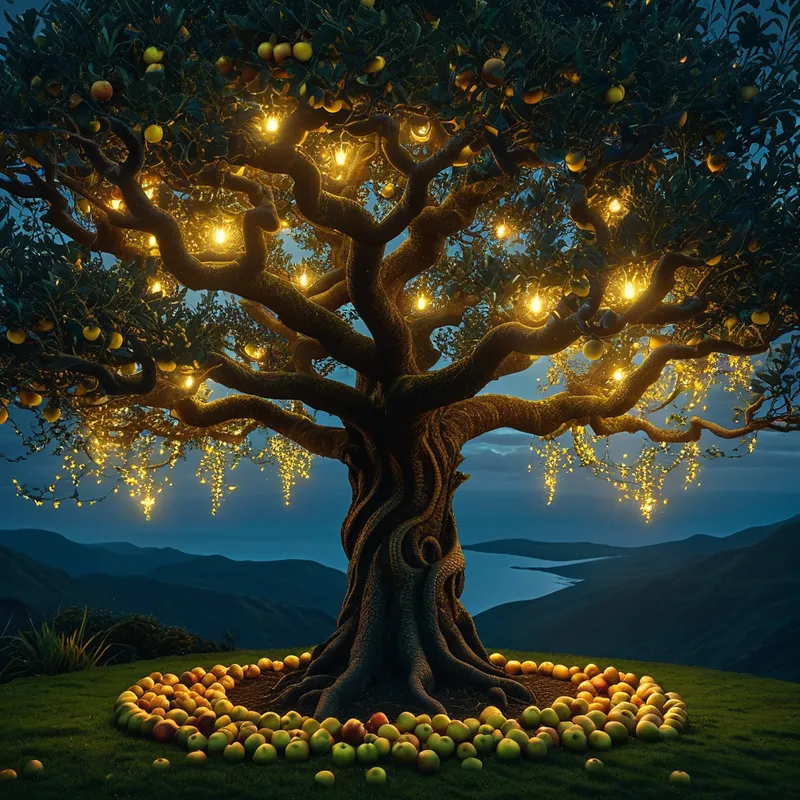
Listen, and hear of the edge of [the world](/myths/the-world “Myth from Tarot culture.”/). Not the sharp cliffs that plunge into wine-dark seas, but the soft, perpetual twilight where the sun goes to rest. Here, in the Garden of the [Hesperides](/myths/hesperides “Myth from Greek culture.”/), the air is heavy with the scent of ambrosia and the silence of eternity. This was the orchard of the gods, a wedding gift from Gaia herself to Hera. And in its heart grew a tree that bore not fruit, but solidified sunlight—the Golden Apples of Immortality.
They were tended by the Hesperides, sisters whose songs could lull the very winds to sleep. And coiling around the tree’s gnarled trunk, a hundred eyes never blinking, was [Ladon](/myths/ladon “Myth from Greek culture.”/), a dragon born of monsters, whose scales were harder than adamant and whose breath was a creeping frost. This was the unbreachable sanctum. This was the Eleventh Labor.
The hero, [Heracles](/myths/heracles “Myth from Greek culture.”/), stood at the precipice of the known world. His task, set by a vengeful king, was simple: bring back the apples. Simple, and impossible. No mortal could find the garden, let alone pass its guardians. So [Heracles](/myths/heracles “Myth from Greek culture.”/) wandered, a brute force adrift in a riddle. He wrestled the shape-shifting sea god, Nereus, until the deity, exhausted, whispered the secret path west. He fought the giant Cycnus. He freed the Titan [Prometheus](/myths/prometheus “Myth from Greek culture.”/) from his eternal torment, earning a cryptic counsel in return: do not pluck the apples yourself.
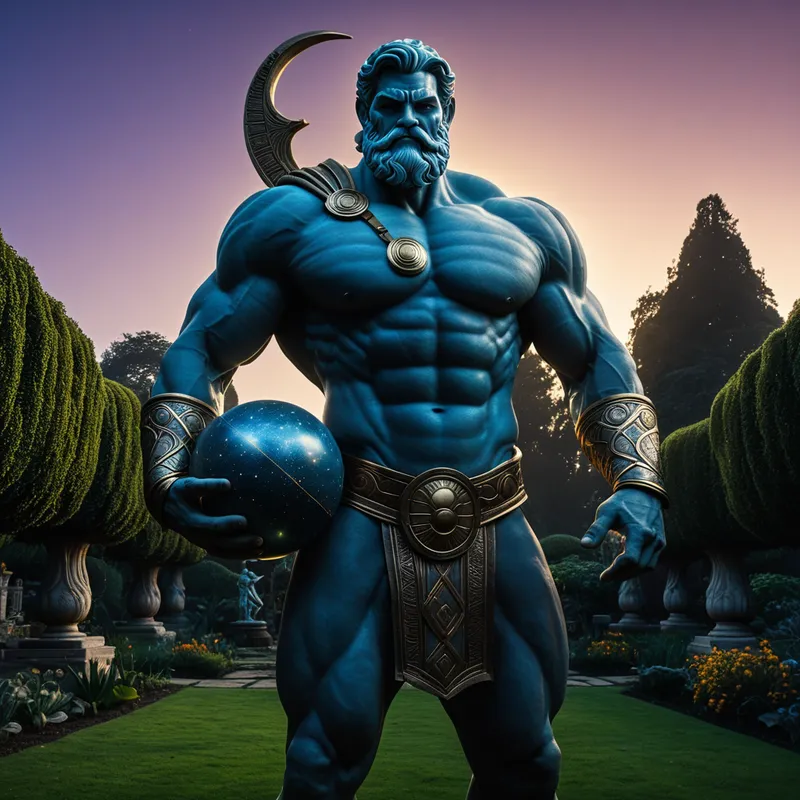
And so he came to the twilight land. He saw the shimmer of gold through the leaves, heard the haunting melody of the [nymphs](/myths/nymphs “Myth from Greek culture.”/), and felt the watchful gaze of Ladon. But remembering Prometheus’s words, he did not draw his club. Instead, he sought the one being whose shoulders already bore an impossible weight: Atlas, the father of the Hesperides, who groaned under the sphere of [the sky](/myths/the-sky “Myth from Persian culture.”/).
Heracles found him at the western pillar. A deal was struck. Atlas, with a spark of cunning in his weary eyes, would retrieve the apples from his own daughters and their pet. Heracles must take the sky upon his own shoulders. The hero planted his feet, muscles straining against the cosmic weight, the universe pressing down on him. Atlas walked free, a momentary god, and returned with three apples that glowed with an inner fire.
But the Titan had tasted freedom. “I will deliver them myself,” he said, a smile playing on his lips. The sky was Heracles’ burden now. Trapped, the hero employed the only weapon left: guile. He agreed, but asked Atlas to take the heavens back for just a moment, so he could place a pad on his shoulders. The Titan, gullible in his arrogance, complied. The moment the weight returned to him, Heracles snatched the apples, and with the speed of desperation, fled eastward, leaving the roar of a betrayed Titan fading in the everlasting dusk. The apples were delivered, the labor complete. But they were never meant for mortal hands. Athena herself returned them to the garden, for some treasures are not for keeping, only for seeking.
Cultural Origins & Context
This myth, in its most complete form, comes to us from the post-Homeric era, crystallized in such works as the Bibliotheca of Pseudo-Apollodorus. It is a labor of Heracles, a cycle of stories that served as foundational national epics for various Greek city-states, particularly emphasizing themes of heroic endurance (ponos) and the appeasement of divine order. The tale would have been performed by rhapsodes and poets, a gripping episode in the larger saga of the hero’s penance and apotheosis.
Its societal function was multifaceted. On one level, it was an etiological myth, explaining the far western limits of the known world (often associated with the Atlas Mountains in North Africa). On another, it reinforced the cosmic hierarchy: even the greatest hero could not directly seize the property of the gods (Hera). He must rely on cleverness ([metis](/myths/metis “Myth from Greek culture.”/)) and negotiation with older, primordial powers ([the Titans](/myths/the-titans “Myth from Greek culture.”/)). The myth also served as a narrative anchor for the concept of the “impossible task,” a trope that tested the hero’s worth beyond mere physical strength, demanding resilience, patience, and intellectual resourcefulness.
Symbolic Architecture
The Garden is the Self in its pristine, pre-conscious state—a wholeness that exists at the “edge of the world,” beyond the ordinary ego’s reach. It is the [realm](/symbols/realm “Symbol: The symbol of ‘Realm’ often signifies the boundaries of one’s consciousness, experiences, or emotional states, suggesting aspects of reality that are either explored or ignored.”/) of potential immortality, the untouched psychic totality.
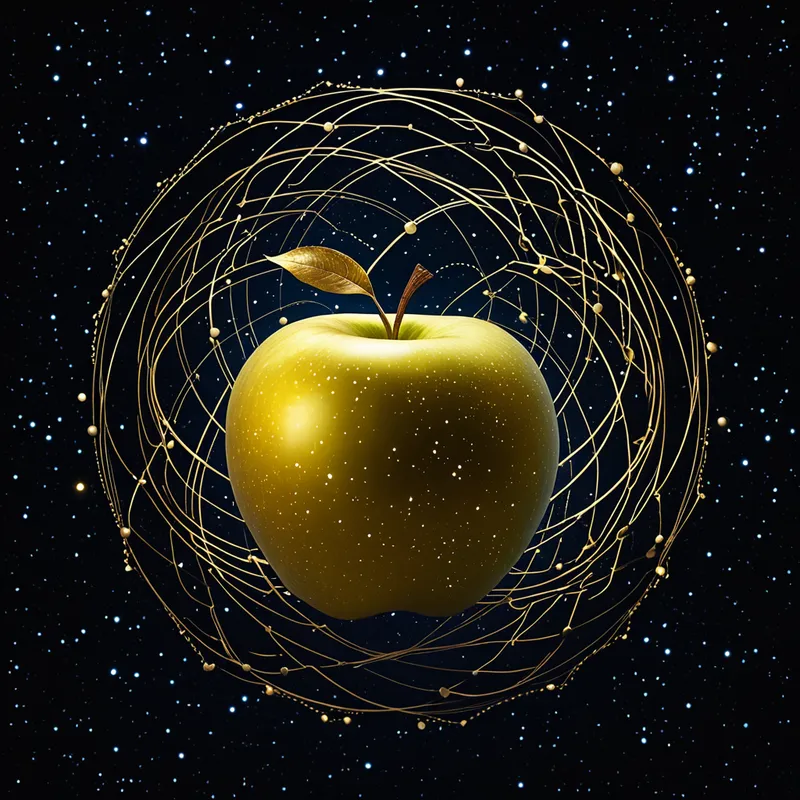
The Golden Apple is not a fruit, but a mirror. It reflects not your face, but the condition of your soul: its yearning for perfection, its thirst for eternal life, its latent divinity.
The Hesperides represent the alluring, nurturing, yet passive aspects of the unconscious—the beautiful, singing potentials that do not actively resist but simply are. Ladon, in contrast, is the fierce [guardian](/symbols/guardian “Symbol: A protector figure representing safety, authority, and guidance, often embodying parental, societal, or spiritual oversight.”/) of this wholeness, the psychic [defense](/symbols/defense “Symbol: A protective mechanism or barrier against perceived threats, representing boundaries, security, and resistance to external or internal challenges.”/) [mechanism](/symbols/mechanism “Symbol: Represents the body’s internal systems, emotional regulation, or psychological processes working together like a machine.”/). He is the inertia of the deep Self, the [resistance](/symbols/resistance “Symbol: An object or tool representing opposition, struggle, or the act of pushing back against external forces or internal changes.”/) to [integration](/symbols/integration “Symbol: The process of unifying disparate parts of the self or experience into a cohesive whole, often representing psychological wholeness or resolution of internal conflict.”/), often perceived by [the ego](/myths/the-ego “Myth from Jungian culture.”/) as a monstrous [threat](/symbols/threat “Symbol: A threat in dreams often reflects feelings of vulnerability, anxiety, or fear regarding one’s safety or well-being. It can indicate unresolved conflicts or the presence of external pressures.”/). He is not evil, but necessary; without him, the [treasure](/symbols/treasure “Symbol: A hidden or valuable object representing spiritual wealth, inner potential, or divine reward.”/) is cheapened.
Heracles is the striving ego-[consciousness](/symbols/consciousness “Symbol: Consciousness represents the state of awareness and perception, encompassing thoughts, feelings, and experiences.”/), tasked by a tyrannical outer [authority](/symbols/authority “Symbol: A symbol representing power structures, rules, and control, often reflecting one’s relationship with societal or personal governance.”/) (the [king](/symbols/king “Symbol: A symbol of ultimate authority, leadership, and societal order, often representing the dreamer’s inner power or external control figures.”/)) to integrate an [aspect](/symbols/aspect “Symbol: A distinct feature, quality, or perspective of something, often representing a partial view of a larger whole.”/) of the divine. His brute force is useless here. The labor forces him into a supreme [paradox](/symbols/paradox “Symbol: A contradictory yet true concept that challenges logic and perception, often representing unresolved tensions or profound truths.”/): to gain the treasure, he must first accept an even greater burden—the [weight](/symbols/weight “Symbol: Weight symbolizes burdens, responsibilities, and emotional loads one carries in life.”/) of the [cosmos](/symbols/cosmos “Symbol: The entire universe as an ordered, harmonious system, often representing the totality of existence, spiritual connection, and the unknown.”/), held by Atlas. Atlas is the [archetype](/symbols/archetype “Symbol: A universal, primordial pattern or prototype in the collective unconscious that shapes human experience, behavior, and creative expression.”/) of the burden-bearer, the one carrying the entire inherited, unconscious worldview (the sky). Heracles’ cunning trick is the essential maneuver of [consciousness](/symbols/consciousness “Symbol: Consciousness represents the state of awareness and perception, encompassing thoughts, feelings, and experiences.”/): it must temporarily relieve the old [structure](/symbols/structure “Symbol: Structure in dreams often symbolizes stability, organization, and the framework of one’s life, reflecting how one perceives their environment and personal life.”/) (the [Titan](/symbols/titan “Symbol: Titans represent immense power, strength, and a connection to the primordial forces of nature and creation.”/)) to allow it to fetch the treasure, but must be shrewd enough not to be trapped forever under the old order’s [weight](/symbols/weight “Symbol: Weight symbolizes burdens, responsibilities, and emotional loads one carries in life.”/).
The Dreamer’s Resonance
When this myth stirs in the modern dreamer, it signals a confrontation with the “impossible task” at [the threshold](/myths/the-threshold “Myth from Folklore culture.”/) of a major life transition. Dreaming of a radiant, out-of-reach fruit in a guarded garden speaks to a somatic sense of longing for a state of completeness—perhaps a career goal, a relationship ideal, or psychological wholeness—that feels divinely ordained yet protected by immense inner resistance.
[The dragon](/myths/the-dragon “Myth from Chinese culture.”/) in the dream may not be a literal beast. It could manifest as a suffocating anxiety when approaching the goal, a pattern of self-sabotage, or a profound, immobilizing lethargy. The dreamer is in the phase of “wrestling Nereus”—grappling with shifting, elusive truths about themselves and their path. The psychological process is one of encountering [the Self](/myths/the-self “Myth from Jungian culture.”/)’s guardianship. The ego is being tested to see if it seeks the treasure for aggrandizement (like the king’s command) or for a deeper, more integrative purpose. The dream asks: Are you willing to carry the sky? Are you willing to bear the overwhelming responsibility of your own wholeness?
Alchemical Translation
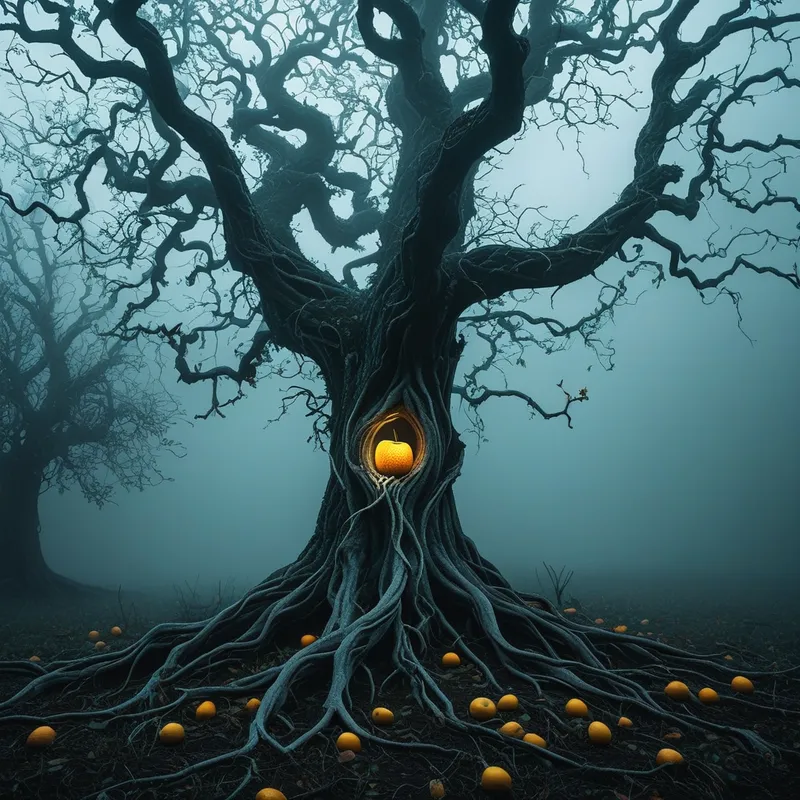
The myth models the opus contra naturam—the work against nature, or rather, the work of transmuting base egoic nature into golden consciousness. The initial state is one of servitude to a petty ruler (the unresolved complex, the societal [persona](/myths/persona “Myth from Greek culture.”/)). The quest is the individuation imperative.
The alchemy occurs not in seizing the gold, but in the moment the shoulders accept the sky. That is the mortificatio—the ego’s humiliation and death—where sheer force is annihilated by a greater cosmic weight.
Atlas fetching the apples symbolizes the necessity of engaging the primordial, Titanic layers of the [psyche](/myths/psyche “Myth from Greek culture.”/)—the deep, often burdensome inheritance of family, culture, and [the collective unconscious](/myths/the-collective-unconscious “Myth from Jungian culture.”/). One cannot integrate the gold (the Self) without first consciously relating to this foundational layer. Heracles’ trick is the sublimatio: the conscious ego must cleverly re-engage with this ancient burden without being subsumed by it. It takes the treasure and returns to the world.
Crucially, the apples are returned to the garden by Athena. This is the final, critical stage of psychic transmutation. The integrated treasure does not become a possession of the ego. It is restored to its sacred place within the Self. The ego-hero does not become immortal by eating the apple; he becomes worthy by having sought it, carried the sky, and relinquished it. The labor transforms the laborer. The goal of the quest is not to possess the golden apple, but to become the garden in which it can eternally grow. The immortality gained is not of the body, but of the soul’s alignment with its own divine, guarded core.
Associated Symbols
Explore related symbols from the CaleaDream lexicon: