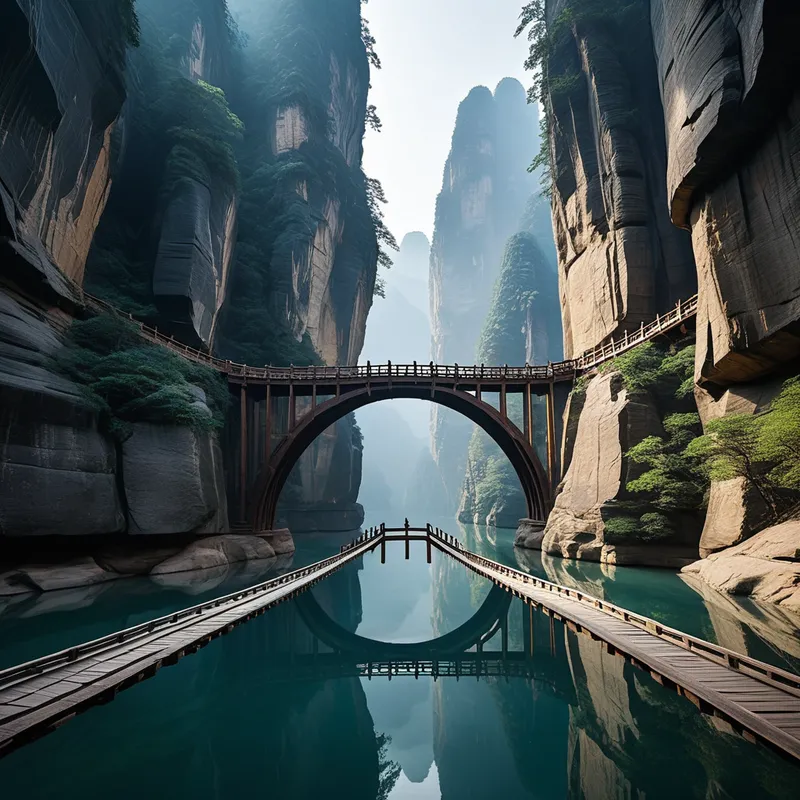
The Glass Bridge at Zhangjiajie Myth Meaning & Symbolism
A celestial artisan builds a bridge of pure faith for a mortal hero, testing the courage to walk a path of terrifying transparency.
The Tale of The Glass Bridge at Zhangjiajie
Listen, and hear the tale whispered on the winds that scour the stone forests of Zhangjiajie. In an age when the earth was still conversant with the heavens, a great calamity befell the mortal realm. A chasm, born of a quarrel between the Dì Líng and a storm dragon, split the very heart of the mountains. It was not merely a crack in stone, but a tear in the world—a void so deep its bottom drank the light of the sun and exhaled only a cold, silent breath. The people of the valleys were severed from the sacred peaks, from the healing herbs that grew only in the high mist, and from the temple of their ancestors. Their songs of lament rose like incense, curling through the pine forests to the very gates of the celestial courts.
Hearing this sorrow, the Yù Huáng was moved. He summoned Liú Yún Xiān, the artisan of clouds and light. “Weave a connection,” commanded the emperor, “not of stone, which can be sundered again, nor of wood, which can be consumed. Weave a bridge of a different nature.”
Liú Yún Xiān descended to the precipice. The wind howled, plucking at her robes of spun dawn. She did not gather granite or fell ancient trees. Instead, she gathered the first, fearless light of morning as it crested the peaks. She collected the unbroken silence of the mountain’s core. She drew the clarity of a winter’s sky after snow. With hands that could shape vapor and solidify song, she began her work. What formed was a bridge of pure, flawless glass. It was a sculpture of air made visible, a path of terrifying transparency. It had no pillars but its own crystalline integrity, spanning the abyss in a single, graceful, impossible arc. It did not hide the void; it revealed it in its entirety.
But a bridge, even one of divine making, is not a path until it is walked. The call went out to the mortal villages: who would be the first to cross? Fear held them fast. To step onto that clarity was to see the depth of one’s potential fall with every step. It was to be suspended in perfect visibility between solid ground and oblivion.
From among them stepped a young woodcutter named Jiān Shān. He was not the strongest warrior, nor the wisest elder. But in his heart was a need greater than his fear—his grandmother lay dying in their isolated hut on the far side, needing a herb that grew only on the severed peak. He approached the bridgehead. The glass gleamed, a cold mirror to the dizzying drop. He saw his own pale, wide-eyed reflection staring back from the path itself. Taking a breath that felt like his last, he placed a foot upon the surface.
It did not crack. It sang—a faint, high harmonic, like a struck crystal cup. The second step was a pact. He could not look down at the chasm, for it was everywhere beneath him. He could not look up, lest he lose his balance. He fixed his gaze on the far side, on the mist-shrouded form of his grandmother’s home. The bridge became a corridor of pure exposure. The wind mocked him; the glass showed him the exact measure of his fragility. Halfway across, a storm crow landed before him, its beady eye a black void. “Turn back,” it seemed to caw, “the gods have built you a joke, a path of certain death made pretty.”
Jiān Shān’s knees trembled. The glass trembled with him, a sympathetic vibration. In that moment, he understood the bridge’s nature. It was not testing his strength, but his trust. It was made of faith given form. He stopped, closed his eyes to the visual terror, and felt. He felt the solid, unwavering support beneath his soles. He felt the divine intent in its construction—not to kill, but to connect. He felt his own purpose, a steady pulse pushing him forward. He opened his eyes, no longer seeing the abyss, but seeing the path. Step by resonant step, he walked the line of clarity until his foot found the rough, blessed soil of the far shore.
As he did, a miracle unfolded. Where his feet had trod, the pristine glass bloomed. Delicate, golden veins—like the lines of a hand or the branches of a ginkgo tree—spread through the structure. The bridge was no longer a cold, celestial artifact. It was alive, anchored by mortal courage, a fusion of heaven’s craft and humanity’s heart. The path was open.
Cultural Origins & Context
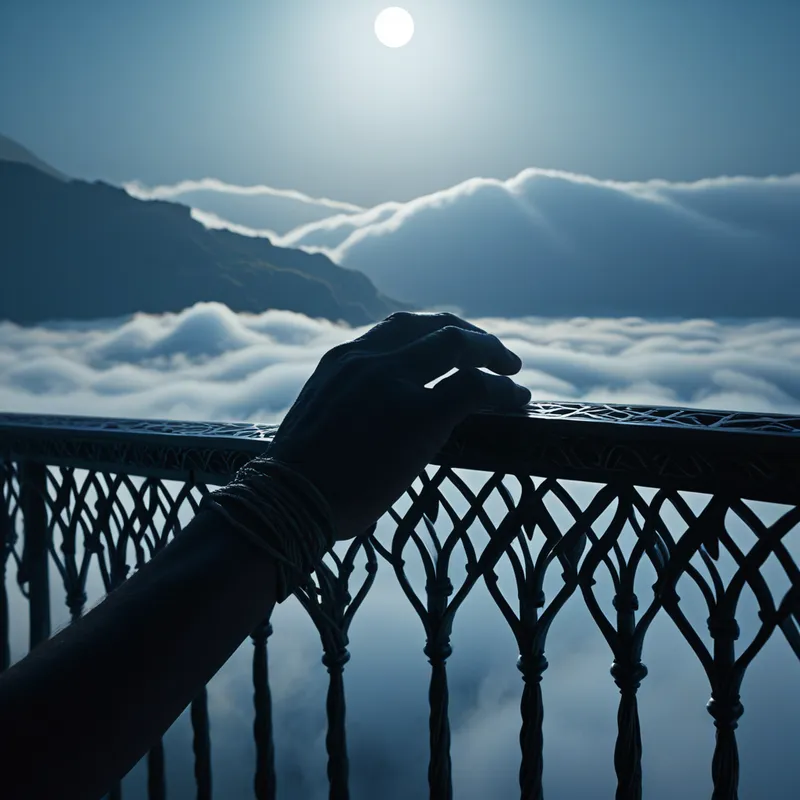
The myth of the Glass Bridge is a difāng chuánshuō, a folktale originating from the Tujia and Miao ethnic communities indigenous to the Wulingyuan region, home to the Zhangjiajie sandstone pillars. Unlike canonical myths recorded in ancient texts, this story lived in the oral tradition, told by elders by firelight and by guides leading travelers through the perilous mountain paths. Its primary function was not merely to explain a geological wonder, but to impart a core ethic necessary for survival in a breathtaking yet treacherous landscape: profound situational awareness and cultivated courage.
The tale emerged from a direct, phenomenological experience of the environment. The real Zhangjiajie landscape—with its vertiginous cliffs, deep ravines, and ever-shifting mists—naturally evokes a sense of the numinous and the perilous. Before modern engineering, traversing these heights required absolute trust in one’s footing, one’s guide, and one’s own calm spirit. The myth personifies this psychological ordeal. The celestial artisan represents the inexplicable, awe-inspiring beauty of the natural formation itself, which seems so impossibly perfect it must be divine craft. The glass bridge is the metaphorical path of safe passage that nature sometimes provides—a narrow ridge, a natural stone arch—that feels both miraculous and terrifyingly exposed.
Societally, the story served as a pedagogical tool. It taught that the most daunting challenges require a different kind of strength—not brute force, but the steady, focused will to proceed despite transparent danger. It reinforced community values: Jiān Shān crosses not for glory, but for familial duty (xiào). His success benefits not just himself, but reconnects the entire community, modeling that individual courage undertaken for collective good is the virtue that truly animates and “grounds” the gifts of heaven.
Symbolic Architecture
At its core, the Glass Bridge is a master symbol of the psychic threshold. It represents the necessary, terrifying path of awareness one must cross to integrate fragmented aspects of the self or to reach a new stage of consciousness.
The Abyss is the unconscious itself—the chaotic, unknown, and potentially overwhelming depth of all we have repressed, ignored, or feared. It is the shadow realm. The Glass is the medium of consciousness. It is transparency, clarity, and unforgiving self-reflection. The bridge does not allow you to ignore the abyss; it forces you to see it, to walk directly over it with full awareness. This is the essence of the heroic journey in depth psychology: not slaying a dragon in the dark, but walking in full sight of it.
The most perilous crossing is not over darkness, but over clarity. The bridge of glass forces the soul to witness its own traversal above the void, making every step an act of conscious creation.
The celestial artisan, Liú Yún Xiān, symbolizes the transcendent function—the psyche’s innate capacity to create a tertium non datur, a “third thing” (the bridge) that reconciles opposites (the separated cliffs, the conscious and unconscious). She builds not from earthly materials (the known ego), but from elements of air, light, and silence (the numinous, intuitive wisdom of the Self). The hero, Jiān Shān, is the ego that must volunteer for this journey. His motivation—love and duty—provides the “gravity” that keeps him moving forward, the libido or psychic energy directed toward wholeness.
The final transformation, where golden veins spread from his footsteps, is the crucial symbol of integration. The divine structure (the transcendent solution) is inert until it is animated by lived, mortal experience. The golden veins are the nervous system of lived truth, the psychic pathways forged when courage meets grace, permanently altering the structure of the personality itself.
The Dreamer’s Resonance
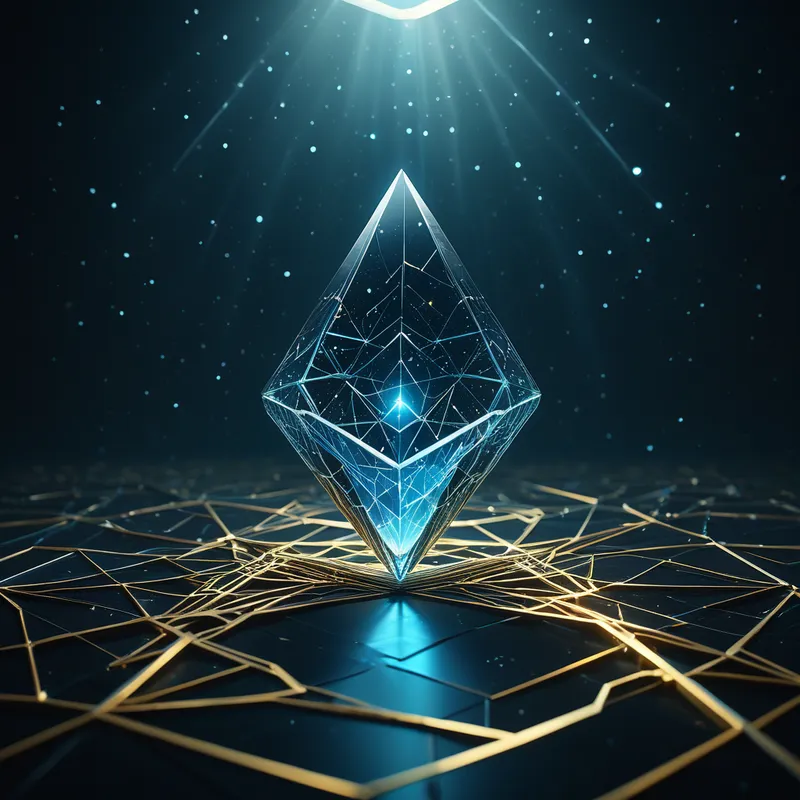
When this myth pattern appears in modern dreams—as a glass walkway, a transparent floor in a skyscraper, or a fragile bridge over a deep valley—it signals a critical phase of shadow-work or conscious transition. The dreamer is likely facing a situation in waking life that requires proceeding with full awareness of acute risk, vulnerability, or emotional exposure.
Somatically, the dream often replicates the visceral feeling of vertigo, of the stomach dropping, and of muscle tension in the legs—a literal embodied fear of the “fall.” Psychologically, the process is one of conscious endurance. The dream-ego is being tested not on its ability to fight or flee, but to stay present in a state of high anxiety and visibility. The abyss below often contains shadow content: swirling mists that may form into faces, forgotten memories, or archetypal figures (the storm crow). The dream asks: Can you hold your course while looking directly at what frightens you?
The moment the dreamer stops, closes their eyes (in the dream), and finds a felt sense of support—or when they notice the bridge is stronger than it appears—marks a turning point. It indicates the ego accessing a inner resource, a trust in the Self’s guidance (the celestial artisan’s intent) that is deeper than sensory panic. This dream is a rehearsal. It prepares the psyche to walk its own “glass bridge” in reality—a difficult conversation, a career leap, an admission of vulnerability—where success depends on maintaining conscious, trembling integrity all the way across.
Alchemical Translation
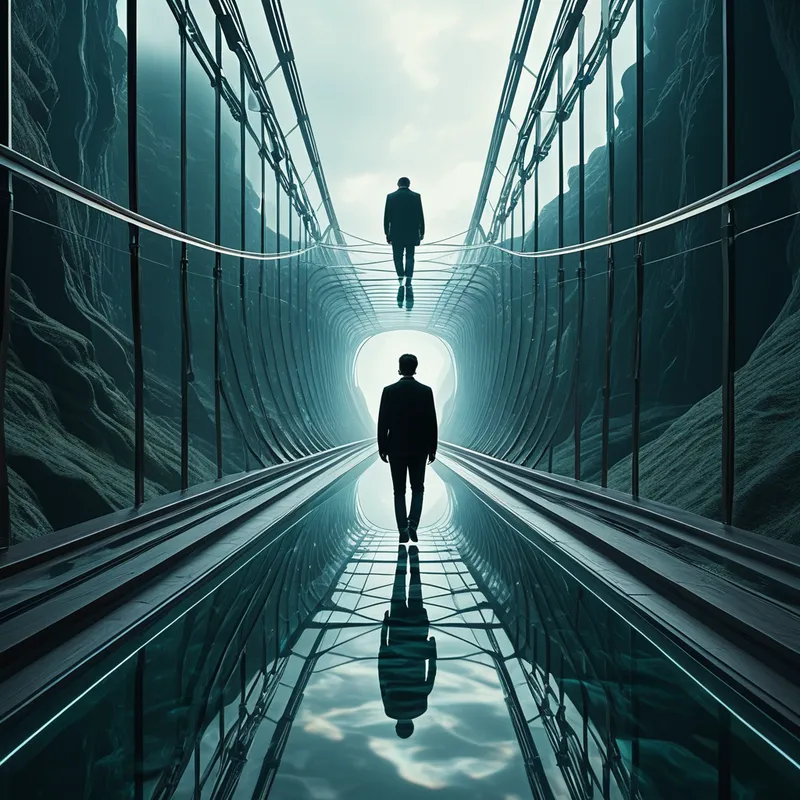
The myth models the alchemical opus of individuation in a strikingly clear formula: Calcinatio → Solutio → Coagulatio.
First, Calcinatio: The burning away of the old. The great chasm is opened by a divine quarrel, representing the necessary crisis, the painful separation or burning away of an old, stable identity (the connected valley). This creates the nigredo, the dark night of the soul, the abyss of despair and disconnection.
Then, Solutio: The dissolving into the spiritual. The artisan gathers intangible, celestial elements—light, silence, clarity. This is the dissolution of the problem into its spiritual components. The ego’s solid, earthly solutions (stone, wood) are useless. The psyche must turn to a higher, more refined principle: transparent awareness itself. The bridge is formed, a solution from above.
The alchemy occurs in the traversal. The spirit provides the crystal formula, but the soul must provide the courageous heat to anneal it into being.
Finally, Coagulatio: The embodiment, the making solid. This is the hero’s walk. The spiritual insight (the glass bridge) remains a beautiful, potential theory until the mortal ego commits its weight, its life force, to it. Each step is a coagulation—a making real of that insight through lived action. The intense, focused fear and attention is the heat of the alchemical furnace.
The golden veins are the aurum philosophicum, the philosophical gold—the result of the opus. It is the enduring, valuable transformation of the personality. The once-terrifying, exposed path becomes a living, integrated part of the psyche’s landscape, a neural pathway of courage that forever connects the once-separated realms of the conscious and the unconscious. The individual is no longer a resident of only one cliff; they become the sovereign of the bridge itself, capable of traversing the depths with conscious grace. They have not conquered the abyss; they have learned to build and walk the path of clarity that spans it.
Associated Symbols
Explore related symbols from the CaleaDream lexicon: