The Ghost Hotel Myth Meaning & Symbolism
A spectral inn appears at life's crossroads, where guests must face their own ghosts to pay the only toll that grants passage forward.
The Tale of The Ghost Hotel
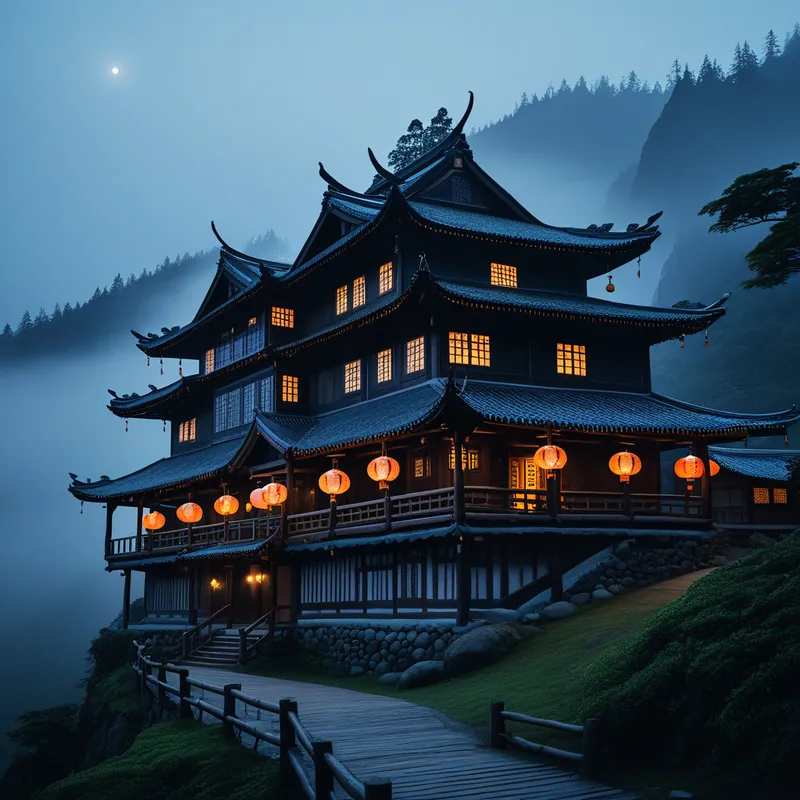
Listen, and let the mists of the old roads gather. There is a place where the path forks, not in dirt or stone, but in the soul. It is there, when the sun drowns in the west and the world holds its breath between day and night, that the inn appears. They call it The Ghost Hotel.
It does not stand on solid ground, but on the moment of a choice unmade, a word unspoken, a grief untended. Its timbers are the color of forgotten twilight, and paper lanterns, glowing with a soft, sorrowful light, hang from its eaves like captive moons. The door is always open, an invitation carved from shadow and longing.
The one who finds it is always a traveler, but their journey is inward. They are the soldier fleeing a battle that replays behind their eyes, the merchant who traded love for gold and found the currency empty, the parent who hears a lost child’s laugh in the rustling leaves. Weariness is their cloak, and a silent question is their only map.
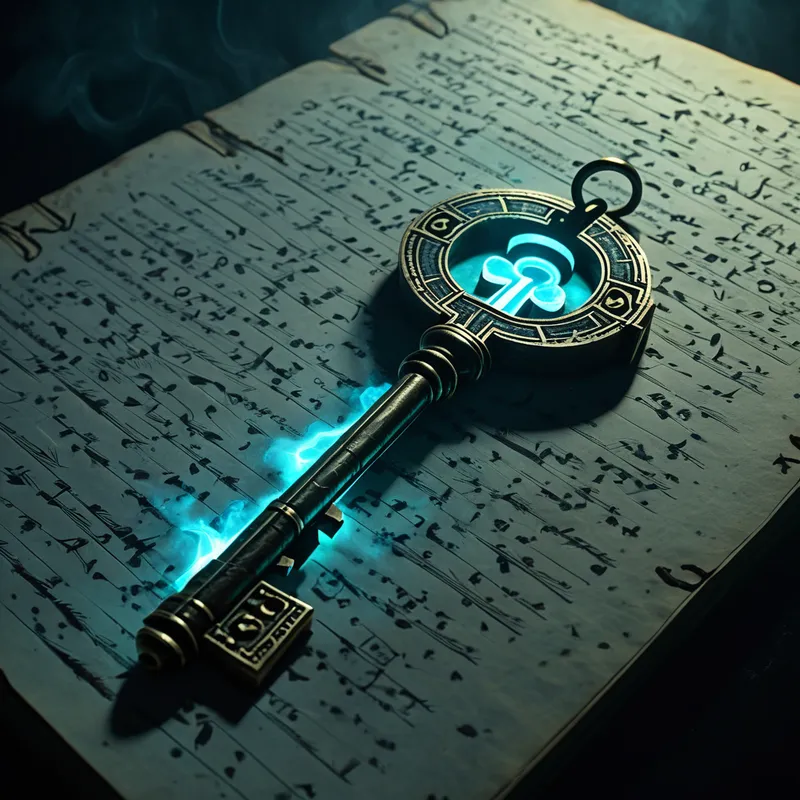
As they cross the threshold, warmth embraces them—the scent of pine smoke and old paper, the sound of a low fire. The Innkeeper is there, a figure of immense calm with eyes that hold the patience of mountains. No words of greeting are needed. A ledger lies open on the desk. The traveler’s name is already there, not written in ink, but in the faint, shimmering echo of their own life’s moments.
They are shown to a room. It is always their room. Not a copy, but the very chamber of memory itself. The soldier finds his tent, the cold dread of dawn before the charge seeping from the walls. The merchant finds his childhood home, the simple wooden bowl from which he once ate now radiating a profound, accusing absence. Here, they must lodge. Here, they must meet the Guest.
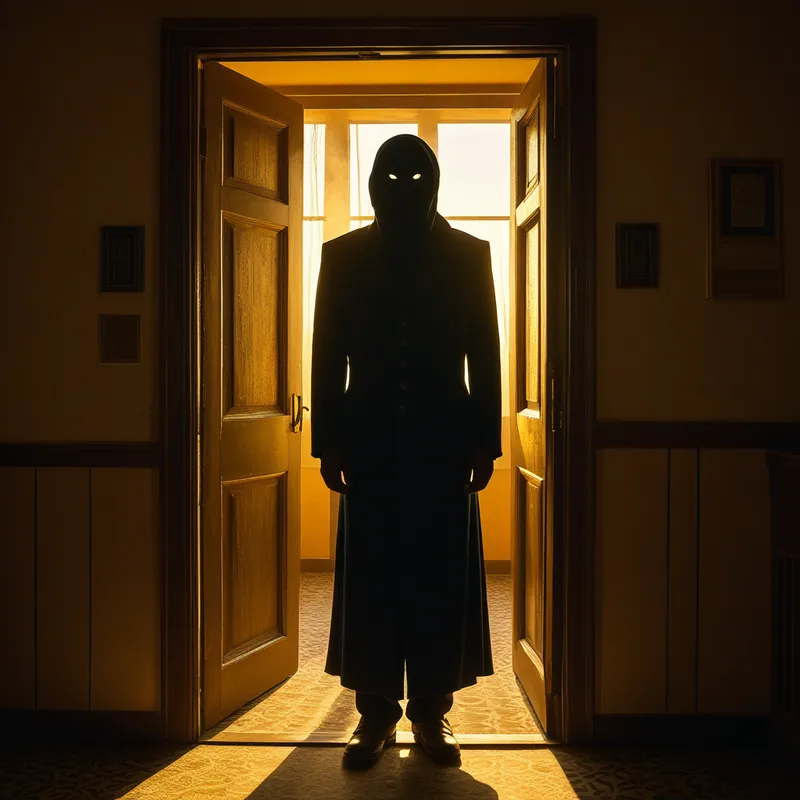
The Ghost is not a phantom of another, but the spectral shape of their own unresolved past: the fear they denied, the love they abandoned, the tear they refused to shed. It sits in the corner, or stands at the window, a presence of pure, condensed emotion. It waits. The night stretches, an eternity in a single hour. The traveler may try to sleep, but the Ghost breathes with the rhythm of their own heart. They may try to reason, but the Ghost speaks in the language of feeling, which has no logic.
The crisis comes in the deepest watch. The traveler must turn and face the Guest. Not to fight, not to banish, but to see it. To acknowledge its reality, its right to exist within the architecture of their soul. This is the toll. This is the only coin the Ghost Hotel accepts.
When the gaze is met, a silent transaction occurs. A weight lifts, not because the memory vanishes, but because its sharp, fragmented edges soften into the whole of a story. The Ghost may fade, or it may simply sit quietly, becoming a part of the room’s furniture, a acknowledged fact. As the first true light of dawn—not the false twilight of the crossroads—touches the window, the traveler finds themselves back on the path. The inn is gone. But the path ahead feels different underfoot. The fork remains, but the choice is now clear, made not from avoidance, but from a strange, hard-won wholeness.
Cultural Origins & Context
The myth of the Ghost Hotel finds its roots not in grand epics of courts or battles, but in the oral traditions of wayfarers, pilgrims, and those who lived their lives on the roads connecting villages and mountain passes. It is a folklore of the liminal, belonging to the cultural psyche of itinerant merchants, wandering monks, and displaced families. Told around campfires and in roadside tea houses, it served as a sophisticated psychological map for navigating internal crises.
Its primary tellers were often the travelers themselves, recounting it not as a mere spooky tale, but as a sober, metaphorical truth. The story functioned as a societal permission slip for profound grief and introspection, which in many traditional settings were expected to be private or swiftly resolved. By externalizing the process into a mythic encounter, it provided a framework for understanding prolonged sorrow, PTSD (before such a term existed), or the haunting guilt of a difficult decision. It taught that some journeys have necessary detours through the interior, and that such detours were not a failure of the voyage, but a hidden, sacred part of its route.
Symbolic Architecture
The Ghost Hotel is the ultimate symbol of the psychic threshold. It does not represent hell or punishment, but a mandatory waystation for the soul that has outpaced its own integration. The crossroads are the conscious moment of crisis; the Hotel is the unconscious container that appears to process it.
The past is not a country we leave, but a suite we must occasionally revisit to pay the rent on our present.
The Innkeeper is the archetypal psychopomp of this inner space—a personification of the Self’s guiding function. He does not intervene, judge, or advise. His presence asserts the simple, non-negotiable law of the psyche: what is unmet will wait for you. The ledger with the pre-written name signifies that this encounter is fated by one’s own biography; it is an appointment with the self.
The room and its Ghost are the myth’s brilliant core. The room is the complex—a charged cluster of memories and emotions within the personal unconscious. The Ghost is the living, emotional core of that complex. The myth correctly posits that we cannot dismantle the room (the memory), but we can change our relationship to its occupant (the charged emotion). Integration is not deletion; it is the transformation of a haunting into a housed memory.
The Dreamer’s Resonance
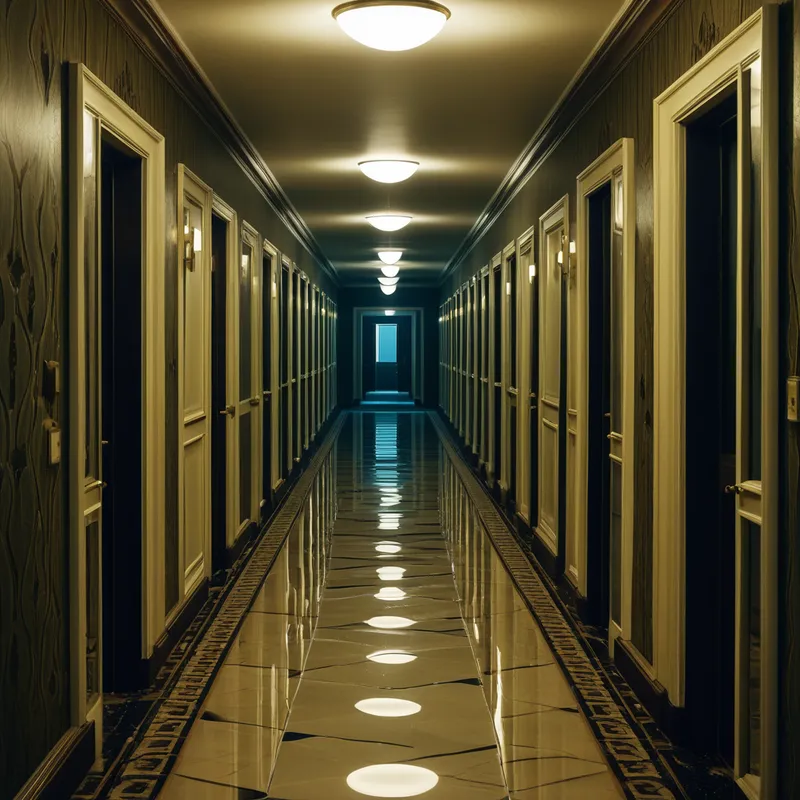
When this myth patterns a modern dream, the dreamer is at a profound somatic and psychological crossroads. Dreaming of wandering an endless, unfamiliar hotel, searching for a room, or being pursued down its corridors signals that unconscious material is demanding lodging in the conscious mind. The body often reports sensations of being lost, heavy dread, or a chilling cold—the somatic signature of repressed emotion rising.
A dream where one is checked in, facing a specific, eerie room or a silent, familiar-yet-strange figure, indicates the process has moved from general anxiety to specific confrontation. The psyche is staging the encounter. The emotional tone upon waking—whether terror, deep sadness, or unexpected relief—is the direct feedback from that attempted meeting. Such dreams are not malfunctions; they are the innate, mythic machinery of the individuation process, constructing its own Ghost Hotel in the theater of the night to force a reconciliation the waking self has postponed.
Alchemical Translation
The alchemy of the Ghost Hotel is the transmutation of leaden, paralyzing guilt or grief into the gold of informed consciousness. The hero’s journey here is deeply interior. The prima materia is the raw, haunting memory. The vas or alchemical vessel is the Hotel room itself—a sealed, pressurized container where the confrontation must occur.
The toll is paid in the currency of attention, the one treasure we often hoard from the parts of ourselves that need it most.
The nigredo is the long night of facing the Ghost, the descent into the blackness of the unprocessed feeling. The albedo is the moment of acknowledgment, where the Ghost is seen not as a monster, but as a lost part of the self—a whitening, a clarification. There is no final rubedo of glorious victory in this myth, and that is its wisdom. The culmination is a quiet coniunctio: the traveler and the Ghost coexisting in the same psychic space. The transformed traveler leaves not with a solved problem, but with an integrated burden. The path forward is walked with the full weight of one’s history, now carried consciously, instead of dragging behind like a forgotten chain. This is the individuation modeled: becoming the responsible innkeeper of one’s own haunted halls.
Associated Symbols
Explore related symbols from the CaleaDream lexicon: