The Garden of Gethsemane Myth Meaning & Symbolism
The story of a divine figure's ultimate human moment, wrestling with destiny in an olive grove under a moon of sorrow.
The Tale of The Garden of Gethsemane
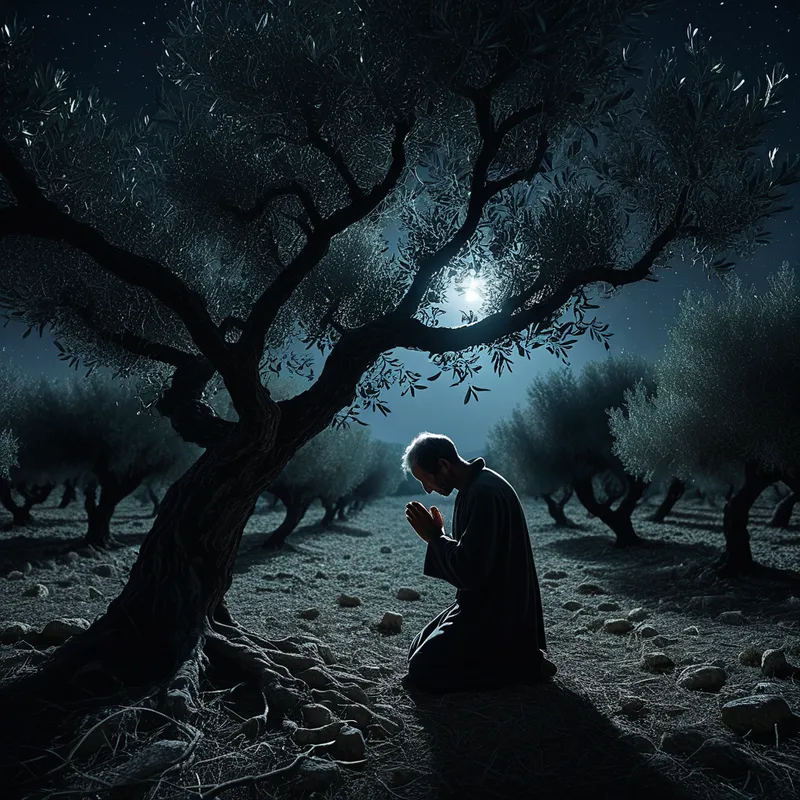
The night was a cloak of final things. The city’s Passover lights glittered below like distant, cold stars, but here, on the slope of the Mount of Olives, the darkness was a living presence. It was a garden, this place—[Gethsemane](/myths/gethsemane “Myth from Christian culture.”/)—a grove of ancient olive trees, their trunks twisted into agonized, knowing shapes by centuries. The air smelled of crushed herbs, damp earth, and the coming dawn.
He entered the garden, and the weight of [the world](/myths/the-world “Myth from Tarot culture.”/) entered with him. This was [Jesus of Nazareth](/myths/jesus-of-nazareth “Myth from Christian culture.”/), the teacher, the healer, the one they called the Messiah. But tonight, the mantle of prophecy fell from his shoulders like lead. He took with him his three closest—[Peter](/myths/peter “Myth from Biblical culture.”/), and the two sons of thunder, James and John. Their hearts were heavy with the unsung hymn of [the last supper](/myths/the-last-supper “Myth from Christian culture.”/), with the foretelling of betrayal that hung in the room like a ghost.
“My soul is overwhelmed with sorrow to the point of death,” he said to them, his voice a fracture in the night’s silence. “Stay here and keep watch.” He walked a stone’s throw further, into the deeper embrace of the grove, and the solitude became a chamber. He fell to the ground, the cool soil against his face. The full moon, a cold observer, cast his shadow as a puddle of black.
“Abba, Father,” he cried out, [the word](/myths/the-word “Myth from Biblical culture.”/) a child’s plea torn from a man’s chest. “Everything is possible for you. Take this cup from me.” The cup—it was not of wine. It was [the vessel](/myths/the-vessel “Myth from Alchemical culture.”/) of all that was to come: the betrayal by a friend’s kiss, the desertion by all, the mockery of [justice](/myths/justice “Myth from Tarot culture.”/), the searing pain of the cross. It was the full, bitter dregs of human suffering and divine abandonment. His anguish was not a performance; it was a seismic event in the soul. So great was the inner pressure that his sweat fell like great drops of blood upon [the earth](/myths/the-earth “Myth from Hindu culture.”/), a sign that the struggle was rending the very boundary between spirit and flesh.
Yet, into that tempest, a second breath was drawn. A surrender not of defeat, but of terrible, costly alignment. “Yet not what I will, but what you will.”
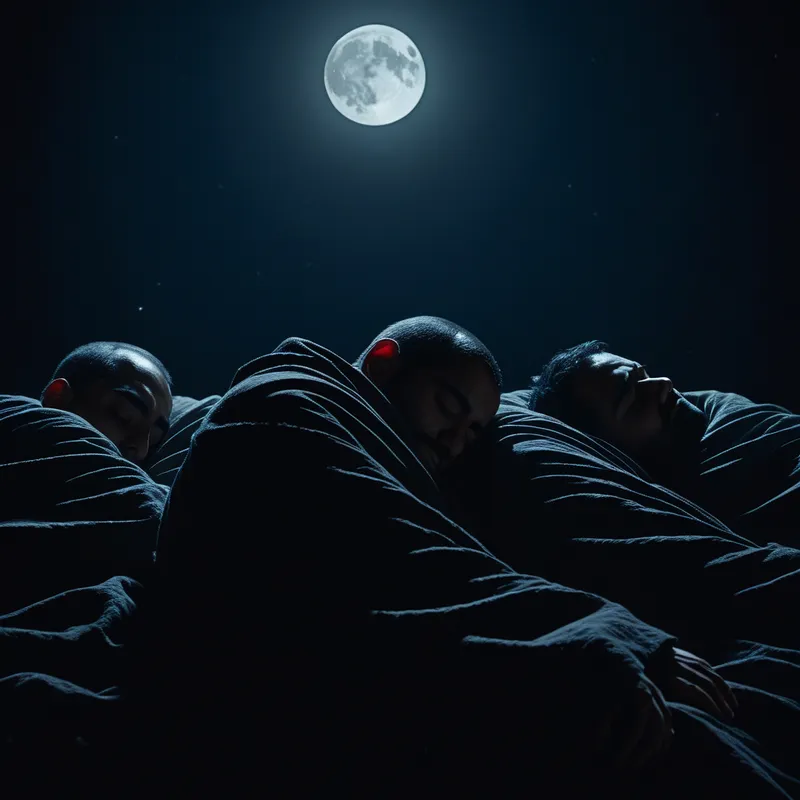
He returned to his friends, seeking a fragment of human solidarity in his hour of dereliction. He found them asleep. “Simon,” he said to Peter, a name that meant ‘rock,’ now soft with slumber. “Could you not keep watch for one hour?” The question held the loneliness of ages. He woke them, a tenderness persisting even in his own devastation, and warned them again to pray lest they fall into temptation. Twice more he withdrew, each time wrestling anew with the cup, each time returning to the same heartbreaking scene: his chosen pillars of support, overcome by grief and human frailty, lost to sleep.
The third time, he did not wake them gently. The sound was in the air—the clink of armor, the tramp of feet, the flicker of torches cutting through the trees. The hour had come. “Are you still sleeping and resting?” he said. “Enough! The hour has come. Look, the betrayer is at hand.”
And there he was, [Judas Iscariot](/myths/judas-iscariot “Myth from Christian culture.”/), leading a crowd armed with swords and clubs. The signal was a kiss—a gesture of intimate friendship perverted into a marker for death. The disciples started awake, confusion turning to futile violence as a sword flashed. But he who had wrestled with the divine will now submitted to the human one. “Put your sword away! Shall I not drink the cup the Father has given me?” With those words, the struggle in the garden was complete. The man of sorrows turned and walked, freely, into the arms of his fate.
Cultural Origins & Context
The story of Gethsemane is found within the Gospels of Matthew, Mark, and Luke. It is a cornerstone of the Passion narrative. Scholars note that its intimate, psychologically raw detail—the solitary prayer, the bloody sweat mentioned only by Luke, the repeated disappointment in the disciples—suggests it originated from a very early and deeply treasured oral tradition, likely passed down by the inner circle of followers themselves. It served a critical function for a persecuted early church: it presented a Messiah who was fully divine in his obedience, yet fully human in his dread. This duality provided a profound model for believers facing their own trials and potential martyrdom. It was not a story of stoic, unmoved divinity, but of divinity fully immersed in the terror of the human condition, thereby sanctifying human fear and struggle.
Symbolic Architecture
The Garden is the mythic oratory of the [soul](/symbols/soul “Symbol: The soul represents the essence of a person, encompassing their spirit, identity, and connection to the universe.”/), the liminal [space](/symbols/space “Symbol: Dreaming of ‘Space’ often symbolizes the vastness of potential, personal freedom, or feelings of isolation and exploration in one’s life.”/) between the known world of ministry and the unknown [abyss](/symbols/abyss “Symbol: A profound void representing the unconscious, the unknown, or a spiritual threshold between existence and non-existence.”/) of sacrifice. It is the last private [moment](/symbols/moment “Symbol: The symbol of a ‘moment’ embodies the significance of transient experiences that encapsulate emotional depth or pivotal transformations in life.”/) before the public [drama](/symbols/drama “Symbol: Drama signifies narratives, emotional expression, and the exploration of human experiences.”/) of destruction and [redemption](/symbols/redemption “Symbol: A theme in arts and music representing transformation from failure or sin to salvation, often through creative expression or cathartic performance.”/) unfolds.
The true battleground is not the cross of physical suffering, but the garden of internal consent.
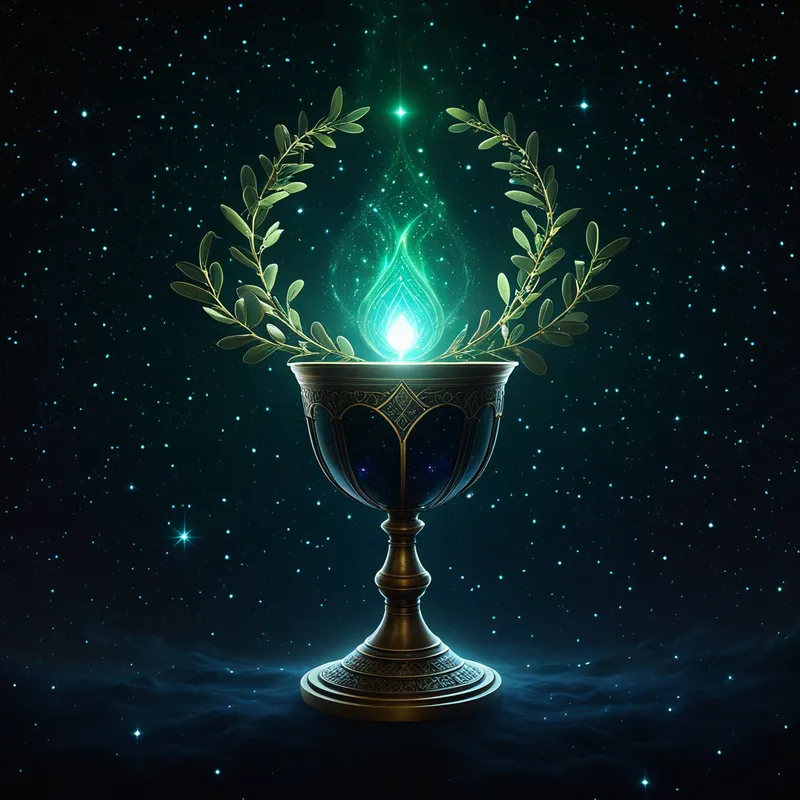
The cup is the central [symbol](/symbols/symbol “Symbol: A symbol can represent an idea, concept, or belief, serving as a powerful tool for communication and understanding.”/). It represents the totality of one’s [destiny](/symbols/destiny “Symbol: A predetermined course of events or ultimate purpose, often linked to spiritual forces or cosmic order, representing life’s inherent direction.”/), particularly its most bitter, unavoidable aspects—the “[shadow](/symbols/shadow “Symbol: The ‘shadow’ embodies the unconscious, repressed aspects of the self and often represents fears or hidden emotions.”/) vocation” that runs [counter](/symbols/counter “Symbol: A counter symbolizes boundaries, transitions, and the interplay between order and chaos, as well as a space for negotiation and interaction.”/) to all personal desire for comfort, [safety](/symbols/safety “Symbol: Safety represents security, protection, and the sense of being free from harm or danger, both physically and emotionally.”/), and continuity. To “drink the cup” is to fully internalize and accept one’s [fate](/symbols/fate “Symbol: Fate represents the belief in predetermined outcomes, suggesting that some aspects of life are beyond human control.”/), to make the outer necessity an inner [truth](/symbols/truth “Symbol: Truth represents authenticity, honesty, and the quest for knowledge beyond mere appearances.”/).
The sleeping disciples symbolize the inevitable failure of the [human](/symbols/human “Symbol: The symbol of a human represents individuality, complexity of emotions, and social relationships.”/) [community](/symbols/community “Symbol: Community in dreams symbolizes connection, support, and the need for belonging.”/) to comprehend or share in the [depth](/symbols/depth “Symbol: Represents profound layers of consciousness, hidden truths, or the unknown aspects of existence, often symbolizing introspection and existential exploration.”/) of an individual’s spiritual [crisis](/symbols/crisis “Symbol: A crisis symbolizes turmoil, urgent challenges, and the need for immediate resolution or change.”/). Even the most devoted companions fall asleep at the wheel of our deepest transformations. The olive press (Gethsemane’s literal meaning) is the perfect [metaphor](/symbols/metaphor “Symbol: A figure of speech where one thing represents another, often revealing hidden connections and deeper truths through symbolic comparison.”/): the soul is pressed between the millstones of personal will and transcendent necessity until its essential oil—its true [purpose](/symbols/purpose “Symbol: Purpose signifies direction, meaning, and intention in life, often reflecting personal ambitions and core values.”/)—is released.
The Dreamer’s Resonance
When this myth appears in modern dreams, it rarely comes with biblical imagery. Instead, the dreamer finds themselves in a familiar yet alien version of their backyard, a city park at night, or an empty office after hours. They are utterly alone, facing a looming, unavoidable task—a difficult conversation, a career change, a health diagnosis, the end of a relationship. There is a profound sense of being at a point of no return.
The somatic experience is key: a crushing weight on the chest, difficulty breathing, a feeling of sweating or trembling. This is the body keeping the score of the soul’s Gethsemane. The dream may feature friends or family nearby, but they are distracted, on their phones, or simply unable to hear the dreamer’s pleas. This is the [psyche](/myths/psyche “Myth from Greek culture.”/) working through the painful realization that certain thresholds must be crossed in absolute existential solitude. The dream is not a prophecy of doom, but a sign that [the ego](/myths/the-ego “Myth from Jungian culture.”/) is in a state of extreme tension, pressed between its own desires for safety and [the Self](/myths/the-self “Myth from Jungian culture.”/)’s demand for a greater, more difficult integration.
Alchemical Translation
In the alchemy of individuation, Gethsemane represents the [nigredo](/myths/nigredo “Myth from Alchemical culture.”/)—the blackening, the darkest night of the soul. It is the critical stage where the conscious personality (the hero) must confront the full weight of the unconscious Self’s (the Father’s) agenda.
Transformation is not born from triumph, but from the exhausted, blood-sweating surrender of the ego’s plan to a pattern it cannot yet see.
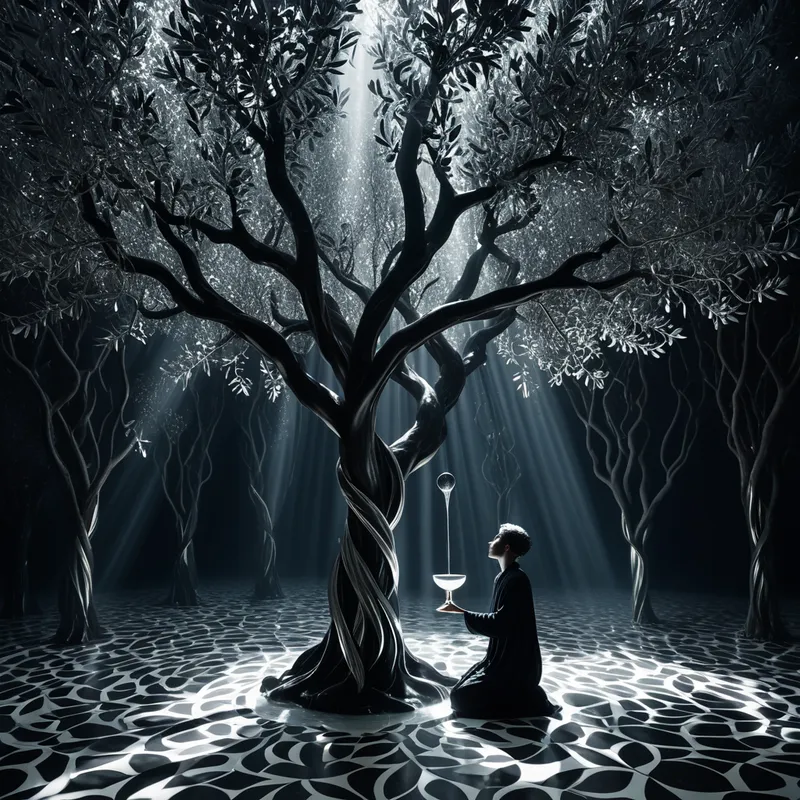
The process is one of sacrifice—not of something external, but of the ego’s cherished self-image and its will to control the narrative. The prayer, “Yet not what I will, but what you will,” is the precise moment of psychic transmutation. It is the ego releasing its grip on the steering wheel, not into passivity, but into active collaboration with a larger intelligence. The “cup” is the rejected, painful, shadowy aspect of one’s own wholeness that must be reclaimed. To drink it is to integrate what one has spent a lifetime avoiding. The disciples’ sleep signifies that this work cannot be delegated to therapists, partners, or gurus; it is an intimate, solitary negotiation between the ego and the depths. The [triumph](/myths/triumph “Myth from Roman culture.”/) of Gethsemane is not escape, but the achievement of a conscious, willing alignment with one’s own deepest, most difficult truth. From this surrender, the individual does not walk out weakened, but paradoxically empowered—no longer a victim of fate, but a conscious participant in its unfolding.
Associated Symbols
Explore related symbols from the CaleaDream lexicon: