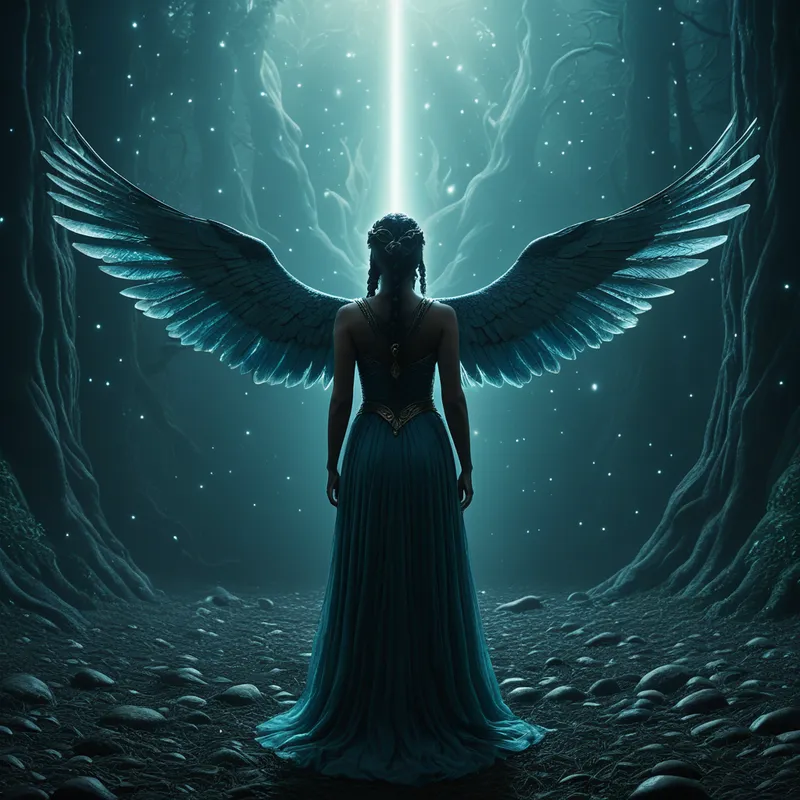
The Four Stations of the Heart
A Sufi mystical allegory mapping the heart's spiritual journey through four transformative stations toward divine union and inner awakening.
The Tale of The Four Stations of the Heart
In the silent, unseen chambers of the human being, there exists a kingdom. Its sovereign is the Heart, not the pulsing organ of flesh, but the luminous center of consciousness, the qalb. This sovereign, however, is often a ruler in exile, its throne room clouded, its corridors echoing with forgotten whispers. The Sufi path is the royal road of return, and along this road stand four mighty waystations, each a fortress of trial and a temple of revelation.
The journey begins not with ecstasy, but with a profound and unsettling ache. The seeker arrives at the first station, The Station of the Breast (Sadr). Here, [the world](/myths/the-world “Myth from Tarot culture.”/) is one of stark duality: light and dark, permissible and forbidden, self and other. The heart at this stage is like a vigilant sentinel, armed with [the law](/myths/the-law “Myth from Biblical culture.”/) and scripture, striving to keep the lower self, the nafs al-ammarah (the commanding soul), at bay. It is a place of effort, of discipline, of cleansing the outer courts of [the self](/myths/the-self “Myth from Jungian culture.”/). The seeker learns the sacred forms, the prayers, the acts of service. But within this necessary order, a conflict stirs. The sentinel’s torch casts long, dancing shadows, and in those shadows, the seeker first glimpses the depth of the inner wilderness they must eventually cross.
Having mastered the outer forms, the heart’s yearning deepens, pulling the traveler inward to the second station, The Station of the Heart Proper (Qalb). This is the realm of direct experience and spiritual feeling. The dry wood of law gathered at the Sadr now meets the spark of divine love. Here, the heart becomes a battlefield of exquisite agony. It is alternately expanded by flashes of luminous insight, tasting the sweetness of proximity to the Beloved, and contracted by the searing pain of separation, doubt, and [the ego](/myths/the-ego “Myth from Jungian culture.”/)’s last, desperate stands. This station is one of constant turning (tawajjuh) and breaking. The heart is polished by gratitude and rent by longing, its rhythm an irregular pulse of hope and despair. It is here the seeker truly learns that the path to union is paved with the shattered pieces of their own certainty.
If the Qalb is the battlefield, the third station is the secret garden found at its center: The Station of the Inner Heart (Sirr). [The word](/myths/the-word “Myth from Biblical culture.”/) Sirr means “secret,” and it is the intimate, confidential point of communion. The tumultuous storms of the Qalb subside into a profound, silent dialogue. Here, witnessing replaces striving. The seeker becomes a silent confidant to the Divine, and the Divine to the seeker. The veils of individual will and perception grow thin. This is the station of mysteries (asrar), where knowledge is not learned but poured directly into the soul. The conflicts of the previous stations are not forgotten, but are now seen from a great height, understood as necessary chapters in a sacred story written by a Hand other than one’s own.
The journey culminates in the fourth and most ineffable station, The Station of the Inmost Secret (Khafi). This is the point of utter annihilation and subsistence, fana and baqa. It is the hidden core, [the divine spark](/myths/the-divine-spark “Myth from Gnostic culture.”/) within the human that was never separate. At the Khafi, the last vestige of “I” dissolves in the ocean of “He.” [The mirror of the heart](/myths/the-mirror-of-the-heart “Myth from Taoist culture.”/) becomes so clear that it ceases to be a mirror at all; it simply is the Light it reflects. The seeker does not perceive the Truth; they become the living expression of it. From this station, all action flows not from personal desire but from divine imperative. The journey through the four stations is complete: from the outer law of the Breast, through the emotional crucible of the Heart, into the silent intimacy of the Secret, finally arriving at the ineffable unity of the Inmost Secret, where the traveler and the path are one.
Cultural Origins & Context
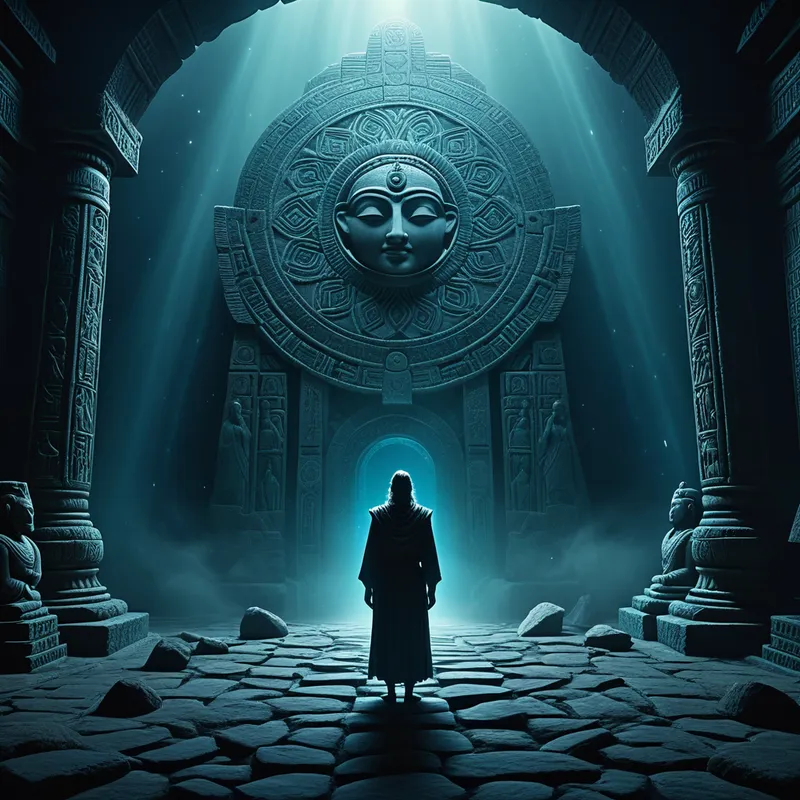
The schema of the Four Stations of the Heart is not a single, codified myth from a specific text, but a profound mystical cosmology that emerged organically from the depths of Islamic esotericism, refined over centuries by Sufi masters. Its roots tap into the Qur’anic and Prophetic emphasis on the heart (qalb) as the seat of faith, understanding, and spiritual perception. Verses speak of hearts being “sealed,” “hardened,” or “finding rest in the remembrance of God,” establishing the heart as a dynamic, spiritual organ subject to transformation.
The systematic articulation of these stations is found in the works of classical Sufi theorists like Al-Ghazali (d. 1111) in his Ihya Ulum al-Din (The Revival of the Religious Sciences), and later in the intricate psycho-spiritual mappings of Ibn ‘Arabi (d. 1240) and his school. For these sages, this was not abstract philosophy but a descriptive anatomy of the soul’s awakening, verified by direct experience (dhawq). The stations correspond to stages of the soul’s (nafs) purification: from the commanding soul (ammarah), to the self-accusing soul (lawwamah), to the soul at peace (mutma’innah).
This framework provided a map for the salik, [the wayfarer](/myths/the-wayfarer “Myth from Buddhist culture.”/), on the path (tariqa) toward God. It contextualized the often tumultuous experiences of the seeker—the rigors of discipline, the oscillations of spiritual states (ahwal), and the attainment of stable stations (maqamat). It is a deeply Islamic model, yet its focus on the universal human journey of inner transformation has allowed it to resonate across cultural and religious boundaries, speaking to the core of the mystical quest.
Symbolic Architecture
The [architecture](/symbols/architecture “Symbol: Architecture in dreams often signifies structure, stability, and the framing of personal identity or life’s journey.”/) of the Four Stations is a masterpiece of spiritual [psychology](/symbols/psychology “Symbol: Psychology in dreams often represents the exploration of the self, the subconscious mind, and emotional conflicts.”/), mapping an [inward](/symbols/inward “Symbol: A journey toward self-awareness, introspection, and the exploration of one’s inner world, thoughts, and unconscious mind.”/) descent to the primordial [origin](/symbols/origin “Symbol: The starting point of a journey, often representing one’s roots, source, or initial state before transformation.”/).
The journey from Sadr to Khafi is a movement from the circumference to the center, from the manifest to the unmanifest, from the realm of forms to the Formless.
Each [station](/symbols/station “Symbol: Signifies a temporary stop, transition point, or a place of waiting in life’s journey.”/) is both a [location](/symbols/location “Symbol: The symbol of ‘Location’ signifies a sense of place, context, and the environment in which experiences unfold.”/) and a state of being. The Sadr ([breast](/symbols/breast “Symbol: The breast symbolizes nurturing, comfort, femininity, and the relationship with maternal figures.”/)) symbolizes the outer self, the interface with the world. It is the [fortress](/symbols/fortress “Symbol: A fortress symbolizes security and protection, representing both physical and psychological safety from external threats.”/) [wall](/symbols/wall “Symbol: Walls in dreams often symbolize boundaries, protection, or obstacles in one’s life, reflecting the dreamer’s feelings of confinement or security.”/), necessary for protection but ultimately a [boundary](/symbols/boundary “Symbol: A conceptual or physical limit defining separation, protection, or identity between entities, spaces, or states of being.”/) to be transcended. The Qalb ([heart](/symbols/heart “Symbol: The heart symbolizes love, emotion, and the core of one’s existence, representing deep connections with others and self.”/)) is the dynamic center, [the alembic](/myths/the-alembic “Myth from Alchemical culture.”/) where the base [metal](/symbols/metal “Symbol: Metal in dreams often signifies strength, transformation, and the qualities of resilience or coldness.”/) of the ego is dissolved in the fires of love and longing. Its constant turning (tawajjuh) mirrors the [cosmos](/symbols/cosmos “Symbol: The entire universe as an ordered, harmonious system, often representing the totality of existence, spiritual connection, and the unknown.”/) itself, which only exists through God’s perpetual [attention](/symbols/attention “Symbol: Attention in dreams signifies focus, awareness, and the priorities in one’s life, often indicating where the dreamer’s energy is invested.”/).
The Sirr (secret) represents [the threshold](/myths/the-threshold “Myth from Folklore culture.”/) of the unseen world. It is [the holy of holies](/myths/the-holy-of-holies “Myth from Biblical culture.”/) within the [temple](/symbols/temple “Symbol: A temple often symbolizes spirituality, sanctuary, and a deep connection to the sacred aspects of life.”/) of the self, where speech ends and communion begins. Finally, the Khafi (inmost secret) is the divine point of contact, the barzakh ([isthmus](/symbols/isthmus “Symbol: A narrow land bridge connecting two larger landmasses, symbolizing connection, transition, and vulnerability between distinct states or phases.”/)) where the [human](/symbols/human “Symbol: The symbol of a human represents individuality, complexity of emotions, and social relationships.”/) and the Divine intersect. It is not a “place” the self goes to, but the ground of being from which the self arises.
This structure reveals a fundamental truth: the deepest conflict—the sense of separation from the Divine—is not solved by the ego, but is dissolved in stages as the ego itself is gradually emptied, making room for the Divine Presence.
The [progression](/symbols/progression “Symbol: Symbolizes forward movement, development, or advancement through stages toward a goal or state of being.”/) is alchemical: limitation (Sadr) provides the [vessel](/symbols/vessel “Symbol: A container or structure that holds, transports, or protects something essential, representing the self, emotions, or life journey.”/), passionate engagement (Qalb) provides the heat and [reaction](/symbols/reaction “Symbol: A reaction in a dream signifies the subconscious emotional responses to situations we face, often revealing our coping mechanisms and fears.”/), silent witnessing (Sirr) allows for [separation](/symbols/separation “Symbol: A spiritual or mythic division between realms, states of being, or consciousness, often marking a transition or loss of connection.”/) and purification, and unity (Khafi) achieves the gold of true selfhood, which is no-self.
The Dreamer’s Resonance
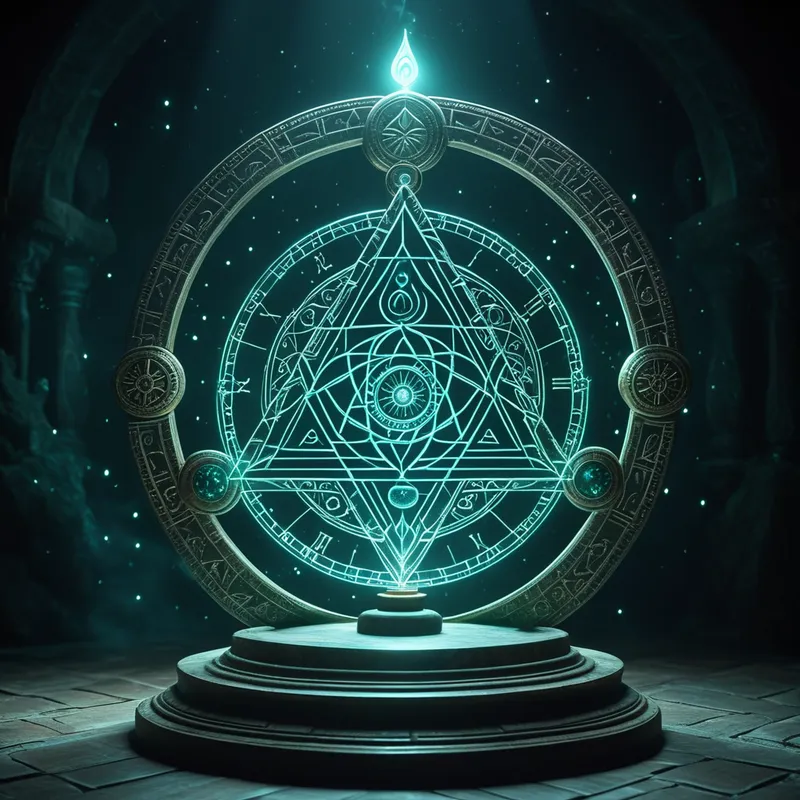
For the modern dreamer or psychological seeker, the Four Stations offer a profound map for navigating the inner landscape, far beyond religious doctrine. The Station of the Breast resonates with the necessary, early stage of any profound transformation: building structure, establishing healthy boundaries, and confronting the conscious conflicts between our desires and our ideals. It is the work of the ego forming a competent vessel.
The tumultuous Station of the Heart mirrors the descent into the emotional and unconscious depths in therapies like depth psychology. This is where we encounter [the shadow](/myths/the-shadow “Myth from Jungian culture.”/), the repressed grief, the wild swings between inflation and despair that accompany any authentic encounter with the Self. The heart’s breaking is the breaking of old identities, a painful but necessary disintegration.
The Station of the Inner Secret speaks to the experience of deep introspection, meditation, or active imagination, where one moves from being in the drama to witnessing it. Here, the dreamer begins to understand the symbolic language of the [psyche](/myths/psyche “Myth from Greek culture.”/), receiving insights that feel “given” rather than constructed. It is the stage of reconciling with inner figures and hearing the soul’s confidential wisdom.
Finally, the Station of the Inmost Secret points toward those fleeting moments of non-dual awareness, of peak experiences, or of profound synchronicity where the boundary between inner and outer, self and world, dissolves. It is the psychological correlate of what Jung called individuation—not a perfected ego, but the ego living in service to and as an expression of the greater, transpersonal Self.
Alchemical Translation
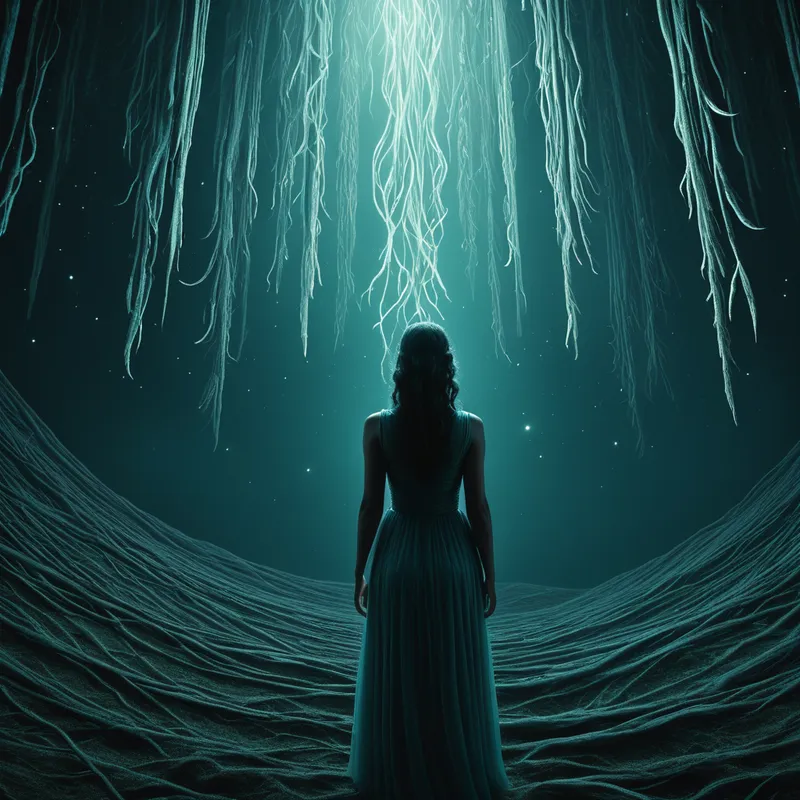
The Four Stations are a complete alchemical opus within [the vessel](/myths/the-vessel “Myth from Alchemical culture.”/) of the human being. The Sadr is the [nigredo](/myths/nigredo “Myth from Alchemical culture.”/), the blackening. Here, the [prima materia](/myths/prima-materia “Myth from Alchemical culture.”/)—the raw, chaotic soul—is subjected to the fire of religious law and discipline, calcifying the impurities, creating the initial separation. It is a necessary mortification.
The Qalb is the stage of albedo and citrinitas, the whitening and yellowing. The fires of love and longing act as the alchemical mercury, dissolving the calcified structures of the ego, leading to the volatile state of alternating expansion and contraction, illumination and despair.
The Sirr corresponds to the [separatio](/myths/separatio “Myth from Alchemical culture.”/) and [coniunctio](/myths/coniunctio “Myth from Alchemical culture.”/) on a higher level. The purified elements separate from the dross in the silence of contemplation, and [the sacred marriage](/myths/the-sacred-marriage “Myth from Various culture.”/) between the soul’s secret and the Divine begins. This is the stage of receiving the philosophical [mercury](/myths/mercury “Myth from Roman culture.”/), the divine [water](/myths/water “Myth from Chinese culture.”/) of life.
Finally, the Khafi is the achievement of the [rubedo](/myths/rubedo “Myth from Alchemical culture.”/), the reddening, the production of [the Philosopher’s Stone](/myths/the-philosophers-stone “Myth from Alchemical culture.”/). Here, the transformation is complete. The base metal of the individual soul has been transmuted into the gold of the Universal Spirit. The stone is not possessed; the seeker becomes the stone—the perfected, transparent medium through which the [divine light](/myths/divine-light “Myth from Christian culture.”/) operates without distortion. The conflict of duality is resolved not through victory, but through transcendence, in the realization of a primordial, non-dual unity.
Associated Symbols
Explore related symbols from the CaleaDream lexicon:
- Heart — The central sovereign and [vessel of transformation](/myths/vessel-of-transformation “Myth from Alchemical culture.”/), undergoing purification, breaking, and ultimate illumination on the mystical journey.
- Fire — The transformative agent that purifies the heart at the Qalb, burning away the dross of the ego through the heat of longing and divine love.
- Mirror — The heart as a reflector of divine attributes, polished through spiritual practice to ultimately cease reflecting and become one with the Light itself.
- Door — Each station acts as a threshold to a deeper layer of consciousness, with the Sirr being the final door before the ineffable chamber of the Khafi.
- Cup — The heart as a receptacle, empty at the Sadr to be filled with law, overflowing and broken at the Qalb, and finally becoming the cup from which the Divine drinks at the Khafi.
- Journey — The essential movement inward through landscapes of conflict, emotion, silence, and unity, mapping the soul’s progression toward its source.
- Station — A fixed stage on the spiritual path where specific work is done and certain qualities are stabilized before proceeding to the next.
- Shadow — The hidden aspects of the self confronted and integrated primarily at the tumultuous Station of the Heart (Qalb).
- Key — The practices, love, and grace that unlock the door to each successive, more interior station of the heart.
- Transformation Cocoon — The entire process of the four stations as a metamorphic enclosure where the larval ego is dissolved to allow the emergence of the winged spirit.
- Root — The Khafi as the inmost, hidden root of the soul, its divine origin and point of connection with the absolute.
- Light — The divine reality that the heart seeks to reflect and ultimately become, the illuminator of each station from within.