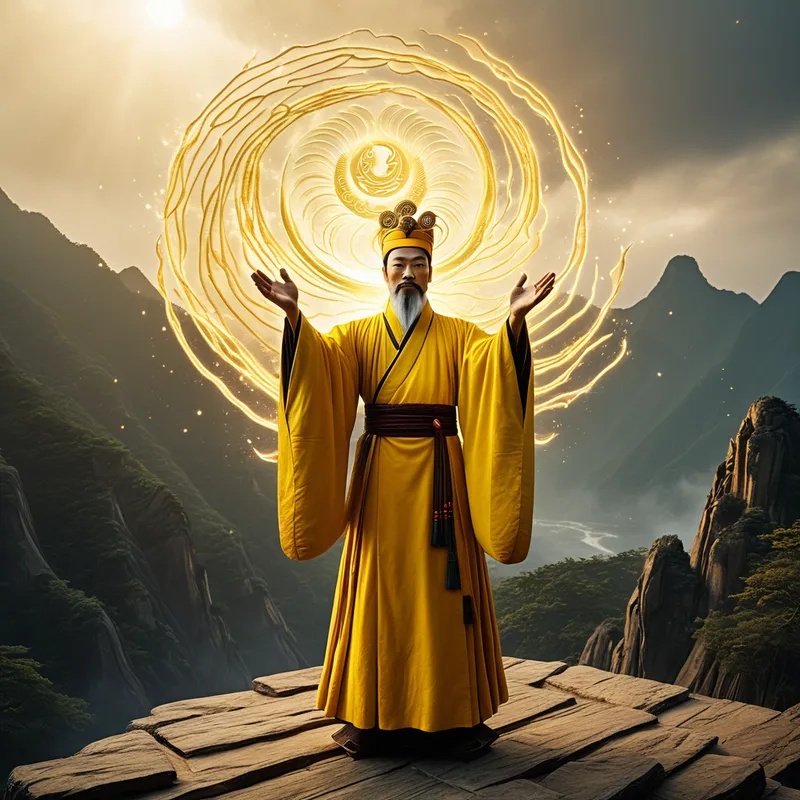
The Five Elements Myth Meaning & Symbolism
A primordial myth of five cosmic forces—Wood, Fire, Earth, Metal, Water—in an eternal dance of creation, destruction, and harmonious transformation.
The Tale of The Five Elements
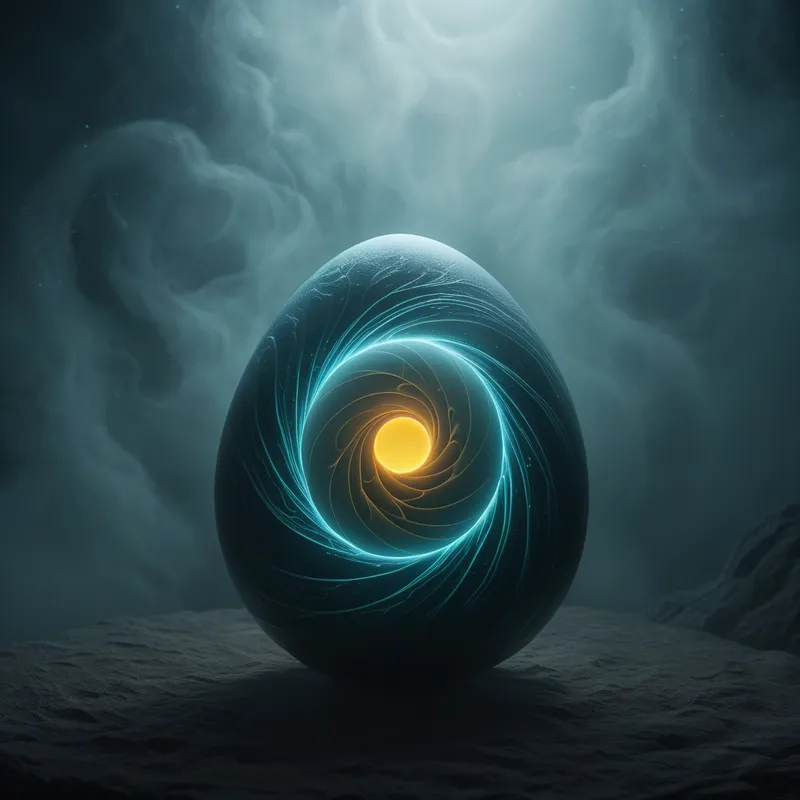
In the beginning, there was the Hundun. It was not emptiness, but a fullness so complete it had no distinction—a silent, swirling egg of potential. From its restless depths, a rhythm began, a heartbeat that was not a sound but a feeling. This feeling crystallized into five distinct pulses, five breaths of the cosmos.
First came the Breath of Mu. It was a surge of upward-reaching life, a green force that pushed through the formless dark like the first sprout cracking open a seed. It carried the scent of damp soil and the sound of sap rising. Where it passed, the potential for growth was sown.
From the vigorous flourishing of Mu sprang the Breath of Huo. It was not a destructive blaze, but the first warmth of the sun touching a leaf—a brilliant, expanding radiance of transformation. It crackled with the energy of passion and illumination, turning raw potential into dynamic action, casting the first long shadows of form.
The activity of Huo spent itself, and its ashes settled, becoming the Breath of Tu. This was the moment of grounding, of fertile, nurturing stillness. It was the rich, brown soil that receives and integrates, the stable plane that gives context to both growth and flame. In its center, all things found their place and were nourished.
From the deep, metallic veins within the nurturing Tu, the Breath of Jin condensed. It was a force of structure and refinement, a cool, contracting energy that drew boundaries. It was the forming of crystal from solution, the hardening of ore, the sharp, clear line that defines a thing by separating it from the whole. It brought clarity and value.
Finally, from the discipline of Jin, flowed the Breath of Shui. It was a deep, flowing descent—the gentle rain, the hidden aquifer, the relentless river carving stone. It carried wisdom to the depths, dissolved rigid forms, and returned all essence back to the source, preparing it for the cycle to begin anew.
These Five Breaths did not battle; they danced. Mu fed Huo. Huo’s ash enriched Tu. Tu bore Jin. Jin purified and channeled Shui. And Shui nourished Mu. This was the Sheng, the Generating Cycle, the whisper of creation. But within this harmony lived another truth: Mu could pierce and divide Tu. Tu could dam and absorb Shui. Shui could quench Huo. Huo could melt Jin. And Jin could cut Mu. This was the Ke, the Controlling Cycle, the necessary friction that prevents any one force from consuming the world.
Thus, from the Hundun, order was born not as a static decree, but as a living, breathing, eternal conversation. The cosmos found its voice in the rustle, the crackle, the silence, the chime, and the flow. The dance of the Five Breaths became the rhythm of the world, the hidden score to which all things—the seasons, the organs of the body, the directions of the compass, the phases of a life—would forever move.
Cultural Origins & Context
This understanding of the Wu Xing is not a single myth with a linear narrative, but a foundational cosmological framework that permeated ancient Chinese thought. Its earliest systematic elaborations appear in texts from the Zhanguo period, such as the Shangshu and the Liji, but its roots sink deep into the soil of Neolithic observation.
It was the work of scholar-officials, natural philosophers, and diviners of the early imperial courts, like those serving the Han Dynasty, who wove these observations into a coherent system. They were not merely telling a story; they were mapping the very patterns of reality. The mythos functioned as a grand, unifying theory, connecting macrocosm and microcosm. It informed statecraft (dynastic cycles), medicine (TCM), martial arts, feng shui, and even culinary arts. It was passed down not just through oral tradition, but through practical application in every aspect of life, teaching that to live in harmony with these cycles was to align oneself with the Dao itself.
Symbolic Architecture
The Wu Xing is a symbolic language for the fundamental processes of existence. It moves beyond simple substance to embody phases of energy, directions of change, and qualities of being.
The Five Elements are not things you have, but verbs you are doing. They are the grammar of transformation.
Mu is the archetype of the Pioneer and the Visionary. It symbolizes birth, growth, planning, and benevolent authority. Psychologically, it is the surge of a new idea, the courage to expand into new psychic territory, the flexible strength that bends but does not break. Huo is the archetype of the Lover and the Illuminator. It represents joy, connection, radiance, and spiritual awareness. It is the warmth of relationship, the light of consciousness that reveals, and the transformative fire of passion that forges identity. Tu is the archetype of the Nurturer and the Integrator. It symbolizes empathy, stability, thought, and grounding. Psychologically, it is the ego’s capacity to hold and digest experience, to provide a stable center from which to relate to the world, and to nurture the self and others. Jin is the archetype of the Judge and the Alchemist. It represents righteousness, grief, letting go, and refinement. It is the psychological function of discernment, the necessary cutting away of what is no longer true, the courage to feel the grief of release, and the process of distilling essence from dross. Shui is the archetype of the Sage and the Mystic. It symbolizes wisdom, fear, will, and the unconscious. It is the deep flow of intuition, the descent into the shadowy depths of the psyche, the terrifying yet wise power of the unconscious, and the fluid adaptability of true intelligence.
The Dreamer’s Resonance
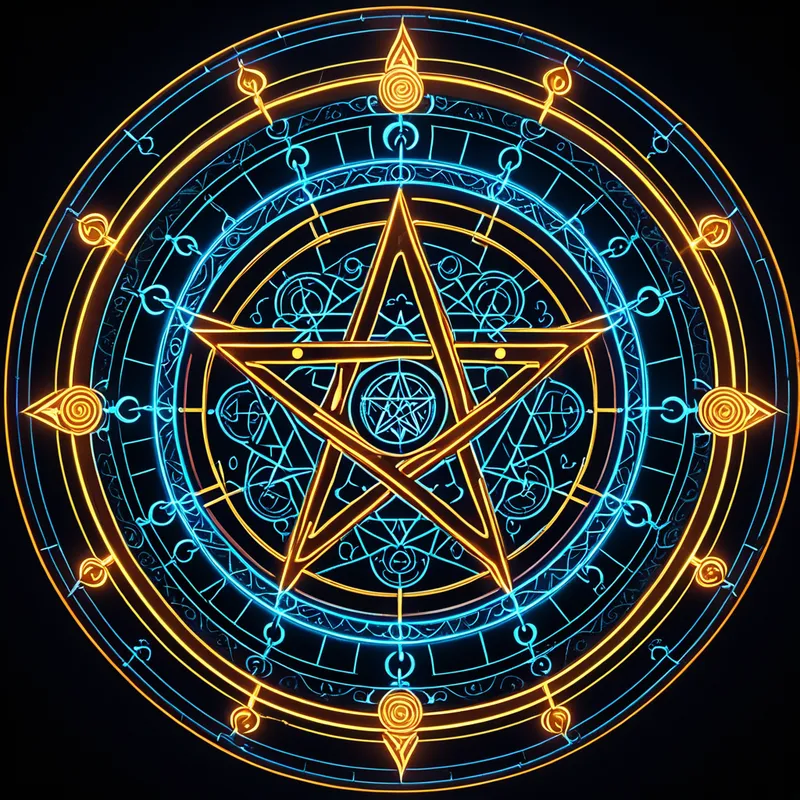
When the Wu Xing pattern emerges in modern dreams, it signals the dreamer’s psyche is actively engaged in a process of dynamic self-regulation and transformation. It is seldom all five at once, but often a pair or a cycle in motion.
Dreaming of a raging forest fire (Mu generating excessive Huo) may point to a creative passion that is burning out of control, consuming one’s resources. Dreaming of a parched, cracked landscape (Tu severely controlling Shui) could symbolize an emotional or intuitive drought caused by overthinking or rigid stability. A dream of a beautiful, sharp sword (Jin) being melted in a stream (Shui) might reflect the painful but necessary dissolution of a long-held judgment or rigid self-definition.
Somatically, these dreams can be accompanied by sensations related to the elements: the restless energy of Mu (tingling, tension), the heat of Huo (flushing, agitation), the heaviness or nausea of Tu imbalance, the tightness or grief in the chest of Jin, or the chilling fear or deep fluidity of Shui. The dream is the psyche’s attempt to re-balance these inherent energies within the body-mind.
Alchemical Translation
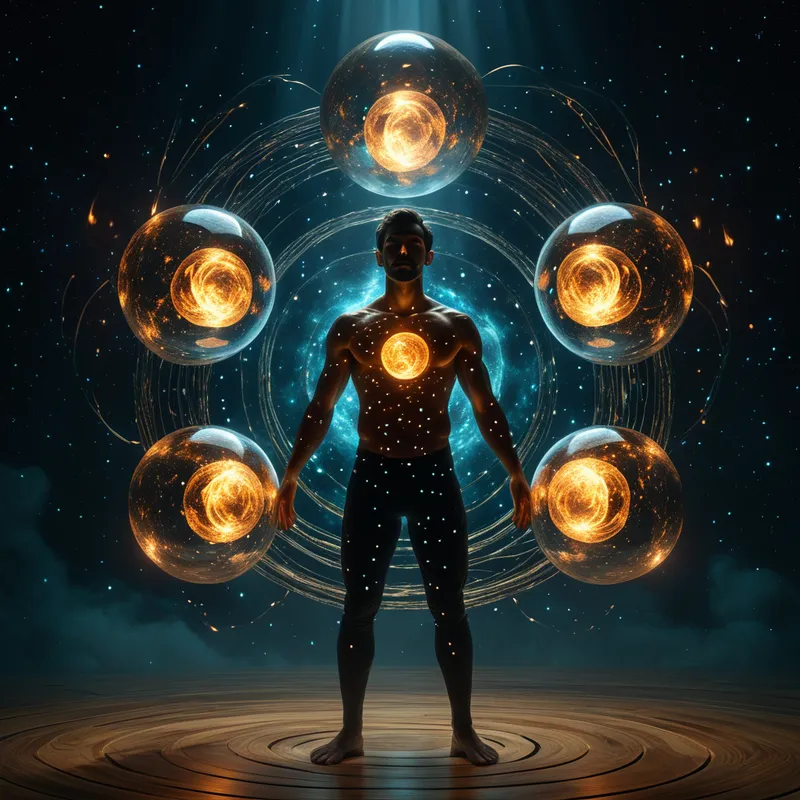
The individuation process, the journey toward psychological wholeness, is mirrored perfectly in the Sheng and Ke cycles. It is not a linear path to a static goal, but an ongoing alchemy of the elements within.
The journey often begins with a Mu impulse—a calling, a dissatisfaction, a new vision that pushes us to grow. This requires the Huo of conscious engagement and passion to bring it to life. That passionate work must then be integrated (Tu) into the fabric of our daily existence and self-concept. From this integrated place, we can discern (Jin) what parts of our old identity must be let go to serve the new growth. This release opens the way to a descent into deeper wisdom (Shui), connecting us to the unconscious wellsprings, which then nourish the next cycle of growth (Mu).
The goal is not to achieve a perfect balance, but to master the dance—to allow each phase its season, to let Fire transform but not consume, to let Metal define but not isolate, to let Water dissolve but not drown.
The controlling cycle is equally crucial for alchemy. Without Jin’s discipline, Mu’s growth becomes chaotic and directionless. Without Tu’s grounding, Shui’s wisdom becomes formless terror. This is the psyche’s self-regulating wisdom, ensuring that no single archetypal energy dominates and inflates into a tyranny. The modern individual’s alchemical work is to become conscious of which elemental phase they are in, to honor its process, and to understand what force must naturally arise next—or what restraining force is needed—to continue the sacred, spiraling dance toward wholeness.
Associated Symbols
Explore related symbols from the CaleaDream lexicon: