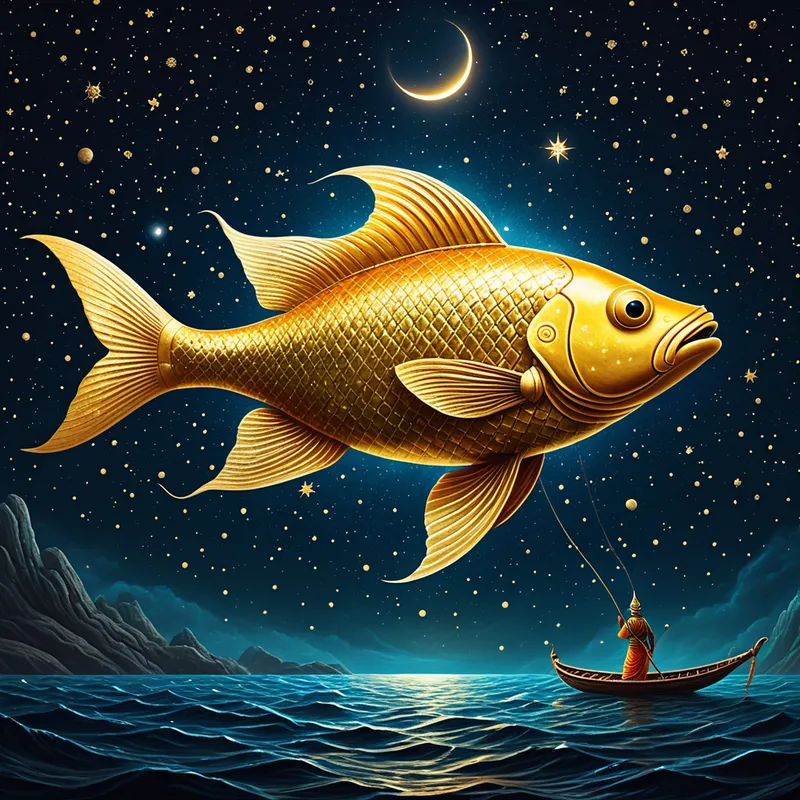
The Fish of Matsya - The first Myth Meaning & Symbolism
A tiny fish grows to cosmic size, guiding a king through a world-ending deluge to preserve the seed of all life for a new creation.
The Tale of The Fish of Matsya - The first
In the age when time was a young river, and [the world](/myths/the-world “Myth from Tarot culture.”/) was heavy with the sleep of forgotten vows, there lived a king named Manu. He was a man of [tapas](/myths/tapas “Myth from Hindu culture.”/), of fierce austerity, washing his hands in a leaf-cupped stream each dawn. One day, as the [water](/myths/water “Myth from Chinese culture.”/) cleansed his palms, a tiny fish leapt into his hands. It was no ordinary creature. Its scales held the sheen of a just-born star, and its eye held a knowing deeper than the well of night.
“O King,” the fish spoke, its voice the sound of a distant waterfall, “the great ones in the water seek to devour me. Protect me, and I shall protect you.”
Moved by a compassion that was his true royalty, Manu placed the fish in a small clay jar. But by nightfall, the fish had grown, filling the jar. Manu transferred it to a larger vessel, then a pond, then a great lake. Each day, the fish expanded, its body becoming a vessel of impossible growth, until finally, Manu led it to the ocean. There, in the vast cradle of primordial waters, the fish revealed its true form. It was [Matsya](/myths/matsya “Myth from Hindu culture.”/), the great horned fish, its body spanning [the horizon](/myths/the-horizon “Myth from Various culture.”/), a golden [leviathan](/myths/leviathan “Myth from Biblical culture.”/) against the blue.
“Listen,” Matsya’s voice now thrummed through the water and earth alike. “The fabric of this age is fraying. The time of dissolution, the [Pralaya](/myths/pralaya “Myth from Hindu culture.”/), draws near. The waters of sleep will rise to drown all that is. Build a ship, strong and vast. Gather the Saptarishi, the seeds of every plant, and the embryos of every living [thing](/myths/thing “Myth from Norse culture.”/). I will be your guide.”
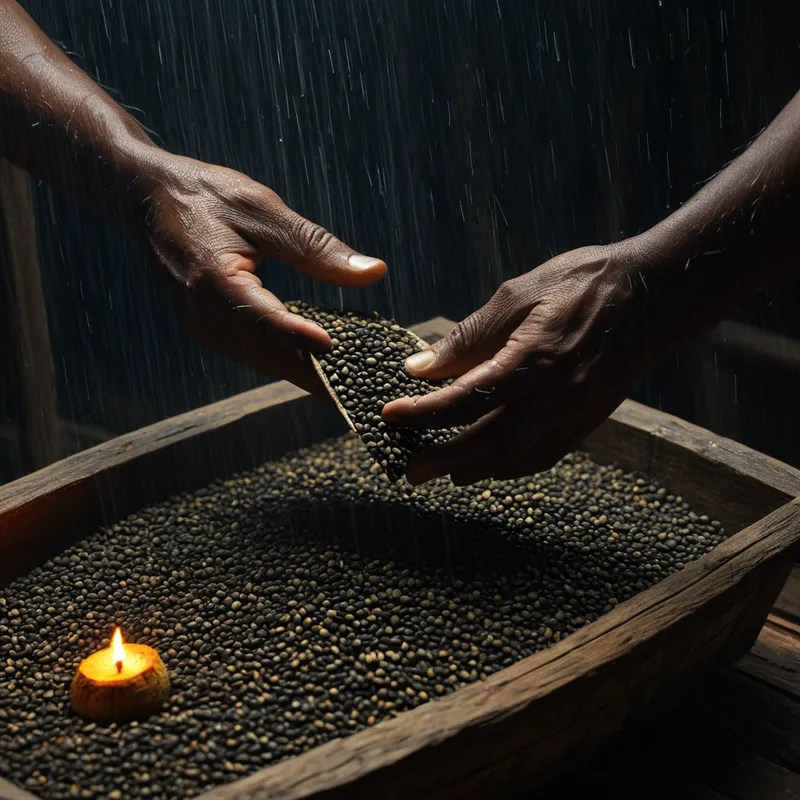
As the first unnatural rains began, cold and endless, Manu labored. He built a mighty ark, a wooden mountain bound with ropes of faith. He gathered the sages, the silent seeds, the sleeping potentials of life. When the floodwaters rose, swallowing forests, mountains, and finally the sun itself, the ship was tossed on a chaos of waves under a starless sky. Just as despair threatened to drown them all, a light pierced the abyssal dark. It was the horn of Matsya, glowing like a beacon. The great fish appeared, cosmic in scale, and Manu fastened the ship’s serpent-rope to that radiant horn.
For years untold, they voyaged. Matsya pulled them through the drowning world, through the churning waters of time’s end. He taught Manu the wisdom of the deep—the laws that govern dissolution and the secrets hidden in the seed. When the waters at last began to recede, they revealed the peak of a single mountain, the Meru, the navel of the new world. There, on that first, wet stone, Manu stepped forth. He released the seeds, awakened the life, and with the wisdom granted by the Fish, he performed the sacrifice that kindled the sun for a new dawn. The Preserver had delivered the blueprint of existence through the form of the first, and most humble, of creatures.
Cultural Origins & Context
The myth of Matsya finds its most detailed and ancient expression in the Mahabharata and the Puranas, particularly the [Vishnu](/myths/vishnu “Myth from Hindu culture.”/) Purana and Matsya Purana. It is a cornerstone of Yuga cosmology, narrating the reset that occurs at the end of a cosmic cycle. This was not a story told merely for entertainment; it was a metaphysical anchor. Recited by priests and scholars, it served to explain the nature of time itself as non-linear and cyclical, to validate the role of the king (dharmaraja) as the preserver of order (dharma), and to illustrate the principle that divine intervention (avatara) is always geared towards preservation of the cosmic blueprint, not its destruction.
Symbolic Architecture
At its [heart](/symbols/heart “Symbol: The heart symbolizes love, emotion, and the core of one’s existence, representing deep connections with others and self.”/), Matsya is the [archetype](/symbols/archetype “Symbol: A universal, primordial pattern or prototype in the collective unconscious that shapes human experience, behavior, and creative expression.”/) of the [Savior](/symbols/savior “Symbol: A figure representing rescue, redemption, or deliverance from crisis, often embodying hope and external intervention in times of need.”/) from the [Depths](/symbols/depths “Symbol: Represents the subconscious, hidden emotions, or foundational aspects of the self, often linked to primal fears or profound truths.”/). The fish, the first vertebrate, symbolizes the most primordial, instinctual [layer](/symbols/layer “Symbol: Layers often symbolize complexity, depth, and protection in dreams, representing the various aspects of the self or situations.”/) of [life](/symbols/life “Symbol: The symbol of ‘Life’ represents a journey of growth, interconnectedness, and existential meaning, encompassing both the joys and challenges that define human experience.”/)—the unconscious itself. Its miraculous growth from a vulnerable minnow to a cosmic guide mirrors the potential of the unconscious, when heeded, to expand from a personal whisper to a transpersonal, guiding intelligence.
The savior does not come from the heavens above, but from the waters below—from the ignored, the small, the seemingly insignificant voice within the daily ritual.
[The flood](/myths/the-flood “Myth from Biblical culture.”/) represents the necessary [dissolution](/symbols/dissolution “Symbol: The process of breaking down, dispersing, or losing form, often representing transformation, release, or the end of a state of being.”/) of outworn psychic structures, the overwhelming return of repressed contents, or a collective [crisis](/symbols/crisis “Symbol: A crisis symbolizes turmoil, urgent challenges, and the need for immediate resolution or change.”/) that threatens all conscious order. The ark is the [vessel](/symbols/vessel “Symbol: A container or structure that holds, transports, or protects something essential, representing the self, emotions, or life journey.”/) of the Self—the cohesive [identity](/symbols/identity “Symbol: Identity represents the sense of self, encompassing personal beliefs, cultural background, and social roles.”/) that can survive this [inundation](/symbols/inundation “Symbol: A flood or overwhelming deluge, often representing emotional overwhelm, cleansing, or uncontrollable forces.”/) because it carries within it the “seeds”: the core potentials, the essential [knowledge](/symbols/knowledge “Symbol: Knowledge symbolizes learning, understanding, and wisdom, embodying the acquisition of information and enlightenment.”/) (the sages), and the vital life-force (the embryos) required for [rebirth](/symbols/rebirth “Symbol: A profound transformation where old aspects of self or life die, making way for new beginnings, growth, and renewal.”/). Matsya’s [horn](/symbols/horn “Symbol: A horn symbolizes primal power, warning signals, and spiritual connection, often representing strength, alertness, or divine communication in dreams.”/), the point of [connection](/symbols/connection “Symbol: Connection symbolizes relationships, communication, and bonds among individuals.”/), is the [axis](/symbols/axis “Symbol: A central line or principle around which things revolve, representing stability, orientation, and the fundamental structure of reality or consciousness.”/) mundi in [motion](/symbols/motion “Symbol: Represents change, progress, or the flow of life energy. Often signifies transition, personal growth, or the passage of time.”/)—the living link between the drowning ego (Manu) and the guiding, transpersonal Self.
The Dreamer’s Resonance
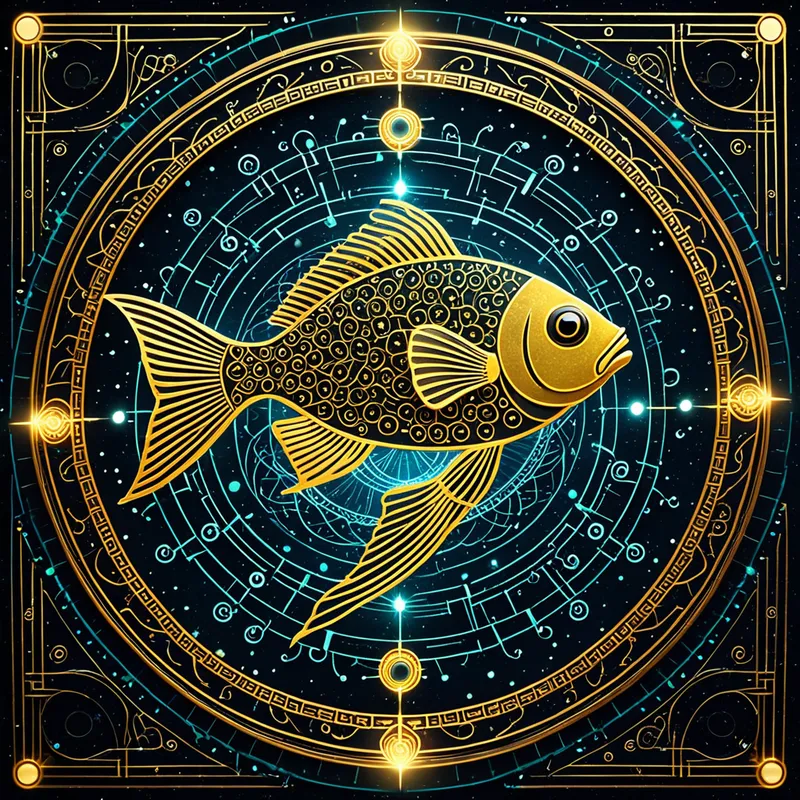
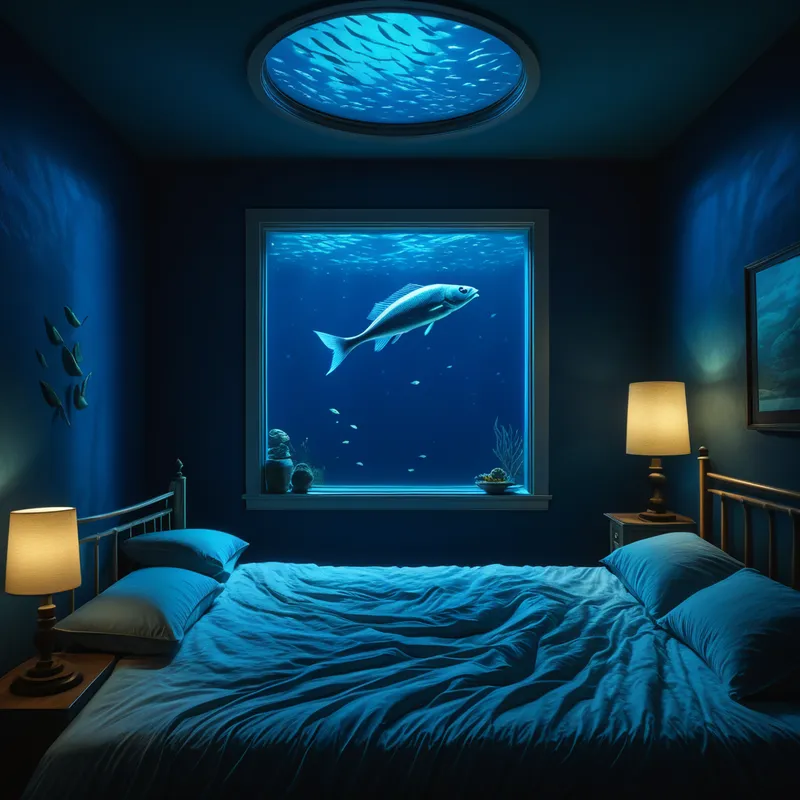
When this myth stirs in the modern [psyche](/myths/psyche “Myth from Greek culture.”/), it often manifests in dreams of overwhelming floods, tsunamis, or rising water in one’s house. This is not necessarily a portent of literal disaster, but a somatic signal of an impending psychic overwhelm—a depression, a life transition, or a collapse of meaning that feels world-ending. To dream of a fish, especially one that is unusually large, golden, or communicative, within such a deluge is a critical sign. It indicates the unconscious is activating the preserving, guiding function.
The dream-ego’s task is to recognize the “tiny fish” in their waking life: what small, seemingly insignificant intuition, creative spark, or forgotten promise is asking for protection? Heeding it—placing it in the “jar” of conscious attention—initiates the alchemical process. The subsequent feeling of being “towed” through chaos in the dream suggests a surrender to a process larger than [the ego](/myths/the-ego “Myth from Jungian culture.”/)’s understanding, trusting that the unconscious itself contains the navigational map for the journey through dissolution.
Alchemical Translation
The process modeled by Matsya is the alchemy of preservation through dissolution—[solve et coagula](/myths/solve-et-coagula “Myth from Alchemical culture.”/) applied to the psyche. The ego (Manu) must first engage in the humble, daily ritual of attention (washing in the stream). When the instinctual, living symbol (the fish) emerges, the ego’s duty is not to analyze it, but to protect it, giving it space to grow. This requires enlarging the container of consciousness repeatedly, a painful stretching of identity.
The building of the ark is the conscious preparation for the [nigredo](/myths/nigredo “Myth from Alchemical culture.”/), [the dark night of the soul](/myths/the-dark-night-of-the-soul “Myth from Christian Mysticism culture.”/). One must gather their essential truths (the sages), their latent potentials (the seeds), and their vital connections (the embryos). When the flood hits—the breakdown—the ego must fasten itself to the horn, to the guiding symbol from the deep. This is the act of faith in [the Self](/myths/the-self “Myth from Jungian culture.”/).
The new world is not built after the flood; it is carried, fully seeded, within the ark through the flood. The work of individuation is not creation from nothing, but the faithful preservation of essence through chaos.
The voyage is the period of liminal suffering and unknowing, where one is sustained only by the connection to the deep guide. The arrival at the mountain peak is the albedo, the dawning of a new conscious standpoint, grounded, fertile, and informed by the wisdom of [the abyss](/myths/the-abyss “Myth from Kabbalistic culture.”/). Manu does not become a god; he becomes the first man of a new age, a steward initiated by the deep. So too, the individual emerges not “cured” or enlightened, but fundamentally re-oriented, carrying the preserved and now-activated essence of their being into a renewed life.
Associated Symbols
Explore related symbols from the CaleaDream lexicon: