The First Hawaiians Myth Meaning & Symbolism
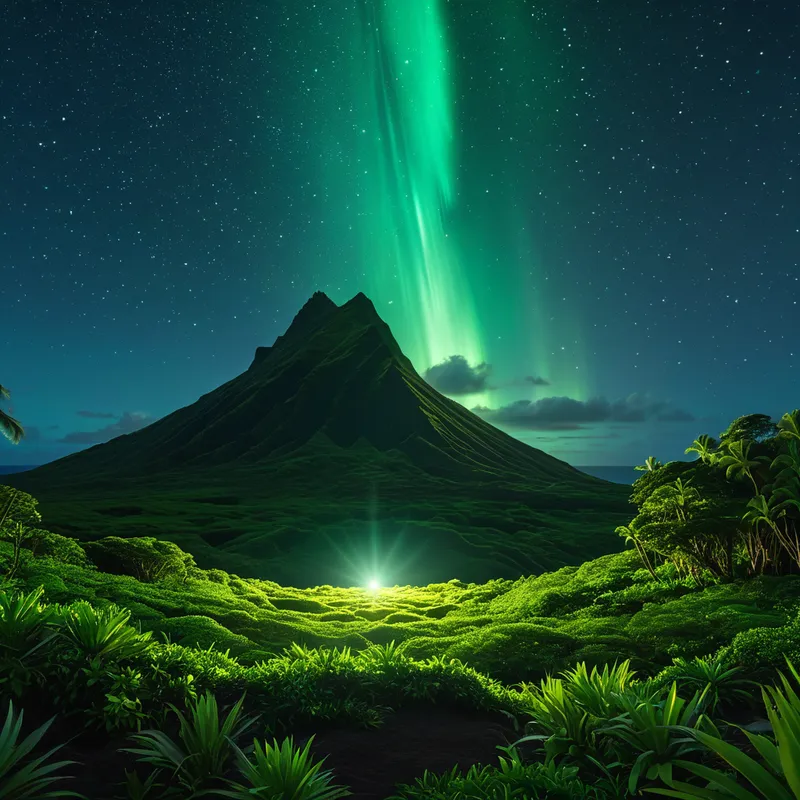
The primal deities Papahānaumoku (Earth Mother) and Wākea (Sky Father) unite, giving birth to the Hawaiian islands and the first human ancestor.
The Tale of The First Hawaiians
In the deep, resonant time before time, there was only Pō—the profound, generative night. From its dark waters, life stirred. The great, wide Wākea</ab title> unfolded himself, a canopy of endless blue by day, a cloak of glittering, watching stars by night. Below him, from the same fertile darkness, arose Papahānaumoku, solid and vast, her body the very substance of potential, her slopes and valleys a silent promise.
Wākea looked upon Papahānaumoku, and a sacred longing, a mana of attraction, moved between them. This was not a story of conquest, but of yearning completion. The sky, which had only ever known its own expanse, reached down. The earth, which had only ever known its own solitude, reached up. In a cosmic embrace, Wākea covered Papahānaumoku. From this primal, tender union, life was conceived. But the firstborn was not a child of flesh; it was a child of land. The islands were born: first, the child of their union was Hawaiʻi, a fiery, mountainous firstborn. Then came Maui, Oʻahu, Kauaʻi, and all the others, each a beloved offspring, each a distinct manifestation of their parents’ essence.
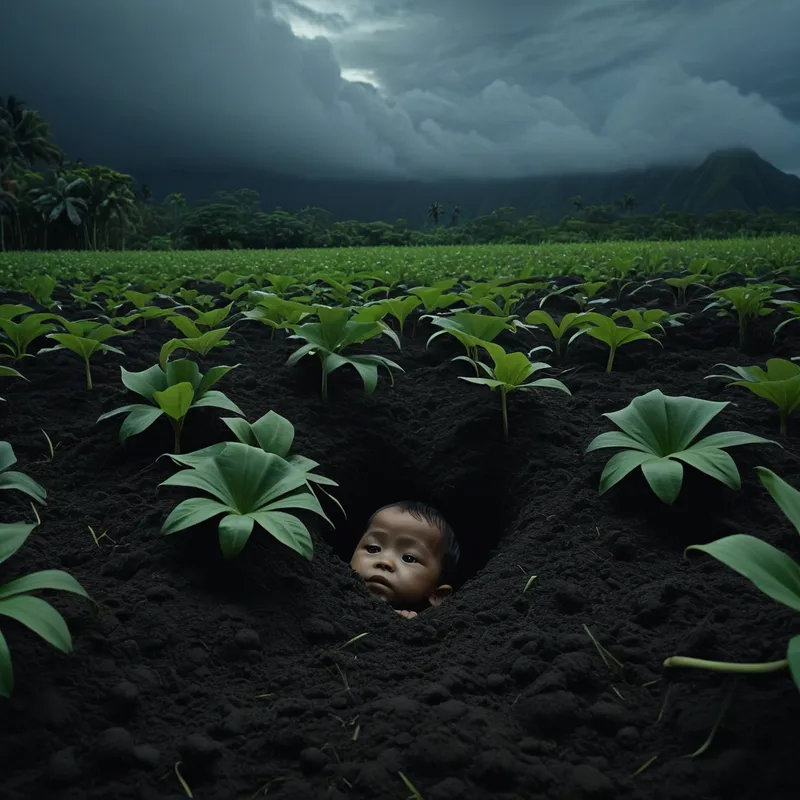
Yet, the desire for a different kind of offspring, a being to tend these sacred lands, remained. Wākea and Papahānaumoku united again. Their first human child was born, but he was still and lifeless—a form without breath. They named him Hāloa-naka, “Long Breath, Trembling.” With hearts heavy with divine grief, they buried his tiny body in the rich, dark earth of their firstborn island. They watered the grave with their tears, the sky weeping rain upon the earth.
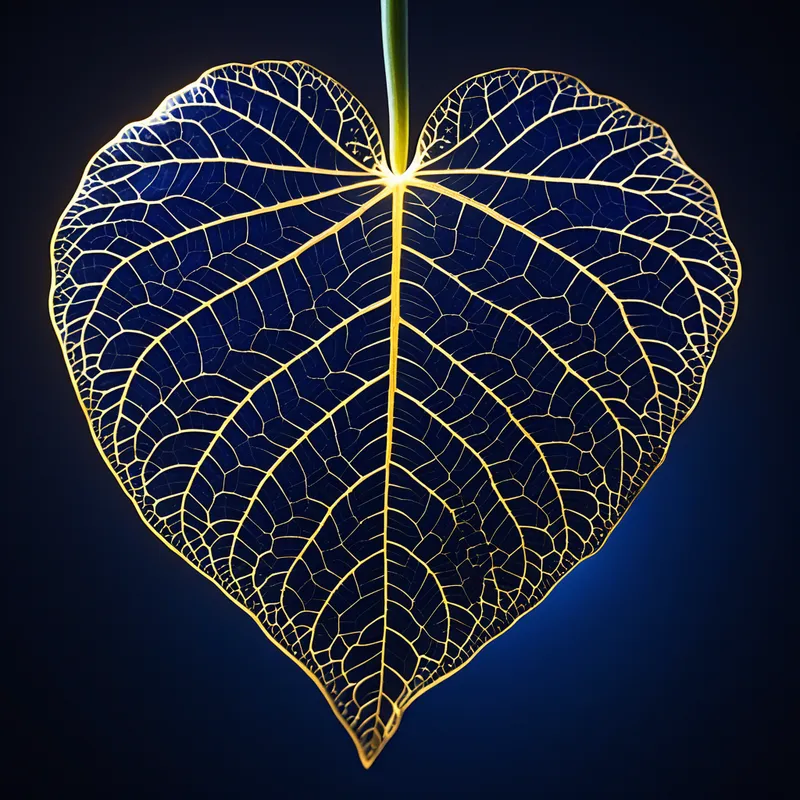
From that sacred grave, something miraculous sprouted. The first kalo plant (taro) grew, its broad, heart-shaped leaves reaching for the sky, its stem strong, its corm deep in the nourishing earth. Seeing this, the deities understood. This plant was the transformed body of their first child, a new form of life. From this plant of sustenance, they understood the pattern. They united once more, and from them was born a second child. They named him also Hāloa, in honor of his elder sibling. Into this child, they breathed the sacred ha—the breath of life. This Hāloa lived. He became the first kanaka, the progenitor of all the Hawaiian people. His elder sibling, the kalo, would forever be his sustenance and his sacred elder, the foundation upon which his life was built. Thus, the first human drew his life from the land, which was his ancestor, and was nourished by the plant, which was his elder brother.
Cultural Origins & Context
This cosmogonic genealogy, known as the Kumulipo, is the foundational chant of Hawaiian identity. It was not merely a story but a sacred framework recited by kāhuna and haku mele during times of profound importance, such as the birth of a high-ranking aliʻi (chief). Its recitation connected the present moment to the very origin of the cosmos, affirming the divine ancestry of the people and their inseparable bond with the ʻāina. The myth functioned as a social and ecological charter: it established the familial relationship between humans, gods, islands, and food sources. It mandated respect for the ʻāina as family and for the kalo as an elder sibling, encoding principles of sustainable stewardship and reciprocal care into the very DNA of cultural consciousness.
Symbolic Architecture
The myth presents a [universe](/symbols/universe “Symbol: The universe symbolizes vastness, interconnectedness, and the mysteries of existence beyond the individual self.”/) built not on [separation](/symbols/separation “Symbol: A spiritual or mythic division between realms, states of being, or consciousness, often marking a transition or loss of connection.”/), but on sacred, generative [relationship](/symbols/relationship “Symbol: A representation of connections we have with others in our lives, often reflecting our emotional state.”/). The union of Wākea and Papahānaumoku is the archetypal hieros gamos, the divine [marriage](/symbols/marriage “Symbol: Marriage symbolizes commitment, partnership, and the merging of two identities, often reflecting one’s feelings about relationships and social obligations.”/) that creates a habitable world—a psychic [space](/symbols/space “Symbol: Dreaming of ‘Space’ often symbolizes the vastness of potential, personal freedom, or feelings of isolation and exploration in one’s life.”/) where [consciousness](/symbols/consciousness “Symbol: Consciousness represents the state of awareness and perception, encompassing thoughts, feelings, and experiences.”/) (sky) and the unconscious ([earth](/symbols/earth “Symbol: The symbol of Earth often represents grounding, stability, and the physical realm, embodying a connection to nature and the innate support it provides.”/)) meet to generate [reality](/symbols/reality “Symbol: Reality signifies the state of existence and perception, often reflecting one’s understanding of truth and life experiences.”/).
The first form is often stillborn; the initial creation must return to the dark earth to be transmuted into the substance that sustains all future life.
The stillborn first Hāloa represents a necessary sacrifice, a primal [idea](/symbols/idea “Symbol: An ‘Idea’ represents a spark of creativity, innovation, or realization, often emerging as a solution to a problem or a new outlook on life.”/) or potential that must “die” into the unconscious to be transformed. His [burial](/symbols/burial “Symbol: A symbolic act of laying something to rest, often representing closure, transformation, or the release of past burdens.”/) is not an end, but a planting. From this psychic compost grows the kalo, the [symbol](/symbols/symbol “Symbol: A symbol can represent an idea, concept, or belief, serving as a powerful tool for communication and understanding.”/) of sustenance, [heart](/symbols/heart “Symbol: The heart symbolizes love, emotion, and the core of one’s existence, representing deep connections with others and self.”/)-centered [connection](/symbols/connection “Symbol: Connection symbolizes relationships, communication, and bonds among individuals.”/), and practical, rooted wisdom. It is the [archetype](/symbols/archetype “Symbol: A universal, primordial pattern or prototype in the collective unconscious that shapes human experience, behavior, and creative expression.”/) made nourishing, the [spirit](/symbols/spirit “Symbol: Spirit symbolizes the essence of life, vitality, and the spiritual journey of the individual.”/) made substance. Only after this transformation can the living Hāloa emerge, sustained by that very transformation. The [breath](/symbols/breath “Symbol: Breath symbolizes life, vitality, and the connection between the physical and spiritual realms.”/), ha, is the animating [spirit](/symbols/spirit “Symbol: Spirit symbolizes the essence of life, vitality, and the spiritual journey of the individual.”/) that connects the [human](/symbols/human “Symbol: The symbol of a human represents individuality, complexity of emotions, and social relationships.”/) back to the celestial [father](/symbols/father “Symbol: The father figure in dreams often symbolizes authority, protection, guidance, and the quest for approval or validation.”/), while the [body](/symbols/body “Symbol: The body in dreams often symbolizes the dreamer’s self-identity, personal health, and the relationship they have with their physical existence.”/) and its nourishment are irrevocably of the earth [mother](/symbols/mother “Symbol: The symbol of ‘Mother’ represents nurturing, protection, and the foundational aspect of one’s emotional being, often associated with comfort and unconditional love.”/). The [human](/symbols/human “Symbol: The symbol of a human represents individuality, complexity of emotions, and social relationships.”/) is thus the living bridge, the conscious point where [heaven](/symbols/heaven “Symbol: A symbolic journey toward ultimate fulfillment, spiritual transcendence, or connection with the divine, often representing life’s highest aspirations.”/) and earth meet and recognize their kinship.
The Dreamer’s Resonance
When this myth stirs in the modern dreamer, it often signals a profound process of rooting and re-sourcing the psyche. Dreams of giving birth to a landscape, or of being both a person and an island, speak to the emergence of a new, solid sense of self from the primal waters of the unconscious. A dream of a stillborn child or a withered plant followed by the discovery of a lush, heart-leafed plant can mirror the myth’s sequence: a cherished plan or identity must be surrendered (buried) to become the fertile ground for what will truly nourish and sustain the dreamer’s future life.
Somatically, this can feel like a deep, gravitational pull towards grounding, a need to connect physically with the earth, or a literal change in breath patterns as one integrates a new, more authentic rhythm of life. It is the psyche working to heal the modern fracture between spirit and matter, seeking to remember that one’s very body and one’s “ground of being” are sacred, ancestral, and generative.
Alchemical Translation
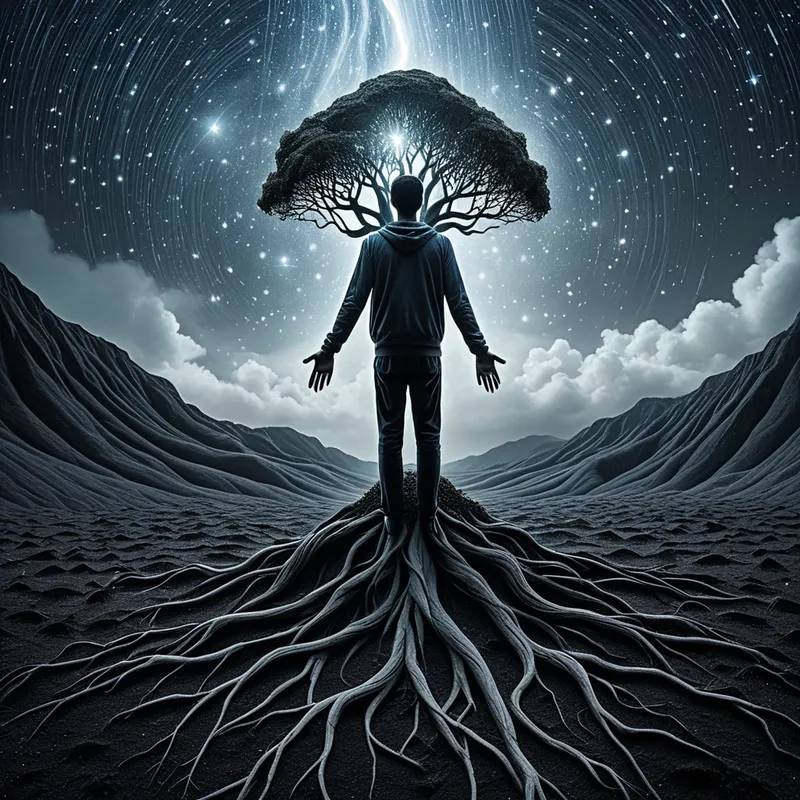
The individuation journey modeled here is one of coming from rather than going to. The modern seeker often looks to the sky for answers—abstract philosophies, spiritual transcendence. The Kumulipo’s alchemy instructs us to first embrace our grounded, earthly nature, our “island-self.” Our initial spiritual ambitions (the stillborn child) may need to be humbly returned to the dark soil of the unconscious. There, through the patient, unseen work of the psyche, they decompose and recompose into a form of practical, nourishing wisdom—the kalo. This is the development of a rooted ethic, a sustainable practice, a heartfelt connection that actually feeds the soul and community.
Individuation is not about ascending from the earth, but about realizing the sky is already within the earth, and the earth is already within the sky, and you are the breath that dances between them.
The living Hāloa is the integrated Self, who does not deny his celestial origins (aspiration, consciousness) but understands he is sustained every day by his earthy, humble, elder sibling—the embodied, practical, and often overlooked work of soul-making. To honor that elder sibling is to tend the garden of the psyche with reverence, ensuring the cycle of nourishment—from unconscious potential to conscious, lived sustenance—continues.
Associated Symbols
Explore related symbols from the CaleaDream lexicon:
- Earth — The body of Papahānaumoku, representing the foundational unconscious, the receptive and generative matrix from which all tangible life and identity emerges.
- Sky — The expanse of Wākea, symbolizing consciousness, spirit, aspiration, and the limitless potential that seeks form through union with the earth.
- Child — The first, stillborn Hāloa, representing a nascent potential or identity that must undergo a sacrificial transformation to fulfill its ultimate purpose.
- Root — The kalo plant growing from the buried child, signifying the deep, nourishing connection to ancestry, the unconscious, and the transformative process that turns loss into sustenance.
- Breath — The sacred ha given to the second Hāloa, embodying the animating life force, spirit, and the conscious awareness that connects the individual to the divine source.
- Mother — Papahānaumoku as the Earth Mother, the archetypal source of all material form, nourishment, and the grounding, containing principle of reality.
- Father — Wākea as the Sky Father, the archetypal source of order, spirit, and the expansive, fertilizing principle that initiates creation.
- Sacrifice — The burial of the firstborn, representing the necessary surrender of a first form or ego-driven plan so that a deeper, more nourishing truth can grow in its place.
- Ancestor — The kalo plant as the elder sibling, symbolizing that which came before and sustains us, mandating a relationship of respect and reciprocity with our sources.
- Union — The sacred embrace of Sky and Earth, depicting the primal creative act where opposites conjoin to generate a new, habitable realm of being.
- Mountain — The firstborn island of Hawaiʻi, representing the solid, enduring manifestation of divine union, the established and prominent aspect of the Self born from the psyche.
- Seed — The potential within Pō and within the union itself, representing the latent, unmanifested life and consciousness that contains the entire pattern of what is to come.