The Fairy Kingdom Myth Meaning & Symbolism
A mortal enters the timeless Fairy Kingdom, is offered impossible gifts, and must choose between eternal enchantment and a flawed, human return.
The Tale of The Fairy Kingdom
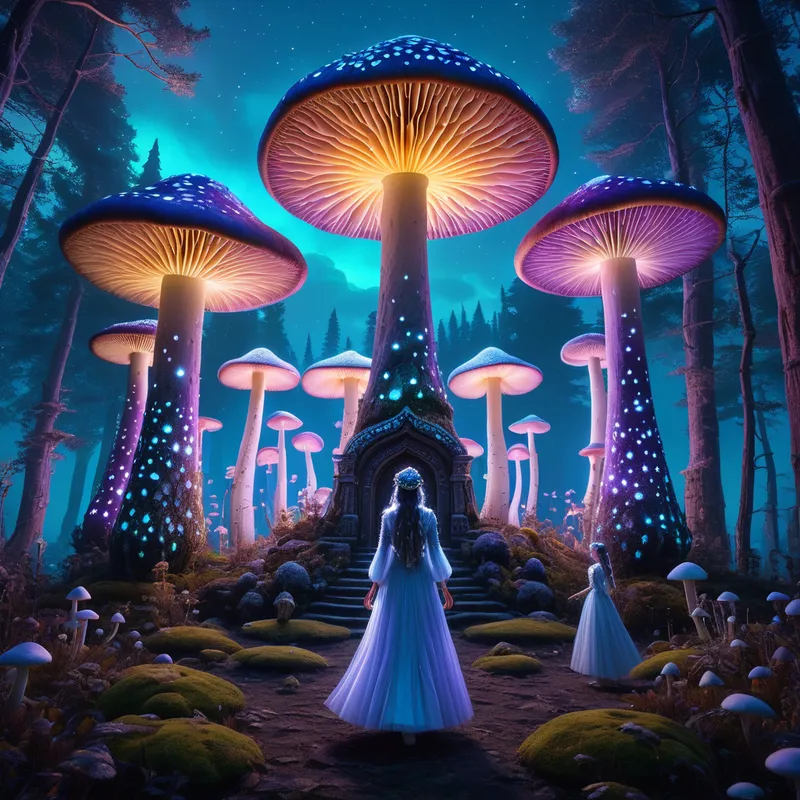
Listen. There is a place where [the world](/myths/the-world “Myth from Tarot culture.”/) grows thin. It is not on any map, for it lies in [the hollow hills](/myths/the-hollow-hills “Myth from Celtic culture.”/), beneath the roots of the oldest oak, or at the bottom of a forgotten well where the [water](/myths/water “Myth from Chinese culture.”/) is black and still. This is the border of the Fairy Kingdom. The air there hums, a sound like bees in summer and distant bells. The light is neither day nor night, but a perpetual, honeyed gloaming.
Into this borderland stumbled a soul—a farmer, a poet, a lost child, it matters not. They followed a [will-o’-the-wisp](/myths/will-o-the-wisp “Myth from Celtic culture.”/), or chased a hare with eyes like molten silver, or simply fell asleep in a ring of toadstools. In a heartbeat, the familiar world dissolved. Before them lay the Kingdom. Trees bore fruit of crystal and song. Rivers flowed with liquid moonlight. The very flowers chimed as they bloomed. And the people… they were beautiful beyond bearing, with faces of perfect, cold symmetry and eyes that held the depth of centuries. They danced in endless, intricate patterns, their laughter a sound both delightful and chilling.
The Fairy Queen herself approached. Her gown was woven from shadows and [spider](/myths/spider “Myth from Native American culture.”/)-silk, her crown a circlet of living ivy and frost. She offered no threat, only a smile that did not touch her eyes. “Welcome,” she said, her voice the rustle of leaves. “Stay. Feast with us. Forget the world of toil and time.”
And what a feast it was! Food that tasted of one’s deepest longing, drink that sparkled with pure joy. The mortal danced, feeling lighter, wiser, more alive than ever before. Days and nights blurred into a single, exquisite present. The Queen, pleased, offered gifts: a harp that played itself, a purse that never emptied, the gift of prophecy. But as the mortal reached for them, a faint, nagging pull echoed in their chest—a memory of sunrise, of a loved one’s imperfect face, of rain on real soil.
Then came the warning, whispered by a pitying brownie or seen in a fleeting, fearful glance from a courtier. “Eat or drink nothing more,” it said. “To consume the food of Faerie is to be bound here forever. Your human life will wither to a story, and you will become a shimmering ghost in their eternal dance.”
The choice crystallized, sharp and terrible. The enchantment was a silken cage. The Kingdom’s beauty was real, but it was a beauty without change, without decay, and therefore without true growth or love. To stay was to gain eternity but lose one’s soul. To leave was to return to pain, loss, and death—but also to meaning.
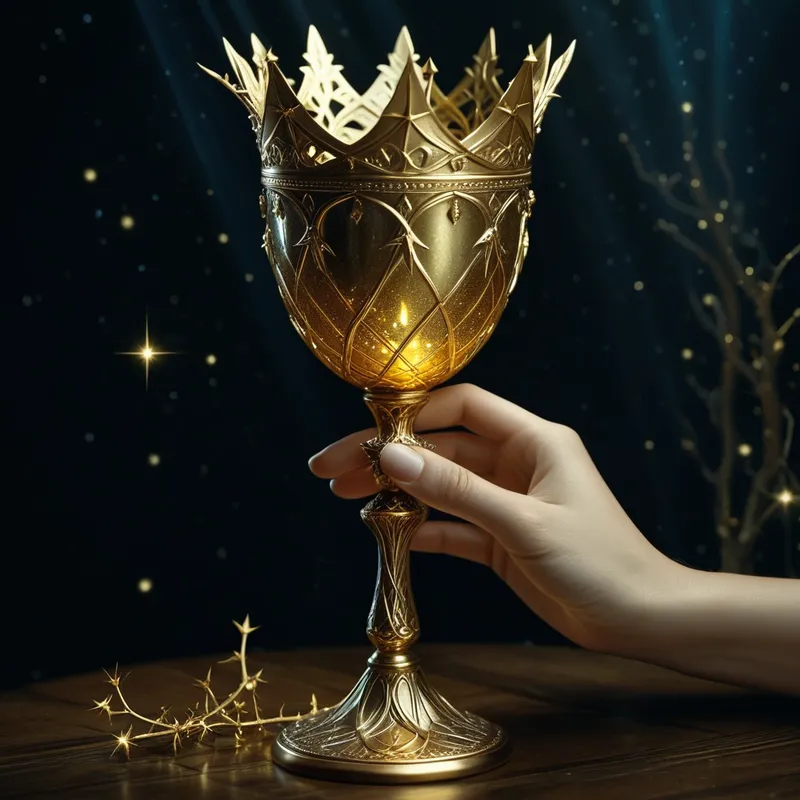
With a heart tearing in two, the mortal refused the final, glittering cup. The music stopped. The Queen’s smile vanished, replaced by an ancient, indifferent cold. “So be it,” she said. “Go back to your mud and your dying sun.” The path home was sudden and harsh—a stumble through a thorn hedge, a fall from a fairy mound at dawn. They returned, often years after they left, to a world grown older, to faces that had mourned them. They were forever altered, haunted by a beauty they could never fully describe, carrying a loneliness for a kingdom that was never truly theirs.
Cultural Origins & Context
The myth of the Fairy Kingdom is not a single story but a profound pattern woven through the folklore of the Celtic isles, Scandinavia, Eastern Europe, and beyond. It was told by firesides, not in temples, passed down by grandmothers and traveling storytellers. Its function was multifaceted: it explained mysterious disappearances, warned children away from lonely places, and served as a narrative container for the deep human anxiety about the “other”—the world of spirit, magic, and the unconscious that runs parallel to our own.
These stories were ecological and psychological maps. The fairy forts ([sídhe](/myths/sdhe “Myth from Celtic / Irish culture.”/)) were real places in the landscape, marking the literal [thin places](/myths/thin-places “Myth from Celtic culture.”/) between worlds. The tales enforced social codes: respect the land, do not trespass, honor your promises. But more deeply, they gave form to the existential understanding that profound beauty and profound danger are often the same [thing](/myths/thing “Myth from Norse culture.”/), and that every gift from the unconscious comes with a price.
Symbolic Architecture
The [Fairy](/symbols/fairy “Symbol: Fairies represent the magical and whimsical aspects of life, often symbolizing transformation and the unseen forces that guide us.”/) [Kingdom](/symbols/kingdom “Symbol: A kingdom symbolizes authority, belonging, and a sense of identity within a larger context or community.”/) is the [psyche](/myths/psyche “Myth from Greek culture.”/)‘s [image](/symbols/image “Symbol: An image represents perception, memories, and the visual narratives we create in our minds.”/) of the unconscious in its totality—not just the personal [shadow](/symbols/shadow “Symbol: The ‘shadow’ embodies the unconscious, repressed aspects of the self and often represents fears or hidden emotions.”/), but the collective, timeless, and impersonal [realm](/symbols/realm “Symbol: The symbol of ‘Realm’ often signifies the boundaries of one’s consciousness, experiences, or emotional states, suggesting aspects of reality that are either explored or ignored.”/) of archetypes. It is the world of pure potential, of numinous imagery and instinctual patterns that exist before they are shaped by [the ego](/myths/the-ego “Myth from Jungian culture.”/) and brought into the light of [consciousness](/symbols/consciousness “Symbol: Consciousness represents the state of awareness and perception, encompassing thoughts, feelings, and experiences.”/).
The Fairy Queen is the archetype of the Anima/Animus in its most absolute form—the captivating, terrifying, and alluring ruler of the inner world. She offers integration, but on her terms, which are the terms of the unconscious: the dissolution of the conscious self.
The feast represents the seductive pull of [inflation](/symbols/inflation “Symbol: A dream symbol representing feelings of diminishing value, loss of control, or expansion beyond sustainable limits in one’s life or psyche.”/)—of being possessed by archetypal energies. To “eat the [food](/symbols/food “Symbol: Food in dreams often symbolizes nourishment, both physical and emotional, representing the fulfillment of basic needs as well as deeper desires for connection or growth.”/)” is to identify completely with these energies, to believe one is a [prophet](/symbols/prophet “Symbol: A messenger or seer who receives divine revelations, often warning of future events or guiding moral direction.”/), a genius, or a magical being, losing one’s grounding in [human](/symbols/human “Symbol: The symbol of a human represents individuality, complexity of emotions, and social relationships.”/) [reality](/symbols/reality “Symbol: Reality signifies the state of existence and perception, often reflecting one’s understanding of truth and life experiences.”/). The warning is the nascent voice of the ego-complex, [the Self](/myths/the-self “Myth from Jungian culture.”/)‘s [guidance](/symbols/guidance “Symbol: The act of receiving or seeking direction, advice, or leadership in a dream, often representing a need for clarity, support, or a higher purpose on one’s life path.”/) [system](/symbols/system “Symbol: A system represents structure, organization, and interrelated components functioning together, often reflecting personal or social order.”/), insisting on [differentiation](/symbols/differentiation “Symbol: The process of distinguishing or separating parts of the self, emotions, or identity from a whole, often marking a developmental or psychological milestone.”/). The painful return is the essential, humanizing act of individuation: one must leave the [paradise](/symbols/paradise “Symbol: A perfect, blissful place or state of being, often representing ultimate fulfillment, harmony, and transcendence beyond ordinary reality.”/) of unconscious unity to become a conscious, individual being, even if it means embracing [mortality](/symbols/mortality “Symbol: The awareness of life’s finitude, often representing transitions, impermanence, or existential reflection in dreams.”/) and imperfection.
The Dreamer’s Resonance
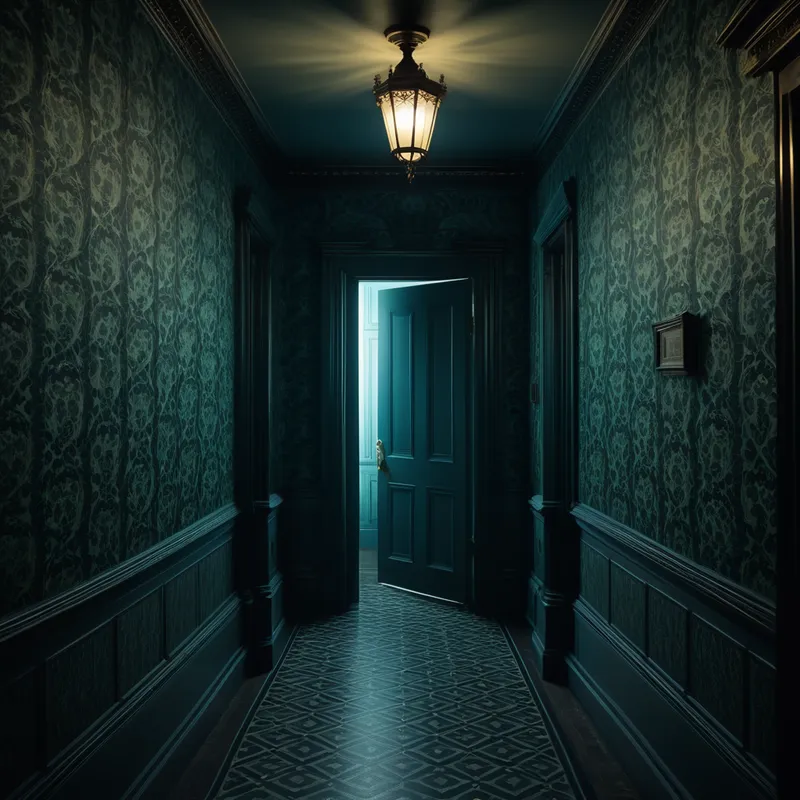
When this myth stirs in modern dreams, it rarely appears as literal fairies. It manifests as dreams of being offered a perfect, life-changing opportunity that feels too good to be true—a dream job, a transcendent relationship, a spiritual awakening. The setting is often a breathtakingly beautiful but eerily static place: a mansion where all the rooms are the same, a party where the laughter is hollow, a technological utia that feels sterile.
The somatic experience is one of simultaneous enchantment and dread. The dreamer feels the magnetic pull, the promise of an end to striving, yet a deep, visceral anxiety knots in the stomach. This is the psyche signaling a critical choice point. The dream is asking: Are you about to sacrifice your authentic self, your human connections, or your moral compass for a glittering illusion? Are you being seduced by an archetype, mistaking its power for your own? The dream rehearses the trauma and [triumph](/myths/triumph “Myth from Roman culture.”/) of saying “no” to possession, of choosing the difficult, human path of conscious development over the easy bliss of unconscious identification.
Alchemical Translation
The alchemical process mirrored in this myth is [separatio](/myths/separatio “Myth from Alchemical culture.”/)—the crucial, often painful separation of the pure from the impure, the spirit from the matter, the eternal image from the temporal personality. The mortal enters the Kingdom in a state of [nigredo](/myths/nigredo “Myth from Alchemical culture.”/), the blackening: they are lost, naive, or psychologically dissolved. The Fairy Kingdom itself represents the albedo, the whitening—a state of lunar, silver illumination by the unconscious. It is beautiful, spiritual, but cold and reflective.
The triumph is not in entering the Kingdom, but in leaving it. The true gold, the rubedo, is forged in the return. It is the integrated self who carries the memory of the numinous—the fairy gift that was not taken—as a source of inspiration and depth, not as a possession.
For the modern individual, the myth models the entire journey of psychological maturation. We are all tempted by the “fairy gifts” of fundamentalist ideologies, addictive technologies, or spiritual bypasses that promise a painless eternity. The alchemical work is to visit these enchanting inner realms—through imagination, art, or deep reflection—to be nourished by their beauty and wisdom, but to consciously refuse the final cup of total identification. We must return to the mortal world, to our relationships, our bodies, and our responsibilities, now “haunted” in the best sense: deepened, humbled, and carrying a fragment of the eternal within our finite lives. We become the bridge between the worlds.
Associated Symbols
Explore related symbols from the CaleaDream lexicon: