The Erymanthian Boar Myth Meaning & Symbolism
Hercules' fourth labor: a winter hunt for a monstrous boar, a test of strategy over strength, culminating in a tense confrontation with a centaur.
The Tale of The Erymanthian Boar
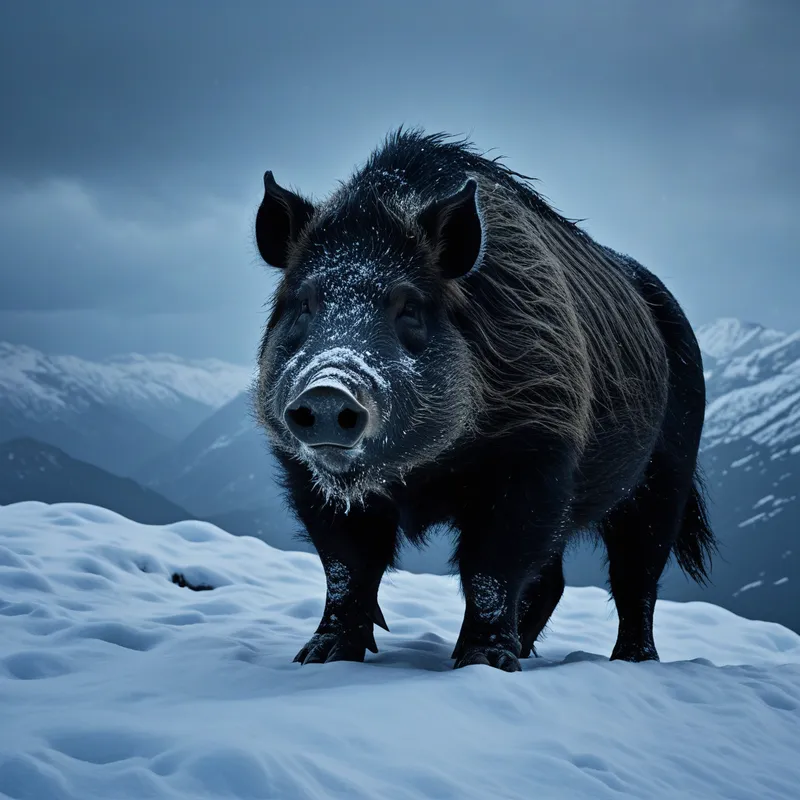
The air on the slopes of Mount Erymanthus was sharp as a blade, tasting of iron and pine. It was a season of white silence, where the sun was a pale coin in a leaden sky, and [the world](/myths/the-world “Myth from Tarot culture.”/) seemed to hold its breath. This was the domain of a terror not born of fire or fang, but of sheer, unstoppable mass—the Erymanthian Boar.
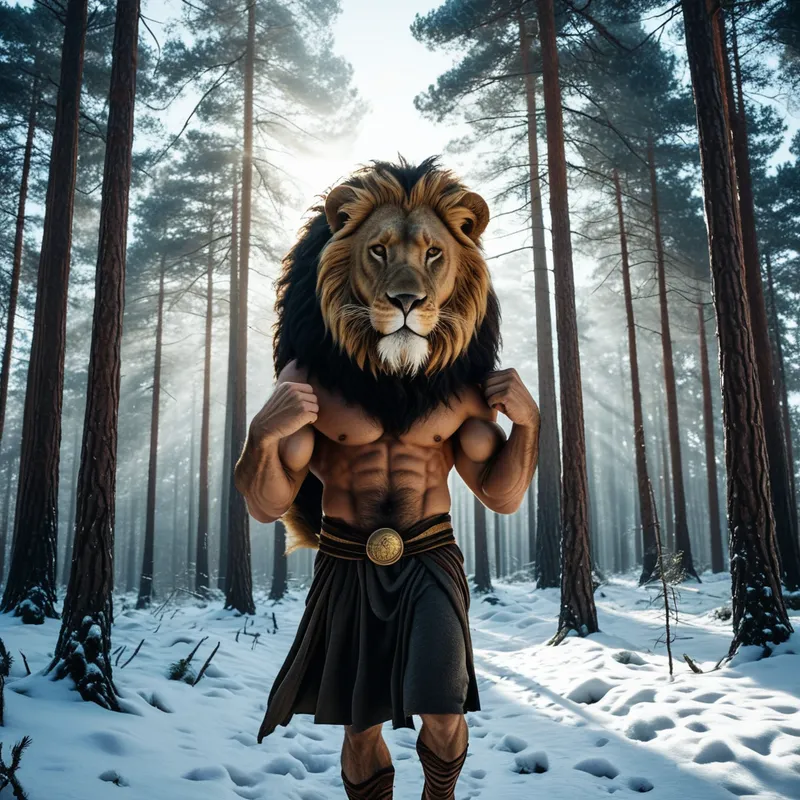
Sent by a king who wished him dead, the hero [Hercules](/myths/hercules “Myth from Greek culture.”/) climbed into that frozen realm. His shoulders still bore the pelt of the Nemean Lion, a trophy of impossible strength. But here, strength alone was a fool’s currency. The Boar was no mere beast; it was a force of the land itself, a creature of Artemis gone awry. It did not hunt for hunger, but for ruin, ploughing through groves and trampling villages into the mud with the mindless fury of a winter storm.
Hercules did not charge. In the deep quiet, a new kind of courage was required—the courage of patience. For days, he became a part of the mountain’s silence, tracking not just hoof-prints in the snow, but the deeper scar of chaos the beast left in its wake. He followed the trail of shattered timber and the cold dread hanging over the high meadows.
His strategy was one of terrain and exhaustion. With shouts that echoed off the cliffs, he drove the great boar from its thickets, up and up, into the highest drifts where the snow lay deep and soft. The beast, all brute power, began to flounder, its charge slowed to a furious, labored slog. Its hot breath plumed in great gusts, its small, red eyes burning with a trapped, elemental rage. Then, in a moment of perfect, poised action, Hercules closed. Not with a killing blow, but with a wrestler’s cunning grasp. He subdued the monstrous creature, binding its legs, and hoisted the living, snorting embodiment of wildness onto his back. The journey down the mountain was a procession of surreal [triumph](/myths/triumph “Myth from Roman culture.”/): the hero, bowed under the weight of the primal chaos he had captured, carrying his furious burden back to the world of men.
Cultural Origins & Context
This tale forms the fourth of the canonical Twelve [Labors of Hercules](/myths/labors-of-hercules “Myth from Greek culture.”/), a cycle of stories that served as a foundational pillar of Hellenic culture. These narratives were not mere entertainment; they were a cultural curriculum, transmitted by bards and vase-painters, performed in rituals and recited in symposia. The labors chart a map of heroic development, moving from the conquest of direct, physical threats ([the Nemean Lion](/myths/the-nemean-lion “Myth from Greek culture.”/)) to more complex challenges requiring guile, diplomacy, and containment.
The Erymanthian Boar labor sits at a crucial pivot. It follows the confrontation with the monstrous [Hydra](/myths/hydra “Myth from Greek culture.”/) and precedes the cleansing of the Augean Stables. Its placement signals a shift. The hero is no longer just a destroyer of monsters but must become a master of logistics and control. The myth functioned to illustrate ideal arete for a Greek audience: true excellence combines might (bia) with intelligence ([metis](/myths/metis “Myth from Greek culture.”/)), and ultimate victory is demonstrated not in slaughter, but in the ability to capture and present the untamed force.
Symbolic Architecture
The Boar is not a [demon](/symbols/demon “Symbol: Demons often symbolize inner fears, repressed emotions, or negative aspects of oneself that the dreamer is struggling to confront.”/) from the [underworld](/symbols/underworld “Symbol: A symbolic journey into the unconscious, representing exploration of hidden aspects of self, transformation, or confronting repressed material.”/), but a [creature](/symbols/creature “Symbol: Creatures in dreams often symbolize instincts, primal urges, and the unknown aspects of the psyche.”/) of the upper world run amok. It symbolizes the raw, instinctual, and destructive potential of [nature](/symbols/nature “Symbol: Nature symbolizes growth, connectivity, and the primal forces of existence.”/)—and by extension, of [human](/symbols/human “Symbol: The symbol of a human represents individuality, complexity of emotions, and social relationships.”/) nature—when it is not directed or bounded. It is the unchecked id, the rage that destroys one’s own home, the compulsive [energy](/symbols/energy “Symbol: Energy symbolizes vitality, motivation, and the drive that fuels actions and ambitions.”/) that ravages rather than builds.
The shadow is not what is evil, but what is unlived and therefore volatile. The Boar is the potency of the wilderness that, when driven into the high snows of consciousness, can be carried, not as a burden, but as a source of immense power.
Hercules’ method is profoundly symbolic. He does not meet brute force with brute force on its own terms. He uses the environment—the deep snow—to transform the nature of the confrontation. The snow represents a higher, cooler [consciousness](/symbols/consciousness “Symbol: Consciousness represents the state of awareness and perception, encompassing thoughts, feelings, and experiences.”/). By driving the boar upward, he forces the chaotic energy into a [realm](/symbols/realm “Symbol: The symbol of ‘Realm’ often signifies the boundaries of one’s consciousness, experiences, or emotional states, suggesting aspects of reality that are either explored or ignored.”/) where it must be experienced differently: it becomes slow, heavy, visible. The final act of carrying the subdued [beast](/symbols/beast “Symbol: The beast often represents primal instincts, fears, and the shadow self in dreams. It symbolizes the untamed aspects of one’s personality that may need acknowledgment or integration.”/) is the ultimate [image](/symbols/image “Symbol: An image represents perception, memories, and the visual narratives we create in our minds.”/) of [integration](/symbols/integration “Symbol: The process of unifying disparate parts of the self or experience into a cohesive whole, often representing psychological wholeness or resolution of internal conflict.”/). The [hero](/symbols/hero “Symbol: A hero embodies strength, courage, and the ability to overcome significant challenges.”/) does not disown the primal force; he takes [responsibility](/symbols/responsibility “Symbol: Responsibility in dreams often signifies the weight of duties and the expectations placed upon the dreamer.”/) for it, bearing its [weight](/symbols/weight “Symbol: Weight symbolizes burdens, responsibilities, and emotional loads one carries in life.”/) consciously back into the [community](/symbols/community “Symbol: Community in dreams symbolizes connection, support, and the need for belonging.”/).
The Dreamer’s Resonance
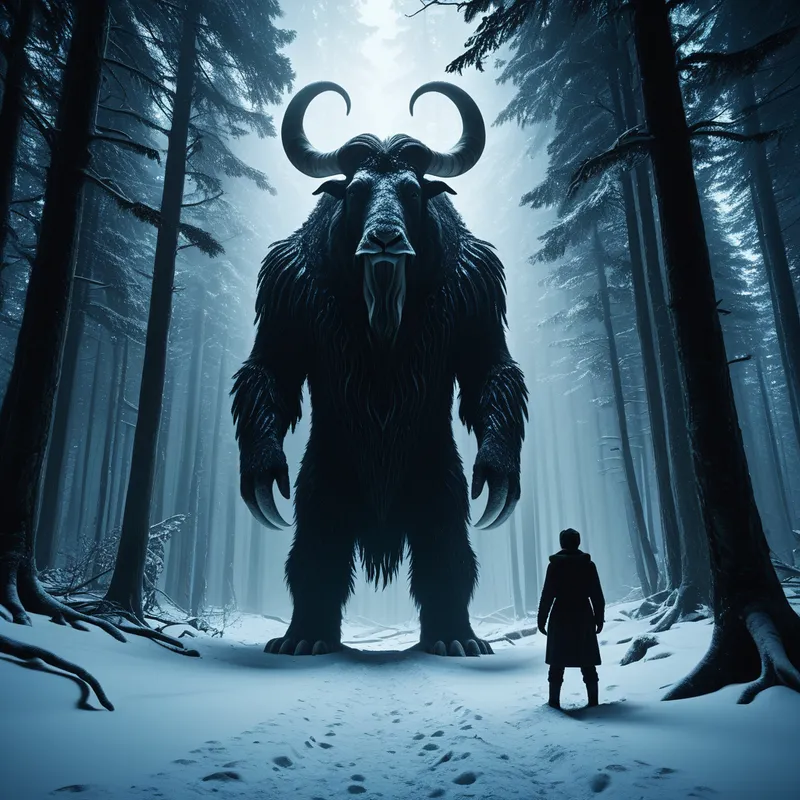
When this myth stirs in the modern [psyche](/myths/psyche “Myth from Greek culture.”/), it often manifests in dreams of being pursued by, or struggling with, a large, powerful, and frightening animal—a bull, a bear, or indeed, a boar. The somatic feeling is one of being overwhelmed by a force that is both immensely physical and seemingly mindless. The dreamer may feel their own strength is useless, that they cannot punch or outrun this [thing](/myths/thing “Myth from Norse culture.”/).
This is the psyche signaling a confrontation with a “boar” in one’s own life: an addiction, a consuming anger, a financial chaos, or a relationship pattern that feels like it’s trampling one’s inner landscape. The dream presents the problem in its raw, archetypal form. The guidance of the myth is clear: direct confrontation in the beast’s chosen arena (the thicket of obsession, the mud of resentment) leads to exhaustion and defeat. The healing movement implied is to “drive it into the snow”—to find a perspective, a practice, or a container (therapy, meditation, creative work) that changes the ground of engagement. The goal is not to kill the energy, which is often a vital part of [the self](/myths/the-self “Myth from Jungian culture.”/), but to contain it, see it clearly, and ultimately learn to carry it without being destroyed by it.
Alchemical Translation
In the alchemy of individuation, the labor of the Erymanthian Boar models the stage of mortificatio and sublimatio—the dying of an old, unconscious way of being and the lifting of that material into a higher form. The boar represents the [prima materia](/myths/prima-materia “Myth from Alchemical culture.”/), the base, chaotic stuff of the psyche that is both the problem and the only source of the solution.
The hero’s journey up the mountain is the arduous work of introspection, lifting a problem out of the murky emotional thicket and into the clear, reflective light of consciousness (the snow). The binding of the beast is the act of coagulatio—giving a defined form to what was once a formless, rampaging influence. Finally, carrying it to King Eurystheus represents presenting this integrated, though still potent, aspect of the self to the ruling principle of [the ego](/myths/the-ego “Myth from Jungian culture.”/). Eurystheus’s comic terror, hiding in a storage jar, shows that the conscious ego is often terrified of the raw power it has asked to see.
The ultimate alchemy is not destruction, but a change of state. The boar’ fury, once integrated, becomes formidable resilience; its brute persistence becomes unwavering endurance. What once trampled your inner world now carries you through it.
For the modern individual, this myth instructs that our most destructive impulses and chaotic life patterns contain a fearsome vitality. The path is not to annihilate them in shame, but to engage them with strategic consciousness, exhaust their mindless momentum, and learn to bear their transformed weight as a testament to a wholeness that includes, but is no longer ruled by, the wildness within.
Associated Symbols
Explore related symbols from the CaleaDream lexicon: