The Eight White Tents Myth Meaning & Symbolism
A sacred covenant between heaven and earth, embodied in eight white tents that hold the memory of a people and the promise of their destiny.
The Tale of The Eight White Tents
Listen, child of the eternal blue sky, and hear the breath of the wind in the tall grass. Before the great empires rose and fell, when the world was young and the spirits walked close to the earth, there was a time of forgetting. The people had scattered to the four winds, their hearts grown heavy with the weight of their journeys, their tongues forgetting the old songs that spoke to the mountains and the rivers.
In this time of silence, a vision came to the eldest of the elders, a woman whose bones remembered [the first sunrise](/myths/the-first-sunrise “Myth from Filipino culture.”/). In her dream, the great Tengri spoke not with thunder, but with a whisper that was the sound of wind through countless blades of grass. He showed her a circle on the boundless plain, and within that circle, eight pillars of pure white light that did not blind, but clarified. They were not stone, nor wood, but something woven from sky-mist and starlight. And a voice, older than the oldest river, said: “Build what you see. The memory of the world will dwell within. The covenant will be remembered.”
Awakening with the dawn cold on her face, she gathered the scattered clans. She spoke of the circle of light, and a great yearning awoke in them—a homesickness for a home they had never seen. Together, they gathered the whitest wool from the high mountain sheep and felted it under the sun’s gaze and the moon’s blessing. They cut slender poles from birch trees that grew by sacred springs. They worked not as builders, but as midwives, assisting in the birth of the vision onto the earthly plane.
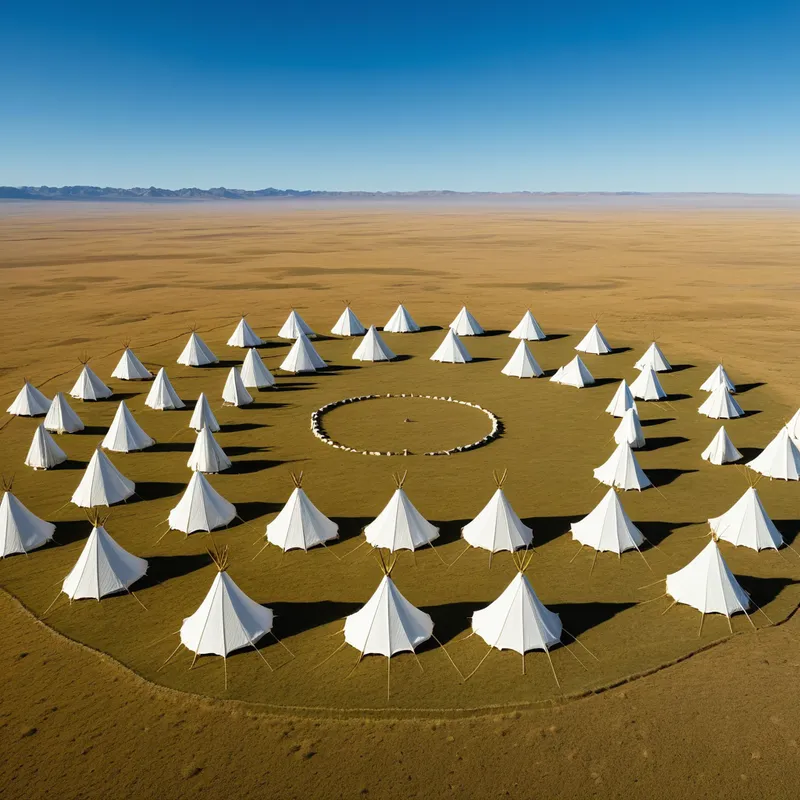
And so, upon a chosen hill where the earth’s pulse was strong, they raised them: eight tents, gers, each a perfect white dome against the green sea of the steppe. They arranged them not in a line, but in a sacred circle, a mirror of the sun’s path and the turning seasons. When the last rope was tied, a profound silence descended, deeper than any night. Then, from the smoke hole of the central tent, a single wisp of blue smoke rose straight as a prayer into the endless blue.
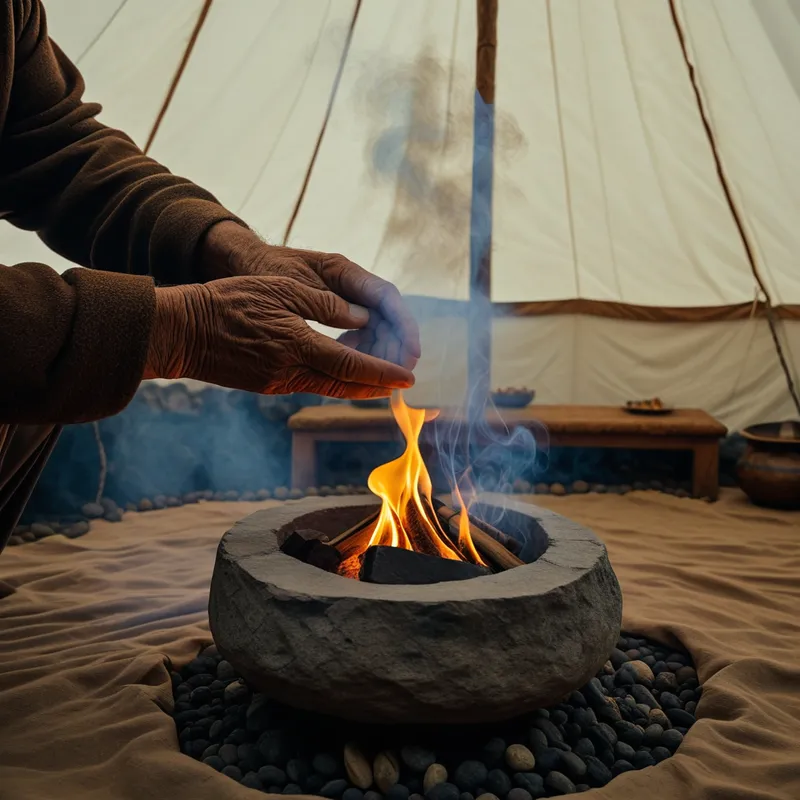
One by one, the elders entered each tent. In the first, they placed a stone from the heart of the Burkhan Khaldun. In the second, water from nine distant rivers. In the third, ashes from a fire that had burned for nine generations. So it went, through soil, seed, milk, a lock of hair from the first horse, and a fragment of a meteorite that had fallen singing from the sky. Each tent became a vessel for an essence of the world.
That night, with the tents glowing like fallen moons in the darkness, the people gathered in the center. And the memory returned. It flowed into them not as words, but as a knowing in the blood: the covenant between the people, the spirit of the earth Etügen, and the eternal Tengri. They remembered their place in the great pattern. They were not owners of the land, but its conscious strand, woven into the whole. The Eight White Tents stood not as a fortress, but as a portal—a place where heaven and earth touched, where the scattered soul of a people could become whole again.
Cultural Origins & Context
The myth of the Eight White Tents is rooted in the deep spiritual substratum of Tengrism and the nomadic consciousness. It is not a myth of a single hero, but of a collective soul. It speaks to the primordial Mongolian understanding of sacred space and cosmological order. The number eight holds profound significance, representing the cardinal and intercardinal directions—the totality of the visible world. The white color symbolizes purity, the sacred, the celestial, and the state of blessing.
This narrative was not penned in a chronicle but carried in the oral tradition, likely by shamans (böö) and storytellers during night-time gatherings within the very ger it describes. Its function was multifaceted: it was an etiological myth explaining the spiritual significance of the ger itself as a microcosm; a ritual map for establishing new camps in a spiritually correct manner; and a foundational narrative reinforcing social cohesion. In a life defined by movement across a trackless landscape, the myth provided a portable, replicable model of cosmic center. Wherever the people raised their white tents in the proper, mindful way, they were recreating that first, sacred circle—they were not just making camp, they were aligning themselves with the fundamental order of creation.
Symbolic Architecture
The myth is a profound [blueprint](/symbols/blueprint “Symbol: A blueprint represents the foundational plan or design for something, often symbolizing potential, structure, and the mapping of one’s inner self or future.”/) of psychic and cosmic [integration](/symbols/integration “Symbol: The process of unifying disparate parts of the self or experience into a cohesive whole, often representing psychological wholeness or resolution of internal conflict.”/). The Eight White Tents are not mere dwellings; they are vessels of [consciousness](/symbols/consciousness “Symbol: Consciousness represents the state of awareness and perception, encompassing thoughts, feelings, and experiences.”/).
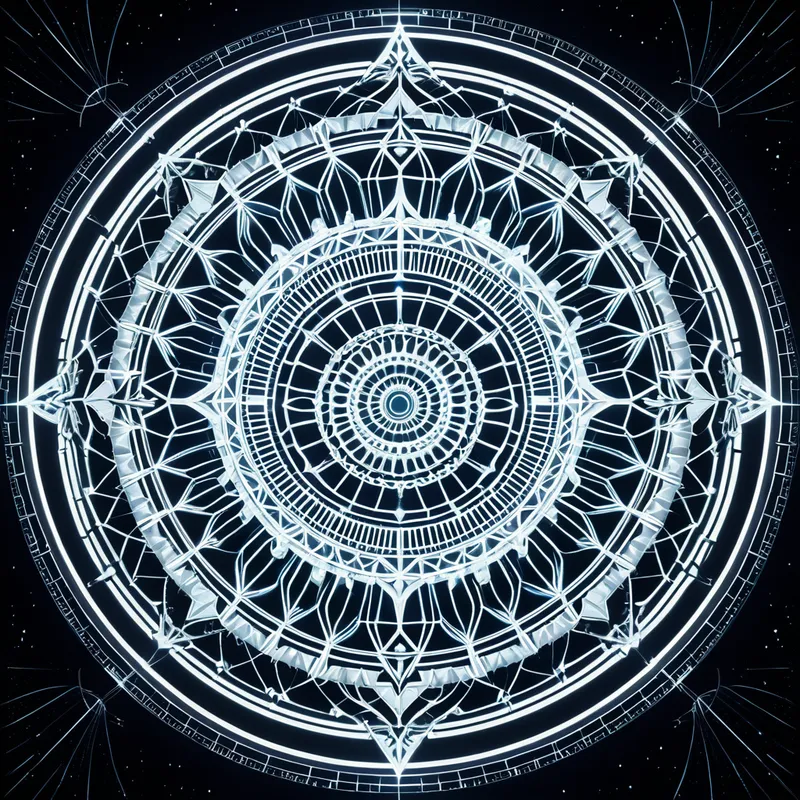
The circle of tents is the mandala of the Self, a constructed totality where every fragmented aspect of experience finds its sacred dwelling place.
The initial state of “forgetting” and scattering represents a psychological diaspora—a [condition](/symbols/condition “Symbol: Condition reflects the state of being, often focusing on physical, emotional, or situational aspects of life.”/) where the instincts, memories, and spiritual connections of the psyche are dissociated, leading to a sense of existential [weight](/symbols/weight “Symbol: Weight symbolizes burdens, responsibilities, and emotional loads one carries in life.”/) and alienation. The elder’s dream is the intervention of the transcendent function, a [symbol](/symbols/symbol “Symbol: A symbol can represent an idea, concept, or belief, serving as a powerful tool for communication and understanding.”/) emerging from the deepest [layer](/symbols/layer “Symbol: Layers often symbolize complexity, depth, and protection in dreams, representing the various aspects of the self or situations.”/) of the [collective unconscious](/symbols/collective-unconscious “Symbol: The Collective Unconscious refers to the part of the unconscious mind shared among beings of the same species, embodying universal experiences and archetypes.”/) to guide the process of recollection and re-membering.
Each [tent](/symbols/tent “Symbol: A tent often symbolizes temporary shelter, transition, and the need for safety.”/), dedicated to a specific elemental essence ([stone](/symbols/stone “Symbol: In dreams, a stone often symbolizes strength, stability, and permanence, but it may also represent emotional burdens or obstacles that need to be acknowledged and processed.”/), [water](/symbols/water “Symbol: Water symbolizes the subconscious mind, emotions, and the flow of life, representing both cleansing and creation.”/), fire, etc.), symbolizes the need to honor and consciously house every facet of one’s being and heritage. The central, empty [space](/symbols/space “Symbol: Dreaming of ‘Space’ often symbolizes the vastness of potential, personal freedom, or feelings of isolation and exploration in one’s life.”/) between them is perhaps the most critical symbol: it is the toono, the smoke hole and open center. It is the void where the vertical [connection](/symbols/connection “Symbol: Connection symbolizes relationships, communication, and bonds among individuals.”/) between the [human](/symbols/human “Symbol: The symbol of a human represents individuality, complexity of emotions, and social relationships.”/), the earthly, and the divine occurs. It represents the conscious ego’s necessary [role](/symbols/role “Symbol: The concept of ‘role’ in dreams often reflects one’s identity or how individuals perceive their place within various social structures.”/) not as a ruler of the psychic contents (the tents), but as the [guardian](/symbols/guardian “Symbol: A protector figure representing safety, authority, and guidance, often embodying parental, societal, or spiritual oversight.”/) of the open [space](/symbols/space “Symbol: Dreaming of ‘Space’ often symbolizes the vastness of potential, personal freedom, or feelings of isolation and exploration in one’s life.”/) where transformation can happen.
The Dreamer’s Resonance
When this myth stirs in the modern dreamer, it often signals a profound process of psychic recollection and the rebuilding of inner sacred space. To dream of eight white structures—tents, domes, or even simple glowing forms—arranged in a circle is to encounter the Self’s architecture.
The somatic experience might be one of sudden lightness after a long-carried “weight,” or a feeling of profound orientation in a psychological landscape that had felt trackless. The dreamer may find themselves inside one tent, discovering it contains a forgotten memory, a neglected talent, or a buried emotion (the stone, the water, the ashes). The conflict in the dream often revolves around being unable to enter a particular tent (resistance to integrating a specific content) or finding one tent darkened or damaged (a traumatized or neglected aspect of the psyche).
This dream pattern is the unconscious initiating a ritual of self-covenant. It is the psyche’s attempt to gather its scattered “clans”—the disparate roles, identities, and experiences of a life—and house them in a respectful, ordered, and sacred relationship to each other and to a central, transcendent principle of meaning.
Alchemical Translation
The alchemical process modeled here is that of coagulatio followed by a sacred conjunctio. The initial solve (dissolution) is the painful state of forgetting and fragmentation. The vision from Tengri provides the prima materia: the imaginal blueprint of wholeness.
The labor of building the tents is the slow, meticulous work of psychological integration—taking the raw, felted experiences of a life and constructing a durable, conscious structure to contain them.
The gathering of the elemental tokens—stone, water, ash—is the separatio and purificatio, the conscious retrieval and honoring of one’s foundational experiences, both personal and ancestral. Placing them in their respective tents is the immobilization, giving each its proper, stable place so it is no longer a wandering, haunting ghost but a resident spirit with a home.
The final, silent ritual of gathering in the center represents the coniunctio oppositorum—the marriage of heaven and earth, spirit and matter, within the individual. The smoke rising straight to heaven is the symbol of the liberated spirit, now in correct relationship with the transcendent, because it has first established correct order within the immanent realm of the psyche. The individual is no longer a scattered subject buffeted by fate, but a living, breathing axis mundi—a centered self within the sacred circle of their own being, in covenant with the totality of existence.
Associated Symbols
Explore related symbols from the CaleaDream lexicon:
- Tent — The primary vessel of the myth, representing the sacred, portable home for the spirit, a microcosm where the inner and outer worlds meet.
- Circle — The fundamental arrangement of the eight tents, symbolizing wholeness, the cyclical nature of life and the seasons, and the sacred boundary of a completed Self.
- Sky — The domain of Tengri, representing the transcendent, the father principle, and the source of the visionary blueprint that guides integration.
- Earth — The domain of Etügen, representing the immanent, the mother principle, and the raw materials (wool, wood) from which the sacred structure is built.
- Stone — The anchor, the memory of the ancestral mountain, placed in the first tent as the foundational, enduring core of identity.
- Fire — The transformative element, whose ashes hold the continuity of generations, representing the alchemical process that transmutes experience into wisdom.
- Water — The element of emotion, memory, and fluidity, gathered from nine rivers to ensure the psyche’s capacity to flow and adapt.
- Horse — The companion spirit of the Mongolian people, whose hair in a tent symbolizes the instinctual, mobile energy that is tamed and integrated into the sacred circle.
- Journey — The precondition of the myth; the scattering and subsequent seeking that makes the discovery and construction of the sacred center meaningful and necessary.
- Memory — The central treasure housed within the tents; not just personal recollection, but the animating knowledge of one’s place in the cosmic covenant.
- Destiny — Not a fixed fate, but the potential realized when the sacred circle is built; the destiny of a people or an individual to live in aligned wholeness.
- Dream — The medium of revelation, the channel through which the blueprint for wholeness is delivered from the unconscious to the conscious mind.