The Egyptian ritual of the Wei Myth Meaning & Symbolism
A cosmic ritual to maintain universal balance, where a priestess channels celestial energies to weave harmony from chaos, guided by ancient deities.
The Tale of The Egyptian ritual of the Wei
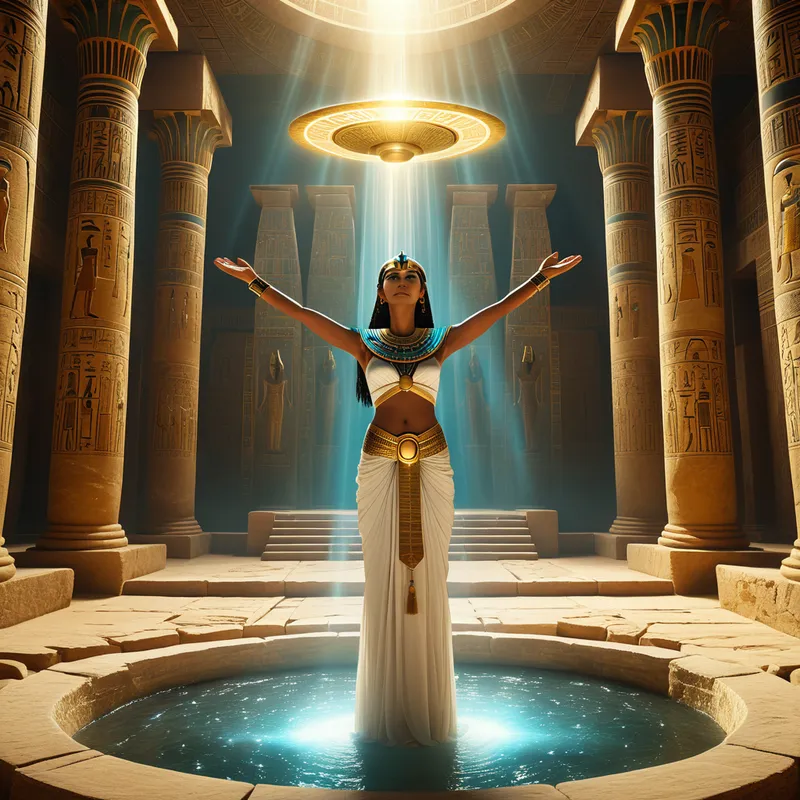
Hear now the whisper from the time before time, when the sky was a cloak of indigo velvet pierced by the unblinking eye of Sirius. In the heart of the silent desert, where the sands remember the footsteps of gods, stood the Temple of the Balanced Heart. Its walls were not of stone, but of solidified moonlight and the breath of Thoth.
Within its innermost sanctum, where the air hummed with the song of spinning galaxies, stood the Priestess of the Wei. She was not born of man and woman, but woven from the sigh of Isis and the dust of fallen stars. Her duty was older than the pyramids, heavier than the world. Before her rested the Basin of Nun, a vast, shallow bowl carved from a single piece of celestial alabaster. It did not hold water, but the very reflection of cosmic order—a perfect, still mirror of the harmonious heavens.
But the universe breathes. With each divine inhalation, a residue of chaos, a thick, obsidian essence known as the Wei, would coalesce. It was the shadow of creation, the necessary dissonance in the symphony. Left unattended, it would drip into the Basin, shattering the reflection, unmaking order into formless tumult.
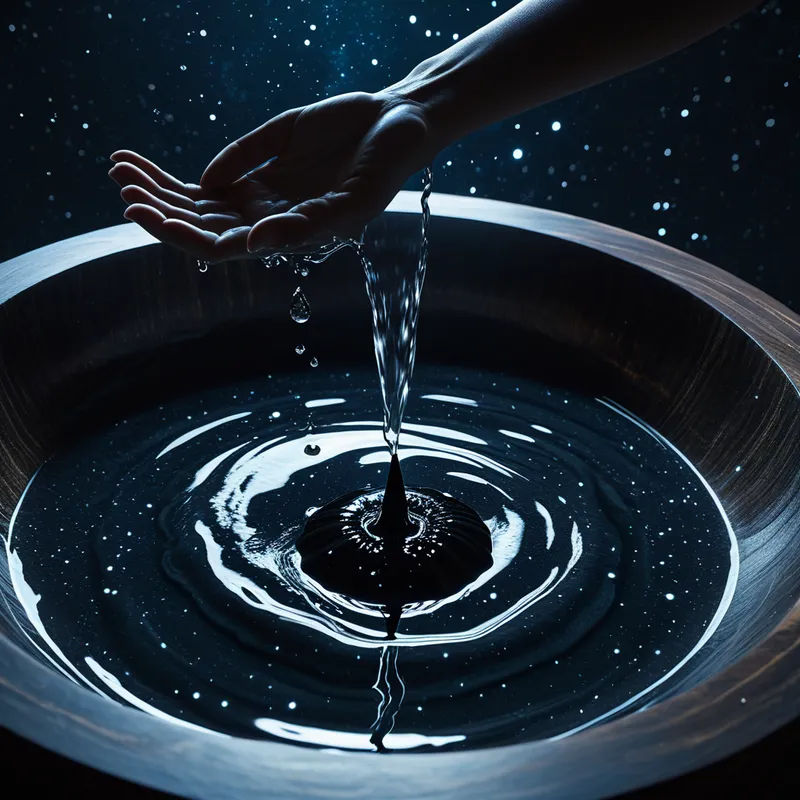
And so, at the precise moment when Sirius pierced the horizon, the ritual began. The priestess did not chant. She listened. She heard the strain in the fabric of Ma'at, the subtle tear where the Wei gathered. With hands that glowed with internal starlight, she would reach into the unseen. The air would resist, grow cold and heavy. She would grasp the intangible Wei—a substance that felt like solidified grief and primal fear—and draw it forth, a single, trembling black droplet hanging from her fingertips.
This was the moment of peril. To cast it out was impossible, for chaos is part of the whole. To hold it was to be consumed. Her face, illuminated by the struggling starlight within her, would contort in silent agony. The droplet sought to fall, to corrupt the Basin. Guided by the silent presence of Isis and the measured knowledge of Thoth, she then performed the alchemy. She did not destroy the Wei. She transmuted it. Pouring her own essence—a silver light drawn from her core—into the black drop, she would hum the note of the world's axis. The black would swirl with silver, dark with light, chaos with order. Then, and only then, would she let it fall.
The droplet would strike the surface of the Basin. Instead of a splash of corruption, it would create a ripple of profound, deeper harmony. The reflected stars would brighten; the cosmic image would grow more intricate, more resilient. The priestess would sway, emptied yet fulfilled, as the balanced universe sighed in relief. She held the tension of opposites, and in that holding, she wove the world anew.
Cultural Origins & Context
The ritual of the Wei does not belong to a single papyrus or dynasty. It is a myth of the "Global/Universal" culture—a term denoting those profound, recurring patterns of human understanding that transcend geographical boundaries to speak of fundamental cosmic principles. While clothed in the potent imagery of ancient Egypt—a civilization deeply preoccupied with cosmic order (Ma'at), cyclical renewal, and the priestly duty to maintain the bridge between the divine and the mundane—its essence is found in countless traditions.
It is the story told not around fires, but in the silent chambers of temples and the quiet minds of mystics. It was passed down through lineages of priestesses and philosophers who understood the universe as a dynamic equilibrium, perpetually threatened and perpetually restored through conscious, ritualized action. Its societal function was not to explain natural phenomena, but to model the sacred responsibility of consciousness itself. It taught that harmony is not a passive state, but an active, daily creation requiring sacrifice, precision, and immense inner strength.
Symbolic Architecture
At its core, the myth is a masterful map of the psyche's relationship to chaos and order. The Basin of Nun represents the unified field of the Self, the potential for wholeness. The perfect reflection is the ego's ideal of order, stability, and conscious control.
The Wei is the inevitable return of the repressed—the shadow, the trauma, the unruly emotion, the creative madness that constantly seeps from the unconscious. It is not "evil," but raw, undifferentiated psychic energy.
The true ritual is not the banishment of darkness, but the courageous act of bringing it into relationship with the light within one's own vessel.
The Priestess is the archetype of the mediating consciousness, the part of us capable of holding the tension between opposing forces without collapsing into one or violently rejecting the other. Her agony is the somatic cost of this work—the anxiety, the dread, the feeling of being torn apart. The silver light of her essence is the libido, the life force, the power of conscious attention and love. The ritual's resolution symbolizes the birth of a third thing: a transcendent function where conflict becomes complexity, and pain becomes a new note in a richer harmony.
The Dreamer's Resonance
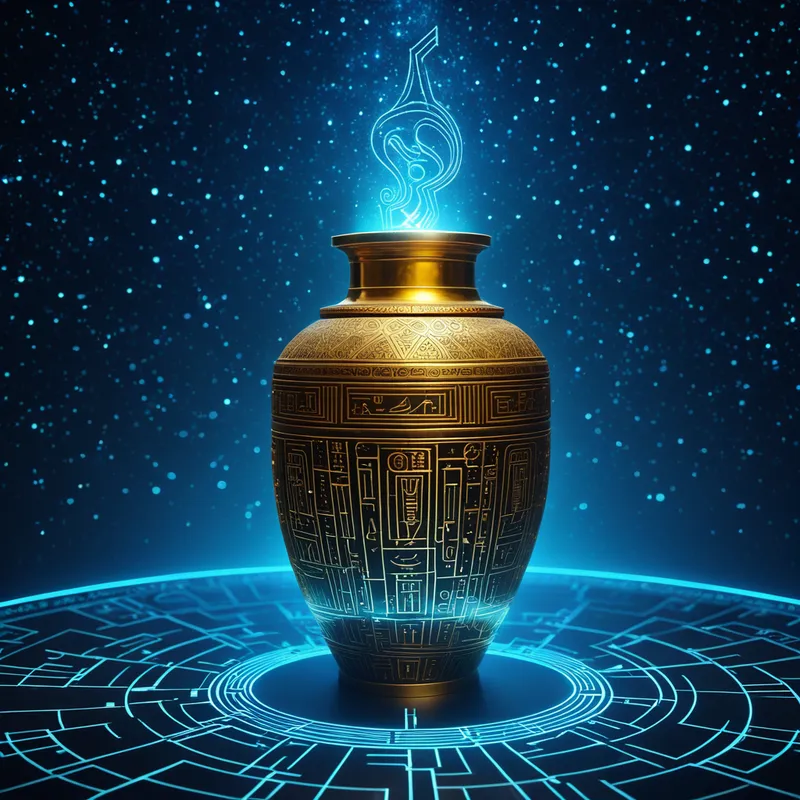
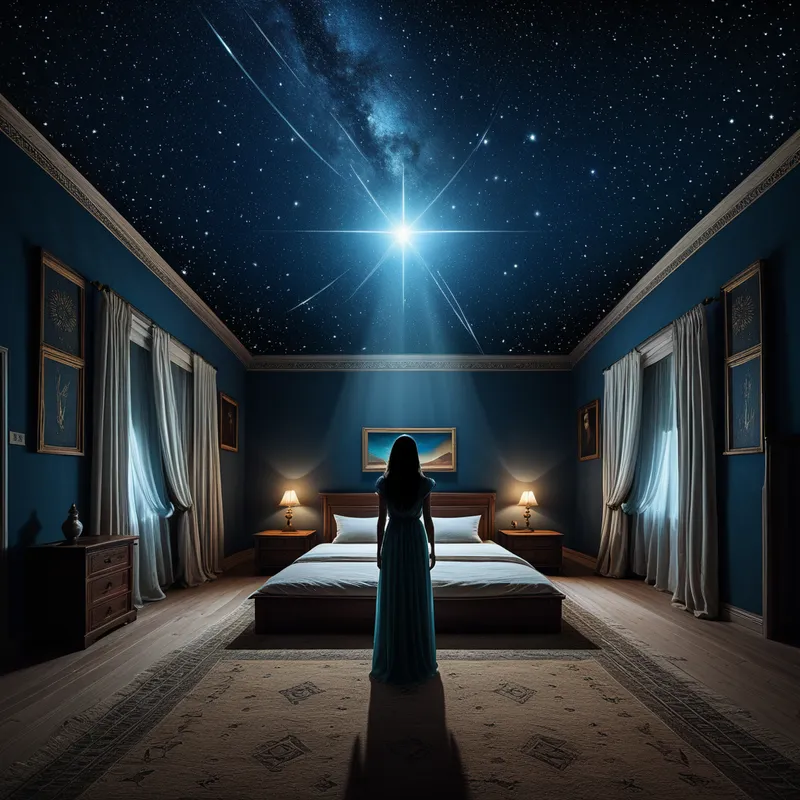
When this myth stirs in the modern dreamer, it often manifests as dreams of overwhelming responsibility or sacred, impossible tasks. You may dream of holding a vessel that is leaking a dark, viscous substance, tasked with repairing it before it empties. You may find yourself in a familiar place (your home, your workplace) that is also an ancient temple, knowing you must perform a specific, forgotten action to prevent a collapse only you can sense.
Somatically, this echoes the priestess's trembling. It is the feeling of being the container for a potent, unprocessed energy—a grief, a rage, a creative impulse—that feels too big to hold, yet too dangerous to release. The dream signals that a piece of your psychic "Wei" has coalesced. The psychological process is one of containment: the ego is being called to not act out, dissociate, or rationalize, but to simply hold the tension with awareness, to "listen" to the strain in your personal Ma'at. The dream is the sanctum; the dreamer is the priestess.
Alchemical Translation
The individuation journey modeled here is not one of heroic conquest, but of sacred, repetitive care. It is the caregiver archetype applied to the cosmos of the self. Our modern "ritual of the Wei" occurs in the mundane moments: when we feel the surge of irrational anger and instead of lashing out, we pause and feel its texture; when we acknowledge a deep shame without letting it define us; when we take a chaotic, painful experience and consciously work to find meaning within it.
Individuation is the daily ritual of meeting the chaos that drips from our own depths and, through the sacrifice of our old certainties, transmuting it into the substance of a more resilient soul.
The "silver light" we pour is our honest attention, our vulnerability, our willingness to be changed. The "Basin" that holds the new harmony is the broader, more integrated Self that emerges from this continual practice. We are not meant to achieve a static, perfect order. We are meant to become the living temple where the ritual eternally takes place, where we willingly bear the sacred agony of transformation so that our inner universe—and by reflection, the world we engage with—may breathe in deeper, more complex harmony. We become both the vessel and the alchemist, the chaos and the star that guides it home.
Associated Symbols
Explore related symbols from the CaleaDream lexicon: