The Dwarves' Hoard Myth Meaning & Symbolism
A myth of cursed treasure, divine wrath, and the price of creation, revealing the shadow within all acts of making and taking.
The Tale of The Dwarves’ Hoard
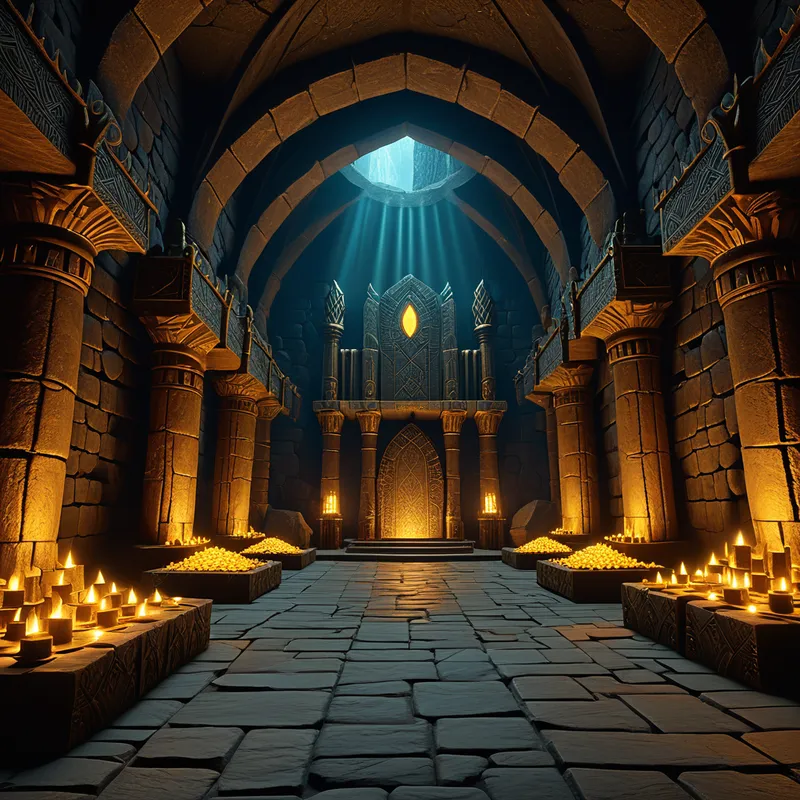
Listen. In the deep-delving dark, under the roots of the [Yggdrasil](/myths/yggdrasil “Myth from Global/Universal culture.”/), where the rivers of [Ginnungagap](/myths/ginnungagap “Myth from Norse culture.”/) whisper of ancient cold, the sons of Ivaldi toil. Their hammers are the heartbeat of [the world](/myths/the-world “Myth from Tarot culture.”/), their breath the bellows of the mountain. They are the makers, the shapers, the ones who bind form to the formless. And from their forges came wonders: [Gungnir](/myths/gungnir “Myth from Norse culture.”/), the spear of the All-Father, and [Skidbladnir](/myths/skidbladnir “Myth from Norse culture.”/), the ship that folds to fit in a palm.
But pride is a spark that can ignite a mountain. Another clan, the brothers Brokkr and Sindri, heard the gods sing the praises of the Ivaldi sons. A fire, hot and competitive, kindled in their soot-black hearts. “We shall make greater things,” Sindri declared, his voice like grinding stone. “We shall craft a hoard that will make the gods forget all other treasures.”
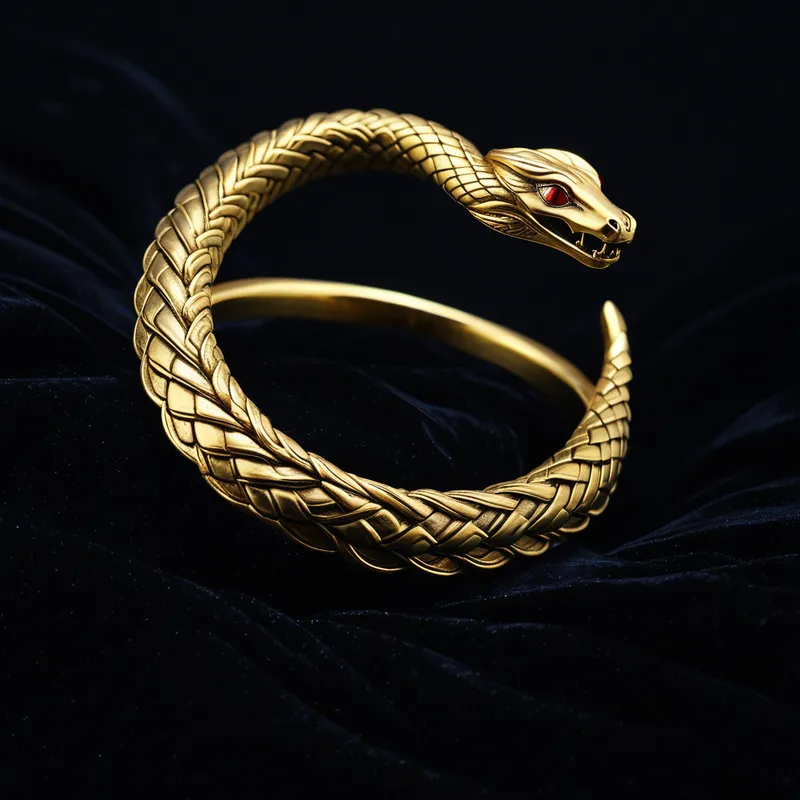
And so they began. Brokkr worked the bellows with a strength that shook [the earth](/myths/the-earth “Myth from Hindu culture.”/), while Sindri laid gold in the forge. From the fire, he drew [Gullinbursti](/myths/gullinbursti “Myth from Norse culture.”/), a boar of living gold that shone like the sun. Next, from the white-hot heart, he drew Draupnir, a ring of such perfection it wept eight rings of equal weight every ninth night. Finally, with a roar that cracked the anvil, he presented the third wonder: Mjolnir, short in the haft but terrible in its power.
The gods judged. Loki, ever the agitator, had bet his head that the brothers would fail. They had not. The treasures were unparalleled. In a panic, Loki fled, but was caught. [The dwarves](/myths/the-dwarves “Myth from Norse culture.”/) demanded their prize: his lying head. Loki, slippery as ever, agreed—but stipulated they could not touch his neck. Enraged by the trick, Brokkr took an awl and sewed [the trickster](/myths/the-trickster “Myth from Various culture.”/)‘s lips shut, a grim and silent punishment.
Yet the story of the hoard does not end at its making. It flows like cursed gold into the hands of gods and men. Odin placed Draupnir upon the funeral pyre of his son, Baldr, a sacrifice of infinite wealth to infinite grief. It passed into the possession of [the dragon](/myths/the-dragon “Myth from Chinese culture.”/) Fafnir, who, poisoned by its gleam, murdered his father to claim it, transforming into a wyrm to coil upon his gold in sleepless, paranoid greed. From him, it was taken by the hero [Sigurd](/myths/sigurd “Myth from Norse culture.”/), whose life it then doomed, weaving a tapestry of betrayal, love, and death for all who touched it. The hoard was a seed of light forged in darkness that grew only poisoned fruit, a river of gold that drowned all who swam in it.
Cultural Origins & Context
This is not a single myth, but a powerful narrative current that runs through the corpus of Eddic and saga literature. The story of the dwarven hoard, particularly the cursed treasure of the Volsungs, was a staple of the skaldic tradition, told in [feasting halls](/myths/feasting-halls “Myth from Celtic culture.”/) where firelight danced on sword-hilts. Its function was multifaceted. On one level, it was a foundational etiological myth, explaining the origins of the gods’ most powerful artifacts. On another, it was a profound piece of social and ethical instruction for a warrior society acutely aware of fate, ørlög, and the fleeting nature of fortune.
The hoard myth reinforced a core, paradoxical Norse value: the supreme worth of treasure as a measure of honor, success, and social bonding (through the giving of rings), coupled with a deep, existential suspicion of it. It taught that all wealth, all creation, comes with a price—a verð—often hidden and terrible. The myth was passed down not to discourage ambition, but to warn that the pursuit of wealth without awareness of its spiritual cost was a direct path to ruin, a lesson as vital for a Viking raider as for a settled farmer.
Symbolic Architecture
The Dwarves’ Hoard is the ultimate [symbol](/symbols/symbol “Symbol: A symbol can represent an idea, concept, or belief, serving as a powerful tool for communication and understanding.”/) of the [shadow](/symbols/shadow “Symbol: The ‘shadow’ embodies the unconscious, repressed aspects of the self and often represents fears or hidden emotions.”/) side of creation. The dwarves themselves, beings of the [earth](/symbols/earth “Symbol: The symbol of Earth often represents grounding, stability, and the physical realm, embodying a connection to nature and the innate support it provides.”/), of [stone](/symbols/stone “Symbol: In dreams, a stone often symbolizes strength, stability, and permanence, but it may also represent emotional burdens or obstacles that need to be acknowledged and processed.”/) and mineral, represent the raw, unconscious, instinctual forces of the [psyche](/myths/psyche “Myth from Greek culture.”/) that possess the power to manifest form. They are the innate talent, the compulsive drive, the deep, often dark, well of creativity.
The treasure is not cursed because it is evil, but because it is a perfect object born from an imperfect, unconscious process. It carries the unresolved shadow of its makers—their envy, their pride, their ruthless competitiveness.
The gold is psychic [energy](/symbols/energy “Symbol: Energy symbolizes vitality, motivation, and the drive that fuels actions and ambitions.”/) made concrete, libido transformed into [artifact](/symbols/artifact “Symbol: An object from the past carrying historical, cultural, or personal significance, often representing legacy, memory, or hidden knowledge.”/). But [energy](/symbols/energy “Symbol: Energy symbolizes vitality, motivation, and the drive that fuels actions and ambitions.”/) that is not integrated, that is won through trickery (Loki’s involvement) and fueled by spite (the brothers’ rivalry), carries a toxic charge. The ring Draupnir, which multiplies itself, is a perfect [image](/symbols/image “Symbol: An image represents perception, memories, and the visual narratives we create in our minds.”/) of [the self](/myths/the-self “Myth from Jungian culture.”/)-perpetuating [nature](/symbols/nature “Symbol: Nature symbolizes growth, connectivity, and the primal forces of existence.”/) of unconscious complexes: they replicate, they spread, they create endless cycles of attraction and destruction. To possess such a [treasure](/symbols/treasure “Symbol: A hidden or valuable object representing spiritual wealth, inner potential, or divine reward.”/) is to be possessed by the autonomous, unintegrated complex it embodies. Fafnir, the [dragon](/symbols/dragon “Symbol: Dragons are potent symbols of power, wisdom, and transformation, often embodying the duality of creation and destruction.”/), is the ultimate end state: [the ego](/myths/the-ego “Myth from Jungian culture.”/) that has fused entirely with its possessive complex, becoming a monstrous, isolated [guardian](/symbols/guardian “Symbol: A protector figure representing safety, authority, and guidance, often embodying parental, societal, or spiritual oversight.”/) of its own sickness.
The Dreamer’s Resonance
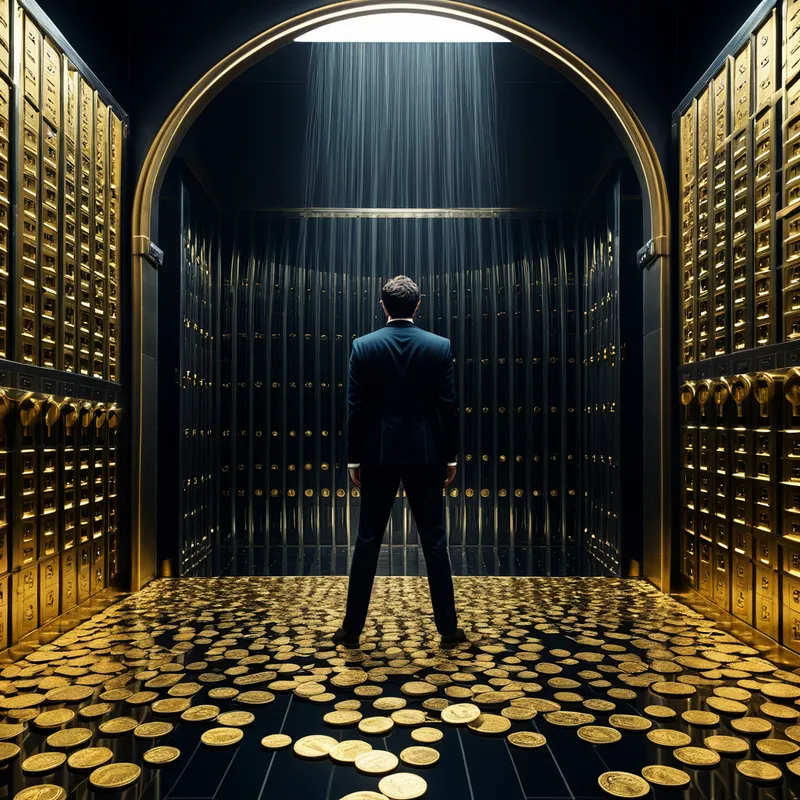
When this myth stirs in the modern dreamer, it often signals a confrontation with the “shadow of success.” You may dream of finding a vast sum of money, a brilliant idea, or a long-sought opportunity, only to feel a creeping dread, a sense of a hidden catch, or to see it crumble to dust or transform into something repulsive. Somatic sensations often accompany these dreams: a heaviness in the chest (the weight of gold), a metallic taste (the flavor of the curse), or a chilling cold (the breath of the dragon).
Psychologically, this is the psyche processing a profound ambivalence around creation, acquisition, or achievement. The dream asks: What is the true cost of what you are building or chasing? What unacknowledged envy, pride, or fear is powering your ambition? What part of your soul have you had to “sew shut” (like Loki’s lips) to get what you want? The dream of the hoard is an invitation to audit the moral and emotional ledger of one’s endeavors before the curse manifests in waking life as burnout, ethical compromise, or the hollow emptiness of a Pyrrhic victory.
Alchemical Translation
The alchemical journey modeled by this myth is not about rejecting the treasure, but about undergoing the [nigredo](/myths/nigredo “Myth from Alchemical culture.”/) necessary to purify it. The initial stage is Coniunctio in [the shadow](/myths/the-shadow “Myth from Jungian culture.”/): the fusion of creative drive (dwarves) with trickster intelligence (Loki) produces a potent but poisoned [prima materia](/myths/prima-materia “Myth from Alchemical culture.”/)—the glittering hoard.
The individuation task is to become not the hero who slays the dragon and takes the gold, but the smith who can return to the forge and re-work the cursed metal.
This requires a descent into the mountain of the self, a voluntary confrontation with the “dwarves”—the instinctual, perhaps grudge-holding, brilliant but flawed parts of our nature. We must acknowledge the Loki within—the cunning, amoral strategist who helped create our success. The alchemical fire is the heat of conscious self-reflection. In this fire, the gold of our achievement—our career, our art, our wealth—must be melted down. The curse, the latent shadow, is burned off as a noxious fume. What remains is not less gold, but gold that is redeemed. It is no longer an object that possesses us, but a resource we can consciously wield.
The hammer that was once a symbol of destructive power (Brokkr’s vengeance) becomes, through this process, the tool of careful reshaping. The final product is not a hoard to be guarded, but a crafted piece of the self, integrated and whole. The ring that once multiplied chaos now symbolizes the completed, self-sustaining cycle of a conscious life. The myth, in its brutal Norse wisdom, shows that true creation is always an act of redemption, first and foremost, of the creator.
Associated Symbols
Explore related symbols from the CaleaDream lexicon: