The Dwarven Smiths Myth Meaning & Symbolism
The myth of master craftsmen, the dwarven smiths, who forge treasures of immense power, beauty, and inevitable doom for gods and heroes alike.
The Tale of The Dwarven Smiths
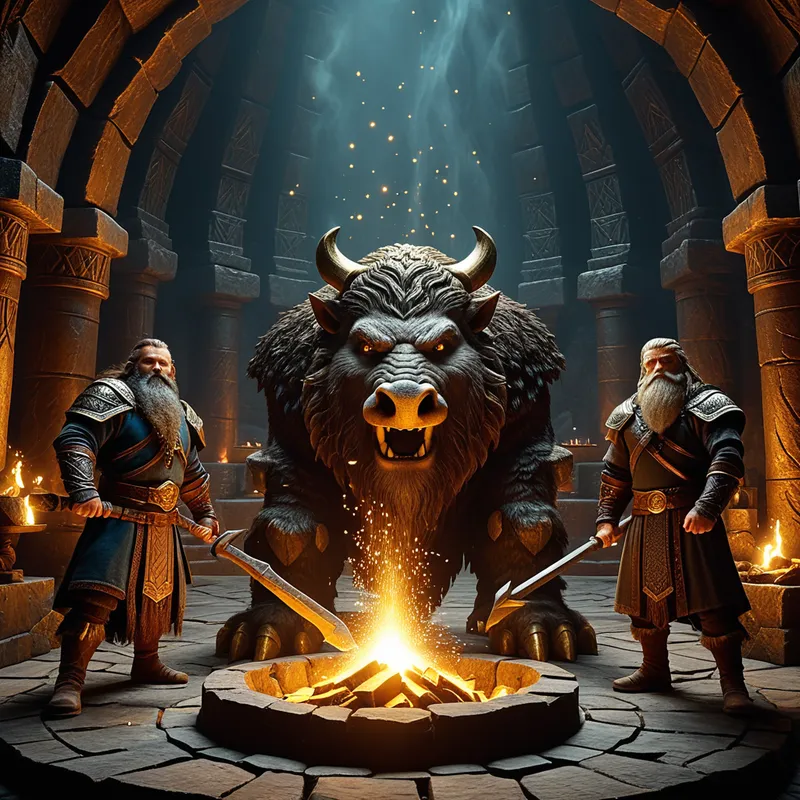
Hear now a tale not of the sun-drenched fields of Asgard, but of the deep places, where the roots of [the world](/myths/the-world “Myth from Tarot culture.”/) gnaw at the bones of [the earth](/myths/the-earth “Myth from Hindu culture.”/). In the smoky gloom of [Svartalfheim](/myths/svartalfheim “Myth from Norse culture.”/), where the only light is the forge-fire’s hungry heart, the masters of metal and mystery dwell. They are the dwarven smiths, and their hammers sing a song older than the gods.
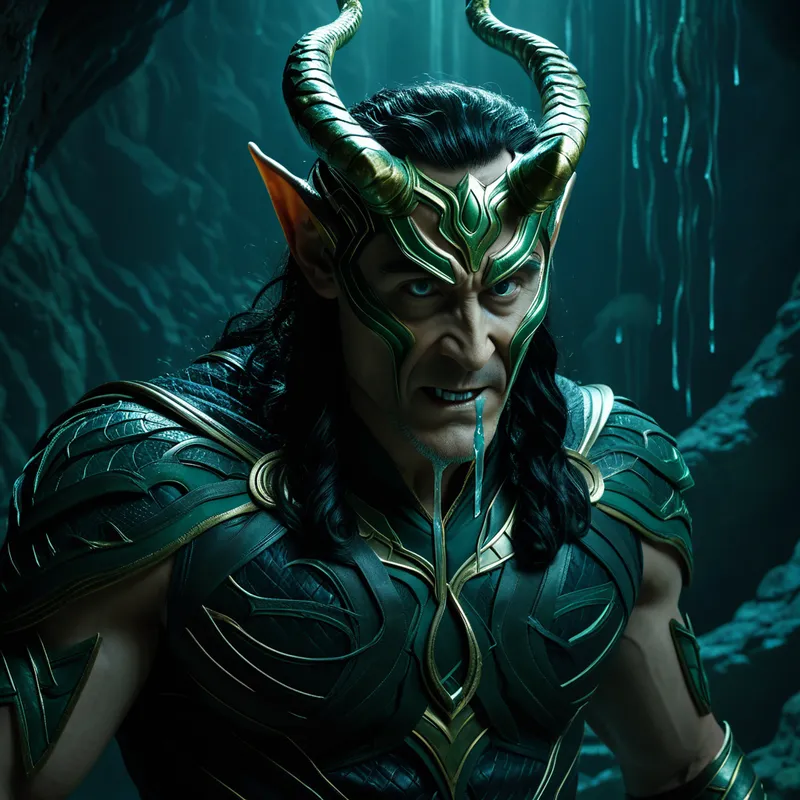
It began with a trick, as so many world-shaking things do. The shimmer-haired god Sif wept, for the silver-tongued Loki, in a fit of malice, had sheared her glorious golden hair. To avoid the thunderous wrath of her husband, Thor, Loki swore to replace it. He descended into the dark, to the forge of the sons of Ivaldi. There, in a cave ringing with the music of hammer on iron, he found his salvation. [The dwarves](/myths/the-dwarves “Myth from Norse culture.”/), their eyes like chips of obsidian in the firelight, took up the challenge. From their anvils, they drew not mere hair, but living gold, finer than silk, that grew from the scalp like a field of wheat under a divine sun.
But Loki, ever the gambler, could not let a victory stand alone. He boasted to the dwarven brothers Brokkr and Eitri that the sons of Ivaldi were the greatest smiths in all the worlds. A wager was struck, with heads as the prize. Brokkr would work the bellows, and Eitri the forge, to craft three treasures to surpass those of their rivals.
The air in their forge grew thick with purpose. Eitri laid a pig’s skin on [the hearth](/myths/the-hearth “Myth from Norse culture.”/). “Blow,” he commanded Brokkr, “and do not cease until I lift the work from the forge.” As Brokkr pumped the bellows, a fly—Loki in disguise—bit his hand fiercely, but he did not falter. From the fire, Eitri drew [Gullinbursti](/myths/gullinbursti “Myth from Norse culture.”/), a boar of bristling gold that could run across sky and sea, its glow lighting the darkest night.
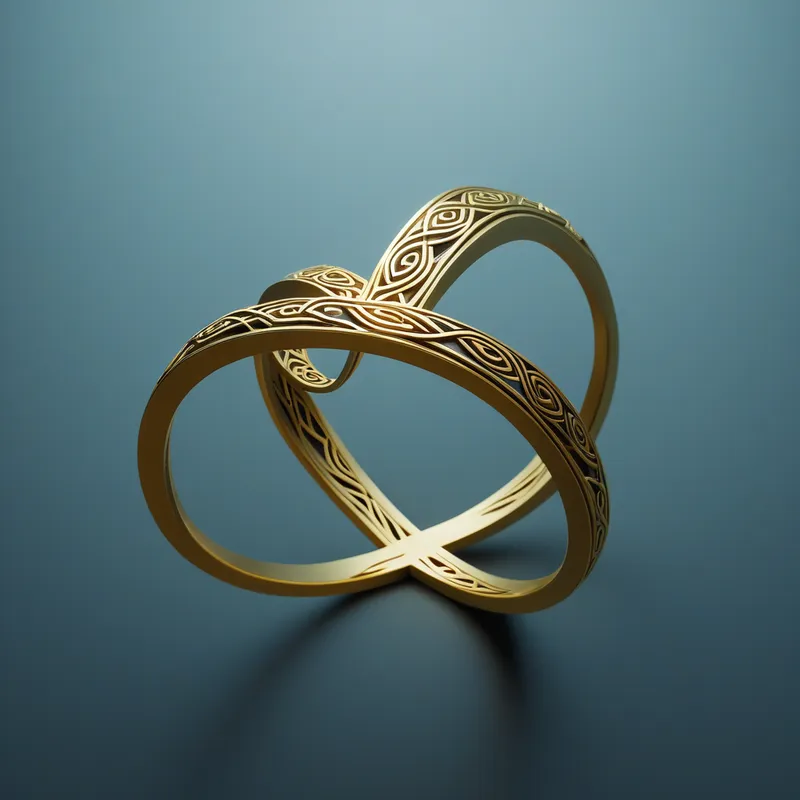
Next, Eitri threw gold into [the crucible](/myths/the-crucible “Myth from Alchemical culture.”/). “Blow,” he said again. The fly came now and bit Brokkr’s neck, drawing blood that ran in rivulets down his sooty skin. Still, the dwarf’s arms pumped, a relentless rhythm of creation. From the molten gold emerged Draupnir, a ring of such perfection that every ninth night, eight rings of equal weight would drip from its golden band.
Finally, Eitri placed iron in the forge. “Blow now,” he whispered, “and if you pause, all is lost.” This was the masterwork. The fly, desperate, landed between Brokkr’s eyes and bit his eyelid. Blood blinded him. With a roar, Brokkr swatted at the pest—a single, shuddering pause in the bellows’ song. Enraged, Eitri drew the hammer from the anvil. It was magnificent, its head massive, its handle short. It was Mjolnir, the crusher, the thunder-maker. Yet, because of that faltering breath, the handle was flawed, too short to be wielded with two hands.
The treasures were presented to the gods. Loki gave Sif her hair, gave [Freyr](/myths/freyr “Myth from Norse culture.”/) the golden boar and the magic ship [Skidbladnir](/myths/skidbladnir “Myth from Norse culture.”/), and gave Odin the spear [Gungnir](/myths/gungnir “Myth from Norse culture.”/). Then Brokkr presented his three wonders: the boar, the ring, and the hammer. The gods judged: Mjolnir, the ultimate defense of Asgard, was the greatest treasure of all.
Loki had lost. He fled, but Thor dragged him back. The price was his head. Yet Loki, the weasel-worded, argued the wager was for his head, not his neck. Cheated of their full prize, the dwarves did the next best [thing](/myths/thing “Myth from Norse culture.”/). They sealed his lying lips, sewing them shut with a leather thong. The silence, for a time, was a treasure greater than any gold.
Cultural Origins & Context
This myth, like most of our surviving Norse lore, was preserved in the 13th-century Poetic Edda and later systematized in the Prose Edda by Snorri Sturluson. It is a myth told in the firelight of the long winter, a story that served multiple functions in a harsh, honor-based society. It explained the provenance of the gods’ most iconic possessions, from Odin’s spear to Thor’s hammer, rooting divine power not in spontaneous generation, but in a fraught transaction with the cunning, earthy powers of [the underworld](/myths/the-underworld “Myth from Greek culture.”/).
The dwarves themselves, the Svartálfar, represent a profound aspect of the Norse worldview: the sacredness and danger of craft. In a culture where survival depended on the quality of one’s axe, ship, and plow, the smith was a figure of awe, a mediator between raw nature (ore) and cultural power (the weapon). The myth acknowledges that such transformative skill exists outside the ordered realms of gods and men, in a shadowy, amoral, and deeply creative space. The story was likely told to honor craftsmanship, to warn of the perils of deceit and broken oaths, and to illustrate a core Norse belief: that every great gift carries a hidden flaw, a seed of its own unraveling.
Symbolic Architecture
The dwarven smiths are the archetypal [Shadow](/symbols/shadow “Symbol: The ‘shadow’ embodies the unconscious, repressed aspects of the self and often represents fears or hidden emotions.”/) of the creative [impulse](/symbols/impulse “Symbol: A sudden, powerful urge or drive that arises without conscious deliberation, often linked to primal instincts or emotional surges.”/). They are not evil, but they are utterly other—driven by pride, craftsmanship, and a transactional view of the [universe](/symbols/universe “Symbol: The universe symbolizes vastness, interconnectedness, and the mysteries of existence beyond the individual self.”/), operating in the psychological “[underworld](/symbols/underworld “Symbol: A symbolic journey into the unconscious, representing exploration of hidden aspects of self, transformation, or confronting repressed material.”/)” of the unconscious. Their forge is the [crucible](/symbols/crucible “Symbol: A vessel for intense transformation through heat and pressure, symbolizing spiritual purification, testing, and alchemical change.”/) of the nascent [psyche](/myths/psyche “Myth from Greek culture.”/), where raw, instinctual energies (the base metals) are subjected to the transformative fires of [attention](/symbols/attention “Symbol: Attention in dreams signifies focus, awareness, and the priorities in one’s life, often indicating where the dreamer’s energy is invested.”/) and [effort](/symbols/effort “Symbol: Effort signifies the physical, mental, and emotional energy invested toward achieving goals and personal growth.”/).
The masterpiece is born not from pure light, but from the disciplined confrontation with the dark, where the hammer of will shapes the molten chaos of potential.
Each [treasure](/symbols/treasure “Symbol: A hidden or valuable object representing spiritual wealth, inner potential, or divine reward.”/) is a perfect [symbol](/symbols/symbol “Symbol: A symbol can represent an idea, concept, or belief, serving as a powerful tool for communication and understanding.”/) of a god’s domain, yet each is cursed by the context of its creation. Sif’s [hair](/symbols/hair “Symbol: Hair often symbolizes identity, power, and self-expression, reflecting how we perceive ourselves and how we wish to be perceived by others.”/) is a replacement for a violation. Draupnir’s endless generation speaks of Odin’s obsessive search for [knowledge](/symbols/knowledge “Symbol: Knowledge symbolizes learning, understanding, and wisdom, embodying the acquisition of information and enlightenment.”/) and power. Most crucially, Mjolnir, the ultimate [symbol](/symbols/symbol “Symbol: A symbol can represent an idea, concept, or belief, serving as a powerful tool for communication and understanding.”/) of protection and order, is flawed from its [birth](/symbols/birth “Symbol: Birth symbolizes new beginnings, transformation, and the potential for growth and development.”/), its short handle a permanent reminder that even divine power has limits and arises from a [moment](/symbols/moment “Symbol: The symbol of a ‘moment’ embodies the significance of transient experiences that encapsulate emotional depth or pivotal transformations in life.”/) of [human](/symbols/human “Symbol: The symbol of a human represents individuality, complexity of emotions, and social relationships.”/) (or dwarven) weakness. The treasures grant power but also bind their owners to the chaotic, [trickster](/symbols/trickster “Symbol: A boundary-crossing archetype representing chaos, transformation, and the subversion of norms through cunning and humor.”/)-[energy](/symbols/energy “Symbol: Energy symbolizes vitality, motivation, and the drive that fuels actions and ambitions.”/) of Loki and the relentless, demanding [nature](/symbols/nature “Symbol: Nature symbolizes growth, connectivity, and the primal forces of existence.”/) of the dwarves themselves.
The Dreamer’s Resonance
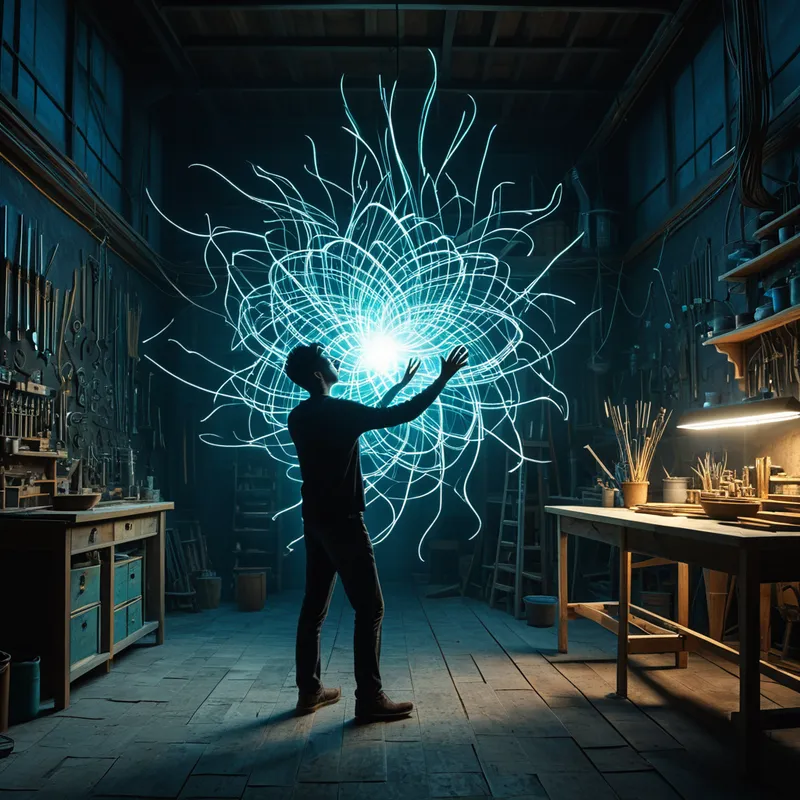
When this myth stirs in the modern dreamer, it often manifests as a profound engagement with the creative/destructive process within. You may dream of laboring in a basement workshop on a project of immense personal importance, only to find the tools are alien or the material fights you. The figure of the dwarf may appear not as a fantasy creature, but as a intense, focused, and perhaps unsmiling mentor or critic within the dreamscape.
Somatically, this can feel like a pressure in the hands, the jaw, or the solar plexus—the centers of doing, speaking, and will. Psychologically, it signals a period of “forging,” where some raw aspect of [the self](/myths/the-self “Myth from Jungian culture.”/) (a talent, a trauma, a passion) is being subjected to the intense heat of conscious examination to be remade into something usable, something powerful. The anxiety in the dream often mirrors Brokkr’s struggle: the fear that an interruption—a distraction, a doubt, a past wound (the biting fly)—will flaw the emerging Self just as it is about to be born whole.
Alchemical Translation
The myth of the dwarven smiths is a masterful allegory for the alchemical process of Individuation, specifically the stage of coagulatio—the condensation of spirit into a lasting, substantial form. The journey begins with the [nigredo](/myths/nigredo “Myth from Alchemical culture.”/), the blackening: Loki’s destructive act, the descent into the dark cave of the unconscious. This is followed by the albedo, the whitening: the intense, purifying fire of the forge, where the bellows (the breath of attention) must not cease.
The dwarves represent the specialized, often neglected functions of the psyche that can perform this miraculous work, but only if we, like Brokkr, can endure the bites of our own insecurities and fears (Loki’s disruptions). The treasures are the nascent symbols of the unified Self—the new personality traits, insights, or life directions that emerge from this ordeal.
The goal is not to become the god who wields the hammer, but to become the smith who can endure the forge. The true treasure forged is not the object, but the capacity to create it.
The flawed handle of Mjolnir is perhaps the most psychologically honest detail. It tells us that the product of our deepest inner work will never be “perfect” by some abstract standard. It will bear the mark of the struggle that created it. Our matured strength, our “hammer,” will always have a quirk, a reminder of our humanity and the cost of its creation. To accept this flaw is to truly own the power. The myth, in its entirety, maps the perilous, glorious, and deeply necessary journey of bringing the light of consciousness to bear on the dark, creative genius within, and accepting the magnificent, imperfect treasures that result.
Associated Symbols
Explore related symbols from the CaleaDream lexicon: