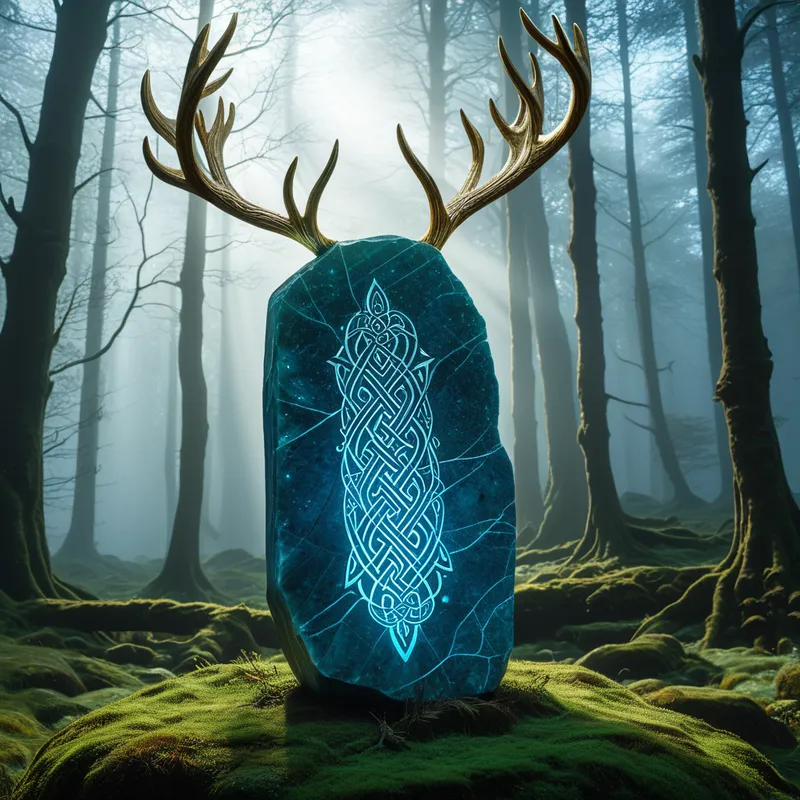
The Dreaming Stone Myth Meaning & Symbolism
A bard journeys to the Otherworld to retrieve a stone holding the world's forgotten dreams, facing the guardian of memory to restore wholeness.
The Tale of The Dreaming Stone
Listen. The world you walk upon is but the skin of a deeper world. In the time when the Tuatha Dé Danann still walked the green hills in twilight, and the veil between the lands of the living and the lands of spirit was thin as morning mist, there was a great forgetting.
It began not with a war, but with a sigh. A weariness settled upon the people. Songs lost their endings. The names of the oldest trees slipped from memory. The stories of how the rivers were born faded, leaving only the sound of water. The world was becoming hollow, an echo without a source. The bards, the keepers of the dindsenchas, felt the loss like a cold stone in the chest. They could sing of kings and battles, but the older song—the one that told why the hawk loves the wind, why the fox weeps at dawn—that song was shattered, its pieces scattered into the Sídhe.
Among them was a bard named Ciarán. His music was skilled, yet it lacked soul, for he could feel the great silence at the heart of all his tales. In despair, he sought the oldest of the druids, a woman whose eyes held the grey of winter seas. “The memory of the world is not lost,” she whispered, her voice like dry leaves. “It sleeps. In the deepest mound of the Aos Sí, under the hill where the Dagda’s harp hangs silent, lies the Lia Fáil of dreams. It is called the Dreaming Stone. It holds every sigh of creation, every unspoken thought of beast and stone, every story that was never told. But it is guarded.”
“By what?” Ciarán asked.
“By its genius loci,” she said. “The White Stag of Memory. To look upon it is to see all you have ever forgotten, and all you were ever meant to be. Few can bear that sight and return.”
Ciarán took his simple harp of willow and horsehair and walked into the west, where the sun drowns in the ocean. For three days and three nights he walked, following a path known only to the wind. He passed through forests that whispered his childhood fears and forded rivers that showed him faces of loved ones long gone. Finally, he stood before a grassy mound, its entrance shrouded in perpetual dusk.
Inside, the air was cool and still. The chamber was not dark, but lit by a soft, internal light. And there, in the center, was the Stone. It was not large, but it seemed to contain vastness within its dark, crystalline heart. Swirls of color moved in its depths like captured auroras. And before it stood the Stag, a creature of impossible majesty. Its coat was the white of fresh snow under a full moon, and its antlers were not of bone, but of woven silver branches, from which hung tiny, chiming stars. Its eyes were deep pools of knowing.
The Stag did not charge. It simply looked at Ciarán, and in that look, the bard was unmade. He saw his own forgotten joys and shames. He saw the ancestral memories of his people—migrations across lost lands, pacts with the earth, moments of sublime courage and profound failure. He saw the dreams of the wolf, the patience of the mountain, the secret language of the stones. The weight of it was crushing, a tidal wave of being. He fell to his knees, his harp silent.
Despair threatened to swallow him. To know everything was to be nothing. But then, from the chaos of memory, a single, clear note arose. It was the first note he had ever plucked on a harp, a note of pure, childish wonder. He grasped for his instrument. With trembling hands, he did not try to play a known tune. Instead, he let his fingers drift, echoing a rhythm from the Stone—the slow pulse of the earth, the quick trill of a wren’s heart.
He played the memory of rain on oak leaves. He played the forgotten grief of a fallen king. He played the joy of a salmon leaping. His music was not a performance for an audience, but a conversation with the Stone. As he played, a single, tear-shaped fragment of light detached from the Stone’s core and floated towards him. It settled not in his hand, but in his chest, where the cold stone of loss had been.
The White Stag lowered its magnificent head in a slow, deliberate nod. Then it turned and faded into the wall of the mound, becoming one with the earth and roots. Ciarán, holding the fragment of the Dreaming Stone within him, found his way back to the world of light. He never sang the same old tales again. Instead, he sang the world awake, his songs reminding the people of the deep, dreaming truth that lay beneath their feet, the memory that makes the present whole.
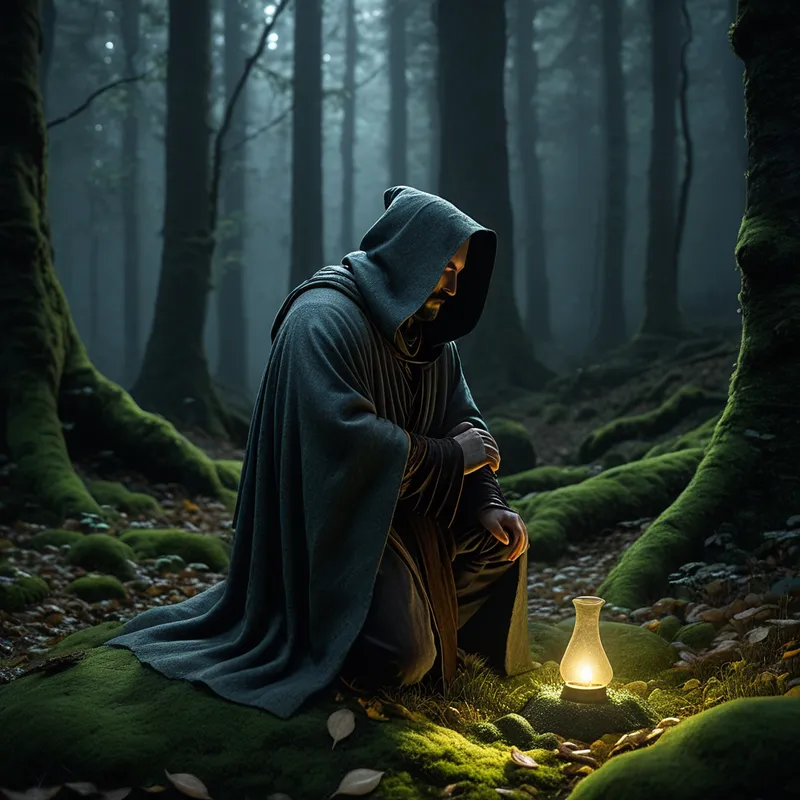
Cultural Origins & Context
The motif of the Dreaming Stone, while not a singular, canonical myth from a specific text, is a profound synthesis of core Celtic cosmological principles. It draws from the pervasive belief in an immanent Otherworld (Annwn in Welsh, Tír na nÓg in Irish) that exists alongside our own, accessible through mounds (sídhe), lakes, and mist. This world is not a distant heaven but a layer of reality rich with ancestral memory and the blueprint of potentiality.
The story would have been the domain of the fili or bard, the inheritors of the druidic oral tradition. Their role was not mere entertainment but psychic maintenance. By reciting the dindsenchas, they literally held the land and its history in relationship with the people. A myth like that of the Dreaming Stone served a crucial societal function: it explained periods of cultural amnesia or spiritual malaise as a rupture in the connection to this ancestral dream-memory. It positioned the bard not as a creator, but as a retriever—one who ventures into the numinous to recover fragments of the whole soul of the people, thereby restoring order (fír) and preventing the world from fading into meaningless chaos.
Symbolic Architecture
At its heart, the myth is a map of the psyche. The Dreaming Stone represents the Self—the deep, foundational layer of the psyche that contains the totality of our experience, both personal and transpersonal. It is the repository of all that we are, have been, and could be, including repressed memories, innate potentials, and ancestral patterns.
The Stone does not judge; it simply is. To approach it is to confront the unedited text of one’s own existence.
The White Stag is the guardian of this threshold, a classic symbol of the psychopomp. It is not a monster to be slain, but a truth to be faced. Its antlers, connecting earth and sky, root and branch, symbolize the neural network of memory itself—the interconnected web of all experience. The Stag tests whether the seeker is ready to bear the weight of self-knowledge without being annihilated by it.
The journey of Ciarán is the ego’s voyage into the unconscious. His initial skillful but soulless music represents an ego-identity built on surface-level knowledge and social persona. His despair is the necessary crisis that propels him inward. His ultimate tool is not force, but resonant authenticity—his music becomes a bridge, a means of dialogue with the deeper Self.
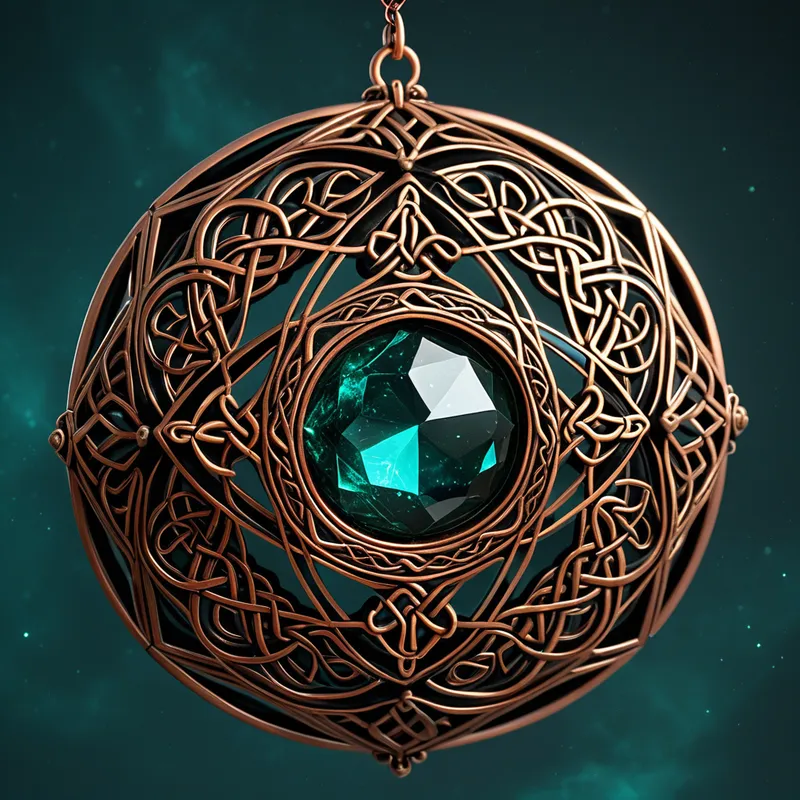
The Dreamer’s Resonance
When this mythic pattern stirs in the modern unconscious, it often manifests in dreams of searching in attics, archives, or ancient ruins for a lost object of immense personal significance—a key, a book, a jewel. The dreamer feels a pressing, somatic urgency, a “cold stone in the chest” akin to Ciarán’s despair. There may be encounters with majestic, silent animals (stags, owls, wolves) that observe rather than attack.
Psychologically, this signals a process of anamnesis—the recovery of what has been “un-membered.” It is the psyche’s attempt to reclaim disowned parts of the self: forgotten talents, buried trauma, suppressed intuition, or cultural heritage that has been lost through assimilation. The dreamer is undergoing a reintegration. The anxiety in the dream is the ego’s resistance to this expansion, fearing it will be overwhelmed by the sheer volume of the unconscious. The resolution, when it comes, is not a dramatic battle, but a moment of profound recognition and acceptance, often symbolized by receiving a gift or hearing a perfect, resonant sound.
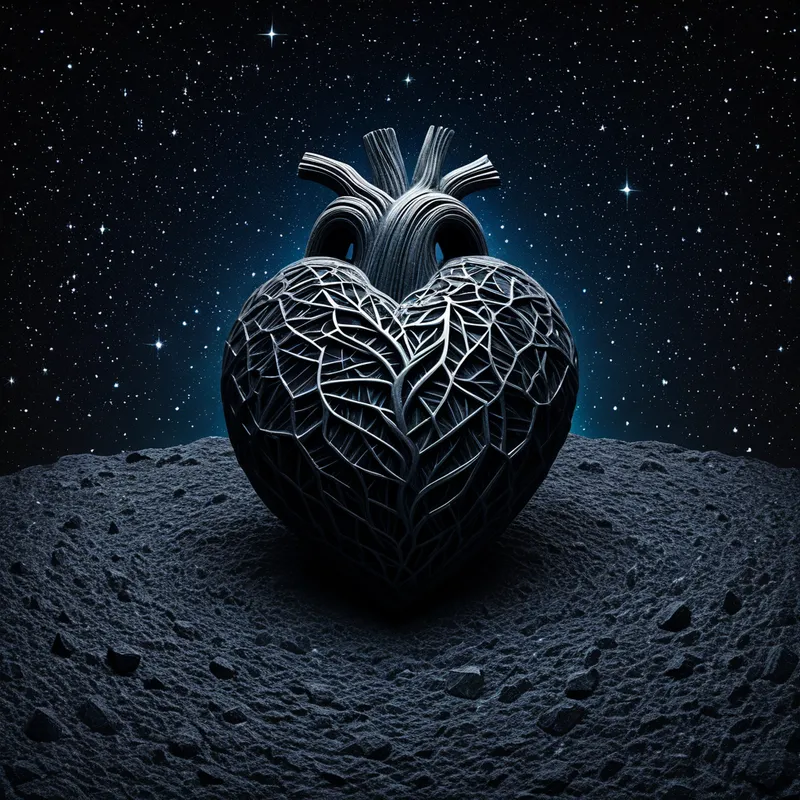
Alchemical Translation
The myth models the individuation process with elegant precision. The starting state is nigredo—the blackening, the spiritual malaise and feeling of hollow fragmentation. Ciarán’s journey into the mound is the descensus ad inferos, the descent into the underworld of the unconscious.
The confrontation with the White Stag and the vision of the Stone’s contents is the mortificatio—the ego’s dissolution in the face of the Self. This is the critical, terrifying stage where one must hold the tension of opposites, seeing both one’s glory and one’s shadow.
The transmutation occurs not in the finding, but in the resonant response. The ego does not conquer the Self; it learns to sing in harmony with it.
Ciarán’s authentic music is the coniunctio—the sacred marriage of conscious skill (his training as a bard) and unconscious content (the memories in the Stone). The fragment of light he integrates is the lapis philosophorum, the philosopher’s stone of the psyche—not a cure-all, but the realized core of one’s unique being. He returns to the world not as a conqueror, but as a vessel of wholeness (albedo and rubedo), his new “songs” representing a life lived from this integrated center. For the modern individual, the myth instructs: your wholeness already exists within you, dreaming. The quest is not to build a new self from scratch, but to courageously journey inward, face the guardian of your totality, and learn the unique melody that can call your scattered fragments home.
Associated Symbols
Explore related symbols from the CaleaDream lexicon: