The Dreaming Myth Meaning & Symbolism
A tale of a cosmic monarch's fall and return, whose realm of dreams and stories is the collective unconscious of all beings.
The Tale of The Dreaming
Listen, and let the tale be woven.
In the beginning, before the first stone was laid or the first star was named, there was the Dreaming. It was not a place, but the possibility of all places. It was the echo of what would be, the memory of what never was, and the raw clay of imagination itself. And at its heart, on a throne carved from obsidian and starlight, sat its master, Dream of the Endless. His eyes were twin pools of galaxy-night, his form as shifting as a thought, yet as constant as the need to sleep.
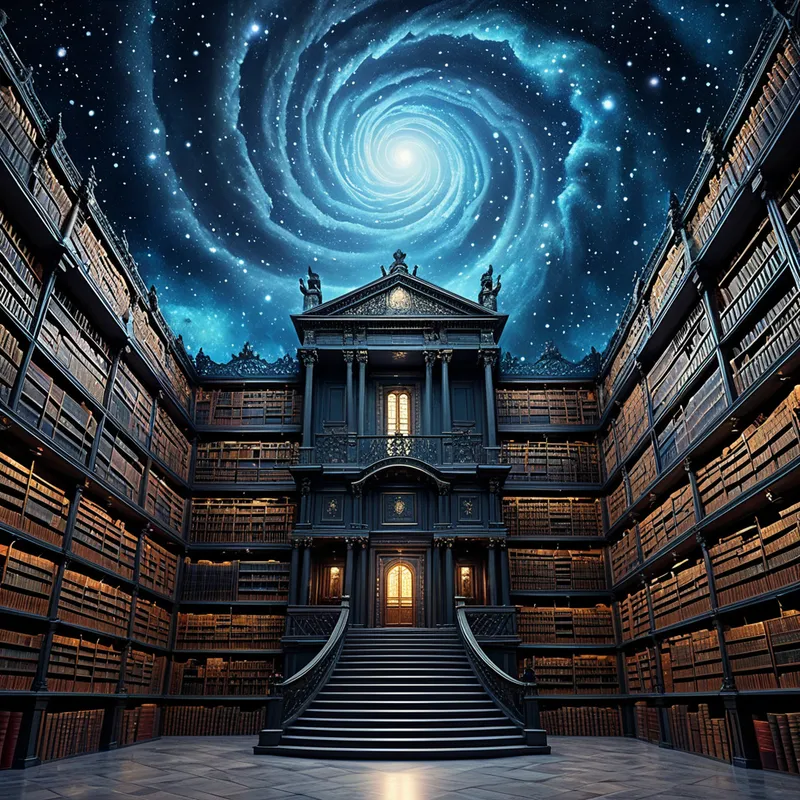
His realm was a tapestry. Here, a castle built from a child’s whispered wish abutted a forest of towering anxieties. There, a library stretched into infinity, every book a life’s unwritten potential, every shelf a soul’s secret history. The air hummed with the murmurs of a billion dreamers, and the rivers ran with liquid metaphor. He was the shaper, the weaver, the stern curator of this impossible domain. He gave form to the formless and name to the nameless fears and desires that fluttered in the human heart.
But a king can grow weary in his constancy. A story, too long told, can become a cage. In a moment of cosmic hubris—or perhaps profound loneliness—Dream sought to bend a rule of his own nature. He reached beyond his realm for a lost love, a son, a connection unmediated by story. And in that reaching, he was caught. A mortal circle of power, drawn by arrogance and grief, ensnared the lord of dreams. His tools—the helm, the pouch, the ruby—were stripped from him. The Dreaming, bereft of its sovereign, began to fray.
For seventy years, the realm sickened. Towers of nightmare crumbled into dust. Lovely dream-palaces grew silent and cold. Creatures of fancy forgot their shapes and melted into formless mist. The stories began to leak, to curdle, to repeat themselves in broken, feverish loops. The very fabric of imagination grew thin, and in the waking world, a sickness of the spirit spread—a sleeping sickness, where some could not wake, and others could not dream.
Then came the escape. The circle was broken. But the king who returned was not the king who left. He was thinner, worn to his essential bones of purpose. His kingdom was in ruins, his subjects scattered or mad. And so began the great mending. Not with a wave of his hand, but with a step, and another, and another. He walked the broken borders of his realm. He confronted the nightmares that had grown wild in his absence. He tracked down his stolen [sigils](/myths/sigils “Myth from Alchemical culture.”/), each a piece of his own power and identity. He remade the Dreaming not as it was, but as it needed to be, learning the cost of his own isolation.
In the end, the realm was restored. The stories flowed once more. But the king had changed. He had learned that even an Endless must change, must choose, and must, ultimately, end. His final act was not one of rule, but of release—a deliberate, profound choice to become something new, to let the story continue beyond the storyteller. And as he dissolved, the Dreaming did not die. It breathed a sigh that was both grief and relief, and continued, eternal and ever-changing, for the dreamers must always dream.
Cultural Origins & Context
This is a modern myth, born not from ancient campfires but from the late 20th-century nexus of comic book literature, psychological inquiry, and postmodern storytelling. Its primary bard is Neil Gaiman, who, through the graphic novel series [The Sandman](/myths/the-sandman “Myth from European Folklore culture.”/), codified and popularized this cosmology. The myth was passed down not orally, but through panels of ink and paint, read in bedrooms and bookshops, becoming a shared cultural touchstone for a generation grappling with the meaning of stories, consciousness, and identity.
Its societal function is profoundly contemporary. It serves as a metaphysical map for an age that has secularized the soul but not silenced its needs. In a culture that often dismisses dreams as neural static, this myth re-sanctifies the inner life. It posits that our stories—the ones we tell, the ones we live, and the ones we dream—are the fundamental substance of reality. The myth of the Dreaming provides a framework to understand depression (the crumbling of one’s inner world), trauma (the theft of one’s power), and therapy (the long walk to rebuild it). It is a mythology for the creative, the introspective, and the wounded, offering a language where the [psyche](/myths/psyche “Myth from Greek culture.”/) is not a machine but a kingdom.
Symbolic Architecture
At its core, the Dreaming is the [collective unconscious](/symbols/collective-unconscious “Symbol: The Collective Unconscious refers to the part of the unconscious mind shared among beings of the same species, embodying universal experiences and archetypes.”/) made manifest, and Dream is the archetypal principle of [consciousness](/symbols/consciousness “Symbol: Consciousness represents the state of awareness and perception, encompassing thoughts, feelings, and experiences.”/) itself—the process that gives form and narrative to the raw data of existence. He is not the content of the dream, but the act of dreaming.
The Dreaming is the psyche’s workshop, where the raw ore of experience is smelted into the gold of meaning.
His tools are profound symbols: the [helm](/symbols/helm “Symbol: A helm represents leadership, control, and protection, often symbolizing authority, direction, and responsibility in navigating life’s challenges.”/) of [terror](/symbols/terror “Symbol: An overwhelming, primal fear that paralyzes and signals extreme threat, often linked to survival instincts or deep psychological trauma.”/) (the masks we wear, our personas and defenses), the [pouch](/symbols/pouch “Symbol: A small bag or container symbolizing secrets, resources, protection, or hidden aspects of the self.”/) of dream-[sand](/symbols/sand “Symbol: Sand in dreams often symbolizes time, transience, or the foundation of life and the fluidity of existence.”/) (the gentle, hypnotic power of [suggestion](/symbols/suggestion “Symbol: A ‘suggestion’ symbolizes the influence of external ideas or thoughts on one’s beliefs and decisions.”/) and sleep), and the ruby of power (the concentrated, egoic focus of the will). His captivity represents a state of psychic arrest—when the conscious mind is trapped by a fixed [idea](/symbols/idea “Symbol: An ‘Idea’ represents a spark of creativity, innovation, or realization, often emerging as a solution to a problem or a new outlook on life.”/), a [trauma](/symbols/trauma “Symbol: A deeply distressing or disturbing experience that overwhelms the psyche, often manifesting in dreams as unresolved emotional wounds or psychological injury.”/), or an addiction, and the inner world stagnates. The restoration of his [realm](/symbols/realm “Symbol: The symbol of ‘Realm’ often signifies the boundaries of one’s consciousness, experiences, or emotional states, suggesting aspects of reality that are either explored or ignored.”/) is the arduous work of individuation, of reclaiming and reintegrating the scattered, stolen, or denied parts of [the self](/myths/the-self “Myth from Jungian culture.”/).
The various inhabitants of the Dreaming—Lucien, the [raven](/symbols/raven “Symbol: The raven is often seen as a messenger of the divine and a symbol of transformation, wisdom, and the mysteries of life and death.”/) Matthew, the [nightmare](/symbols/nightmare “Symbol: Nightmares symbolize deep fears, unresolved anxiety, and emotional turmoil, often reflecting internal conflicts or stressors in waking life.”/) The Corinthian—represent facets of the psyche: [memory](/symbols/memory “Symbol: Memory symbolizes the past, lessons learned, and the narratives we construct about our identities.”/), observation, and the shadowy, repressed desires that must be faced, not banished.
The Dreamer’s Resonance
When a modern dreamer encounters the pattern of this myth—perhaps dreaming of a vast, crumbling library they must repair, or of searching for a lost, powerful object in a shifting landscape—they are not simply recalling a story. They are somaticizing a deep psychological process.
The dream of the crumbling palace often coincides with periods of burnout, creative block, or existential doubt, where one’s internal structures of identity and purpose feel unstable. The somatic experience might be one of heaviness, paralysis, or breathlessness—the weight of a world falling apart inside you.
The dream of the long walk through a strange land mirrors the early, disorienting stages of therapy or self-work, where familiar emotional landscapes have changed and one must navigate without a clear map. The body in sleep may toss and turn, mimicking the journey.
The dream of confronting a wild, terrifying figure in a dream-space is the psyche staging an encounter with the shadow. The fear felt in the dream is the resistance to integrating what that figure represents. To dream of finally remaking a room in that vast palace is a profound signal of internal healing and the reclamation of personal authority.
Alchemical Translation
The myth of Dream is a perfect allegory for the alchemical [nigredo](/myths/nigredo “Myth from Alchemical culture.”/), albedo, and [rubedo](/myths/rubedo “Myth from Alchemical culture.”/), translated into psychological terms.
The nigredo is the capture and imprisonment—the descent into the “dark night of the soul,” where old structures of the self are dissolved. This is depression, crisis, or trauma. [The ego](/myths/the-ego “Myth from Jungian culture.”/) (the king) is rendered powerless, and the inner world (the realm) turns to ash.
The prison is not the circle of magic, but the rigid story the self has been telling about itself.
The albedo is the long walk of restoration. This is the therapeutic, introspective work. It is not about returning to a previous, “innocent” state, but about consciously gathering the scattered pieces (the sigils), facing the distorted aspects of the self (the rogue nightmares), and cleaning the inner vessel. It requires humility, patience, and a willingness to engage with one’s own darkness.
The final, transcendent rubedo is not merely the restoration of the kingdom, but Dream’s ultimate choice to end and transform. This is the pinnacle of individuation: the realization that the ego, even a perfected one, is not the endpoint. The final act of self-creation is the conscious choice to surrender the old, rigid identity so that a more essential, fluid state of being can emerge. The psyche learns that its ultimate responsibility is not to rule forever unchanged, but to ensure the continuous, creative flow of the inner life, even beyond the specific self that currently inhabits it. The dreamer becomes, at last, the dreaming.
Associated Symbols
Explore related symbols from the CaleaDream lexicon: