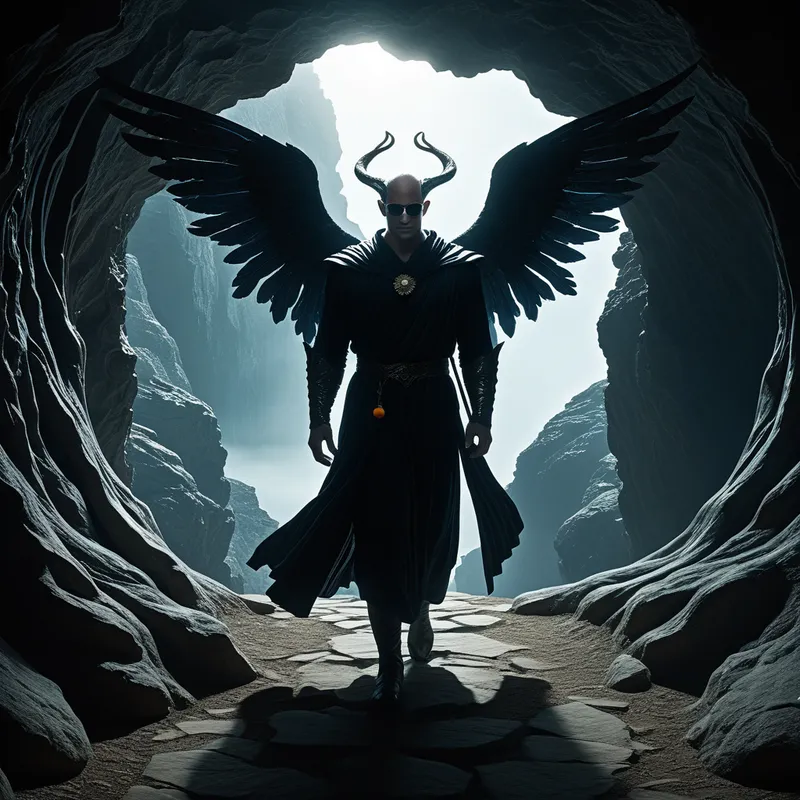
The Dream of Morpheus Myth Meaning & Symbolism
The myth of Morpheus, the divine shaper of dreams, explores the power of illusion, the nature of reality, and the soul's journey through the unconscious.
The Tale of The Dream of Morpheus
Listen, and let the veil between waking and sleeping grow thin. In the silent, sunless west, where the river Lethe murmurs its lullaby, lies a cavern. This is no ordinary hollow in the earth, but the threshold to the realm of Hypnos. Here, no light of Helios ever pierces, only the soft, grey gloom of perpetual dusk. Poppies, heavy with black seeds, crowd the entrance, their scent a tangible mist of forgetfulness.
Within this chamber of eternal quiet rests Hypnos himself upon a couch of ebony, draped in darkest velvet. Around him flutter his thousand sons, the Oneiroi, each a winged spirit of shadow and suggestion. But among this multitude, three are preeminent, born of the night goddess Nyx. There is Phobetor, the shaper of terrifying beasts. There is Phantasos, the maker of earth, rock, and water. And there is Morpheus.
Morpheus is the master of form. His gift is not merely to appear, but to become. He can weave himself from the stuff of shadows into the perfect likeness of any man, woman, or hero. He wears their face, their gait, the very tone of their voice plucked from the dreamer’s deepest memory. When he moves, it is with the silent grace of a falling feather. His wings are the colour of a starless midnight.
The call comes not with a sound, but as a shift in the stillness. A mortal soul, heavy with grief or longing, has cried out in its sleep. Or perhaps the great Zeus himself has a message to send, a warning or a deceit to plant in the mind of a king. Hypnos, stirring not from his couch, selects the messenger. For a task requiring truth wrapped in a familiar face, he chooses Morpheus.
The god of forms nods. He does not speak, for in this realm, intention is action. He passes through the twin gates that stand beside his father’s cave: one of polished ivory, through which false dreams slip to trouble mankind, and one of twisted horn, for the dreams that carry truth. Morpheus may use either, for his power is the vessel, not the message. He dissolves into the darkness between worlds, a stream of consciousness flowing over lands and seas.
He finds his target—a queen weeping for her slain son, a general anxious on the eve of battle. From the air itself, from the dreamer’s own hopes and fears, Morpheus sculpts himself. He becomes the beloved son, standing at the foot of the bed, his phantom hand cool to the touch. He speaks with the son’s voice, delivering a prophecy, a farewell, or a phantom of comfort. He is so perfect, so utterly convincing, that the dreamer awakes certain of the visitation, the line between dream and reality forever blurred. His work done, the form unravels. Morpheus, once again a shadow with wings, flees the coming dawn, back to the silent cave, leaving behind only the echo of a face and a heart changed by a vision.
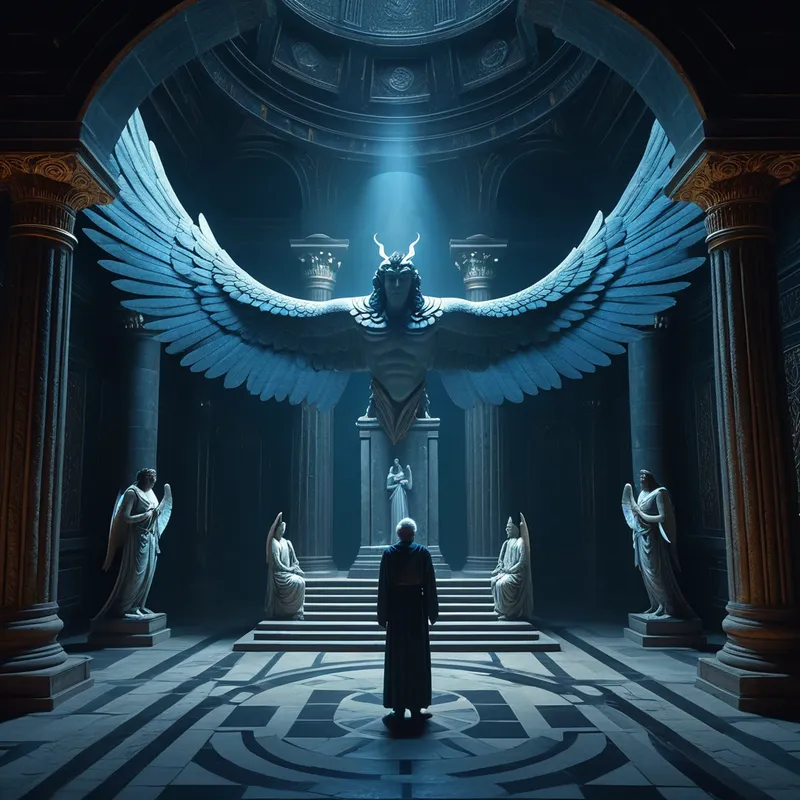
Cultural Origins & Context
The most vivid and enduring account of Morpheus and his brethren comes from the Roman poet Ovid in his epic Metamorphoses. While Ovid’s work is Roman, it meticulously repackages Greek mythological cycles. The figure of Morpheus, however, is less prominent in earlier Greek literature like Homer, where dreams are more often direct, unnamed visitations from gods or the dead. Ovid’s systematization—naming the dream gods, detailing their lineage from Nyx, and describing their dwelling—represents a later, more allegorical phase of myth-making.
This myth functioned as a profound etiological story for the ancient psyche. It answered the haunting question: Why do the dead and the distant appear to us so vividly in sleep? It provided a cosmology for the dreamscape, attributing its bewildering variety to a divine bureaucracy. The myth also served a moral and psychological purpose. By distinguishing between the Gate of Horn and the Gate of Ivory, it acknowledged the dual nature of dreams as both prophetic truth and deceptive fantasy, warning the listener to be discerning of nocturnal visions.
Symbolic Architecture
Morpheus is not the dream itself, but the shaper of the dream. He is the archetypal force of personification within the unconscious. His domain is the persona in its deepest, most literal sense—the mask (persona) through which the unconscious speaks.
Morpheus represents the psyche’s innate, divine capacity to give form to the formless, to clothe raw emotion and archetypal energy in the recognizable faces of our personal world.
His wings symbolize transcendence and travel between realms—the conscious and unconscious, the living and the dead. The poppy, his sacred plant, signifies the necessary narcosis, the letting-go of ego control, required for this journey to occur. His ability to mimic any human form perfectly speaks to the dream’s unsettling power: the most intimate, convincing “reality” we experience can be a fabrication of our own inner theatre, designed to convey a message we cannot hear while awake.
The two gates—ivory and horn—are masterful symbols. Ivory (elephas) was linked to the Greek word elephairomai, “to deceive.” Horn (keras) was linked to krainein, “to fulfill.” This is a profound psychological truth: the unconscious communicates, but its language is symbolic. Its truths (horn) can feel fantastical, and its deceptions (ivory) can feel utterly real. The dreamer’s task is the interpretation, the sorting of horn from ivory.
The Dreamer’s Resonance
When the pattern of Morpheus manifests in modern dreams, it signals a powerful process of personification. The dreamer is not just having a dream about their father, their partner, or a stranger; the unconscious is actively using that form as a vessel.
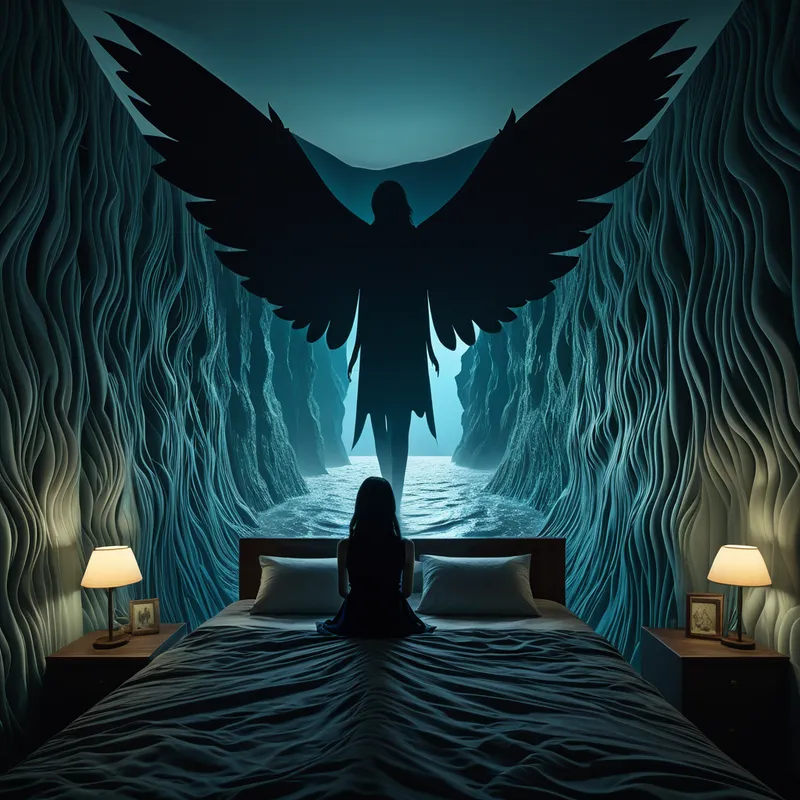
You may dream of a loved one delivering a cryptic message, a historical figure offering advice, or a menacing stranger whose face feels unnervingly familiar. This is the Morpheus-function at work. The somatic experience is often one of intense realism—the touch, the voice, the emotional weight feel “more real than real.” Upon waking, the residue of that encounter lingers, a ghost limb of the psyche. Psychologically, this indicates that a complex—a bundle of thoughts, feelings, and memories—has gathered sufficient autonomy and energy to step onto the stage of consciousness in full costume. The psyche is making its content relatable by dressing it in the clothes of personal history.
Alchemical Translation
The alchemical journey mirrored in Morpheus’s myth is the transmutation of psychic content through form. The raw prima materia of the unconscious—unprocessed grief, unnamed fear, unlived potential—is initially chaotic and incommunicable. This is the shadowy swarm of the Oneiroi in Hypnos’s cave.
The individuation process requires the ego to sleep—to relinquish control—so that the Magician archetype within (Morpheus) can perform its sacred work of shaping the unshaped.
The “dream of Morpheus” in our inner life is the moment we allow a complex to take form and speak. The ego’s task upon waking is not to dismiss the vision as “just a dream” (the ivory gate), but to engage with it as a symbolic communication (the horn gate). This is the interpretatio: holding the form Morpheus created, feeling its emotional impact, and then asking, “What part of me speaks with this voice? What message is being delivered in this particular costume?”
The ultimate alchemical goal is integration. By recognizing the Morpheus-figures in our dreams as aspects of ourselves, we reclaim the projections. We take back the power we gave to the phantom. The beloved, the judge, the monster in the dream—all are facets of the self, given temporary, vivid form by our inner shaper of dreams so that we might finally see them, hear them, and bring them home from the twilight cave into the light of conscious understanding.
Associated Symbols
Explore related symbols from the CaleaDream lexicon: