The Dream of Gilgamesh (Mesopo Myth Meaning & Symbolism
The mighty king Gilgamesh dreams of a falling star and an axe, cryptic omens foretelling the arrival of his destined brother and mirror, Enkidu.
The Tale of The Dream of Gilgamesh (Mesopo)
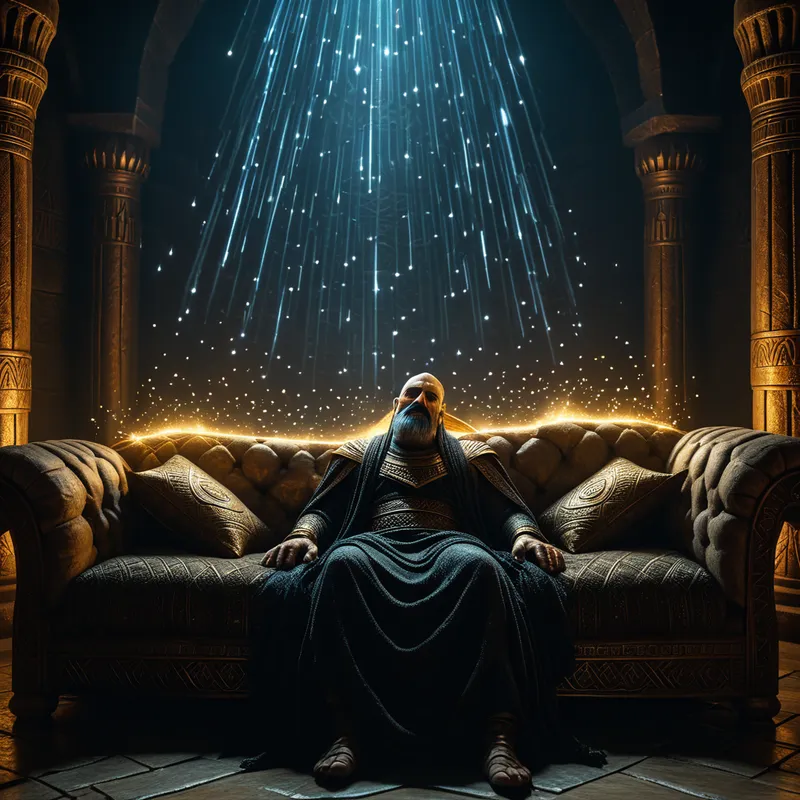
The night in Uruk was not silent. It was a heavy cloak, woven from the heat of the day and the murmurs of a restless city. In his lofty chamber, Gilgamesh slept, but his sleep was not peace. It was a descent. The cedar beams above him vanished, and he stood alone under a vault of infinite, watchful stars.
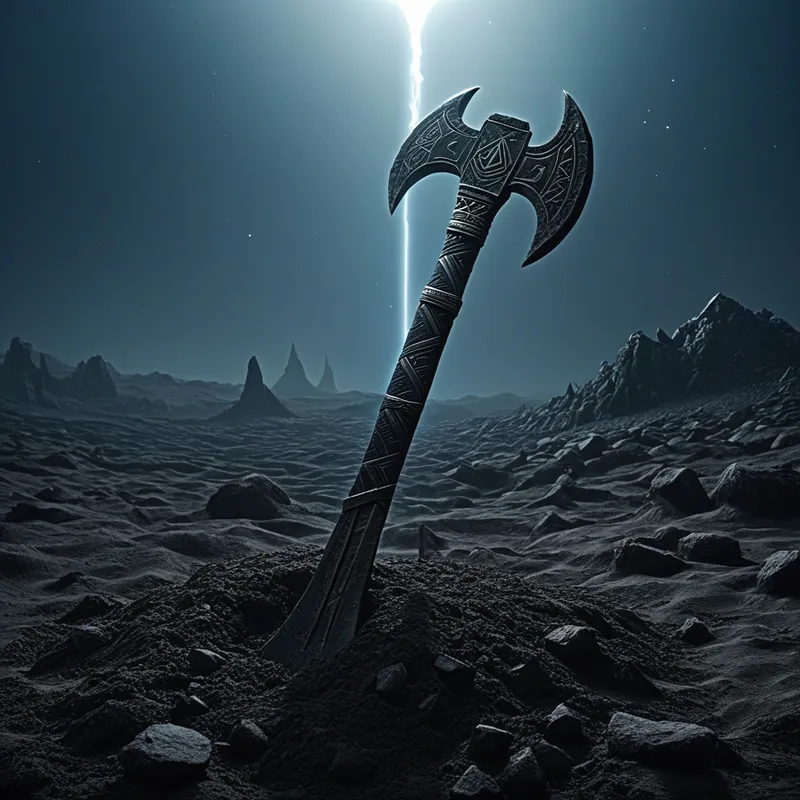
Then, a tearing of the fabric of heaven. A star, immense and burning with the cold fire of destiny, broke from its fixed place. It fell, not as a streak of light, but with the dreadful, deliberate weight of a divine judgment. The air thrummed with its passage. It struck the earth before him with a sound that was both a crash and a profound silence, shaking the bones of the world. From the settling dust, Gilgamesh approached. There it lay: not a stone, but a thing of craftsmanship—an axe. Its haft was of a wood unknown, dark and smooth as a river stone at midnight. The people of Uruk gathered, drawn by the celestial thunder, and their faces, when they saw it, were filled with a terror that was also reverence. They touched it, and a strange kinship passed between them. Gilgamesh lifted the axe, and in its impossible weight, he felt a terrifying love. He embraced it like a wife, and his mother, Ninsun, who watches all from her temple, saw this act from afar.
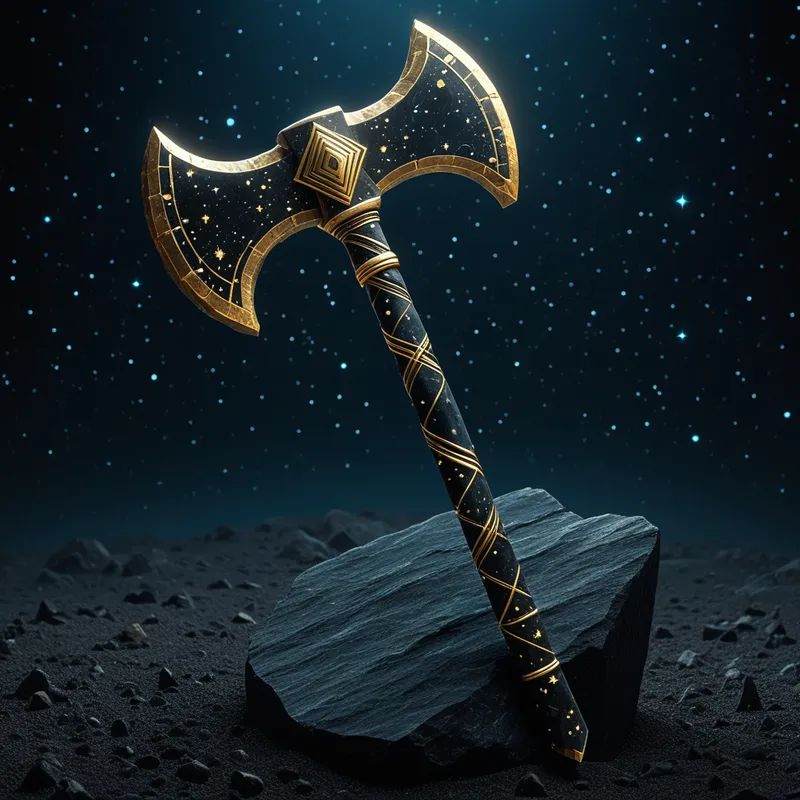
The dream shifted, the scene dissolving like ink in water. Now he walked through the streets of his own city, but it was a Uruk of shadows. Before him lay another object, also an axe, but this one was different. It pulsed with a vibrant, almost threatening life. The citizens crowded around this one too, but their energy was wild, electric. Again, a compulsion seized him. He drew it to his breast, and again, that confounding surge of love and dread, deeper now, more personal. He placed it at the feet of his mother, Ninsun, who sat upon her throne of wisdom. She did not flinch. She looked from the axe, to her son’s troubled face, and then beyond him, as if seeing a figure approaching from the far wilderness. A knowing settled in her eyes, a bittersweet acceptance of a story already written in the clay tablets of fate.
Cultural Origins & Context
This dream sequence is not a standalone folktale, but the crucial opening movement of the world’s oldest surviving epic poem, The Epic of Gilgamesh, inscribed in cuneiform on clay tablets over 4,000 years ago. It originates from the fertile crescent of ancient Mesopotamia, the land between the Tigris and Euphrates rivers, in the Sumerian and later Akkadian cultures. This was a world where the boundary between the divine and the mortal was porous, where dreams were not mere neural static but direct communications from the gods, requiring expert interpretation.
The epic was recited by skilled bards in royal courts and temple precincts. Its function was multifaceted: it was entertainment, a reinforcement of royal ideology (showing even the greatest king is subject to the gods), and profound theological and philosophical inquiry. The dream of the falling star and axe served as the narrative engine, the divine prophecy that sets the entire epic in motion. It established a core Mesopotamian belief: that human lives, especially those of kings and heroes, are inextricably woven into a cosmic plan. The individual’s task is not to avoid destiny, but to understand and meet it with courage, aided by divine wisdom.
Symbolic Architecture
The dream is a masterclass in symbolic economy. The falling celestial object is a classic archetype of the numinosum—a sudden, overwhelming intrusion of the divine into the psychic sphere of the individual. It disrupts Gilgamesh’s autocratic slumber, heralding an imminent and irrevocable change.
The star that becomes an axe is the descent of fate into form, a divine idea taking the shape of a tool that will carve the hero’s soul.
The axe itself is densely layered. It is a weapon, symbol of conflict, power, and the ability to cleave—to separate, to decide, to shape. Its dual appearance points to duality. The first axe, which the people gather around and Gilgamesh embraces, represents his established, kingly self, his ruling persona loved by his subjects. The second, more vibrant axe represents the incoming “other,” the force that will challenge and complement that persona: Enkidu. Gilgamesh’s act of embracing both signifies that this incoming force, though it will bring conflict, is also destined to be deeply, intimately loved—a part of his own soul he has yet to meet.
Ninsun’s role is critical. She is the Senex figure, the interpreter. She translates the raw, terrifying imagery of the unconscious (the dream) into conscious understanding (prophecy). She confirms that the dream is not of disaster, but of a profound, fateful friendship. The dream, therefore, symbolizes the psyche’s preparation for the encounter with the shadow and the anima/animus, in the form of a brother.
The Dreamer’s Resonance
When a modern dreamer encounters a vision akin to Gilgamesh’s dream—a monumental, awe-inspiring object falling from the sky, a potent tool appearing with undeniable significance—they are experiencing a similar psychic event. This is not a dream of mundane anxiety, but of archetypal summons.
Somatically, it may be accompanied by a feeling of seismic shift, a literal shaking upon waking, or a profound sense of weight and significance in the chest. Psychologically, it marks a threshold. The “falling star” is often a brilliant, disruptive insight or a destined life-event (a meeting, a calling, a crisis) breaking into a well-ordered but stagnant conscious life. The “axe” is the tool of transformation that this event brings. To dream of embracing such an object, with both love and fear, signals that the ego is being prepared to integrate a powerful new complex—a part of the personality that has been “out there,” wild and unknown (like Enkidu in the forest), but is now destined to become central to one’s identity and journey. The dream is a harbinger of a necessary conflict that leads to unparalleled growth.
Alchemical Translation
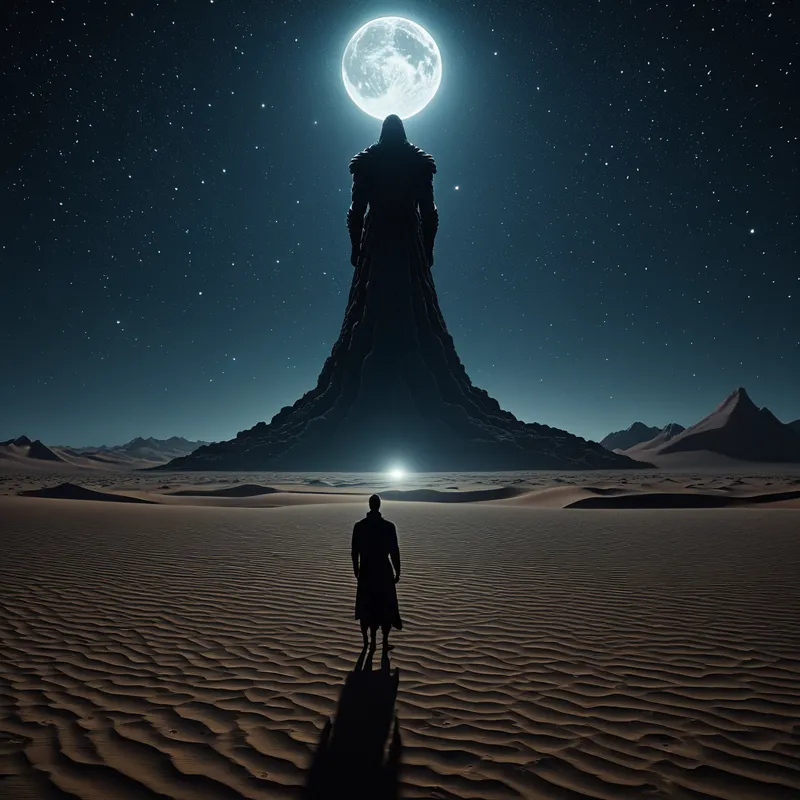
The alchemical process mirrored in this myth is the Coniunctio Oppositorum—the sacred marriage of opposites. Gilgamesh, the hyper-civilized, arrogant king, represents refined spirit, order, and conscious will. His dream foretells the arrival of his opposite: Enkidu, the primal, instinctual creature of earth and water, the embodiment of the unconscious.
The hero’s journey begins not with a quest outward, but with a dream inward, where the universe announces the coming of the missing half of his soul.
The dream is the initial nigredo—the blackening, the first confrontation with the dark, unknown material of the psyche, which brings dread and confusion. Gilgamesh’s confusion and need for his mother’s interpretation represent the ego’s struggle to comprehend the directives of the Self. The embrace of the axe is the first, unconscious acceptance of this process. The subsequent epic—the battle with Enkidu that turns to friendship, the journey to slay Humbaba, the confrontation with mortality—is the long, arduous work of albedo and rubedo, the whitening and reddening, where these opposites clash, purify, and ultimately unite.
For the modern individual, the “Dream of Gilgamesh” models the moment one’s destiny becomes personally, unavoidably known. It is the psychic announcement that a great work of integration is beginning. The task is not to avoid the falling star (the destined crisis or calling), nor to reject the strange axe (the challenging person or inner quality it represents), but to do as Gilgamesh ultimately does: embrace it, bring it to the seat of one’s inner wisdom for interpretation, and then embark on the shared, transformative journey it demands. The dream promises that within the terrifying descent of fate lies the very tool for forging one’s complete self.
Associated Symbols
Explore related symbols from the CaleaDream lexicon: