The Decade of the Trojan War Myth Meaning & Symbolism
A ten-year siege ignited by a stolen queen, where gods and heroes clash, revealing the brutal cost of pride, fate, and the search for home.
The Tale of The Decade of the Trojan War
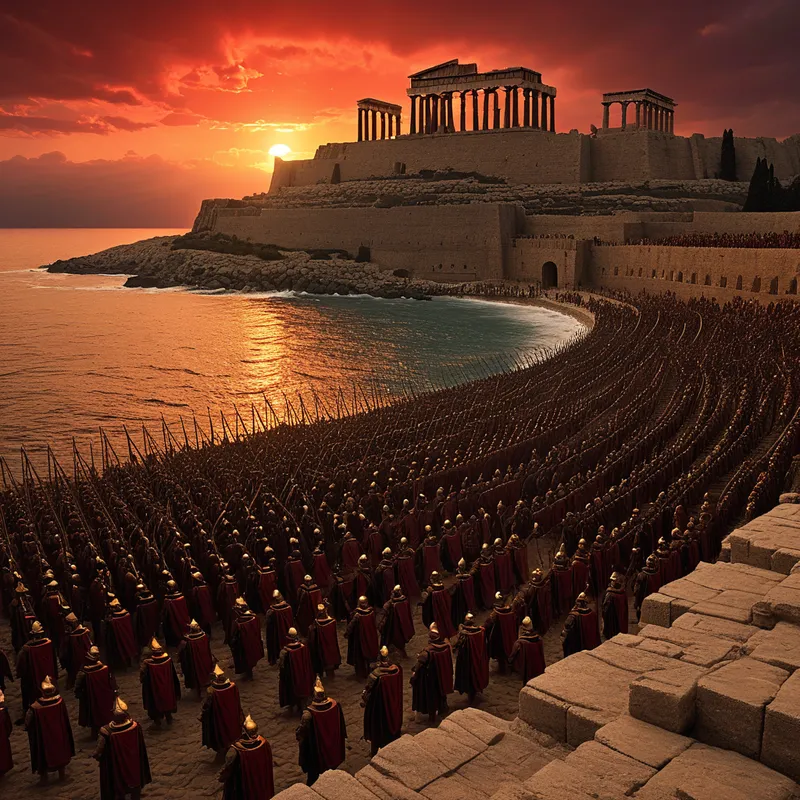
Hear now of a war that shook [the earth](/myths/the-earth “Myth from Hindu culture.”/) for ten long years, a war born not from a king’s decree, but from a goddess’s vanity. It began in the golden halls of Zeus, at a wedding where strife was the uninvited guest. Eris, slighted, cast a single apple into the feast, inscribed “For the Fairest.” And so the three great goddesses—Hera, Athena, and Aphrodite—turned their immortal eyes upon a mortal shepherd on the slopes of Mount Ida. His name was Paris, though he knew it not. Each goddess offered a prize for his favor: Hera, dominion over all kingdoms; Athena, glory in war; Aphrodite, the love of the most beautiful woman in [the world](/myths/the-world “Myth from Tarot culture.”/). He chose love. He chose Helen.
Thus, the spark was lit. From Sparta to Troy, Paris sailed and, by Aphrodite’s will, Helen followed, leaving her husband, Menelaus, with a fury that would summon a thousand ships. The kings of Greece answered the call, bound by an old oath. Achilles came, though he knew a prophecy of his own death there. [Odysseus](/myths/odysseus “Myth from Greek culture.”/) came, though he tried to feign madness. And Agamemnon came, to lead them all to the shining, unconquered walls of Troy.
For nine years, the war ground on like a terrible, unyielding season. The plain before Troy became a churned field of mud, blood, and broken bronze. Heroes clashed with the sound of thunder, their fates tugged by invisible strings from Olympus. Apollo rained plague upon the Greeks for an insult. Athena guided a spear true to its mark. [Thetis](/myths/thetis “Myth from Greek culture.”/), a sea goddess, begged [Hephaestus](/myths/hephaestus “Myth from Global/Universal culture.”/) for armor to protect her mortal son. The war was not merely man against man; it was the playground of divine wills, a canvas for immortal pride and petty grievances.
Then came the tenth year, and with it, the great wrath of Achilles. A quarrel over a captive woman, Briseis, saw the best of the Greeks withdraw from battle, nursing his godlike rage in his tent. Without him, the tide turned. The Trojans, led by the noble Hector, drove the Greeks back to their very ships, and fire threatened to consume the fleet. Only the death of his beloved companion, Patroclus, wearing Achilles’s own armor, could draw the hero back. His return was a storm of grief and vengeance. He slew Hector before the gates of Troy and, in a fury that defied the gods themselves, dragged the prince’s body behind his chariot.
But the walls still stood. Troy would not fall by force alone. The final act required not strength, but cunning. Odysseus conceived a ruse—a giant, hollow horse of wood, an offering to Athena, left upon the shore as the Greeks pretended to sail away. The Trojans, in joy and relief, breached their own walls to bring the monstrous gift inside. That night, in the silent, celebrating city, a hidden door opened in the horse’s belly. Greek warriors poured out, opened the gates, and the waiting army flooded in. Fire, sword, and slaughter consumed the city that had held for a decade. The war ended not with a heroic duel, but with a trick, in the dark.
Cultural Origins & Context
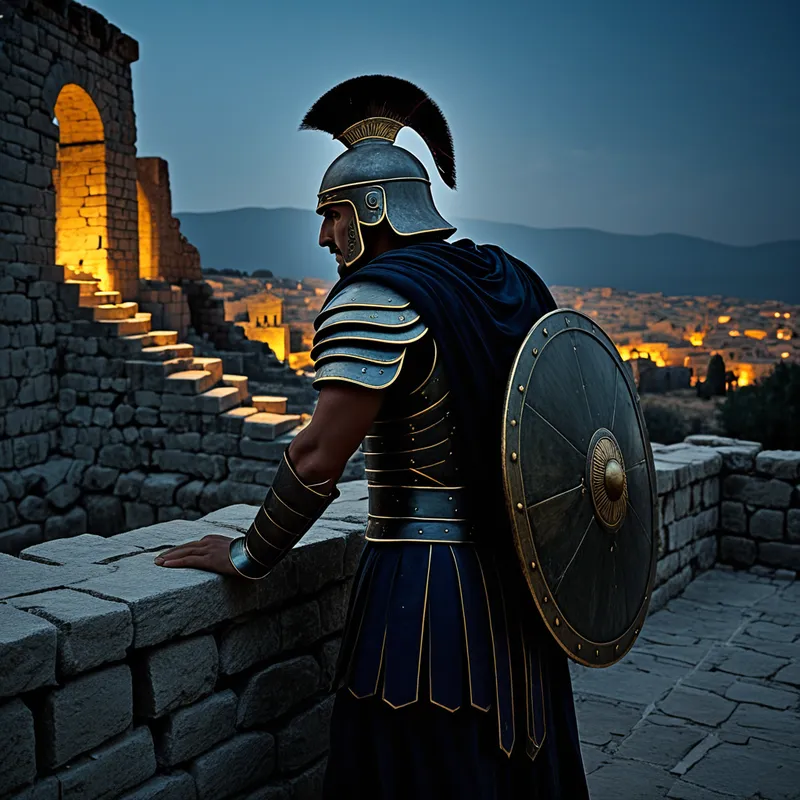
This epic was not a single story but a vast cycle of poems, the most famous being [Homer](/myths/homer “Myth from Greek culture.”/)’s Iliad (focusing on the wrath of Achilles) and Odyssey (the long journey home). These works were the foundational texts of ancient Greek culture, performed orally by bards called rhapsodes at festivals and in the halls of the powerful. They were not mere entertainment; they were a cultural database of values, ethics, history, and theology. The tale defined heroism (arete), explored the tension between human agency and divine fate (moira), and served as a national origin story, explaining the Greek world’s connection to the heroic past. It was a mirror held up to society, asking: What is the cost of glory? What does it mean to be a leader, a warrior, a guest, a host?
Symbolic Architecture
The [Decade](/symbols/decade “Symbol: A ten-year period representing a distinct era of personal or collective experience, often symbolizing cycles, progress, or nostalgia.”/) of [the Trojan War](/myths/the-trojan-war “Myth from Greek culture.”/) is a monumental [drama](/symbols/drama “Symbol: Drama signifies narratives, emotional expression, and the exploration of human experiences.”/) of the [psyche](/myths/psyche “Myth from Greek culture.”/). Troy itself is not just a [city](/symbols/city “Symbol: A city often symbolizes community, social connection, and the complexities of modern life, reflecting the dreamer’s relationships and societal integration.”/); it is the citadel of [the ego](/myths/the-ego “Myth from Jungian culture.”/), a seemingly impregnable complex of [identity](/symbols/identity “Symbol: Identity represents the sense of self, encompassing personal beliefs, cultural background, and social roles.”/), pride, and possession. Its famed walls represent the defenses we build around our sense of self.
The war is always internal before it is external. The decade-long siege is the soul’s protracted struggle with a truth it has walled out.
The conflict is ignited by the [Apple](/symbols/apple “Symbol: An apple symbolizes knowledge, temptation, and the duality of good and evil, often representing the pursuit of wisdom with potential consequences.”/) of Discord—a [symbol](/symbols/symbol “Symbol: A symbol can represent an idea, concept, or belief, serving as a powerful tool for communication and understanding.”/) of the repressed [shadow](/symbols/shadow “Symbol: The ‘shadow’ embodies the unconscious, repressed aspects of the self and often represents fears or hidden emotions.”/), the unresolved [tension](/symbols/tension “Symbol: A state of mental or emotional strain, often manifesting physically as tightness, pressure, or unease, signaling unresolved conflict or anticipation.”/) (Eris) that, when denied, erupts into catastrophic [projection](/symbols/projection “Symbol: The unconscious act of attributing one’s own internal qualities, emotions, or shadow aspects onto external entities, people, or situations.”/). Paris’s “judgment” represents a fateful [choice](/symbols/choice “Symbol: The concept of choice often embodies decision-making, freedom, and the multitude of paths available in life.”/) of values: power, wisdom, or love, each [path](/symbols/path “Symbol: The ‘path’ symbolizes a journey, choices, and the direction one’s life is taking, often representing individual growth and exploration.”/) leading to a different [destiny](/symbols/destiny “Symbol: A predetermined course of events or ultimate purpose, often linked to spiritual forces or cosmic order, representing life’s inherent direction.”/). The gods are the overwhelming, autonomous complexes of the unconscious—Hera the drive for [structure](/symbols/structure “Symbol: Structure in dreams often symbolizes stability, organization, and the framework of one’s life, reflecting how one perceives their environment and personal life.”/) and rule, Athena the intellect and [strategy](/symbols/strategy “Symbol: A plan of action designed to achieve a long-term or overall aim, often involving competition, resource management, and foresight.”/), Aphrodite the compelling force of eros and desire—using [human](/symbols/human “Symbol: The symbol of a human represents individuality, complexity of emotions, and social relationships.”/) lives as pawns in their eternal conflicts. [The Trojan Horse](/myths/the-trojan-horse “Myth from Greek culture.”/) is the ultimate [symbol](/symbols/symbol “Symbol: A symbol can represent an idea, concept, or belief, serving as a powerful tool for communication and understanding.”/) of the [shadow](/symbols/shadow “Symbol: The ‘shadow’ embodies the unconscious, repressed aspects of the self and often represents fears or hidden emotions.”/)’s [integration](/symbols/integration “Symbol: The process of unifying disparate parts of the self or experience into a cohesive whole, often representing psychological wholeness or resolution of internal conflict.”/). It is the accepted gift that contains the transformative, destructive/creative force. The ego (Troy) brings the contents of its own unconscious (the hidden Greeks) inside its walls, leading to the necessary, painful [dissolution](/symbols/dissolution “Symbol: The process of breaking down, dispersing, or losing form, often representing transformation, release, or the end of a state of being.”/) of the old, rigid self.

The Dreamer’s Resonance
When this myth stirs in modern dreams, it often manifests as a feeling of being in a protracted, exhausting stalemate. The dreamer may find themselves in a looping argument, a job they cannot quit, or a relationship defined by perpetual, low-grade conflict. The setting is often a fortified place—a house under renovation forever, a maze of office corridors, a besieged castle. The somatic feeling is one of deep weariness, a “ten-year” fatigue of the spirit.
This dream pattern signals a psychological process where a core complex or defense (the “walls of Troy”) is being challenged. The ego feels besieged by unconscious content—anger, grief, a repressed talent, or a denied truth (the “Greek army”). The dream is the psyche’s depiction of the immense energy required to maintain the defense. The appearance of a deceptive “gift” or a sudden, cunning solution in the dream points to the unconscious preparing a Trojan Horse—a way for the transformative insight to finally breach the ego’s defenses, often through surprise, trickery, or the acceptance of a seemingly benign idea that contains revolutionary change within it.
Alchemical Translation
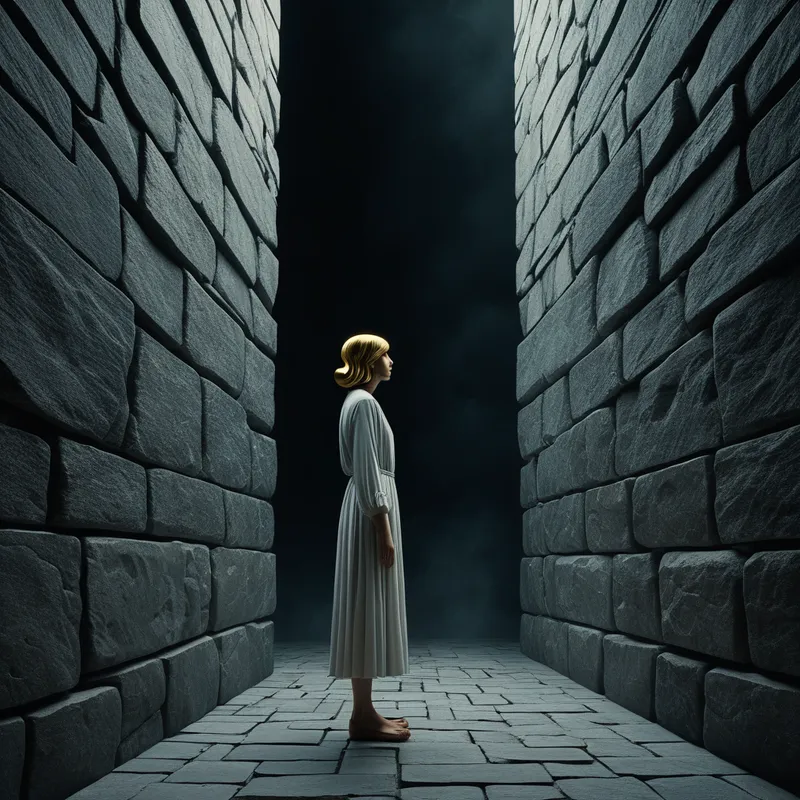
The alchemical process mirrored in this myth is the [nigredo](/myths/nigredo “Myth from Alchemical culture.”/)—the blackening, the long, dark night of the soul that precedes transformation. The ten-year war is the necessary, agonizing period of confrontation and dissolution. The heroic ego (Achilles, Agamemnon) must have its pride and certainties shattered. The noble ego (Hector) must fall. The entire structure (Troy) must be burned to the ground.
Individuation is not a peaceful homecoming; it is the sacking of one’s own city so a new one may be built upon its ashes.
For the modern individual, the myth models the journey from a state of psychic rigidity, where one is identified with a single role or self-image (the “impregnable” ego), through a prolonged crisis that feels interminable, to a final, cunning integration. The “victory” is not the preservation of the old self but its conscious surrender. The Trojan Horse is the symbol of the transcendent function—the symbol that emerges from the unconscious capable of uniting the opposites (inside/outside, Greek/Trojan, self/other). To integrate one’s shadow is to allow the hidden warriors within to open the gates. It is a violent, creative act that ends one life so another, more conscious journey (like Odysseus’s voyage home) can begin. The decade is the time the soul demands to fully count the cost, to exhaust all other options, and to become ready, at last, for the fire.
Associated Symbols
Explore related symbols from the CaleaDream lexicon: