The Death of Dumuzi Myth Meaning & Symbolism
The shepherd-god Dumuzi, beloved of the goddess Inanna, is condemned to the underworld, embodying the eternal cycle of fertility, loss, and seasonal return.
The Tale of The Death of Dumuzi
Hear now the tale that the river whispers and the dry wind carries across the empty plain. It begins not in darkness, but in the unbearable fullness of light—the reign of Inanna, Queen of Heaven, who had descended to the dust of the underworld and returned, forever changed.
She had ascended, but a price was demanded. The Kur does not give up its visitors lightly. A substitute was required, a life for a life, to sit upon the grey throne beside her dark sister, Ereshkigal. Clad in her regained splendor, Inanna journeyed back to her city, Uruk. Her heart was a heavy drum. Whom would she choose?
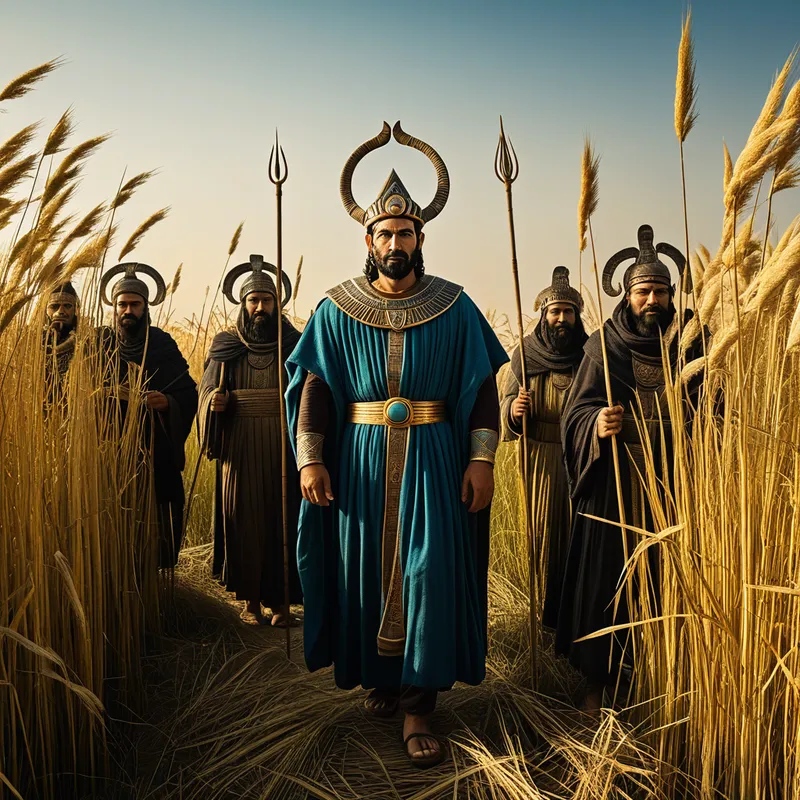
She found her answer not in the temple, but in the fields. There sat Dumuzi, her divine husband, the shepherd-king. He was not mourning her absence. He was seated upon her celestial throne, clad in shining robes, music and feasting surrounding him. He had not shed a single tear for her descent into dust. Inanna’s gaze, still holding the cold of the abyss, fell upon him. The judgment was silent and absolute.
She lifted her hand. From the shadows of the world’s edge, the galla emerged. They were beings of stone and wind, with no food, no water, no mercy in their hearts. Their eyes were hollow, fixed only on the one named. They swept across the land like a sirocco.
Dumuzi felt the shadow fall. The music died in the air. He fled. He ran to the sun-baked reeds, whispering for help to his friend, the sun-god Utu. “Turn my hands into the hands of a snake! Turn my feet into the feet of a snake! Let me slip away from my demons!” Utu, in pity, transformed him. Dumuzi slid into the marsh, a serpent among the roots.
But the galla are tireless. They questioned the earth itself. They found a fly, a knowing creature, and bribed it with beer and bread. The fly whispered of a hidden presence in the rushes. The demons found him. He fled again, to the lap of his sister, the faithful Geshtinanna. “Hide me!” he pleaded. But the galla broke into her simple house, seizing him.
There was no grand battle. Only the stark, brutal capture. His royal robes were torn away. His shepherd’s crook clattered to the stone. The demons seized his arms, binding them. They struck his cheeks with red-painted reeds, they struck his thighs with ax-handles. The vibrant god of the fertile month was broken. They dragged him, not to a pyre or a tomb, but to a sheer “hole in the ground”—the mouth of the Kur itself. With a final cry that echoed the bleating of his lost flocks, Dumuzi, the Lover, was pulled down into the dust. The land above held its breath. And then, the green began to fade.
Cultural Origins & Context
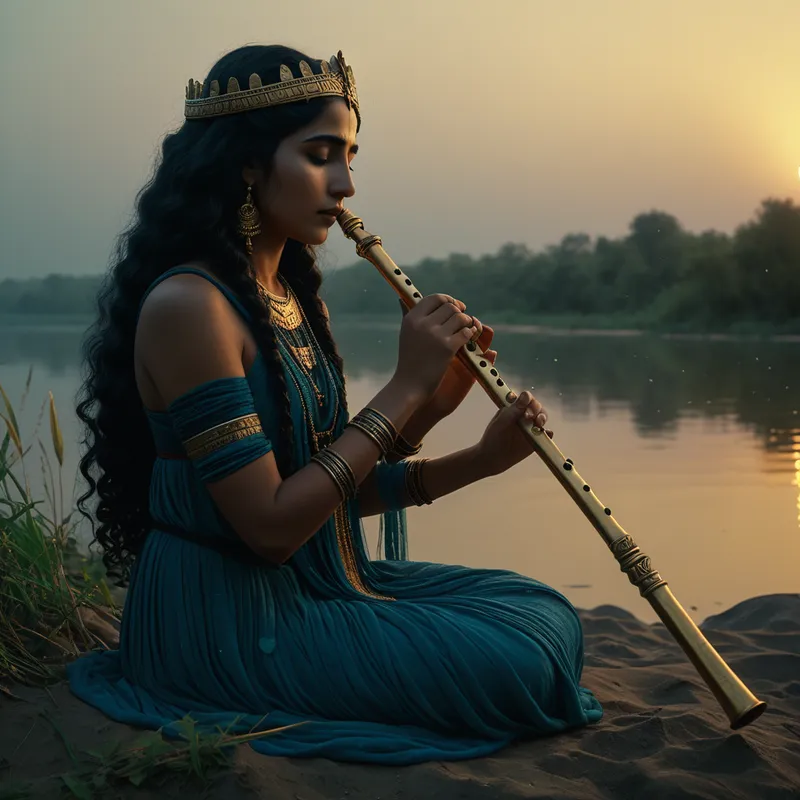
This myth is not a mere story; it is the ancient memory of the land itself, etched into clay in the cradle of civilization. Originating in the 3rd millennium BCE in southern Mesopotamia, the tale of Dumuzi (later known as Tammuz) was central to the Sumerian understanding of reality. It was performed, not just read—a sacred liturgy woven into the fabric of the calendar, recited during the brutal, lifeless heat of high summer.
The myth functioned as a divine explanation for the most visceral of human experiences: the annual death of vegetation. When the rivers receded and the sun scorched the earth, it was because Dumuzi, the spirit of the fertile herds and the date palm’s sap, was imprisoned in the underworld. The professional lamentation priests and priestesses would lead the people in ritual wails, their songs giving voice to Inanna’s grief and the land’s desolation. This was not passive storytelling but an active, magical participation in the cosmic order, a sympathetic ritual to ensure the god’s eventual return with the autumn rains and the new growing season. The myth bound human emotion—love, betrayal, profound grief—directly to the cycle of the natural world, making the psyche of the community a mirror of the divine drama.
Symbolic Architecture
At its core, the myth is a profound map of a necessary sacrifice. Dumuzi is not a [villain](/symbols/villain “Symbol: A character representing opposition, moral corruption, or suppressed aspects of self, often embodying fears, conflicts, or societal threats.”/), but a necessary casualty of a deeper law. He represents the vibrant, embodied, and complacent [aspect](/symbols/aspect “Symbol: A distinct feature, quality, or perspective of something, often representing a partial view of a larger whole.”/) of [life](/symbols/life “Symbol: The symbol of ‘Life’ represents a journey of growth, interconnectedness, and existential meaning, encompassing both the joys and challenges that define human experience.”/)—the flourishing that takes its bounty for granted. His fatal [error](/symbols/error “Symbol: A dream symbol representing internal conflict, perceived failure, or a mismatch between expectations and reality.”/) was not malice, but a failure of [consciousness](/symbols/consciousness “Symbol: Consciousness represents the state of awareness and perception, encompassing thoughts, feelings, and experiences.”/); he did not honor the descent, the necessary [shadow](/symbols/shadow “Symbol: The ‘shadow’ embodies the unconscious, repressed aspects of the self and often represents fears or hidden emotions.”/)-work that his [partner](/symbols/partner “Symbol: In dreams, the symbol of a ‘partner’ often represents intimacy, connection, and the dynamics of personal relationships, reflecting one’s desires and fears surrounding companionship.”/) Inanna had undergone.
The Lover must die so that the Queen can reign. The bliss of union contains the seed of its own dissolution, for wholeness demands an acknowledgment of the void.
Inanna’s judgment is the terrible awakening of the psyche to the cost of transformation. She returns from the [underworld](/symbols/underworld “Symbol: A symbolic journey into the unconscious, representing exploration of hidden aspects of self, transformation, or confronting repressed material.”/) integrated but burdened with its law: nothing is gained without a corresponding [loss](/symbols/loss “Symbol: Loss often symbolizes change, grief, and transformation in dreams, representing the emotional or psychological detachment from something or someone significant.”/). The sacrifice of the [Lover](/symbols/lover “Symbol: A lover in dreams often represents intimacy, connection, and the emotional aspects of relationships.”/) is the sacrifice of naive, unconscious pleasure to the demands of a deeper, more complex [reality](/symbols/reality “Symbol: Reality signifies the state of existence and perception, often reflecting one’s understanding of truth and life experiences.”/). Dumuzi’s [flight](/symbols/flight “Symbol: Flight symbolizes freedom, escape, and the pursuit of one’s aspirations, reflecting a desire to transcend limitations.”/) and capture symbolize the futile [resistance](/symbols/resistance “Symbol: An object or tool representing opposition, struggle, or the act of pushing back against external forces or internal changes.”/) of the ego when faced with its destined [dissolution](/symbols/dissolution “Symbol: The process of breaking down, dispersing, or losing form, often representing transformation, release, or the end of a state of being.”/) into a larger [pattern](/symbols/pattern “Symbol: A ‘Pattern’ in dreams often signifies the underlying structure of experiences and thoughts, representing both order and the repetitiveness of life’s situations.”/). His [death](/symbols/death “Symbol: Symbolizes transformation, endings, and new beginnings; often associated with fear of the unknown.”/) is not an end, but a [translation](/symbols/translation “Symbol: The process of converting meaning from one form or language to another, representing communication, adaptation, and the bridging of differences.”/) into a cyclical, rather than [linear](/symbols/linear “Symbol: Represents order, predictability, and a direct, step-by-step progression. It symbolizes a clear path from cause to effect.”/), mode of being.
The Dreamer’s Resonance
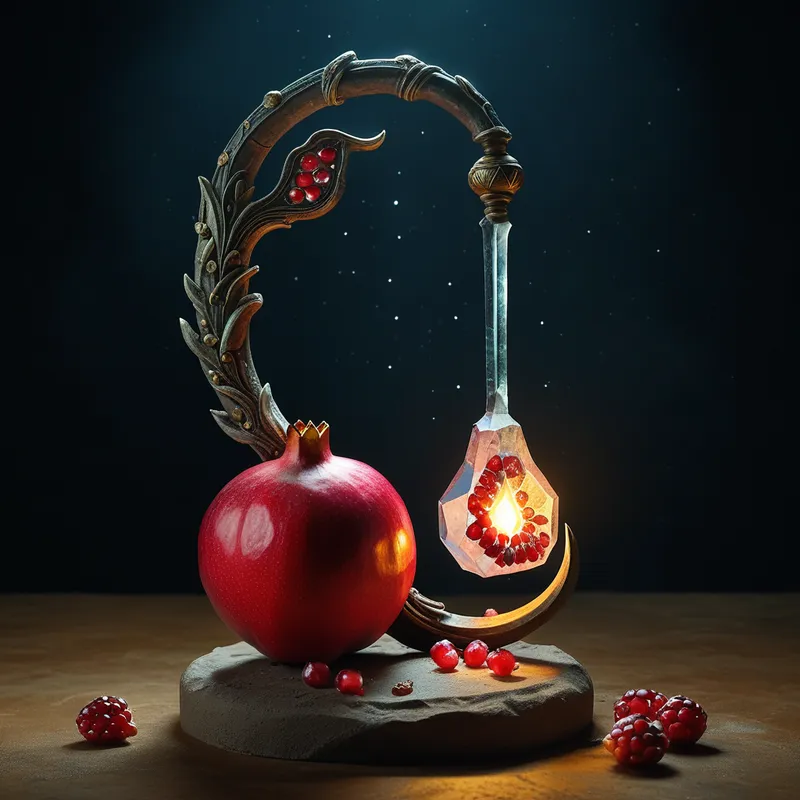
When this myth stirs in the modern dreamer, it often manifests as a season of profound, inexplicable loss. The dreamer may find themselves pursued by faceless authorities, or witness a cherished aspect of their life—a relationship, a career, a creative identity—suddenly “taken away,” dragged into a dark pit. There is a somatic quality of being hunted, of frantic hiding that ultimately fails.
This is the psyche enacting the “Dumuzi phase.” It is the process wherein a valued complex, often one associated with pleasure, identity, and vitality (the inner Lover), must be surrendered to the unconscious. The dreamer feels the betrayal of their own soul, the Inanna within who sanctions this loss. The psychological process is one of enforced descent: the conscious attitude that was once life-giving has become stagnant, and the Self demands its ritual death to make way for renewal. The grief experienced is not pathological, but sacred—the necessary mourning for what must be lost so that a new form of life can eventually emerge from the underworld of the psyche.

Alchemical Translation
The alchemy of this myth models the individuation process through the formula of solve et coagula—dissolve and coagulate. Dumuzi is the element that must be dissolved. His capture and descent represent the painful but essential breakdown of a dominant conscious attitude. The ego’s throne—its sense of control, its familiar pleasures—is usurped.
The true transmutation begins not in the light of achievement, but in the dark humiliation of the galla’s grasp. The gold is forged in the descent.
The modern individual undergoing this pattern is not called to literal death, but to the death of an outworn way of being. The “substitute” demanded by the underworld is often a cherished self-image, a long-held ambition, or a defining relationship. The alchemical work is to consciously participate in this sacrifice, to move from Dumuzi’s resistance to a state of sacred acceptance. This allows for the next phase: the role of Geshtinanna, who in the myth agrees to take her brother’s place in the underworld for half the year. She represents the conscious, witnessing capacity that voluntarily enters the darkness to understand it, creating the rhythm—the cycle—that makes the return possible. The individuated self learns to hold both positions: the sacrificed Lover and the lamenting Queen, the dying god and the sister who shares the burden, thereby mastering the eternal cycle of death and rebirth within one’s own soul.
Associated Symbols
Explore related symbols from the CaleaDream lexicon:
- Death — The central, non-final event of the myth, representing the necessary dissolution of a life phase or psychic structure to serve a larger cyclical order.
- Sacrifice — The compulsory offering of a cherished aspect (Dumuzi) to balance a cosmic debt, modeling the psyche’s demand for exchange in deep transformation.
- Goddess — Embodied by Inanna and Ereshkigal, representing the dual, transformative feminine power that commands both life-giving love and underworld judgment.
- Underworld — The Kur, the realm of dust and forgetting, where what is sacrificed undergoes a period of latent, essential fermentation.
- River — The lifeblood of Sumer, its annual flooding and receding mirrored in Dumuzi’s cycle of presence and absence, fertility and drought.
- Tree — Symbolic of Dumuzi as the fertilizing sap and of the world axis, connecting the heavenly, earthly, and underworld realms through which the drama unfolds.
- Dream — Geshtinanna, the recording sister, is a scribe of dreams, linking the myth to the unconscious realm where such divine dramas are processed and understood.
- Rebirth — The inevitable promise of the myth; Dumuzi’s return is not a reversal of death but its fruit, the new growth that can only emerge from decay.
- Grief — The authentic, world-stopping emotion of Inanna and the ritual lament of the people, which is not pointless sorrow but a sacred technology to facilitate return.
- Ritual — The myth’s primary cultural container, performed to magically participate in and influence the cosmic cycle of decay and renewal.
- Shadow — The galla demons and the dark sister Ereshkigal represent the inescapable, impersonal shadow forces that enforce psychic law.
- Sumerian Tablet — The physical medium of the myth’s preservation, symbolizing the eternal recording of this archetypal pattern in the “clay” of human consciousness.