
The Cup of Lethe and Mnemosyne Myth Meaning & Symbolism
A soul stands at a crossroads in the Underworld, offered a choice between the waters of forgetfulness and the pool of remembrance to shape its next life.
The Tale of The Cup of Lethe and Mnemosyne
Before the sun first drew breath, before the first word was etched upon the air, the pathways of the dead were laid. Not with stone, but with choice. Listen now, to the whisper that echoes in the silent meadow where the blessed dwell.
The air here is not the air of the living. It is a fragrance of asphodel and distant, remembered rain. This is the Elysian Fields, a realm of soft twilight and gentle breezes. Here, the souls who have lived with virtue wander, their forms like smoke given shape by longing. But their rest is not eternal. A cycle turns, a wheel forged by [the Fates](/myths/the-fates “Myth from Greek culture.”/) themselves. Each soul must drink, and drink again, to be born anew into [the world](/myths/the-world “Myth from Tarot culture.”/) above.
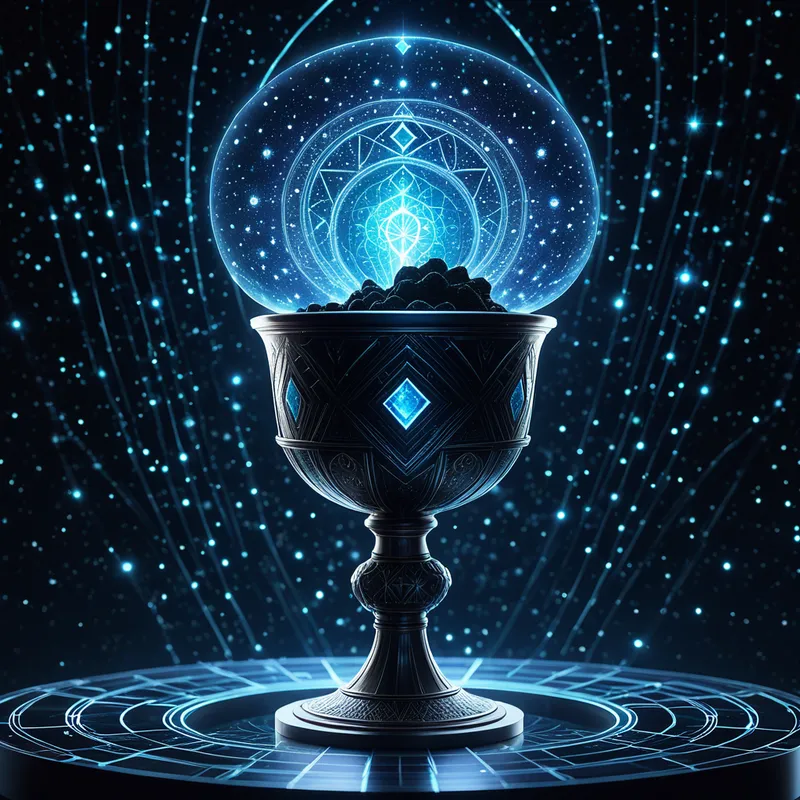
Into this tranquil gloom comes a guide, a [psychopomp](/myths/psychopomp “Myth from Greek culture.”/) whose face is hidden in the fold of a dark cloak. In their hands, they carry not a sword, but a vessel: a simple, unadorned cup of baked clay. From it emanates a cool, empty scent, like the deepest, most forgotten well. This is the Cup of [Lethe](/myths/lethe “Myth from Greek culture.”/). Its [water](/myths/water “Myth from Chinese culture.”/) promises a mercy—a sweet, blank oblivion. To drink is to have every scar of life, every cry of joy, every name ever loved, washed away into a silent sea. The soul, weary from its journey, feels the pull of that emptiness. To forget the pain, the loss, the weight of being… what greater peace could there be?
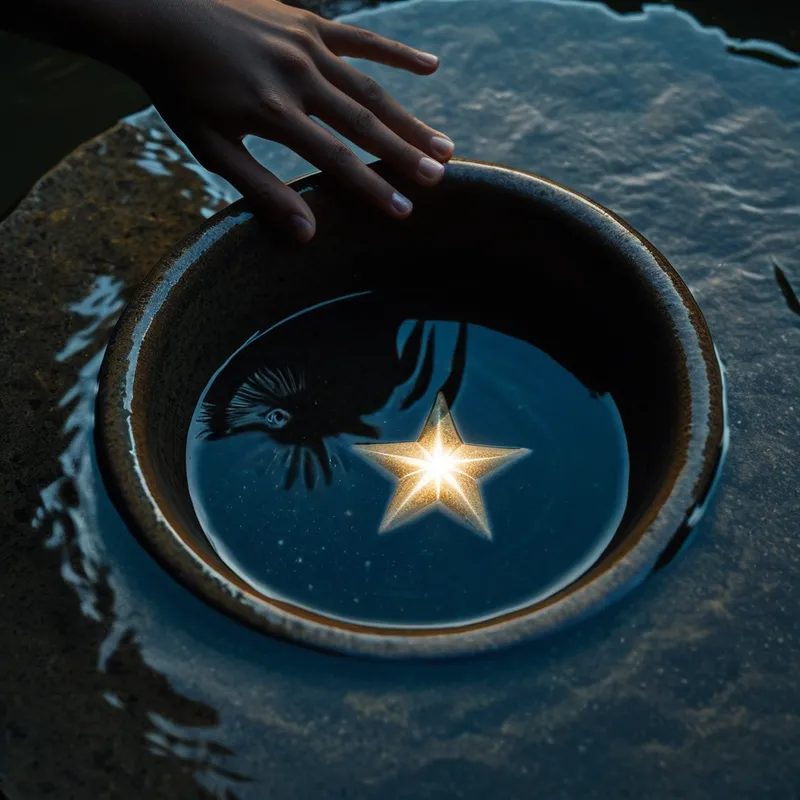
But wait. A whisper, softer than the rustle of a ghost’s garment, stirs the still air. It is not a sound, but a knowing. It draws the soul away from the guide, through a grove of towering black poplars. And there, in a clearing bathed in a light that has no source, is another pool. Its waters are not dark, but clear and deep, holding reflections not of [the sky](/myths/the-sky “Myth from Persian culture.”/), but of countless stars, each one a flicker of a life once lived. Beside it stands a figure of immense, tranquil presence. She is [Mnemosyne](/myths/mnemosyne “Myth from Global/Universal culture.”/), Memory herself. Her eyes are pools of time, and her silence is full of echoes.
She offers no cup, only the pool itself. To drink from Mnemosyne’s Spring is not to find peace, but to reclaim the entirety of one’s being. It is to drink the bitter with the sweet, the shame with the [triumph](/myths/triumph “Myth from Roman culture.”/), the ending with the beginning. It is to remember not just one life, but the thread that connects it to all that came before. The soul stands at the crux, torn between two profound rivers: one that erases, and one that engraves. The guide waits, patient as stone. The goddess watches, still as a mountain. The choice hangs in the balance, a single, eternal moment where a soul decides what it will carry into the next dawn of existence.
Cultural Origins & Context
This powerful, esoteric myth is not part of the grand epic cycles of [Homer](/myths/homer “Myth from Greek culture.”/) or Hesiod, but emerges from the deeper, more mystical streams of Greek religious thought, particularly the Orphic and Eleusinian traditions. It was a narrative preserved not on public monuments, but in the hushed spaces of initiation and on thin sheets of gold foil buried with the dead—these are the famed Orphic Gold Tablets.
The myth functioned as a sacred map for the soul’s journey after death. It was taught to initiates who sought a better fate in the afterlife, promising them a way to avoid the fate of common shades. By knowing the secret—to seek out Mnemosyne and avoid Lethe—the soul could retain its identity and wisdom across incarnations, potentially breaking the cycle of rebirth. This was knowledge for the few, a psychological technology for navigating the ultimate transition. The tellers were priests and mystics, and the societal function was to provide hope, meaning, and a sense of agency in the face of mortality’s great unknown.
Symbolic Architecture
At its [heart](/symbols/heart “Symbol: The heart symbolizes love, emotion, and the core of one’s existence, representing deep connections with others and self.”/), this myth presents the fundamental psychic polarity between oblivion and [integration](/symbols/integration “Symbol: The process of unifying disparate parts of the self or experience into a cohesive whole, often representing psychological wholeness or resolution of internal conflict.”/). Lethe is not merely forgetfulness; it is the [psyche](/myths/psyche “Myth from Greek culture.”/)’s drive toward [dissolution](/symbols/dissolution “Symbol: The process of breaking down, dispersing, or losing form, often representing transformation, release, or the end of a state of being.”/), the desire to return to an undifferentiated, painless state—a kind of psychic [death](/symbols/death “Symbol: Symbolizes transformation, endings, and new beginnings; often associated with fear of the unknown.”/) wish. Mnemosyne is not mere recollection; she is [the principle](/symbols/the-principle “Symbol: A fundamental truth, law, or doctrine that serves as a foundation for a system of belief, behavior, or reasoning, often representing moral or ethical standards.”/) of [consciousness](/symbols/consciousness “Symbol: Consciousness represents the state of awareness and perception, encompassing thoughts, feelings, and experiences.”/), coherence, and the arduous work of making meaning from the raw data of experience.
The Cup of Lethe offers the peace of the unformed; the Spring of Mnemosyne offers the pain and glory of becoming.
The [soul](/symbols/soul “Symbol: The soul represents the essence of a person, encompassing their spirit, identity, and connection to the universe.”/) at the [crossroads](/symbols/crossroads “Symbol: A powerful spiritual symbol representing a critical decision point where paths diverge, often associated with fate, transformation, and life-altering choices.”/) is the [human](/symbols/human “Symbol: The symbol of a human represents individuality, complexity of emotions, and social relationships.”/) ego confronted with its most profound [task](/symbols/task “Symbol: A task represents responsibilities, duties, or challenges one faces.”/): what to do with the contents of a lifetime. Do we dissociate from our [trauma](/symbols/trauma “Symbol: A deeply distressing or disturbing experience that overwhelms the psyche, often manifesting in dreams as unresolved emotional wounds or psychological injury.”/), our mistakes, our complexities, seeking the blank slate? Or do we have the courage to drink the whole [story](/symbols/story “Symbol: The symbol of ‘Story’ represents the narrative woven through our lives, embodying experiences, lessons, and emotions that shape our identities.”/), to integrate the [shadow](/symbols/shadow “Symbol: The ‘shadow’ embodies the unconscious, repressed aspects of the self and often represents fears or hidden emotions.”/) with the light, and carry a coherent Self forward? The myth frames this not as a passive [fate](/symbols/fate “Symbol: Fate represents the belief in predetermined outcomes, suggesting that some aspects of life are beyond human control.”/), but as an active [choice](/symbols/choice “Symbol: The concept of choice often embodies decision-making, freedom, and the multitude of paths available in life.”/), the [soul](/symbols/soul “Symbol: The soul represents the essence of a person, encompassing their spirit, identity, and connection to the universe.”/)’s ultimate act of sovereignty.
The setting in [Elysium](/symbols/elysium “Symbol: A paradisiacal afterlife realm in Greek mythology, representing ultimate peace, reward, and spiritual fulfillment for the virtuous.”/) is critical. This choice is not presented to tortured souls in [Tartarus](/myths/tartarus “Myth from Greek culture.”/), but to those who have earned rest. It suggests that the final, most sacred test is not one of [punishment](/symbols/punishment “Symbol: A dream symbol representing consequences for actions, often tied to guilt, societal rules, or internal moral conflicts.”/), but of wisdom, posed after the struggles of [life](/symbols/life “Symbol: The symbol of ‘Life’ represents a journey of growth, interconnectedness, and existential meaning, encompassing both the joys and challenges that define human experience.”/) are done. Will you choose comfortable annihilation, or conscious continuity?
The Dreamer’s Resonance
When this mythic pattern surfaces in modern dreams, it rarely appears with classical robes and [underworld](/myths/underworld “Myth from Greek culture.”/) scenery. Instead, the dreamer might find themselves standing before two doors, two paths, or two bodies of water. One often feels seductively calm, empty, or blurry. The other seems daunting, complex, or painfully clear.
This is the psyche signaling a critical juncture in a process of integration. The somatic feeling is often one of suspension and deep anxiety—the “liminal space” where an old identity has dissolved but a new one has not yet cohered. To dream of choosing the “Lethe” option may reflect a desire to spiritually bypass a painful healing process, to numb out, or to abandon a difficult but necessary path of self-knowledge. To dream of choosing the “Mnemosyne” option, or being drawn to it despite fear, indicates the unconscious is advocating for the harder, more conscious route: to remember the repressed trauma, to face [the shadow](/myths/the-shadow “Myth from Jungian culture.”/) aspect, to own one’s full history. The dream is a snapshot of the soul’s orientation toward its own unfolding.

Alchemical Translation
In the alchemical vessel of individuation, the myth of Lethe and Mnemosyne maps the crucial phase between [nigredo](/myths/nigredo “Myth from Alchemical culture.”/) (the blackening, dissolution, and despair) and albedo (the whitening, purification, and clarity). After the old ego structures have been broken down in [the nigredo](/myths/the-nigredo “Myth from Alchemical culture.”/), the psyche stands in a barren, in-between state. The easy, tempting path is to fall back into unconsciousness, to let the dissolved pieces remain scattered—this is the Cup of Lethe.
The work of soul-making is the conscious distillation of memory into wisdom, a process that requires drinking from both the dark cup and the starry pool.
The alchemical imperative, however, is to choose Mnemosyne. This is the opus contra naturam—the work against nature’s drift toward entropy. It is the deliberate, painful gathering of all that one has been and done: the failures, the humiliations, the loves, the triumphs. One does not drink from her pool to be haunted, but to transmute. Memory, in this sacred sense, is the raw [prima materia](/myths/prima-materia “Myth from Alchemical culture.”/) for creating the Philosopher’s Stone of a cohesive, resilient Self. By remembering wholly, we do not repeat; we comprehend. We weave the fragments of our personal myth into a narrative that grants meaning, purpose, and a foundation from which to step into a new, more authentic life. The myth teaches that true rebirth is not born from emptiness, but from the fully integrated story of all our deaths and resurrections.
Associated Symbols
Explore related symbols from the CaleaDream lexicon: