The Crossroads of Hecate - whe Myth Meaning & Symbolism
A goddess of thresholds stands at a cosmic junction, where a traveler's choice echoes through fate, revealing the power of liminal spaces and the self.
The Tale of The Crossroads of Hecate - whe
Listen, and hear the whisper of the wind where three roads meet. This is not a place for the sun’s gaze, but for the moon’s secret counsel, for the sigh of the earth between one breath and the next. Here, at the junction of all journeys, stands Hecate - whe.
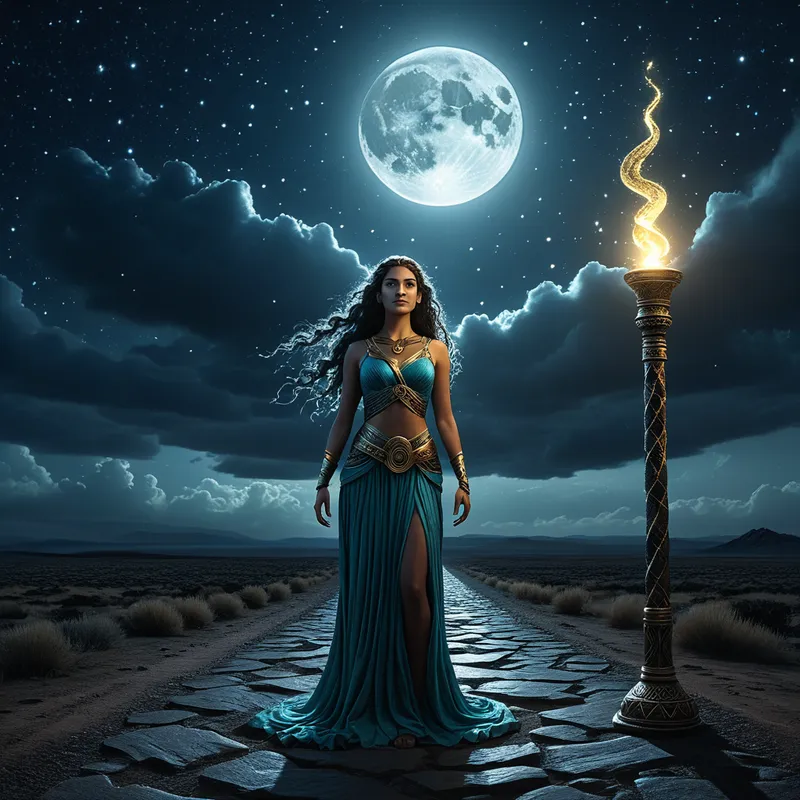
Her form is not one, but three, like the phases of the moon that are her crown. One face is turned to the past, her eyes pools of memory. One gazes upon the present, stern and unmoving. The last looks down the road not yet taken, her expression a mystery. In her hands she bears her emblems: a torch to illuminate the hidden, a key to unlock the sealed, and a serpent, coiled, symbol of the earth’s deep wisdom and life reborn through shedding.
The air here crackles with potential, thick with the scent of ozone and damp soil. The roads are not of stone, but of consequence. One path, paved with worn, familiar cobbles, winds back into the known world, to hearth and habit. Another, a dark trail into the deep wood, promises trials and transformation. The third, a shimmering, insubstantial track of moonlight on mist, leads into the realm of spirit and dream.
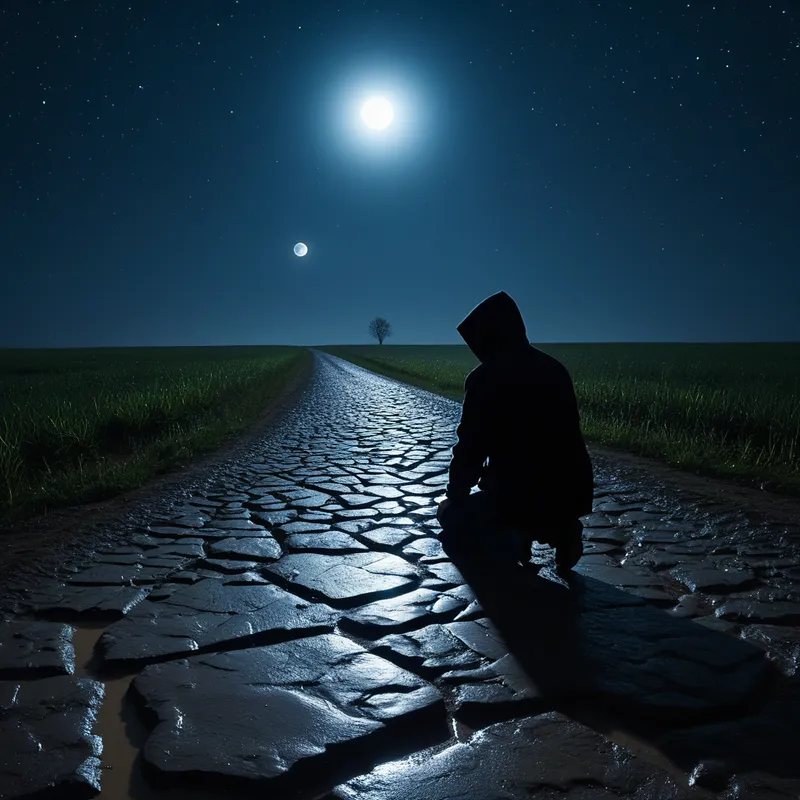
Into this charged silence stumbles the traveler. They are weary, soul-torn, their own path lost behind them in a thicket of doubt. They feel the weight of the place, the pressure of a choice that is more than choice—it is a declaration of self. Kneeling in the dust, they offer no grand prayer, only their confusion, a silent plea cast into the twilight.
Hecate - whe does not speak with a mortal tongue. Her answer is the sudden flaring of her torch, casting long, dancing shadows that become phantoms of possible selves. The traveler sees them: on the left, a ghostly double continuing the safe, diminished life. On the right, a fierce, wounded figure battling beasts in the dark. Straight ahead, a translucent being of light, almost unrecognizable.
The key in her hand turns with a sound like a distant thunderclap. The serpent uncoils, its scales catching the torchlight, and slithers to circle the traveler’s feet, not as a threat, but as a measure. The moment stretches, thin as a blade. The choice is not made for the traveler, but through them. With a breath that feels like their first and last, they step not onto a road, but into the space between them—into the very center of the crossroads itself.
And as they do, the three forms of the goddess nod in unison. The paths themselves shift, swirl, and reconfigure. The chosen road is not a pre-existing track, but one that forms beneath their footfall, woven from their intention, their fear, and their courage. Hecate - whe fades, her torch becoming one with the rising moon. The traveler walks on, forever changed, carrying the crossroads within them.
Cultural Origins & Context
The myth of Hecate - whe at the crossroads is a composite legend, a “global/universal” story that finds echoes in countless traditions. It is not bound to a single culture but arises from the fundamental human experience of the liminal—the physical and psychological thresholds we all must cross. The figure of the triple goddess at the junction is most directly inspired by the Hellenistic Hecate, worshipped at three-way crossroads with offerings known as “Hecate’s Deipnon.”
This story was not passed down in a single sacred text, but in the oral traditions of travelers, midwives, and those who worked with boundaries—literal and spiritual. It was told at dusk, by guides to those about to embark on perilous journeys, and by elders to youths facing life-altering decisions. Its societal function was profound: to sacralize the moment of choice, to provide a psychic container for the anxiety of transition, and to affirm that such places, though terrifying, were under the watch of a powerful, ambivalent divinity. It taught that destiny was not a single thread but a tapestry of choices made at sacred intersections.
Symbolic Architecture
The crossroads is the paramount symbol of the myth, representing the critical point of free will intersecting with fate. It is the embodiment of the liminal, a potent nowhere that is the birthplace of new somethings.
The true power lies not in the path chosen, but in the act of choosing at the sacred junction. The crossroads dissolves the illusion of a single self, revealing the spectral committee of possible identities that reside within.
Hecate - whe herself symbolizes the unified psyche confronting its own multiplicity. Her three forms are the tripartite soul: the Self of the Past (the accumulated persona and history), the Self of the Present (the conscious ego at the moment of crisis), and the Self of the Potential Future (the unlived life, the calling of the Self). Her torch is the light of consciousness, painfully illuminating what we often prefer to keep shadowed. Her key unlocks the gates between these states of being, and her serpent is the cyclical, instinctual wisdom of the body and the unconscious, which must be integrated, not feared.
The Dreamer’s Resonance
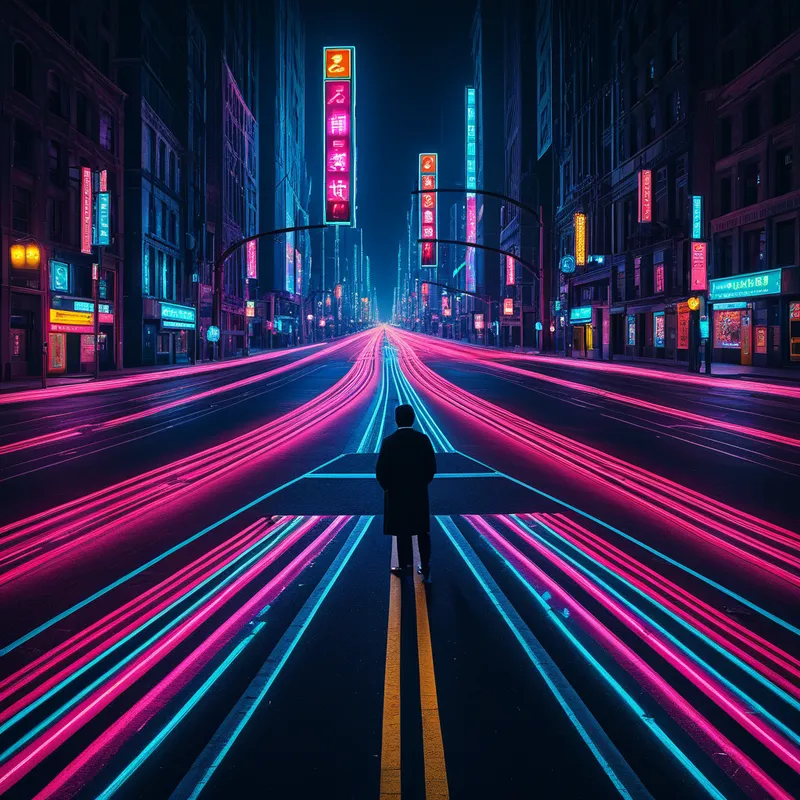
When this myth surfaces in modern dreams, it rarely appears as an ancient goddess. Instead, the dreamer finds themselves paralyzed at a bizarre intersection—a highway cloverleaf at midnight, a hallway with three identical doors, or a point in a video game where the save file corrupts and all choices reset. The somatic feeling is one of profound suspension: heart pounding, feet rooted, breath held. This is the psyche’s enactment of a critical developmental stall.
The psychological process is one of confrontation with the shadow and the anxiety of possibility. Each road or door in the dream represents a different complex, a different bundle of unlived life or unresolved trauma vying for energy. The dreamer is not choosing a career or partner in that moment; they are choosing which aspect of their own depth to acknowledge and integrate. The terror of the dream crossroads is the terror of the ego realizing it is not the sole author of the life, that it must negotiate with these other inner figures.
Alchemical Translation
The alchemical process mirrored here is solutio (dissolution) followed by coagulatio (coagulation). At the crossroads, the old, solidified identity (the traveler’s weariness, their “lost” path) is dissolved in the solvent of the liminal space. The familiar ego-structure breaks down under the pressure of pure potential.
The alchemical gold is not found at the end of any one path, but is forged in the crucible of the choice itself. To stand in the center is to hold the tension of opposites until a third, transcendent possibility emerges.
The triumph is not the successful journey down a new road, but the internalization of the crossroads. The successful “operation” is when the individual learns to carry this sacred junction within. They become their own Hecate - whe, capable of holding their own past, present, and future in conscious tension. They gain the key to their own depths, the torch to illuminate their motives, and the serpentine wisdom of their instinctual life. The psychic transmutation is from a person who seeks their path to one who knows they are, at every moment, standing at its creation point, capable of wielding the tools of choice and awareness. The myth models the ultimate goal of individuation: to become the conscious author at the intersection of fate and free will, forever at the crossroads of becoming.
Associated Symbols
Explore related symbols from the CaleaDream lexicon: