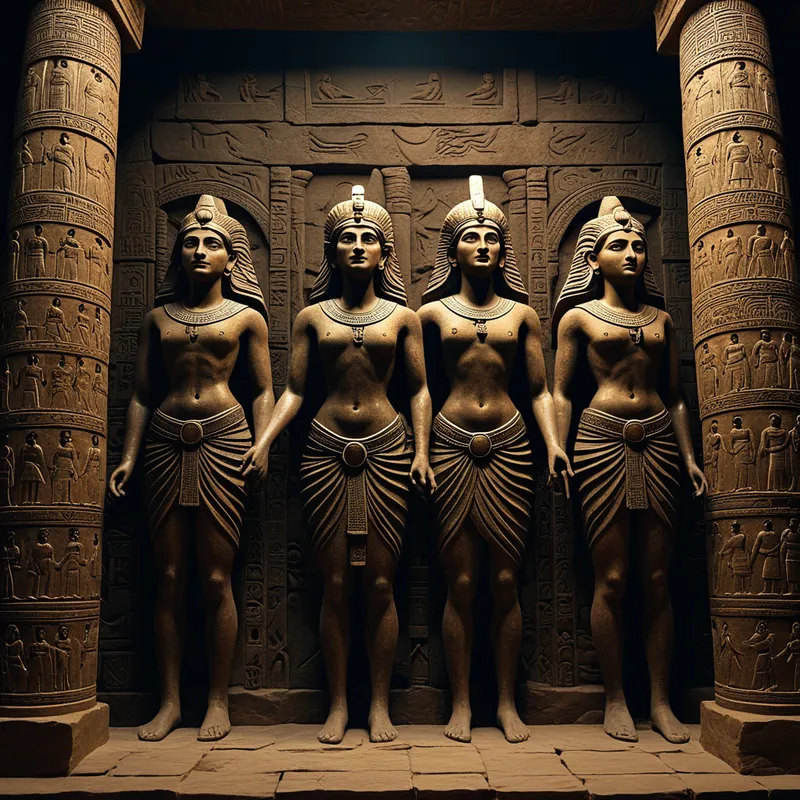
The Creation of Mankind Myth Meaning & Symbolism
The gods, weary of their labors, create humanity from the blood of a slain rebel god mixed with clay, establishing mankind's purpose and divine debt.
The Tale of The Creation of Mankind
Listen, and hear the tale of how you came to be, not from dust and divine breath alone, but from rebellion, exhaustion, and a cunning solution born of blood.
In the beginning, the great gods labored. The Igigi toiled under the sun and stars, digging the beds of the Tigris and Euphrates, raising the mountains, and bearing the baskets of earth until their backs ached and their spirits broke. Their murmurs became a roar, a rebellion that shook the foundations of the cosmos. They surrounded the great dwelling of the senior gods, their tools now weapons, their fatigue turned to fury.
The council of the great gods was thrown into panic. Anu could not calm them. Enlil, the king, was besieged in his own house. The cosmic order itself teetered. Then, the wise one, Ea, who dwells in the sweet-water Apsu, spoke. His voice was the sound of deep, still waters. “Why do we incite war? Their labor is heavy, their misery great. Every day they lament. There is a solution.”
For a great war had already been fought. The monstrous Tiamat had risen in chaos, and the champion Marduk had vanquished her. From her body, he fashioned the heavens and the earth. But from her host, one was singled out: Kingu, who had borne the Tablets of Destiny and led the rebellion. He was captured, bound, and brought before the divine assembly. His fate was decreed: he alone was guilty. From his blood, something new would be made.
Ea proclaimed the plan: “Let them slay Kingu, and let them create humankind from his blood. Let the burden of the gods be imposed on humankind, that they may freely rest.” The gods assented. Kingu was slain in that solemn assembly. His essence, his life-force, his rebellious spirit, was contained in the outpouring of his blood.
Then, the mother of all, the womb-goddess Mami, was summoned. Ea, the master craftsman, gave her the sacred formula. She pinched off clay from the primordial earth, from the very Apsu over which Ea presided. She mixed it thoroughly with the potent, divine blood of Kingu. Before the assembled gods, she recited the incantation. She pinched off fourteen pieces of this mingled substance—seven for males, seven for females. She shaped them, she formed them. The womb-goddesses, the Sassuratu, stood by her side.
And then, she broke the clay! The forms opened, and humankind stirred to life. A cry went up, not from the newborns, but from the gods. They shouted for joy! They clapped and danced, they who had been burdened with toil. “Now we have a substitute! Now we can be at ease!” They gathered around the new creatures, these beings of earth and celestial blood, and bestowed upon them their purpose: to bear the basket, to dig the canal, to grow the food, to feed the gods with their labors and their sacrifices. Thus was humankind created, a living monument to a quelled rebellion and a divine respite.
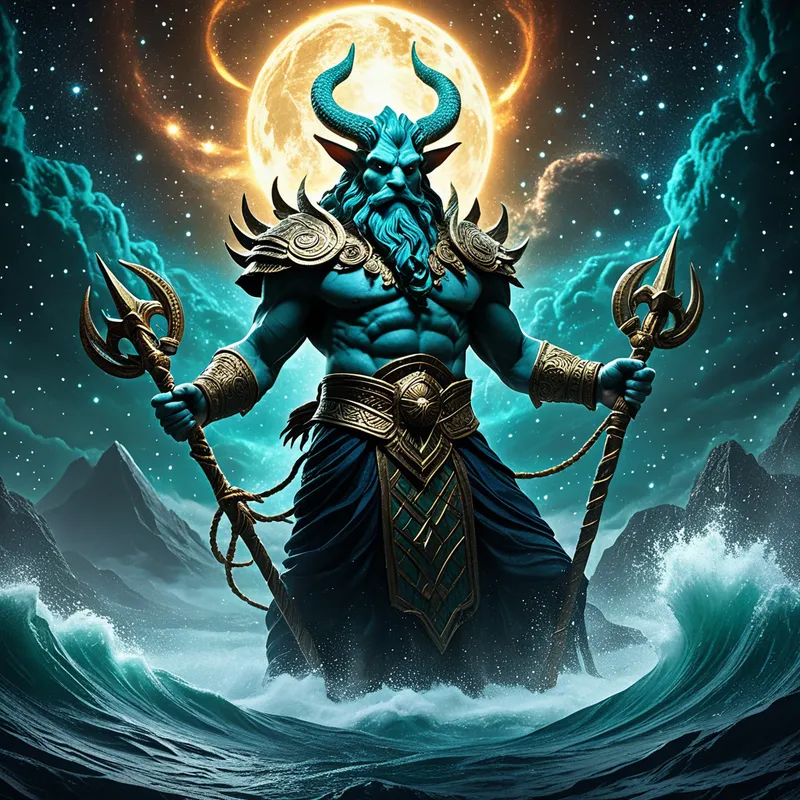
Cultural Origins & Context
This myth, central to the Babylonian worldview, is preserved primarily in the Enuma Elish and the [Atrahasis](/myths/atrahasis “Myth from Babylonian culture.”/) Epic. It was not mere folklore but sacred narrative, recited during the Akitu festival to reaffirm the cosmic and social order. The story explained humanity’s fundamental condition: we are born to labor, our very substance is indebted to divine conflict, and our primary duty is to serve the gods through work and ritual. This provided a theological foundation for the rigid, hierarchical structure of Babylonian society, where each person had a divinely ordained role. The myth was the property of temple scribes and priests, the intellectual elite who mediated between the people and the gods, using it to validate both kingly authority and the necessity of collective toil.
Symbolic Architecture
The myth presents a profound and ambivalent [symbolism](/symbols/symbolism “Symbol: The use of symbols to represent ideas or qualities, often conveying deeper meanings beyond literal interpretation. In dreams, it’s the language of the unconscious.”/) of [human](/symbols/human “Symbol: The symbol of a human represents individuality, complexity of emotions, and social relationships.”/) origins. We are not born of light or pure thought, but of a composite: the base, mortal [Clay](/symbols/clay “Symbol: Clay symbolizes malleability, creativity, and the potential for transformation, representing the foundational aspect of life and the ability to shape one’s destiny.”/) of the [Earth](/symbols/earth “Symbol: The symbol of Earth often represents grounding, stability, and the physical realm, embodying a connection to nature and the innate support it provides.”/) and the potent, divine [Blood](/symbols/blood “Symbol: Blood often symbolizes life force, vitality, and deep emotional connections, but it can also evoke themes of sacrifice, trauma, and mortality.”/) of a slain rebel. This is our inheritance—a physical, mortal frame animated by a spark of something transcendent yet guilty.
Humanity is the vessel where the divine and the earthly, order and rebellion, are forever mixed.
The Kingu figure is crucial. He is not evil, but exhausted—the [spirit](/symbols/spirit “Symbol: Spirit symbolizes the essence of life, vitality, and the spiritual journey of the individual.”/) of labor pushed to rebellion. His blood is the “stuff” of [consciousness](/symbols/consciousness “Symbol: Consciousness represents the state of awareness and perception, encompassing thoughts, feelings, and experiences.”/), will, and that inherent drive that chafes under servitude. By using it, the gods effectively transferred the burden of divine discontent into us. The Mami and Ea represent the archetypal parents: the shaping, nurturing [Mother](/symbols/mother “Symbol: The symbol of ‘Mother’ represents nurturing, protection, and the foundational aspect of one’s emotional being, often associated with comfort and unconditional love.”/) and the cunning, [problem](/symbols/problem “Symbol: Dreams featuring a ‘problem’ often symbolize internal conflicts or challenging situations that require resolution and self-reflection.”/)-solving [Father](/symbols/father “Symbol: The father figure in dreams often symbolizes authority, protection, guidance, and the quest for approval or validation.”/) who devises a practical, if harsh, [solution](/symbols/solution “Symbol: A solution symbolizes resolution, clarity, and the overcoming of obstacles, often representing a sense of accomplishment.”/) for systemic collapse.
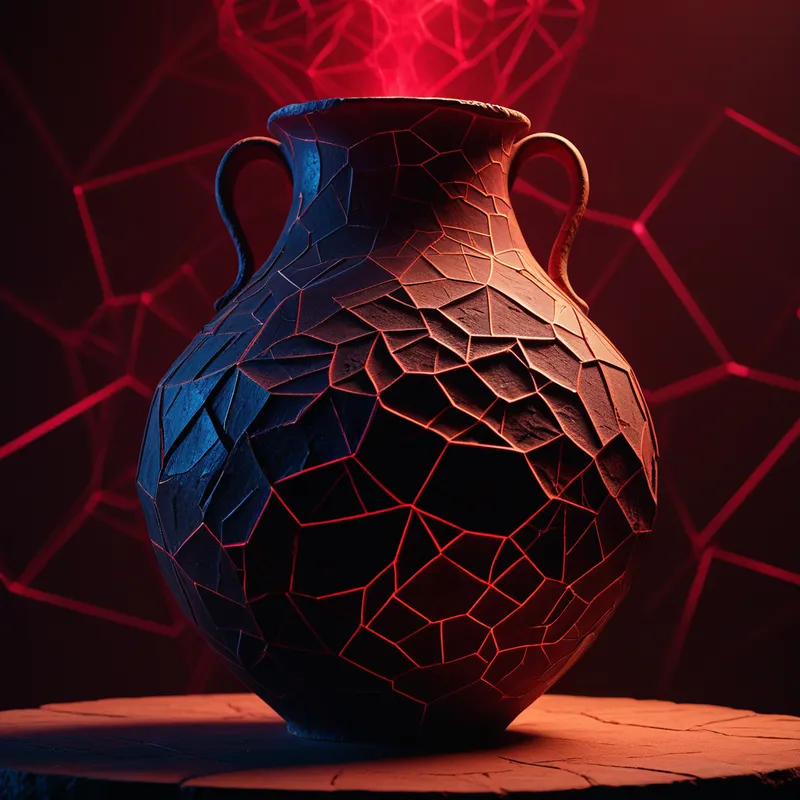
The Dreamer’s Resonance
When this myth stirs in the modern psyche, it often manifests in dreams of profound, inexplicable weariness, of being born into a pre-existing system of labor one never chose. You may dream of shaping clay that is strangely heavy, or of a substance—water, light, ink—that is both you and not you, being mixed into your body. Dreams of being observed by distant, imposing figures while performing mundane tasks echo the watchful gods. A dream of a Primordial Debt, a feeling that you must work to earn your very right to exist, is the somatic footprint of this myth. The psyche is processing the core wound of the Orphan: being created for a purpose not your own, feeling the weight of an inheritance you did not request.
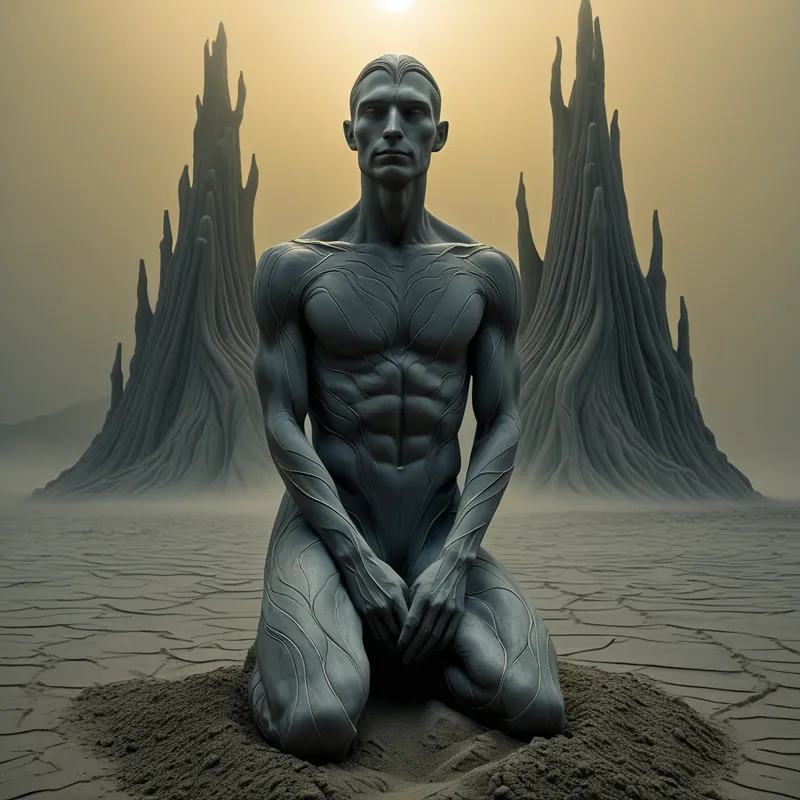
Alchemical Translation
For the modern individual, the “alchemical work” modeled here is the conscious reconciliation of our dual inheritance. The first stage is recognizing the “clay”—our limitations, mortality, and earthly binds. The second is acknowledging the “blood of Kingu”—the inner rebel, the spark of divine discontent, the part of us that feels enslaved by systems, expectations, and internalized burdens.
Individuation begins when we stop merely bearing the basket for the “gods” of external authority and start to consciously metabolize the rebellious spirit within our own blood.
The transmutation occurs when we take responsibility for this mixed substance. We are not to blindly serve the old gods (outmoded paradigms, societal pressures, parental complexes), nor to let the rebellious spirit destroy us in futile rage. Instead, we must become our own Mami and Ea. We must consciously re-shape our purpose. The labor does not disappear, but its meaning changes. We dig canals not for distant masters, but to irrigate the landscape of our own souls. We bear the basket to carry our own chosen offerings. In doing so, we perform the ultimate act of alchemy: transforming the guilt-laden blood of the rebel and the inert clay of fate into the sacred substance of a self-authored life.
Associated Symbols
Explore related symbols from the CaleaDream lexicon:
- Blood — The divine, animating principle from the rebel god Kingu, representing the inherited spirit of consciousness, will, and the burden of a primordial debt mixed into humanity’s essence.
- Clay — The mortal, earthly substance from the Apsu, representing the physical body, limitation, and the raw, formable material of human existence.
- God — Represents the overarching, often burdensome authority and order that humanity was created to serve, embodying the external systems and internalized pressures we labor under.
- Goddess — Specifically the Mother Goddess Mami, the shaper and womb, representing the nurturing yet fateful creative force that gives form to life according to a divine plan.
- Labor — The core purpose imposed upon humanity at creation, symbolizing the inherent toil, duty, and burden of existence that defines the human condition.
- Rebellion — The act of the Igigi and Kingu, symbolizing the exhausting, necessary uprising against unsustainable order that ultimately leads to a new creation.
- Sacrifice — The slaying of Kingu, representing the violent, foundational act that provides the sacred material for new life and transfers a burden from one order to another.
- Servitude — The destined role of humankind, symbolizing the state of being created for a purpose outside oneself, the core dynamic of debt and duty.
- Creation — The central act of mixing and shaping by Mami, representing the profound, ambivalent process of bringing something new into being from conflict and solution.
- Order — The cosmic and social structure the gods uphold, which is threatened by rebellion and re-established through the creation of a serving class (humanity).
- Fate — The predetermined purpose of humanity to labor, decreed by the divine assembly, symbolizing the powerful sense of a pre-written destiny inherent in our origins.
- Spirit — The animating force within the blood of Kingu, representing the transcendent, conscious element within the human composite that chafes against its mortal, servile frame.