The Chimera Myth Meaning & Symbolism
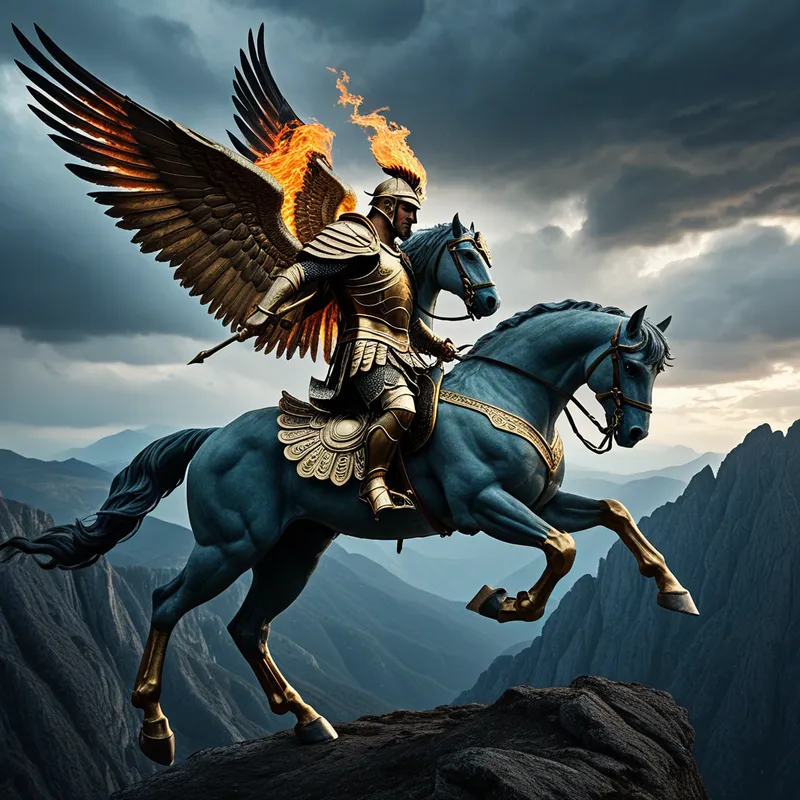
Bellerophon, aided by the winged horse Pegasus, confronts the Chimera, a monstrous fusion of lion, goat, and serpent, in a myth of heroic integration.
The Tale of The Chimera
Hear now a tale of fire and fusion, born in the wilds of Lycia, where the mountains are teeth biting a hard sky. It was not a beast born of nature’s gentle womb, but a blasphemy spat from the deep earth, a child of monsters: [Typhon](/myths/typhon “Myth from Greek culture.”/) and Echidna. They named it Chimera.
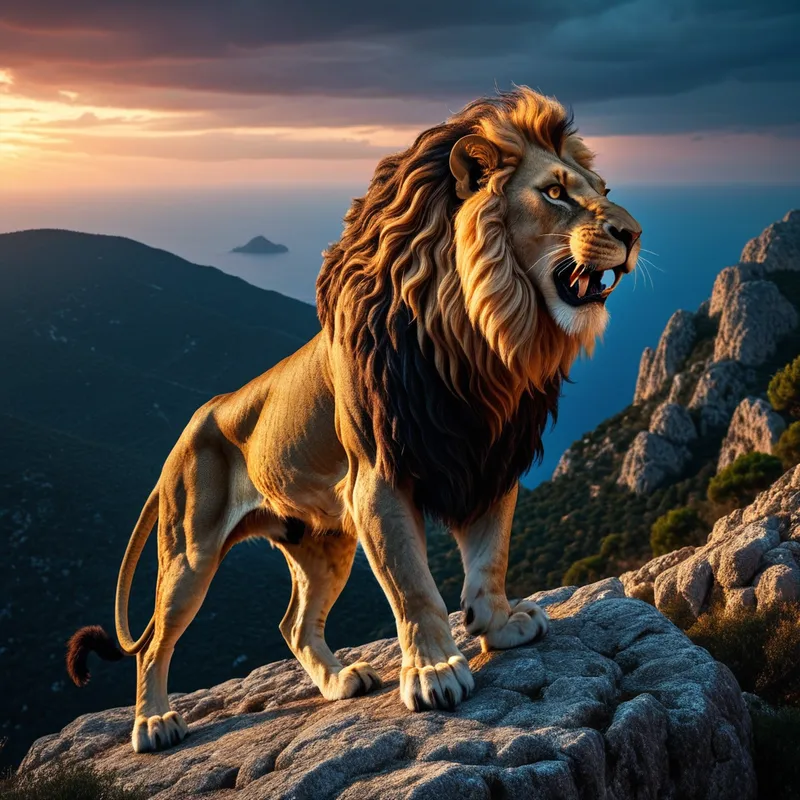
It was a walking contradiction, a nightmare stitched from waking fears. From its powerful shoulders rose the head of a tawny lion, jaws capable of crushing stone. From the center of its back sprouted the neck and head of a wild goat, bleating with a rage that was not herbivore but predator. And where a tail should be, there lived a serpent, a hissing, independent malice with venom-dripping fangs. But its true horror was its breath. Deep in its furnace chest, a foul digestion churned, and from the lion’s maw it exhaled not air, but gouts of living fire. This was its voice: a roar of flame that scorched the fertile plains of Lycia to ash, that drove shepherds mad with terror, that made a kingdom cower.
The king of Lycia, Iobates, despaired. His land was being eaten by this unnatural flame. And into his court came a hero, Bellerophon, bearing a sealed tablet from another king—a silent death sentence requesting the young man’s demise. Iobates, bound by hospitality and cunning, saw his solution. He gave Bellerophon an impossible task: slay the Chimera. It was a polite command to die.
But Bellerophon was favored. He had consulted the seer Polyeidus, who spoke a riddle of wings. Following the divine counsel, Bellerophon slept in [the temple](/myths/the-temple “Myth from Jewish culture.”/) of Athena. There, she gifted him a golden bridle. With it, he approached the spring of [Pegasus](/myths/pegasus “Myth from Global/Universal culture.”/) at Peirene. The magnificent winged horse, born from the blood of [Medusa](/myths/medusa “Myth from Greek culture.”/), allowed himself to be tamed by the goddess’s device.
Now the battle was joined not on the beast’s terms, but on the hero’s. Mounted on Pegasus, Bellerophon ascended into the domain of air, leaving [the earth](/myths/the-earth “Myth from Hindu culture.”/)-bound monster below. He dove and wheeled, a hawk against a fire-belching mountain. The Chimera raged, its three heads straining skyward, its fire falling short of the soaring steed. The earth-bound strategies of tooth, claw, and flame were useless here. Then, in a flash of cunning, Bellerophon took a lump of lead and fixed it to the point of his spear. In a daring descent, he drove the spear into the Chimera’s fiery throat. The beast’s own breath became its doom. The searing heat melted the lead, which flowed down its gullet, burning and choking the life from the monstrous fusion. The Chimera fell, its disparate parts finally still, its chaotic fire extinguished not by [water](/myths/water “Myth from Chinese culture.”/), but by its own elemental nature, transmuted.
Cultural Origins & Context
The Chimera’s story reaches us primarily through the epic poetry of [Homer](/myths/homer “Myth from Greek culture.”/), who mentions it in the Iliad as “a [thing](/myths/thing “Myth from Norse culture.”/) of immortal make, not human, lion-fronted and snake behind, a goat in the middle.” The fuller narrative is fleshed out by later mythographers like Hesiod and the Roman Ovid.
This was not merely a fireside monster story. It functioned as a foundational narrative for the Greek [psyche](/myths/psyche “Myth from Greek culture.”/), illustrating a core cultural value: the [triumph](/myths/triumph “Myth from Roman culture.”/) of [metis](/myths/metis “Myth from Greek culture.”/) (cunning intelligence) and divine order over untamed, chaotic hybridity. The Chimera represented the “other,” the unnatural perversion of boundaries—geographic, biological, and moral. Its home in Lycia, a land at the edge of the Greek world, marked it as a creature of the liminal, the wild frontier that civilization must conquer and define itself against. The myth was a tool for reinforcing the cosmic and social hierarchy: heroes, aided by the gods (Athena), must subdue the monstrous offspring of the chaotic Titans. It was a tale told to explain the very necessity of the heroic quest and the precarious victory of human reason over [the world](/myths/the-world “Myth from Tarot culture.”/)’s inherent, formless terror.
Symbolic Architecture
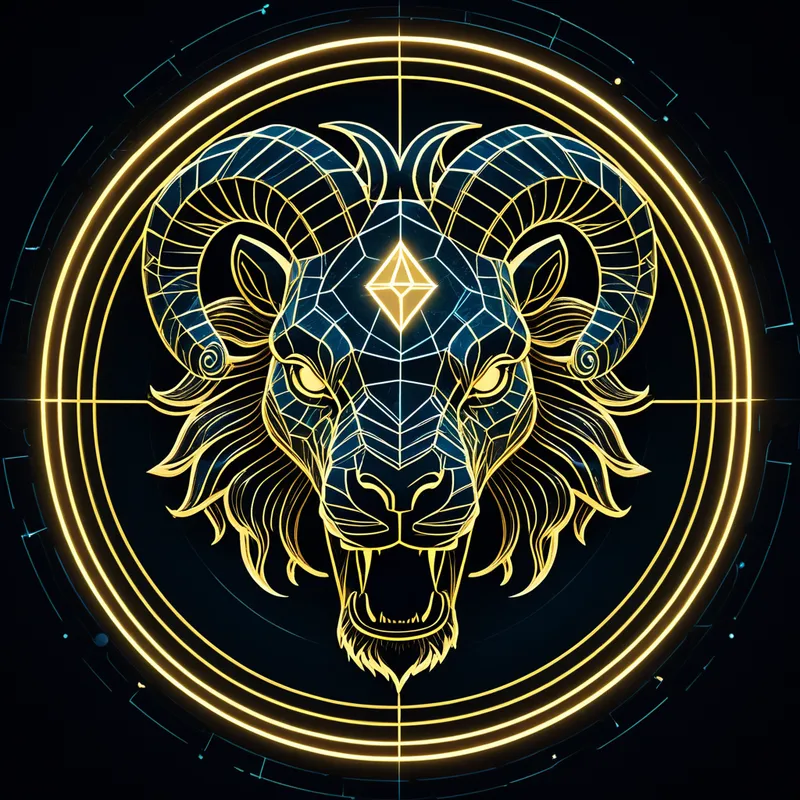
The [Chimera](/symbols/chimera “Symbol: The Chimera symbolizes the blending of oppositional forces, embodying complexity and the multifaceted nature of reality.”/) is the ultimate [symbol](/symbols/symbol “Symbol: A symbol can represent an idea, concept, or belief, serving as a powerful tool for communication and understanding.”/) of unreconciled inner conflict made flesh. It is not a single [beast](/symbols/beast “Symbol: The beast often represents primal instincts, fears, and the shadow self in dreams. It symbolizes the untamed aspects of one’s personality that may need acknowledgment or integration.”/), but a committee of instincts at war.
The [Lion](/symbols/lion “Symbol: The lion symbolizes strength, courage, and authority, often representing one’s inner power or identity.”/) represents raw, kingly power, untamed aggression, and the fiery drive of [the ego](/myths/the-ego “Myth from Jungian culture.”/). The [Goat](/symbols/goat “Symbol: The goat symbolizes independence, resilience, and various traits associated with adaptability across diverse cultures.”/), often associated with lust, stubbornness, and base [appetite](/symbols/appetite “Symbol: Represents desire, need, and consumption in physical, emotional, or spiritual realms. Often signals unmet needs or excessive cravings.”/) (think of the [satyr](/symbols/satyr “Symbol: A mythological creature from Greek lore, half-man and half-goat, representing untamed nature, primal instincts, and unrestrained revelry.”/)), embodies clinging desire and brittle, mountainous pride. The [Serpent](/symbols/serpent “Symbol: A powerful symbol of transformation, wisdom, and primal energy, often representing hidden knowledge, healing, or temptation.”/) is the chthonic wisdom turned toxic, the deep, unconscious instinct that strikes from the [shadow](/symbols/shadow “Symbol: The ‘shadow’ embodies the unconscious, repressed aspects of the self and often represents fears or hidden emotions.”/), symbolizing hidden fear, [betrayal](/symbols/betrayal “Symbol: A profound violation of trust in artistic or musical contexts, often representing broken creative partnerships or artistic integrity compromised.”/), and a poisonous, cyclical [nature](/symbols/nature “Symbol: Nature symbolizes growth, connectivity, and the primal forces of existence.”/).
The monster is not the individual parts, but the fact they are fused without a unifying consciousness. It is a psyche where rage, lust, and cunning operate independently, breathing destructive fire.
Bellerophon, therefore, is not just a slayer, but an integrator. His [weapon](/symbols/weapon “Symbol: A weapon in dreams often symbolizes power, aggression, and the need for protection or defense.”/) is not brute force, but the symbol of the winged horse [Pegasus](/symbols/pegasus “Symbol: A winged divine horse from Greek mythology, symbolizing inspiration, poetic genius, and spiritual ascension beyond earthly limitations.”/)—the soaring [spirit](/symbols/spirit “Symbol: Spirit symbolizes the essence of life, vitality, and the spiritual journey of the individual.”/), imagination, and the elevated [perspective](/symbols/perspective “Symbol: Perspective in dreams reflects one’s viewpoints, attitudes, and how one interprets experiences.”/) granted by connecting to something transcendent (the divine bridle of Athena). He does not fight fire with fire; he uses the [monster](/symbols/monster “Symbol: Monsters in dreams often symbolize fears, anxieties, or challenges that feel overwhelming.”/)’s own elemental nature (its heat) to transform a base [metal](/symbols/metal “Symbol: Metal in dreams often signifies strength, transformation, and the qualities of resilience or coldness.”/) (lead) into an agent of its demise. The [hero](/symbols/hero “Symbol: A hero embodies strength, courage, and the ability to overcome significant challenges.”/)’s [journey](/symbols/journey “Symbol: A journey in dreams typically signifies adventure, growth, or a significant life transition.”/) is the psyche’s attempt to bring disparate, autonomous complexes under the governance of the observing Self, viewing the chaotic inner [landscape](/symbols/landscape “Symbol: Landscapes in dreams are powerful symbols representing the dreamer’s emotional state, personal journey, and the broader context of life situations.”/) from above.
The Dreamer’s Resonance
When the Chimera stalks modern dreams, it rarely appears as a literal lion-goat-snake. Instead, one dreams of a conflicted identity: perhaps a job title that feels like a costume, a relationship that demands contradictory roles, or a personal goal that seems to be made of opposing desires. Somaticly, the dreamer may feel a burning in the chest (the choked fire), a stiffness in the neck and shoulders (the burden of the goat), or a sense of being “poisoned” from behind by a betrayal they cannot see (the serpent).
Psychologically, this dream signals a state of internal civil war. The dreamer is experiencing what Jung called “possession by a complex.” One is not having a rage, one is the rage; not feeling stubborn, but being the stubbornness. The fire-breathing is the symptomatic outburst—the angry tirade, [the self](/myths/the-self “Myth from Jungian culture.”/)-sabotaging addiction, the toxic pattern—that seems to come from a place outside one’s control. The dream Chimera announces that these fragmented parts have coalesced into an autonomous “not-I” that is ruling the psyche. The dream is a call to become Bellerophon: to seek the elevated perspective, to find the “Pegasus” of therapy, meditation, or creative expression that allows one to see the whole monstrous pattern from above, rather than being burned on the ground within it.
Alchemical Translation
The alchemical process mirrored in this myth is [solve et coagula](/myths/solve-et-coagula “Myth from Alchemical culture.”/): to dissolve and to recombine. The Chimera represents the [prima materia](/myths/prima-materia “Myth from Alchemical culture.”/), the base, chaotic matter of the psyche—our inherited traumas, conflicting drives, and unprocessed instincts. It is the “lead” of our nature.
Bellerophon’s quest is the alchemical operation. The golden bridle of Athena is the divine insight or conscious intention that allows us to harness the transcendent function (Pegasus). The flight is the necessary distancing from identification with our chaos. We must observe our rage, our clinging, our venomous thoughts without being them.
The spear with the lead tip is the brilliant, paradoxical intervention of consciousness: we use the heat of our own conflicted emotion to transform the very substance of the conflict.
The melting lead is the moment of insight where a painful pattern is seen in its entirety, and through that searing awareness, it is transmuted. The “death” of the Chimera is not the eradication of the lion’s strength, the goat’s resilience, or the serpent’s depth. It is the dissolution of their chaotic, autonomous fusion. In the successful individuation process, these energies are re-coagulated. The lion’s fire becomes courageous will, the goat’s tenacity becomes enduring purpose, and the serpent’s wisdom becomes intuitive healing. The hero integrates the monster, and the psyche no longer breathes destructive fire, but forges from its own heat a unified, conscious self. The impossible hybrid becomes a harmonious whole.
Associated Symbols
Explore related symbols from the CaleaDream lexicon: