
The Cedars of Lebanon Myth Meaning & Symbolism
A myth of sacred trees felled for a divine temple, embodying the tension between human ambition and cosmic order, pride and sacred purpose.
The Tale of The Cedars of Lebanon
Hear now the tale of the trees that touched heaven, the cedars of the high places, whose roots drank from the deep veins of [the earth](/myths/the-earth “Myth from Hindu culture.”/) and whose crowns brushed the floor of [the sky](/myths/the-sky “Myth from Persian culture.”/). They stood on the shoulders of Lebanon, ancient before kings, whispering secrets to [the wind](/myths/the-wind “Myth from Various culture.”/) that the ears of men had forgotten.
A king dreamed beneath the sun of Judah. [Solomon](/myths/solomon “Myth from Biblical culture.”/), whose wisdom was a well without bottom, received a charge from the Divine: to build a house, not for mortal glory, but for the Name that is above all names. A dwelling of stillness amidst the clamor of [the world](/myths/the-world “Myth from Tarot culture.”/). But no stone of the valley, no bronze of the forge, would suffice for its heart. The instructions were precise, whispered on the wind: the house must be lined, paneled, and filled with the wood of the cedar.
So the king’s gaze turned north, to [the mist](/myths/the-mist “Myth from Celtic culture.”/)-shrouded peaks. He sent word to Hiram, King of Tyre, master of [the sea](/myths/the-sea “Myth from Greek culture.”/) and the forest. “You know that my father David could not build a house for the Name because of the wars that surrounded him. But now the YHWH my God has given me rest on every side. Therefore, I intend to build that house. Command that cedars be cut for me from Lebanon.”
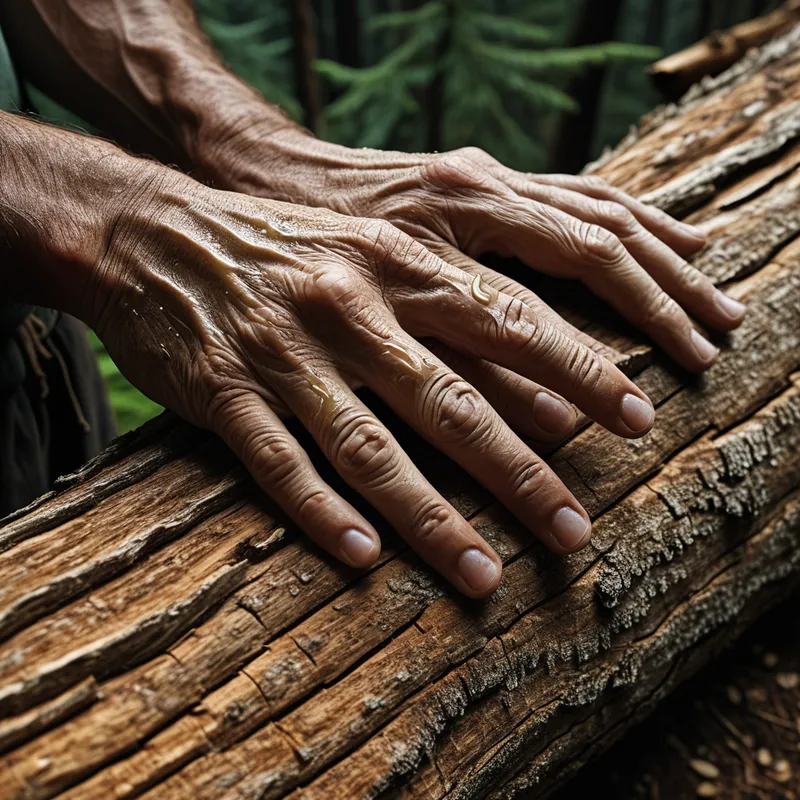
And Hiram, whose soul was gladdened by the wisdom of Solomon, rejoiced. He commanded his servants, the men of Sidon and Tyre, masters of the axe and the adze, to go up to the mountain. They ascended to the high places, where the air was thin and cold, and they stood before the silent, towering sentinels. The first bite of the iron into that sacred bark was a sound that echoed in the soul of the world—a crack like distant thunder, a sigh that rolled down the valleys. The cedars, in their falling, did not crash; they descended like a great king laying himself down, their fragrance—a scent of incense and memory—bursting forth to cloak the mountainside.
They were bound into rafts, these slain giants, and floated down the coast, a strange funeral procession upon the sea, from the ports of Tyre to the sands of Joppa. There, they were hauled onto the shoulders of thousands, up to the threshing floor of Araunah, the place where the angel’s hand was stayed. And in that holy silence, the sound of the craftsman’s tool began: the saw, the plane, the chisel. The cedars, which had known only the song of the wind and the cry of the eagle, now learned the geometry of the sacred. They became walls, they became ceilings, they became carved cherubim and blooming pomegranates. The very air within the completed Holy of Holies was thick with their perfume, a permanent memory of the mountain now enclosing the uncontainable.
Cultural Origins & Context
This is not a single, isolated myth but a resonant motif woven throughout the Tanakh. The Cedars of Lebanon appear as the ultimate symbol of majesty, stability, and divine blessing. They are referenced in the Psalms as trees “which the Lord hath planted”, in [the prophets](/myths/the-prophets “Myth from Biblical culture.”/) as metaphors for proud kingdoms that will be humbled, and in the historical books as the essential, almost magical material for the dwelling of God.
The story is rooted in the historical reality of the 10th century BCE. The cedars (Cedrus libani) were a legendary commodity, prized across the ancient Near East from Egypt to Mesopotamia for their size, durability, and aromatic, insect-repellent qualities. Their procurement required international diplomacy (the treaty with Hiram of Tyre) and immense logistical effort, making them a perfect symbol of a king’s power, wealth, and divine favor. The narrative served multiple societal functions: it legitimized Solomon’s reign and temple project, it celebrated Judah’s geopolitical alliances, and it transformed a commercial timber transaction into a sacred, cosmic event. It was a story told to inspire awe—at the king’s capability, at [the temple](/myths/the-temple “Myth from Jewish culture.”/)’s splendor, and ultimately, at the God who required such a magnificent offering.
Symbolic Architecture
At its core, the myth presents a profound [alchemy](/symbols/alchemy “Symbol: A transformative process of purification and creation, often symbolizing personal or spiritual evolution through difficult stages.”/) of the wild and the ordered, the natural and the consecrated.
The sacred is not born in emptiness; it is carved from the heart of the wild.
The [cedar](/symbols/cedar “Symbol: Aromatic wood symbolizing purification, protection, and sacred connection, often associated with spiritual cleansing and enduring strength.”/) represents untamed, primordial majesty. It is earthly power in its pure form—rooted, enduring, and reaching skyward. It is the numinous raw [material](/symbols/material “Symbol: Material signifies the tangible aspects of life, often representing physical resources, desires, and the physical world’s influence on our existence.”/) of the [cosmos](/symbols/cosmos “Symbol: The entire universe as an ordered, harmonious system, often representing the totality of existence, spiritual connection, and the unknown.”/). The [temple](/symbols/temple “Symbol: A temple often symbolizes spirituality, sanctuary, and a deep connection to the sacred aspects of life.”/) represents divine order, geometric [harmony](/symbols/harmony “Symbol: A state of balance, agreement, and pleasing combination of elements, often associated with musical consonance and visual or social unity.”/), and the conscious containment of [spirit](/symbols/spirit “Symbol: Spirit symbolizes the essence of life, vitality, and the spiritual journey of the individual.”/). The myth, therefore, depicts the necessary, and inherently violent, process of transformation: the raw material of the [soul](/symbols/soul “Symbol: The soul represents the essence of a person, encompassing their spirit, identity, and connection to the universe.”/) (instinct, potential, wildness) must be “cut down” and reshaped to serve a higher, integrative [purpose](/symbols/purpose “Symbol: Purpose signifies direction, meaning, and intention in life, often reflecting personal ambitions and core values.”/).
Psychologically, the felling of the cedar mirrors the difficult but necessary process of humbling [the ego](/myths/the-ego “Myth from Jungian culture.”/). The ego, like the cedar, is noble, strong, and seeks to grow ever taller in its own esteem. To become part of a greater psychic [structure](/symbols/structure “Symbol: Structure in dreams often symbolizes stability, organization, and the framework of one’s life, reflecting how one perceives their environment and personal life.”/)—the Self—this personal pride must be relinquished. It is a sacred sacrifice. The cedar does not cease to be; its essence is preserved and elevated, becoming the very inner [chamber](/symbols/chamber “Symbol: A private, enclosed space representing the inner self, hidden aspects, or a specific stage in life’s journey.”/) where the divine encounter occurs. The conflict is between [human](/symbols/human “Symbol: The symbol of a human represents individuality, complexity of emotions, and social relationships.”/) ambition (building a great house) and divine will (the specific instructions for that house), a [tension](/symbols/tension “Symbol: A state of mental or emotional strain, often manifesting physically as tightness, pressure, or unease, signaling unresolved conflict or anticipation.”/) that asks: are we using our innate majesty for our own glory, or as a [vessel](/symbols/vessel “Symbol: A container or structure that holds, transports, or protects something essential, representing the self, emotions, or life journey.”/) for something transcendent?

The Dreamer’s Resonance
When this myth stirs in the modern dreamscape, it often manifests in images of magnificent, ancient trees being cut, or of being inside vast, wooden, cathedral-like spaces. One might dream of being a lumberjack with a heavy heart, or of watching a great tree fall in slow, silent majesty.
Somatically, this can correlate with a feeling of a deep, internal “cutting away”—the end of a long-standing personal identity, a career, or a way of being that, while noble and well-established, no longer serves the soul’s deeper architecture. There is grief here, the perfume of loss. Psychologically, the dreamer is in the process of negotiating between their innate, natural “wildness” (their talents, instincts, and pride) and the call to organize these forces into a more coherent, purposeful whole. It is the pain of individuation’s [middle passage](/myths/middle-passage “Myth from African Diaspora culture.”/), where the old, towering structure of the personality must be dismantled to provide material for the new. The dream asks: what in me, however majestic, needs to be humbled and repurposed?
Alchemical Translation
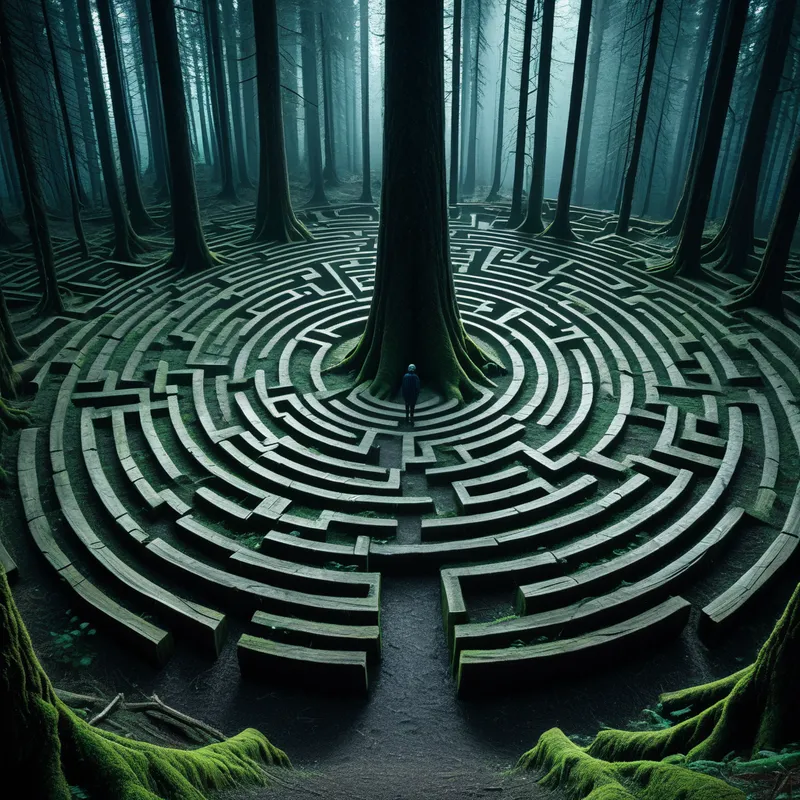
The journey of the cedar from mountain peak to temple wall is a perfect map for the individuation process. The alchemical stages are clear.
First, the [Nigredo](/myths/nigredo “Myth from Alchemical culture.”/): the “felling” on the dark mountain. This is the necessary defeat of the ego’s solitary grandeur, a confrontation with one’s own limitations and the demands of a reality greater than oneself. It is a dark, difficult, and often humiliating descent.
Second, the Albedo: the “rafting upon the sea.” The raw material is separated from its source and enters a liminal, fluid state. Psychologically, this is a period of reflection, purification, and mourning, carried by the unconscious (the sea) toward a new shore.
Finally, the [Rubedo](/myths/rubedo “Myth from Alchemical culture.”/): the “shaping and installation in the temple.” Here, the essence of [the self](/myths/the-self “Myth from Jungian culture.”/), now humbled and purified, is consciously integrated into a new, sacred structure. The wild pride becomes carved wisdom; the instinctual strength becomes supportive beams for a conscious life. The individual is no longer a solitary tree seeking the sun, but an integral part of a holy inner architecture.
The temple cannot be built until the forest consents to be transformed.
For the modern individual, the myth teaches that our greatest strengths, left untamed, become monuments to our own pride. Yet, when offered up—cut down by the sharp tools of experience, loss, and humility—those same strengths become the sacred chamber where the soul finds its true home. The goal is not to destroy our native majesty, but to consecrate it, so that our very being becomes a dwelling place for meaning.
Associated Symbols
Explore related symbols from the CaleaDream lexicon: