
The Cave of the Winds Myth Meaning & Symbolism
Odysseus receives the winds of fate bound in a leather sack from Aeolus, only for his crew's folly to unleash a catastrophic storm.
The Tale of The Cave of the Winds
Hear now the tale of a gift most perilous, a favor from a god that became a man’s undoing. After escaping the dread Cyclops and the seductive sorcery of Circe, Odysseus and his weary crew found their ships drawn by unseen currents to a new wonder. They beached upon a floating island, sheathed in unscaleable bronze cliffs. This was Aeolia, and at its heart lay the source of all the world’s breath: the Cave of the Winds.
Within that vast, echoing chamber dwelt Aeolus, master of the airs. He lived in harmony with his six sons and six daughters, a king in his own right. To this weary traveler, Aeolus showed uncommon grace. For a full month, Odysseus feasted in the hall of the wind-lord, recounting the fall of Troy and his long sorrows. Aeolus listened, and his heart was moved to pity.
When the time came for departure, Aeolus acted. He led Odysseus to the very lip of the chthonic chamber—the Cave itself. There, he did a thing of profound power and trust. With a great bull’s hide and a silver cord, he bound all the winds of destruction—the screaming Boreas, the violent Notus, the fierce Eurus—into one taut, straining leather sack. Only the gentle Zephyrus was left free, commanded to blow them steadily home to Ithaca.
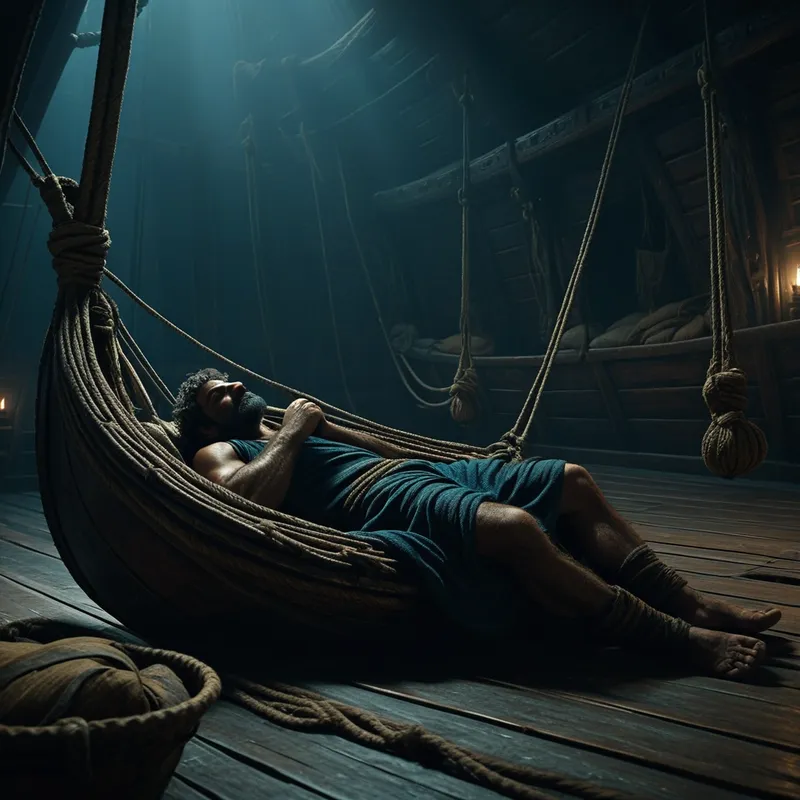
For nine days and nights, Zephyrus filled their sail, and the coast of beloved Ithaca grew on the horizon, close enough to see the watch-fires burning. Exhausted by the vigil, Odysseus succumbed to sleep, the precious sack clutched close. It was then that the poison of suspicion bloomed in the hearts of his crew. Whispering amongst themselves, they eyed the bulging sack. “Gold and silver,” they muttered, “the spoils of Aeolus’s hall, which our captain keeps for himself alone.” Greed and resentment, those old shipmates, clouded their judgment.
They loosed the silver cord.
What erupted was not treasure, but chaos incarnate. The captive winds roared forth with the fury of ages, a screaming hurricane that snatched the ships from the very gates of home. The sailors wept as Ithaca vanished behind a wall of spray and fury. The winds, howling with gleeful malice, drove them back across the wine-dark sea they had just crossed, all the way to the shores of Aeolia once more. When a humiliated Odysseus stood again before the wind-king, Aeolus’s face was like stone. “Leave this island,” he declared, his voice colder than the north wind. “A man so hated by the gods is not welcome here.” The gift had been given, and by human folly, irrevocably undone.
Cultural Origins & Context
This episode from The Odyssey is a masterful folktale nested within a grand epic. It was performed orally for centuries before being codified, part of the rich tapestry of “nostos” or homecoming stories that entertained and instructed polis societies. The bard, channeling Homer, used it as a pivotal narrative check valve. Just as the hero’s goal seems within effortless reach, a catastrophic reversal occurs, extending the journey and deepening its themes.
The figure of Aeolus is fascinatingly liminal. He is a god appointed by Zeus, yet he lives a familial, almost mortal kingship. His domain—a floating, bronze-walled island—exists between the divine Olympus and the human world, much like the winds themselves, which are both natural phenomena and personified deities. The myth served a societal function, illustrating the capricious line between divine favor and divine wrath, and the absolute necessity of respecting a god’s gift to the letter. It was a cautionary tale about the fragility of order and the catastrophic cost of collective doubt and greed, themes deeply resonant for communities navigating the unpredictable seas of fate, politics, and nature.
Symbolic Architecture
At its core, the myth is a profound allegory for the psyche’s struggle to contain primal, chaotic forces in service of a conscious goal. The Cave of the Winds is not merely a location; it is the primal unconscious itself, the raw, undifferentiated source of our emotional and instinctual energies.
The sack is the fragile vessel of the ego, and the bound winds are the instinctual forces we must temporarily repress to navigate toward a conscious aim.
Aeolus represents the archetypal Senex or ruler who has achieved mastery over this inner chaos. He has organized the winds—the unruly emotions of rage (Boreas), passion (Notus), and restless change (Eurus)—and can grant safe passage by binding them. Odysseus, the heroic ego, is gifted this contained potential. His journey home to Ithaca (the Self, wholeness, consciousness) depends entirely on maintaining this integrity. The crew symbolizes the lesser, shadow aspects of the psyche—envy, suspicion, the id’s impulsive greed. Their act of opening the sack is the moment the conscious project is sabotaged by unconscious complexes, unleashing a storm of neurosis that blows the individual far off course, back to the starting point of their inner conflict.

The Dreamer’s Resonance
When this myth pattern stirs in the modern dreamer, it often signals a critical phase of containing and directing powerful psychic energy. You may dream of a sealed room holding a dangerous, living force; a prized possession that must not be opened; or a trusted authority figure bestowing a heavy responsibility that others seek to undermine.
The somatic feeling is one of acute, anxious guardianship—a tightness in the chest or gut, mirroring the tension of the leather sack. Psychologically, this dream emerges when one is navigating by a fragile, hard-won peace or focus. Perhaps you are in recovery, maintaining sobriety (the bound winds of addiction). Maybe you are channeling creative or ambitious energy toward a single goal, repressing distractions (the winds of dispersion). The dream highlights the perceived threat, often from within your own “crew”—parts of yourself or your environment that do not share the higher aim and act from short-sighted desire, threatening to undo your progress. The storm that follows in the dream is the felt-sense of catastrophic regression, the fear that all disciplined effort will be annihilated by a single moment of weakness or betrayal.
Alchemical Translation
The alchemical journey modeled here is that of containment (the vas Hermeticum) and the peril of premature release. In the opus of individuation, one must first gather the chaotic prima materia—the raw, conflicting aspects of the personality—and seal them in the vessel of conscious work. Aeolus performs this initial, merciful coniunctio for the hero. Odysseus’s task is the next, human phase: to sustain the vessel’s integrity through the final leg of the journey.
The catastrophe is not the end of the work, but a necessary, humiliating revelation of where the work truly lies: not in receiving divine gifts, but in forging unshakeable inner authority.
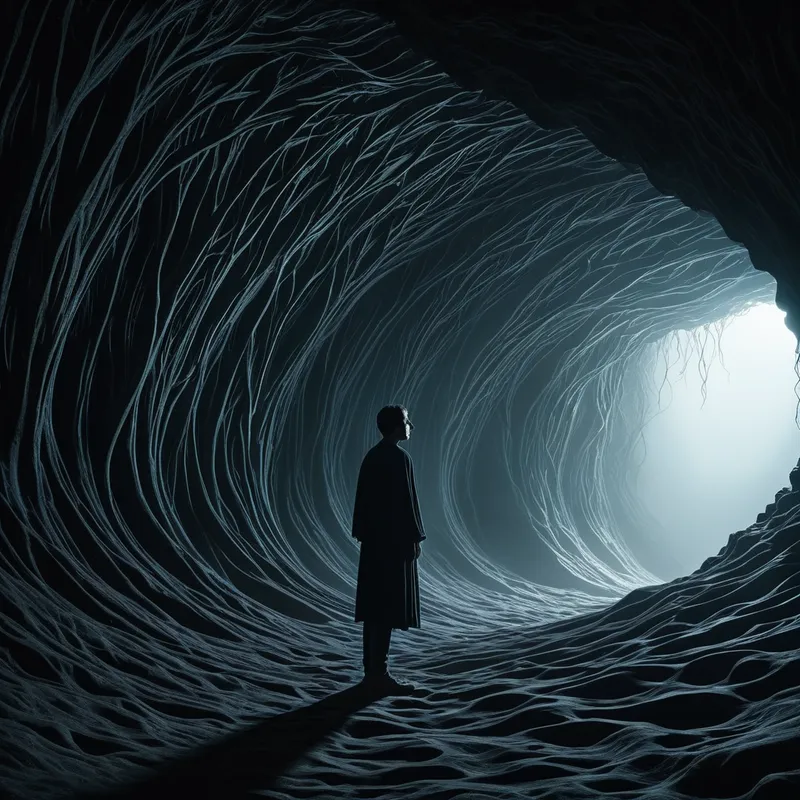
The crew’s betrayal forces a brutal lesson. The gift of bound winds (managed instincts) cannot be simply carried; it must be integrated. The hero’s sleep represents a lapse in consciousness, a reliance on autopilot where the shadow seizes its chance. Being blown back to the start is the alchemical nigredo—the blackening, the despair of seeing one’s progress vanish. It is a descent into the cave of one’s own making, where the winds now rage internally.
The true transmutation begins with the second, rejected arrival at Aeolia. The god now bars the door. This is the pivotal moment: the external savior (the therapist, the dogma, the quick fix) withdraws. The alchemist is thrown back entirely upon their own resources. The journey must continue without the sealed sack, meaning the hero must now learn to sail the very winds that were once bound—to develop a conscious relationship with his own chaos, rage, and passion, and navigate through them. The goal (Ithaca/Self) remains, but the path now demands a harder, wiser mastery than mere carriage of a sealed mystery. It demands becoming the sailor of the storm.
Associated Symbols
Explore related symbols from the CaleaDream lexicon: